Photo: Wikipedia
Political ClimatePolitical Climate in Centerton, AR
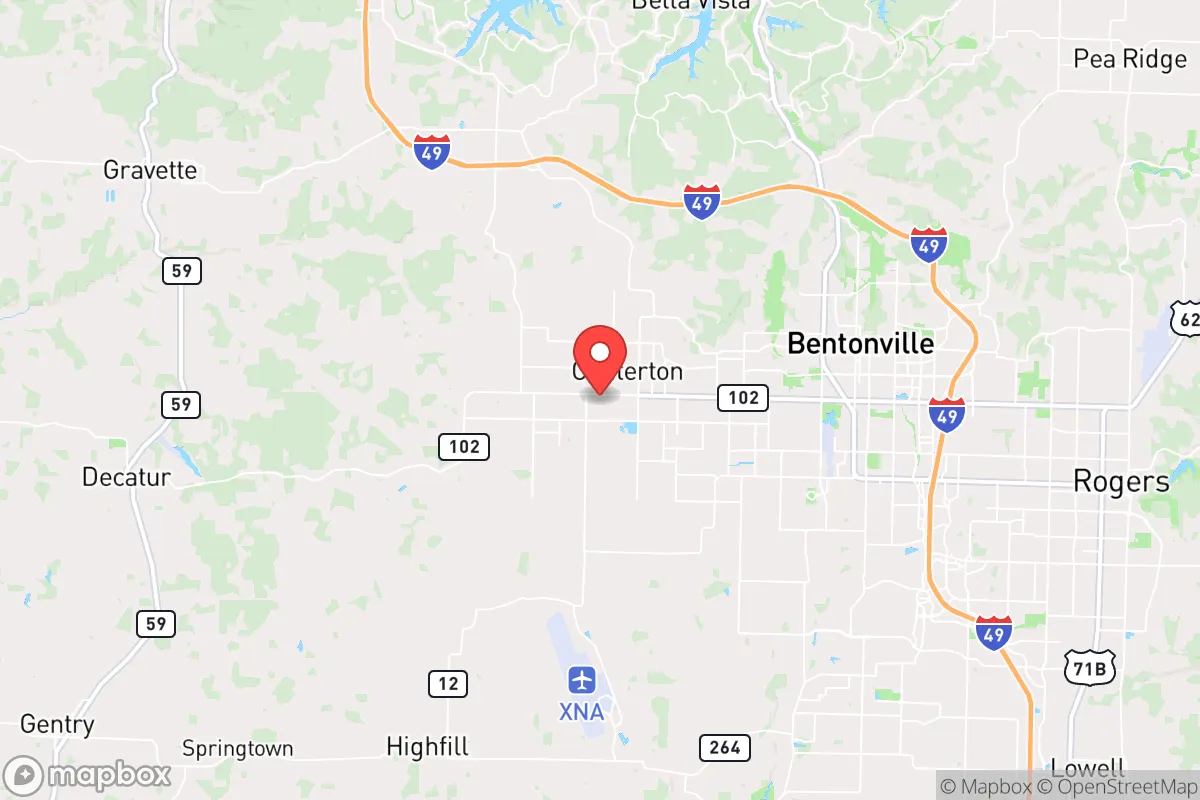
District shown is the primary district for this city’s centroid. Cities may span multiple districts.
Local Political AnalysisPolitical Analysis of Centerton, AR
Centerton, Arkansas, is about as solidly conservative as they come, with a Cook PVI of R+13 that tells you everything you need to know about the local political DNA. This isn't a purple suburb that's slowly turning blue; it's a place where Republican candidates regularly win by double digits, and the local culture reflects that. I've lived here long enough to remember when it was just a quiet crossroads, and while the growth has been explosive, the political lean hasn't budged an inch. If anything, the influx of families fleeing more progressive areas has only reinforced the area's commitment to limited government and personal responsibility.
How it compares
The contrast with nearby cities is stark and instructive. Drive 15 minutes east to Bentonville, and you'll find a much more corporate, globally-minded atmosphere where the Walmart headquarters exerts a moderating influence, and you'll see more Harris/Walz yard signs mixed in with the Trump flags. Head south to Fayetteville, and you're in a full-blown college town with a progressive city council that's been pushing bike lanes, density zoning, and diversity initiatives that would never fly here. Centerton, by contrast, feels like the last bastion of old-school Northwest Arkansas values. We don't have the boutique coffee shops or the art galleries; we have churches, gun shops, and a city council that still believes the best government is the one that stays out of your garage and your backyard. The surrounding rural areas of Benton County vote even redder, but Centerton is the suburban sweet spot where you get the space without the progressive creep.
What this means for residents
For anyone who values personal freedoms over government mandates, this is a breath of fresh air. During the pandemic, Centerton was one of the few cities in the region that didn't impose mask mandates or business closures, trusting residents to make their own choices. Property taxes remain low, and there's no city income tax. The school board is conservative, meaning you won't see critical race theory or gender ideology pushed in the curriculum. The city council regularly votes down proposals for new regulations on short-term rentals, home-based businesses, and even chicken coops—things that would be heavily restricted in Fayetteville or Rogers. The trade-off is that you don't get the same level of city services or public transit, but most residents here prefer lower taxes and fewer rules over a nanny state that micromanages daily life.
What the future looks like
The long-term trajectory is a mixed bag. The rapid growth—Centerton has nearly tripled in population since 2010—is bringing in new people, and not all of them are fleeing blue states. Some are coming from California and Colorado, and they bring different expectations about zoning, environmental regulations, and school policies. There's already been quiet pressure from some newer residents to adopt more "progressive" planning standards, like requiring sidewalks on every street or limiting lot sizes. So far, the old guard has held the line, but I worry that as the city gets bigger and more anonymous, the political culture could start to soften. The key will be keeping local elections focused on individual liberty and fiscal restraint, not on the kind of top-down social engineering that's ruining other parts of the country. If we can do that, Centerton will stay the kind of place where you can live your life without the government breathing down your neck.

State Political ClimatePolitical Climate in Arkansas
State Political AnalysisPolitical Environment in the State
Arkansas has long been a reliably red state, but its conservatism is of a distinct, populist strain rather than the suburban country-club variety you see in some other parts of the South. The state voted for Donald Trump by a comfortable 27-point margin in 2024, a slight tightening from the 30-point spread in 2020, but still firmly in the GOP column. Over the last 20 years, the state has shifted from a competitive, Democrat-friendly environment — Bill Clinton’s home state, after all — to a solidly Republican stronghold, driven largely by the realignment of rural white voters and the collapse of the old conservative Democratic coalition that once dominated county courthouses. The dominant coalition today is a mix of rural traditionalists, evangelical Christians, and a growing number of fiscally conservative transplants from blue states, all united by a deep skepticism of federal overreach.
Urban vs. rural divide
The political map of Arkansas is starkly divided. The two major population centers, Little Rock and Fayetteville (home to the University of Arkansas), are the state’s blue islands. Pulaski County (Little Rock) went for Joe Biden in 2020 and has trended leftward, driven by a growing professional class and minority populations. Washington County (Fayetteville) is a classic college-town outlier, with a mix of academics, artists, and younger voters pushing it purple-to-blue in recent cycles. But outside these two corridors, the state is deeply red. Northwest Arkansas outside Fayetteville — think Bentonville, Rogers, and Springdale — is a fascinating case: it’s the heart of the Walmart and Tyson Foods corporate empire, and while the business community leans Republican, the rapid influx of out-of-state professionals and a large Marshallese and Hispanic population has made it more politically mixed than the rest of the state. Meanwhile, the Arkansas Delta, stretching from Jonesboro down to Pine Bluff, is a study in contrasts: Jonesboro is a reliably red, growing college town, while Pine Bluff and the surrounding rural counties are among the poorest in the nation and have trended Democratic due to high African American populations, though turnout there is often low. The rural counties in the Ozarks and Ouachitas — places like Harrison and Mena — are among the most conservative in the entire country, often voting 80%+ Republican.
Policy environment
Arkansas’s policy environment is aggressively conservative, with a strong emphasis on limited government and low taxes. The state has a flat income tax of 4.4% as of 2025, down from 6.9% a decade ago, and the legislature is actively working toward full elimination. Sales tax is relatively high (6.5% state rate, plus local add-ons), but property taxes are low, making it attractive for homeowners. The regulatory posture is business-friendly, with a right-to-work law and minimal zoning restrictions in most rural areas. On education, the state passed the Arkansas LEARNS Act in 2023, a sweeping school choice law that created universal Education Freedom Accounts, allowing parents to use state funding for private school, homeschooling, or tutoring — a major win for parental rights. Healthcare is a mixed bag: the state expanded Medicaid under the private-option model, but the legislature has pushed for work requirements and tighter eligibility. Election laws have been tightened, with voter ID requirements and limits on absentee ballot drop boxes, which conservatives view as integrity measures. The state also has a near-total abortion ban, with no exceptions for rape or incest, reflecting its strong pro-life stance.
Trajectory & freedom
On the whole, Arkansas is moving in a direction of greater personal freedom in several key areas, though not without some concerning trends. The LEARNS Act is a landmark expansion of educational choice, giving parents real power over their children’s schooling. Gun rights are robust: Arkansas is a constitutional carry state (permitless carry for adults 18+), and in 2025 the legislature passed a law prohibiting local governments from enforcing federal gun regulations that conflict with state law — a clear nullification-style move. Property rights are strong, with no state-level income tax on capital gains and minimal eminent domain abuse. However, there are red flags. The state’s medical marijuana program, while legal, is heavily regulated and has faced bureaucratic delays, frustrating advocates of medical autonomy. More concerning, the Arkansas Department of Health has shown a willingness to impose mandates during public health emergencies, as seen during COVID-19, though the legislature has since passed laws limiting executive emergency powers. The biggest threat to freedom in the coming years may come from the influx of out-of-state migrants — many from California, Illinois, and Colorado — who bring higher expectations for government services and could shift the political calculus in Northwest Arkansas and Little Rock.
Civil unrest & political movements
Arkansas is not a hotbed of civil unrest, but there have been notable flashpoints. The most visible in recent years was the 2020 Black Lives Matter protests in Little Rock, which saw some property damage and clashes with police, but were relatively small compared to national events. The state has a small but vocal progressive activist scene centered in Fayetteville and Little Rock, focused on racial justice, LGBTQ rights, and environmental issues. On the right, the Arkansas Citizens for Liberty and local Tea Party groups remain active, particularly in pushing for school choice, gun rights, and election integrity. Immigration politics are less heated than in border states, but there is tension in Northwest Arkansas, where the growing Hispanic population (now over 10% in some counties) has led to debates over language access and public services. There is no sanctuary city policy anywhere in the state; in fact, the legislature passed a law in 2023 requiring local law enforcement to cooperate with federal immigration authorities. Election integrity controversies have been minimal, though some activists on the right have raised concerns about the security of electronic voting machines, leading to a push for paper ballot audits in several counties.
Projection
Over the next 5-10 years, Arkansas is likely to remain a solidly red state, but the margins may narrow slightly as Northwest Arkansas continues to grow and diversify. The region around Bentonville and Rogers is adding tens of thousands of new residents annually, many from blue states, and while they are often fiscally conservative, they tend to be more moderate on social issues. This could create a political tension between the rural, traditionalist base and the suburban, corporate-friendly wing of the GOP. The state’s Democratic Party is weak but could see a revival if it focuses on economic populism and avoids national progressive branding. The biggest wildcard is the ongoing fight over school choice: if the LEARNS Act proves successful, it could cement conservative dominance for a generation; if it leads to rural school closures or funding fights, it could spark a backlash. Expect continued battles over tax cuts, with a push to eliminate the income tax entirely, and ongoing efforts to limit executive power. A new resident moving in now should expect a state that is broadly free and conservative, but with a growing urban-suburban divide that will make local politics more interesting over time.
For a conservative-leaning individual or family considering relocation, Arkansas offers a strong alignment with traditional values, low taxes, and a government that is generally deferential to personal liberty — especially in the areas of education, gun rights, and property. The key practical takeaway is to choose your location carefully: the rural counties and small towns offer the most freedom and cultural alignment, while the cities of Little Rock and Fayetteville come with higher taxes, more regulation, and a more progressive political climate. If you want the best of both worlds, the suburbs of Northwest Arkansas — think Centerton or Pea Ridge — offer good schools, a growing economy, and a political environment that still leans right, but with a bit more diversity of thought. Just keep an eye on the in-migration trends; the state is changing, and the next decade will determine whether it stays the Arkansas of old or becomes something new.
* Values derived from national, state, county, city and local statistics and may differ in a specific area. Last updated: 2026-04-30T02:24:39.000Z
Narrative content on this page is AI-generated and may contain mistakes. Verify any details that matter before acting on them.
ReloMaps may earn a commission from affiliate links at no extra cost to you.

