Photo: Wikipedia
Demographics of Chaska, MN
Affluence Level in Chaska, MN
An upper-middle-class area. Household wealth, education levels, and homeownership run ahead of national benchmarks.
People of Chaska, MN
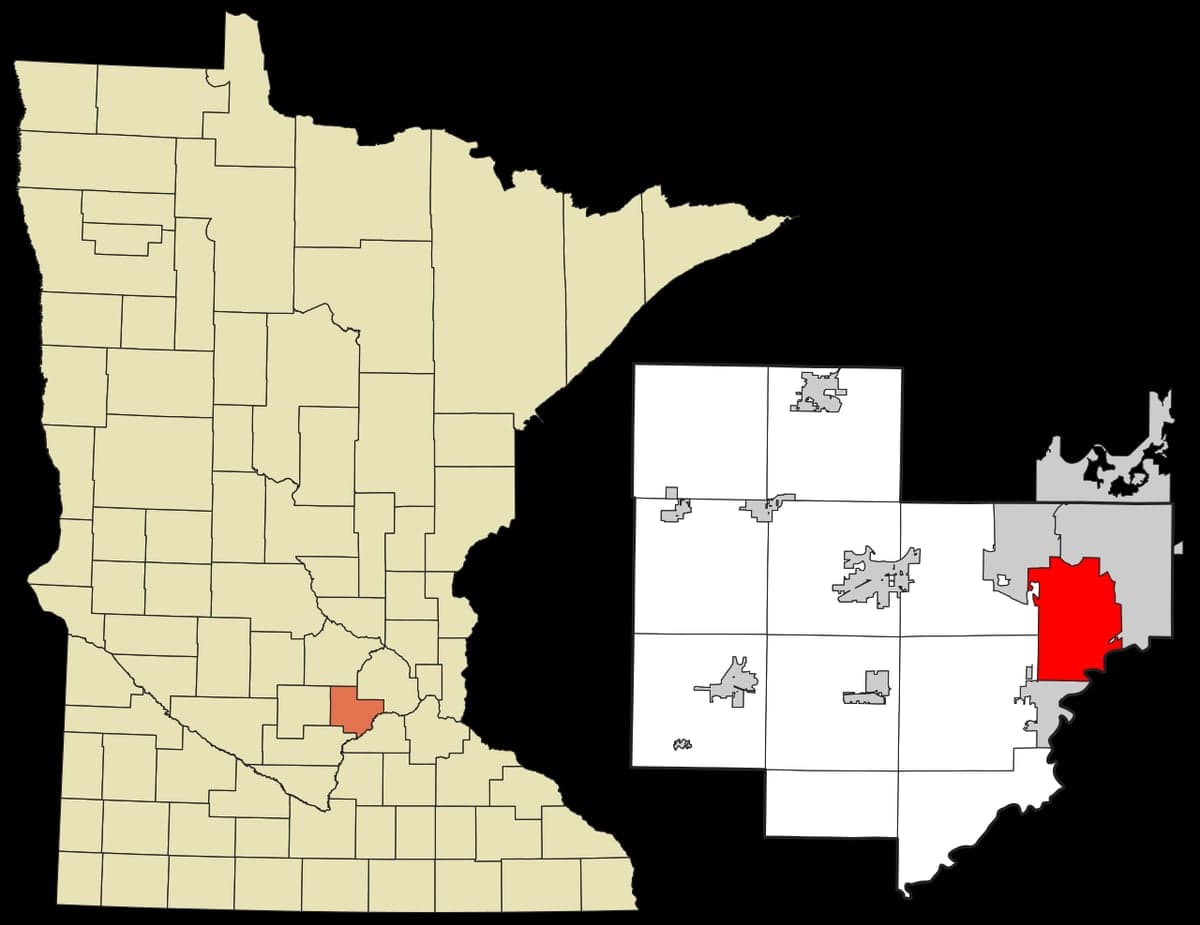
The people of Chaska, Minnesota, today number 28,146, forming a predominantly white (80.9%) and college-educated (46.7%) community with a notably low foreign-born share of just 3.2%. The city’s identity is shaped by its historic riverfront core and newer suburban subdivisions, creating a blend of small-town character and commuter-oriented growth. Distinctive markers include a strong local manufacturing base, a growing Hispanic population (9.1%), and a modest but present East/Southeast Asian community (3.0%), all set within a broader Carver County area that leans conservative politically.
How the city was settled and grew
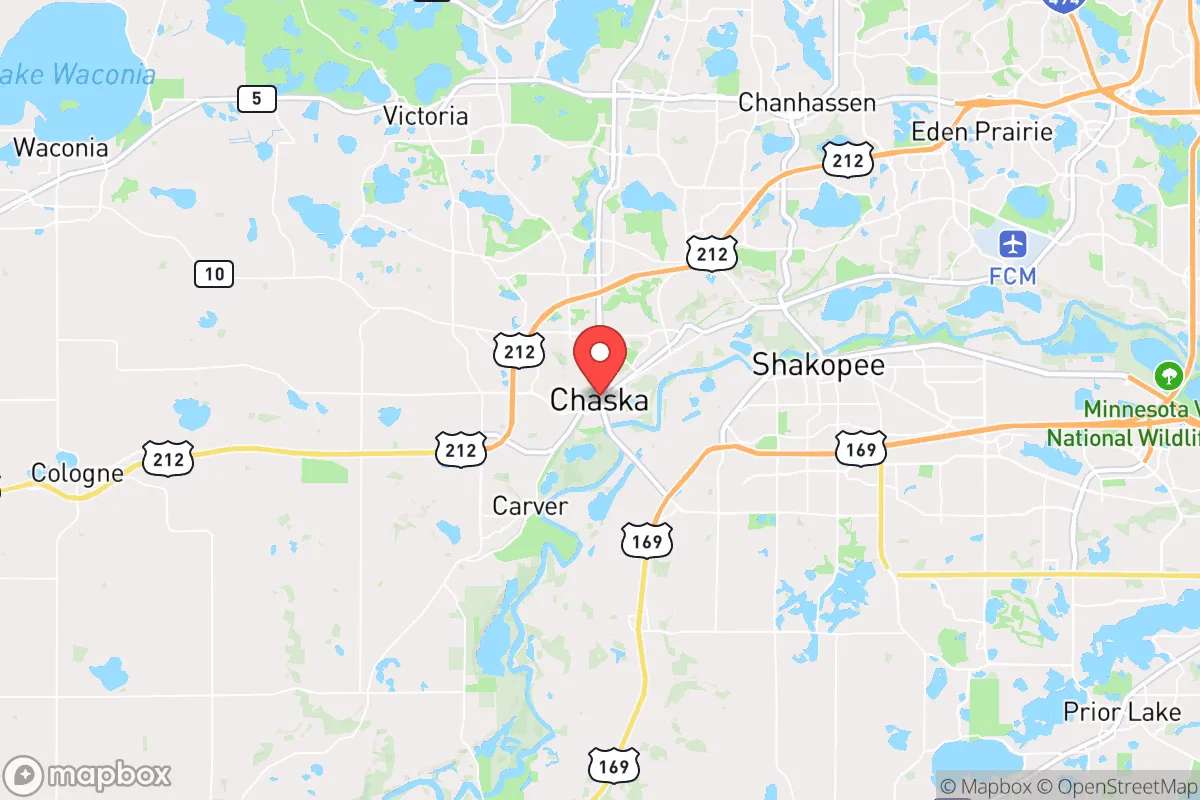
Chaska’s original population was drawn by the confluence of the Minnesota River and the promise of water-powered industry. The city was platted in 1854 by European-American settlers, primarily of German and Scandinavian stock, who established a flour milling and lumber economy. The earliest residents clustered in what is now Historic Downtown Chaska, along the riverfront, where the first gristmills and sawmills operated. A second wave of German Catholic immigrants arrived in the 1860s and 1870s, settling slightly south and east in the St. Victoria area (now a neighborhood within city limits), building St. Victoria Catholic Church as their anchor. By the early 20th century, the population remained overwhelmingly Northern European, with small numbers of Irish and French-Canadian families working in the mills and on nearby farms. The city’s growth was modest through the 1950s, hovering around 2,000 residents, as the economy shifted from milling to manufacturing, notably with the arrival of the Chaska Brick Company and later Beckman Coulter (formerly a local instrument manufacturer).
Modern era (post-1965)
The post-1965 period brought suburbanization as the metropolitan area expanded westward. The 1970s and 1980s saw the development of master-planned subdivisions like Clover Ridge and Laketown Shores, which attracted white, middle-class families from Minneapolis and western suburbs seeking larger lots and lower taxes. These neighborhoods remain predominantly white and owner-occupied today. The Hispanic population began growing in the 1990s, drawn by construction and service jobs in the expanding metro area; they concentrated in older, more affordable housing stock near Highway 41 and Chestnut Street, forming a small but stable enclave. The East/Southeast Asian community (3.0%) arrived primarily in the 2000s and 2010s, with professionals in engineering and healthcare settling in newer subdivisions like Riverside Townhomes and Clover Ridge. The Indian-subcontinent population (0.8%) is a very recent addition, mostly post-2010, and is dispersed rather than concentrated in any single neighborhood. The Black population (1.9%) remains small and scattered, with no distinct ethnic enclave. The foreign-born share (3.2%) is well below the state average (8.6%), reflecting Chaska’s limited role as an immigrant destination compared to the central cities or inner-ring suburbs.
The future
The population is heading toward modest diversification, but the pace is slow. The white share has declined from roughly 90% in 2000 to 80.9% today, driven almost entirely by Hispanic growth (from 3% to 9.1% over the same period). East/Southeast Asian and Indian populations are growing incrementally, but from very small bases. The city is not tribalizing into distinct ethnic enclaves; instead, newer non-white residents are dispersing across middle-class subdivisions, particularly in Clover Ridge and the newer Laketown Village area. The Hispanic community is slowly assimilating, with second-generation families moving into the same subdivisions as their white peers. The next 10-20 years will likely see the Hispanic share approach 12-15%, while the white share settles around 75-78%. The foreign-born share may rise to 5-6% but will remain low relative to the metro area. Chaska is not becoming a majority-minority suburb; it is becoming a slightly more diverse, still predominantly white, and increasingly college-educated community.
For someone moving in now, Chaska offers a stable, family-oriented environment with a conservative-leaning political culture, low crime, and good schools. The population is slowly diversifying but remains overwhelmingly white and native-born, with a small but growing Hispanic presence. New residents will find a community that values its historic roots while accommodating measured suburban growth, but should not expect the ethnic diversity or immigrant infrastructure of larger Twin Cities suburbs.

* Values derived from national, state, county, city and local statistics and may differ in a specific area. Last updated: 2026-04-19T21:25:04.000Z
Narrative content on this page is AI-generated and may contain mistakes. Verify any details that matter before acting on them.
ReloMaps may earn a commission from affiliate links at no extra cost to you.

