Photo: Wikipedia
Political ClimatePolitical Climate in Chaska, MN
District shown is the primary district for this city’s centroid. Cities may span multiple districts.
Local Political AnalysisPolitical Analysis of Chaska, MN
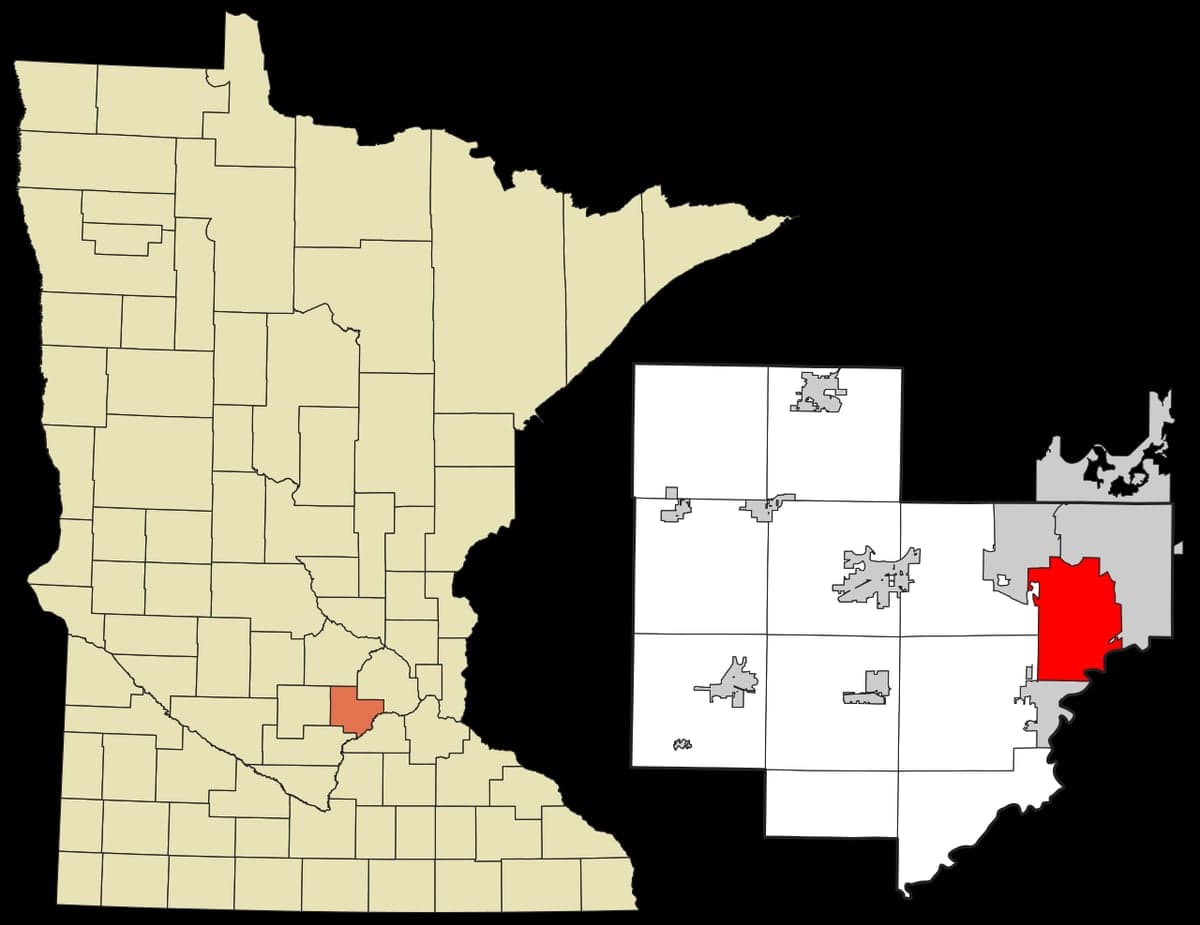
Chaska, Minnesota, sits in a part of the metro that’s historically been a solid conservative stronghold, and the numbers back that up—the Cook PVI clocks it at R+10, meaning the district leans about ten points more Republican than the national average. But if you’ve lived here as long as I have, you’ve watched that lean get tested. The city itself, especially the newer developments along Highway 41 and near the Hazeltine National Golf Club, still votes reliably red in most local races, but you can feel the pressure from the progressive wave washing out of Minneapolis and St. Paul. The trajectory isn’t a hard shift left yet, but it’s a slow erosion—more like a stubborn conservative island getting nibbled at by rising blue water.
How it compares
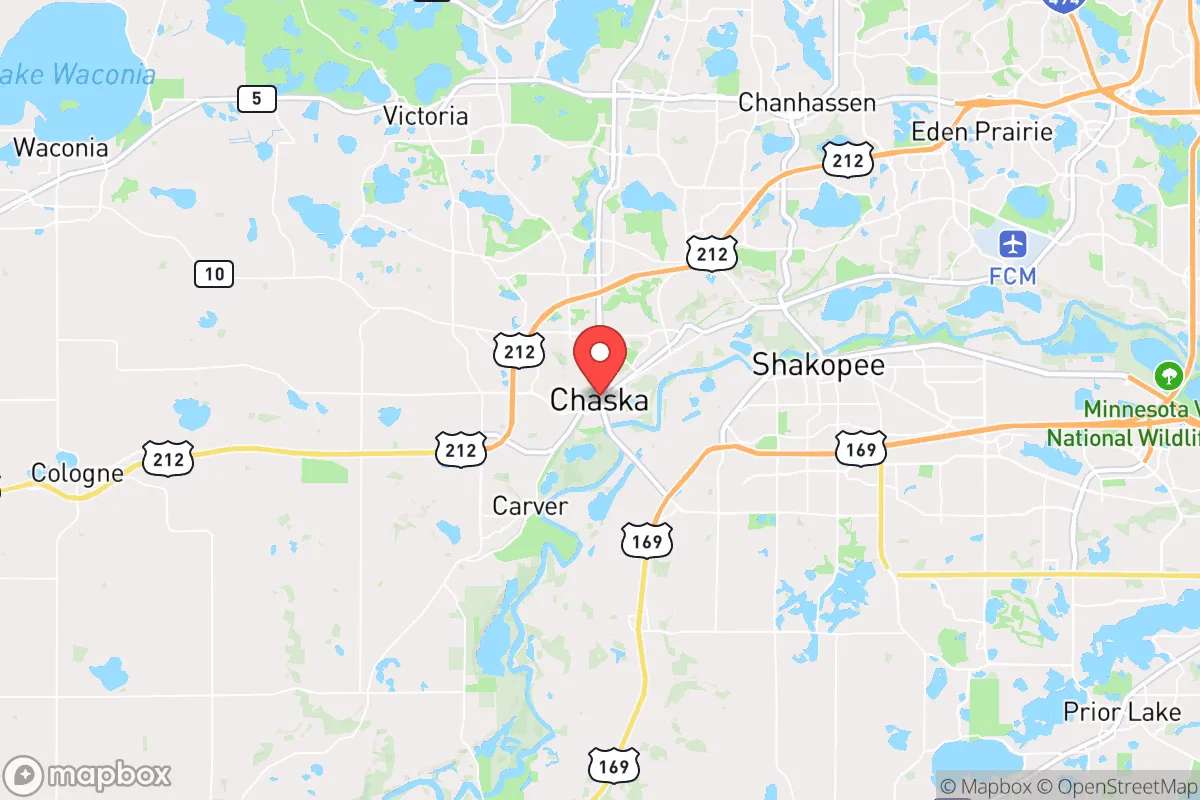
To really get Chaska’s political vibe, you have to look at the towns around it. Drive ten minutes east and you hit Chanhassen, which has gone from purple to reliably blue in the last two cycles—its school board and city council are now dominated by progressive voices pushing equity initiatives and higher-density zoning. Head north to Eden Prairie, and you’re in a classic swing suburb that’s trending left fast. But Chaska? We’re still closer to Waconia and Norwood Young America, those smaller towns to the west where the “Don’t Tread on Me” flags fly just as often as the state flag. The contrast is stark: Chaska’s city council still debates things like property rights and police funding with a straight face, while neighboring cities are already deep into conversations about defunding and DEI training. That R+10 rating feels like a lifeline, but it’s a thin one—if the metro sprawl keeps pushing west, that number could slip to R+5 in a decade.
What this means for residents
For folks who value personal freedoms and want government to stay out of their lives, Chaska is still a decent place to plant a flag—for now. You won’t see mask mandates or business shutdowns being pushed by the local council like you did in some of the eastern suburbs during the pandemic. The school board here has held the line on parental rights, keeping curriculum decisions transparent and pushing back on critical race theory and gender ideology being taught without parent consent. But you have to stay engaged. The progressive playbook is subtle: they start with “inclusivity” committees and “equity audits,” and before you know it, you’ve got a city ordinance limiting single-family zoning or a school policy that undermines your right to know what your kid is learning. If you’re the type who values low taxes, minimal regulation, and the freedom to live your life without a bureaucrat’s permission, Chaska is still a good bet—but you can’t afford to be complacent.
Culturally, Chaska still holds onto some old-school Minnesota conservatism: people wave, neighbors help each other with snowblowers, and the Fourth of July parade is still a big deal. But there’s a growing tension between the “live and let live” crowd and the newer transplants who bring big-government ideas with them. The most telling policy distinction right now is housing: Chaska has resisted the state’s push for mandatory high-density zoning, keeping most of its neighborhoods single-family and quiet. That’s a small win, but it’s a sign of where the real fights are—overreach from St. Paul and the county board, not just local elections. If you’re looking for a place where your rights aren’t treated as negotiable, Chaska is still worth a look. Just keep your eyes open and your vote ready.

State Political ClimatePolitical Climate in Minnesota
State Political AnalysisPolitical Environment in the State
Minnesota has shifted from a classic purple battleground to a solidly blue state over the past two decades, with Democrats now controlling the governorship, both legislative chambers, and the entire federal delegation. The state voted for Hillary Clinton by 1.5 points in 2016, then for Joe Biden by 7 points in 2020, and Kamala Harris carried it by 4 points in 2024 — a clear leftward drift that accelerated after 2016. For a conservative considering relocation, the key takeaway is that the Twin Cities metro area now dictates statewide outcomes, while the rest of the state feels increasingly like an island of red in a sea of blue policy.
Urban vs. rural divide
The political map of Minnesota is a tale of two worlds. The Minneapolis-St. Paul metro, home to roughly 60% of the state's population, is the engine of Democratic dominance. Hennepin County alone delivered a 30-point margin for Biden in 2020, and Ramsey County added another 25-point margin. Meanwhile, greater Minnesota — from the Iron Range in the north to the farm country of the south — votes overwhelmingly Republican. In 2024, counties like Stearns (St. Cloud), Olmsted (Rochester), and Dakota (south metro suburbs) all voted for Trump, though by narrower margins than rural areas. The real story is the collapse of the DFL's rural base: the Iron Range, once a Democratic stronghold, flipped hard to Trump in 2016 and stayed there. St. Louis County (Duluth) is now the only reliably blue area outside the metro, and even there margins are shrinking. Suburbs like Lakeville and Prior Lake in the south metro are increasingly competitive, but the core cities of Minneapolis and St. Paul remain deep blue, with progressive policies that ripple statewide.
Policy environment
Minnesota's policy environment has shifted dramatically since Democrats took full control in 2023. The state now has a progressive income tax with a top rate of 9.85% on income over $200,000 (single) — one of the highest in the nation. Corporate taxes sit at 9.8%, and the state sales tax is 6.875%, though localities can add more. In 2023, the legislature passed a paid family and medical leave program funded by a new payroll tax, a carbon-free electricity mandate by 2040, and a driver's license for all law allowing undocumented immigrants to obtain licenses. Education spending is among the highest per pupil in the country, but school choice is limited — no voucher program, and charter schools are capped. Election laws are among the most liberal: no voter ID requirement, automatic voter registration, and same-day registration. For conservatives, the regulatory posture on energy, labor, and land use is increasingly burdensome, with new environmental review requirements that can delay housing and business projects for years.
Trajectory & freedom
On the freedom index, Minnesota is moving in the wrong direction for conservatives. The 2023 legislative session was a firehose of new restrictions: a red flag law (Extreme Risk Protection Order) allowing courts to temporarily seize firearms from individuals deemed a risk, a universal background check for all gun transfers, and a repeal of the permit-to-carry training requirement (though carry itself remains legal). Parental rights took a hit with the Trans Refuge Act, which shields gender-affirming care for minors from out-of-state legal challenges, and a law requiring schools to adopt policies that affirm students' gender identity without parental notification in some cases. Medical autonomy was further constrained by the codification of abortion rights into state law, removing any parental consent requirements for minors. Property rights are under pressure from new rent control laws in Minneapolis and St. Paul, and a statewide tenant right to counsel program. The state also passed a clean car rule mandating electric vehicle sales targets. On the plus side, Minnesota has no right-to-work law, and union membership remains high — a double-edged sword for conservatives who value workplace freedom.
Civil unrest & political movements
The George Floyd protests in 2020 were a watershed moment, with Minneapolis and St. Paul experiencing days of rioting, arson, and looting that destroyed hundreds of businesses. The aftermath saw a defund the police movement that led to a failed ballot measure to replace the Minneapolis police department, but the city council did cut the police budget by $8 million. Since then, crime has become a central political issue. The Minneapolis Police Department remains under a state consent decree, and officer staffing is at a 20-year low. On the right, the Minnesota Gun Owners Caucus and Minnesota Freedom Fund are active, and there's a growing county-level Second Amendment sanctuary movement, with over 30 counties passing resolutions opposing new gun laws. Immigration politics are heated: Minnesota is a sanctuary state under a 2023 law that limits cooperation with federal immigration enforcement, and the driver's license for all law has been a flashpoint. Election integrity remains a concern for conservatives, with the state's no-ID voting system and widespread mail-in balloting during COVID leading to ongoing litigation. The Minnesota Election Integrity Project has flagged irregularities, but no major fraud has been proven in court.
Projection
Over the next 5-10 years, Minnesota is likely to become more blue, not less. The Twin Cities metro is growing faster than the rest of the state, and in-migration from other blue states (Illinois, California) is accelerating the leftward shift. The 2024 election showed that even with a strong rural turnout, Democrats can win statewide by running up the score in the metro. The state's aging population in rural areas is a demographic headwind for Republicans, while the diversifying suburbs of the Twin Cities are trending Democratic. The DFL's 2023 legislative session was a preview of what's to come: more taxes, more regulation, and more cultural leftism. A conservative moving in now should expect higher taxes, more restrictions on gun rights, and a political environment where their values are increasingly marginalized. The only silver lining is that the state's constitutional amendment process is difficult — requiring a majority of all voters in a general election — so some issues (like a right-to-work amendment) are off the table. But the legislative path is clear: Minnesota is on a trajectory toward becoming a smaller, more progressive version of California or Illinois.
For a conservative considering Minnesota, the bottom line is this: if you live in the Twin Cities metro, you'll be surrounded by progressive policies and a political culture that is actively hostile to traditional values. If you live in greater Minnesota, you'll have more breathing room, but you'll still be subject to state-level laws that limit your freedoms — from gun ownership to school choice to tax burdens. The state's natural beauty, strong economy, and excellent schools are real draws, but they come at the cost of living under a government that is increasingly comfortable with top-down control. If you value personal liberty, fiscal restraint, and cultural conservatism, Minnesota is a state to watch with caution — and perhaps to visit before you commit.
* Values derived from national, state, county, city and local statistics and may differ in a specific area. Last updated: 2026-04-19T21:25:04.000Z
Narrative content on this page is AI-generated and may contain mistakes. Verify any details that matter before acting on them.
ReloMaps may earn a commission from affiliate links at no extra cost to you.

