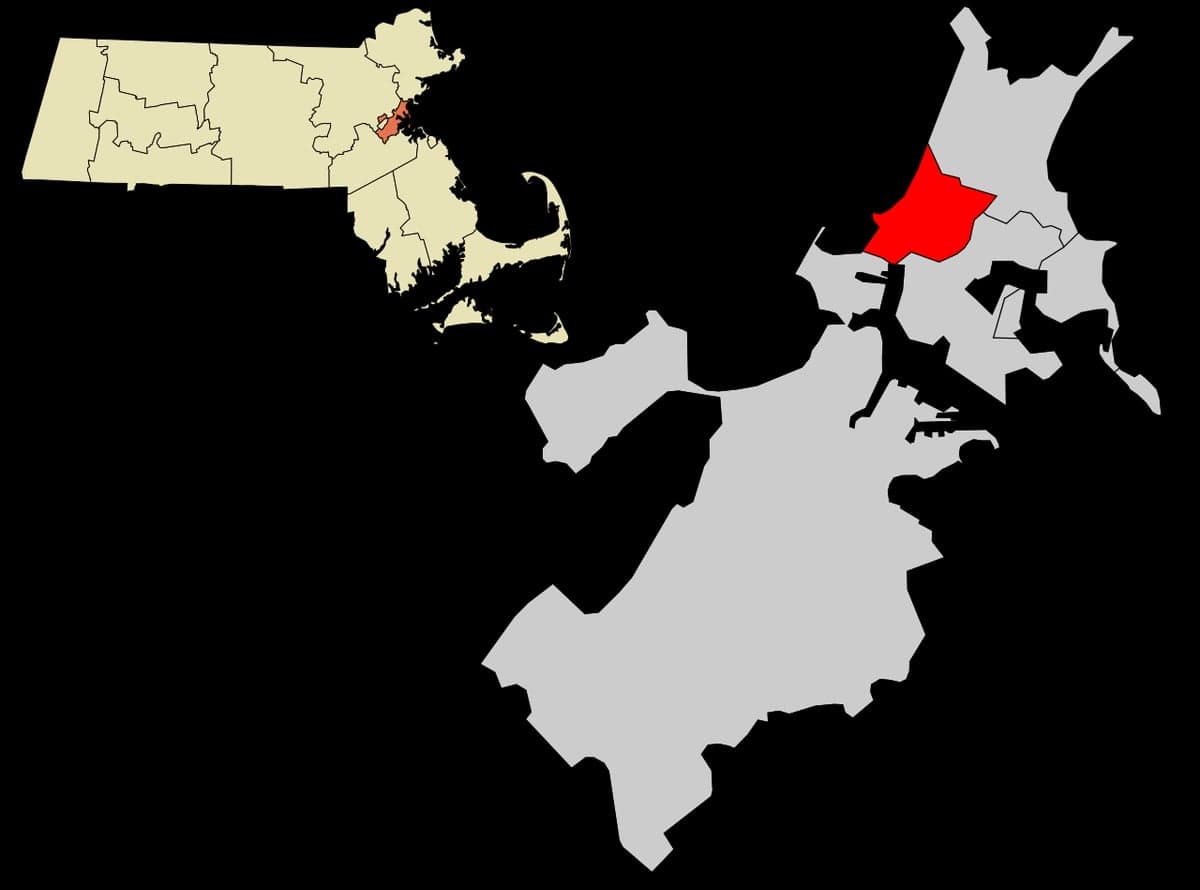
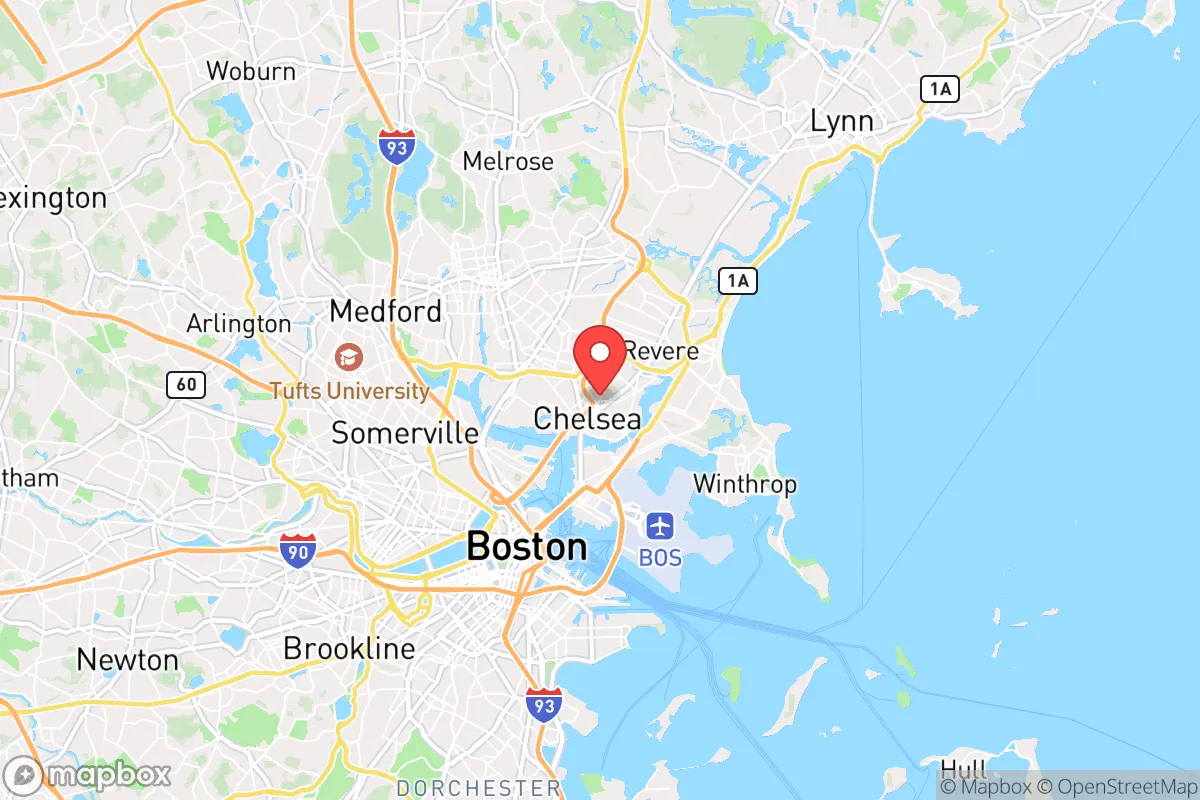
Photo: Wikipedia
Personal Sovereignty in Chelsea, MA
Viable for self-reliance. Generally workable, though some barriers may limit total independence.
What does Personal Sovereignty tell us?
Personal Sovereignty measures your capacity for self-reliance and independence with minimal government friction. Higher scores mean fewer barriers between you and the way you want to live... but it assumes you have the space you need and good neighbors.
What does this tell us?
Personal Sovereignty measures your capacity for self-reliance and independence with minimal government friction. Higher scores mean fewer barriers between you and the way you want to live... but it assumes you have the space you need and good neighbors.
State Policy
Energy independence: Importer (5% of energy produced in-state)
Personal Liberty
Homesteading

Personal Liberty Analysis
Chelsea, Massachusetts, presents a challenging environment for personal sovereignty, particularly for those with a survivalist or prepper mindset who prioritize autonomy and minimal government overreach. As a densely urbanized city just north of Boston, Chelsea operates under the heavy regulatory umbrella of Massachusetts state law, which consistently ranks among the most restrictive in the nation for individual freedoms related to self-defense, taxation, and medical autonomy. For conservative-leaning singles and parents seeking a high degree of personal sovereignty, Chelsea offers limited room for self-reliance within its city limits, though its proximity to less restrictive areas in New Hampshire and rural Massachusetts provides a strategic counterbalance for those willing to commute or relocate.
Tax burden and regulatory posture in Chelsea and Massachusetts
Massachusetts imposes one of the highest overall tax burdens in the United States, a critical factor for anyone prioritizing financial sovereignty. The state levies a flat 5.0% personal income tax on all earned income, with no standard deduction for state purposes, meaning every dollar earned is taxed from the first dollar. Property taxes in Chelsea are moderate for the Boston metro area, with an effective rate around 1.2% of assessed home value, but the city's high property valuations mean annual bills often exceed $5,000 for a modest single-family home. Sales tax is 6.25%, and the state applies it to most goods, including preparedness supplies like generators, tools, and bulk food storage items. The regulatory environment is dense: Massachusetts has a strict building code, extensive environmental regulations that complicate any off-grid modifications, and a state-level "right to repair" law that still leaves many property decisions subject to local permitting boards. For a prepper, the cumulative effect is a system that extracts significant resources while imposing bureaucratic hurdles on independent action, such as installing solar panels, rainwater collection systems, or backyard structures without permits.
Self-defense and gun law specifics in Chelsea and Massachusetts
Massachusetts has some of the most restrictive firearm laws in the country, directly impacting personal sovereignty and the ability to defend one's home and family. The state requires a License to Carry (LTC) for both open and concealed carry, which is issued by local police departments—in Chelsea, this means the Chelsea Police Department has significant discretion over approvals. While "shall issue" in theory, the process is costly and time-consuming: applicants must complete a state-approved firearms safety course, pay fees exceeding $100, and undergo a background check that includes a mental health records review. The state bans "assault weapons" by name and feature, limits magazine capacity to 10 rounds, and requires all firearm transfers to go through a licensed dealer, even private sales. For preppers, this means stockpiling standard-capacity magazines or certain semi-automatic rifles is illegal. Additionally, Massachusetts has no "Stand Your Ground" law; instead, it imposes a "duty to retreat" in public spaces before using deadly force, and self-defense claims in the home are subject to a "reasonable belief" standard that can be heavily scrutinized. For a parent concerned about home defense, the legal landscape in Chelsea requires careful navigation and likely legal counsel to ensure compliance while maintaining any meaningful defensive capability.
Self-reliance and homesteading viability in Chelsea
For those seeking self-reliance through homesteading or off-grid living, Chelsea is among the least viable locations in Massachusetts. The city's median lot size is under 0.1 acres, with most housing consisting of multi-family rowhomes, apartments, and small single-family lots with minimal yard space. Zoning regulations are strict: raising chickens is permitted only with a special permit and limited to four hens (no roosters), and keeping goats, bees, or larger livestock is effectively prohibited in residential zones. Off-grid infrastructure faces severe legal barriers—Massachusetts requires grid-tied solar systems for net metering, and standalone off-grid solar is technically allowed but must meet all state electrical codes, which are costly and complex. Rainwater collection is legal but limited to non-potable uses, and any system must comply with local health department regulations. Composting toilets are not recognized as a primary sanitation solution under state building codes. For a prepper family, the urban density and regulatory constraints mean that true self-reliance within Chelsea's city limits is impractical. However, the city's location offers a strategic advantage: it is less than 30 minutes from rural areas in Middlesex County or southern New Hampshire, where land is cheaper, zoning is looser, and off-grid living is more feasible for those willing to maintain a secondary property.
Personal liberties in Chelsea: parental rights, medical autonomy, speech, and property
Massachusetts generally ranks poorly for personal liberties from a conservative perspective, and Chelsea reflects these statewide trends. Parental rights are under pressure: the state has a robust vaccine mandate for school attendance, including COVID-19 shots for certain age groups, and parents face legal consequences for refusing standard childhood immunizations without a medical exemption. Medical autonomy is similarly constrained—Massachusetts has some of the strictest prescription drug monitoring laws, and the state actively prosecutes alternative medicine practitioners who operate outside conventional frameworks. Free speech protections are nominally strong under the First Amendment, but local ordinances in Chelsea restrict public assembly and protest activities, requiring permits for gatherings over a certain size and imposing noise restrictions that can limit expressive activities. Property rights are heavily regulated: the state's "Chapter 40B" affordable housing law allows developers to override local zoning in certain cases, and Chelsea's inclusionary zoning ordinance requires a percentage of new developments to be "affordable," effectively limiting an owner's ability to sell or develop their property freely. For a parent or individual concerned about government overreach, these policies create an environment where personal decisions about health, education, and property use are subject to significant state control.
Overall, Chelsea offers a low degree of personal sovereignty compared to most other areas in the United States, particularly for those with a survivalist or prepper worldview. The combination of high taxes, restrictive gun laws, dense urban zoning, and limited medical and parental autonomy places it near the bottom for individual freedom among Massachusetts cities. For a conservative-leaning single or parent, the strategic value of Chelsea lies not in its own sovereignty but in its proximity to New Hampshire—a state with no income tax, constitutional carry, and far looser zoning—and to rural Massachusetts towns where land is cheaper and regulations are lighter. If you must live in the Boston area for work or family, Chelsea can serve as a base of operations, but true self-reliance and personal sovereignty will require a secondary property or a willingness to commute from a more liberty-friendly jurisdiction. For those prioritizing maximum autonomy, relocating to New Hampshire or a rural county in western Massachusetts would provide a far more favorable environment for the prepper lifestyle.

* Values derived from national, state, county, city and local statistics and may differ in a specific area. Last updated: 2026-05-01T04:16:12.000Z
Narrative content on this page is AI-generated and may contain mistakes. Verify any details that matter before acting on them.
ReloMaps may earn a commission from affiliate links at no extra cost to you.

