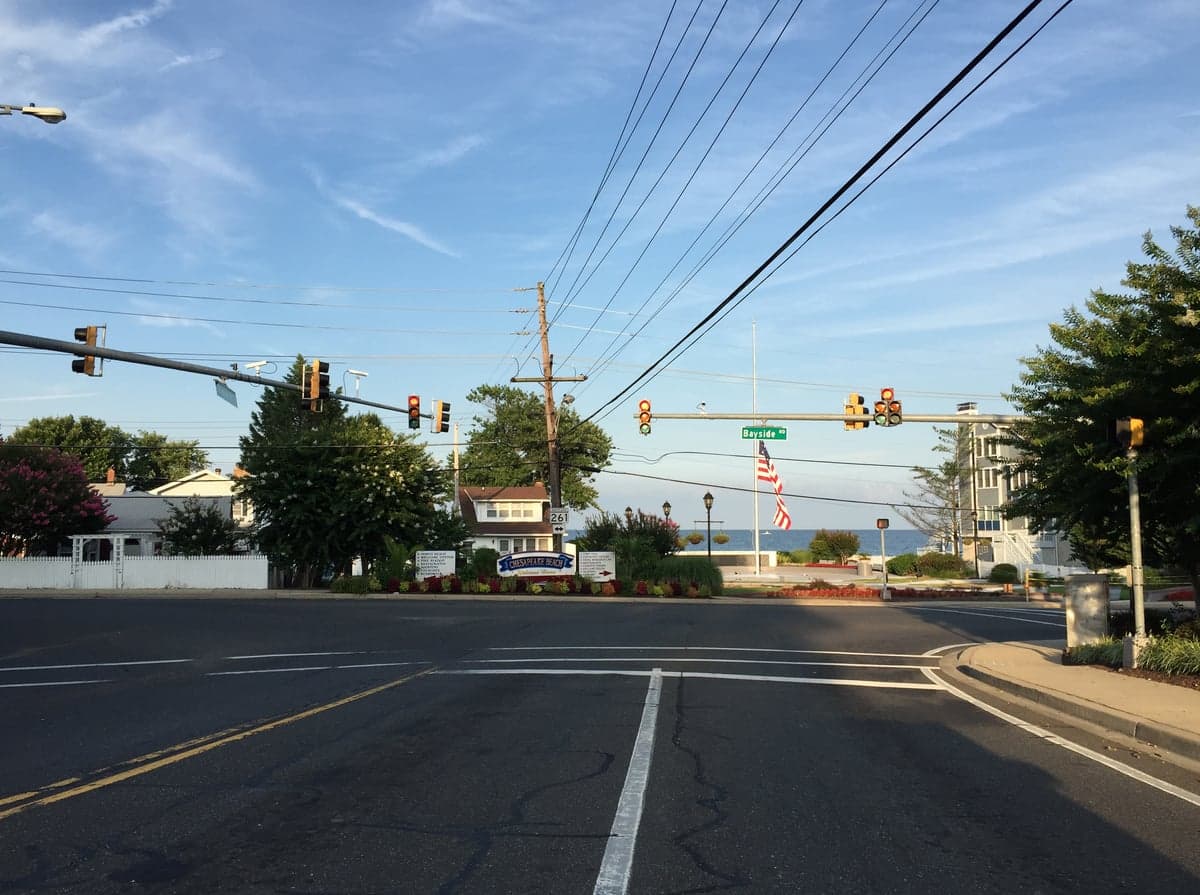
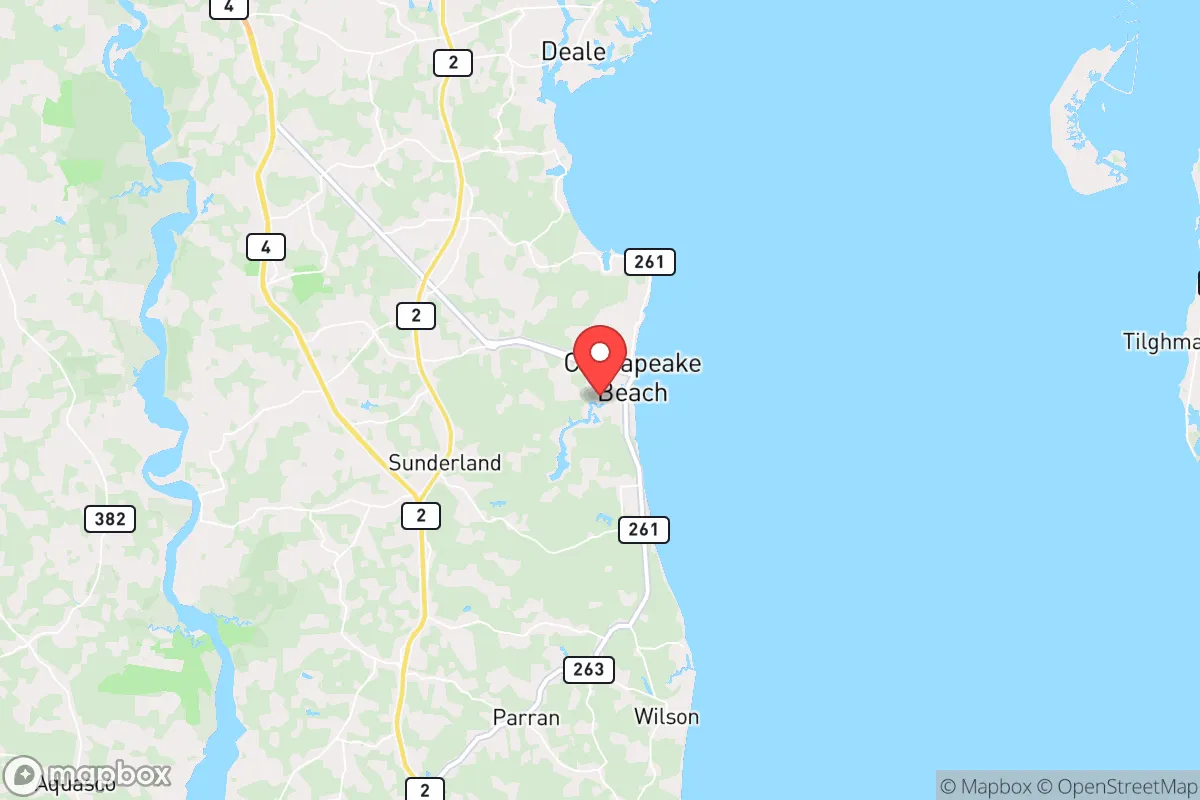
Photo: Wikipedia
Demographics of Chesapeake Beach, MD
Affluence Level in Chesapeake Beach, MD
An upper-middle-class area. Household wealth, education levels, and homeownership run ahead of national benchmarks.
People of Chesapeake Beach, MD
Chesapeake Beach, Maryland, is a small, predominantly white waterfront town of 6,428 residents, characterized by a high proportion of college-educated adults (51.1%) and a very low foreign-born population (1.2%). The city’s identity is shaped by its origins as a turn-of-the-century resort and its subsequent evolution into a quiet, family-oriented bedroom community for nearby military and federal workers. Its population is notably less diverse than the broader Calvert County or the Washington, D.C. metro area, with a demographic profile that reflects limited recent immigration and a stable, long-term resident base.
How the city was settled and grew
Chesapeake Beach was not a colonial settlement but a planned resort community, incorporated in 1886. The Chesapeake Beach Railway, completed in 1900, was the primary catalyst for growth, connecting Washington, D.C., to the Chesapeake Bay shoreline. The original population was drawn by the promise of a seaside escape: day-trippers, hotel workers, and small business owners serving the tourist trade. The historic Old Town district, centered along Chesapeake Avenue and the boardwalk, was built by these early entrepreneurs and laborers, many of whom were white families from the D.C. area seeking seasonal income. A smaller wave of African American workers, employed in domestic service and railroad maintenance, settled in the Bayside area, though their numbers were always modest. The resort’s heyday faded after World War II, and the population stagnated as the railway closed in 1935 and the boardwalk declined.
Modern era (post-1965)
The post-1965 era saw Chesapeake Beach transform from a faded resort into a commuter suburb. The 1970s and 1980s brought a steady influx of white-collar families, many employed by the Patuxent River Naval Air Station and federal agencies in the D.C. corridor. This wave settled primarily in the West Chesapeake Beach subdivision, a planned development of single-family homes built on former farmland, and the Fisherman’s Cove neighborhood, which attracted retirees and second-home buyers. The city’s racial composition remained overwhelmingly white through this period, with the Black population declining as older Bayside residents moved away or passed on. The 2000s saw a modest uptick in Hispanic residents (now 3.2%) and East/Southeast Asian residents (3.1%), concentrated in newer townhome developments like Harbor View. However, the foreign-born share remains exceptionally low at 1.2%, reflecting the city’s limited rental housing stock and lack of immigrant-serving institutions. The Indian-subcontinent population is effectively zero, a notable contrast to the broader D.C. suburbs.
The future
The population of Chesapeake Beach is likely to continue its slow, stable trajectory, with little demographic upheaval. The city is not homogenizing into a single enclave but rather tribalizing into distinct age-based and lifestyle-based pockets: Old Town remains a mix of long-term retirees and seasonal renters, while West Chesapeake Beach is solidly middle-class families with school-age children. The immigrant communities are not growing; the Hispanic and East/Southeast Asian shares are plateauing, as these groups tend to be transient renters rather than homebuyers. The next 10-20 years will likely see an aging population, as the 55+ cohort in Fisherman’s Cove and Old Town remains in place, while younger families are priced out by rising waterfront property values. The city’s low rental inventory and lack of new multi-family construction will suppress any significant diversification.
For someone moving in now, Chesapeake Beach is becoming an increasingly exclusive, age-stratified community where stability is the defining feature. It offers a safe, quiet, and predominantly white environment with strong schools and easy access to the bay, but it is not a destination for those seeking ethnic diversity or a vibrant immigrant culture. The city’s future is one of slow, managed growth, with the population likely to hover around 6,500-7,000 for the foreseeable future, anchored by its appeal to conservative-leaning families and retirees who value predictability over change.

* Values derived from national, state, county, city and local statistics and may differ in a specific area. Last updated: 2026-04-22T03:14:06.000Z
Narrative content on this page is AI-generated and may contain mistakes. Verify any details that matter before acting on them.
ReloMaps may earn a commission from affiliate links at no extra cost to you.

