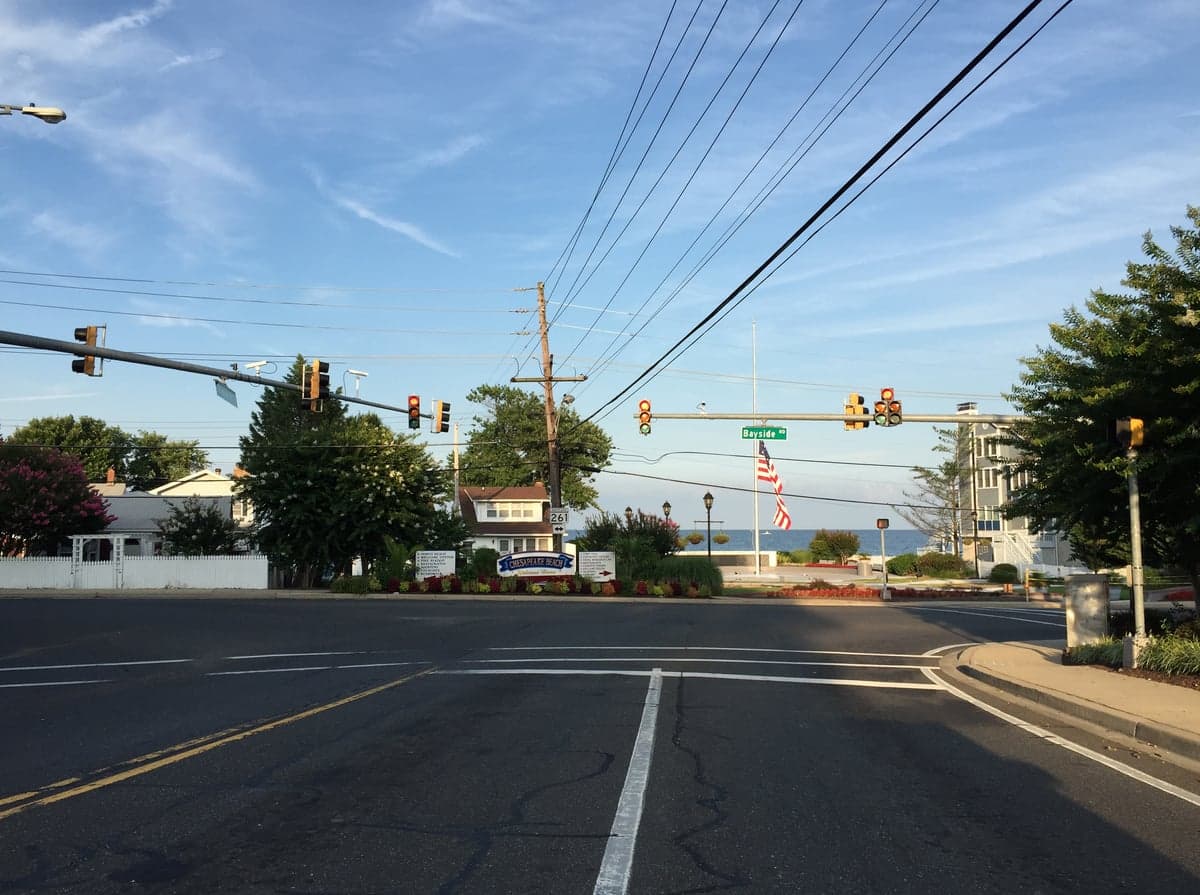
Photo: Wikipedia
Strategic Assessment of Chesapeake Beach, MD
Meaningful friction. Expect exposure to either population pressure, blast zones, or natural disaster risk. Consider buying a retreat property.
What does the Strategic Assessment tell us?
Our Strategic Assessment grades tactical survivability of an area. Major population centers, military targets, fallout zones, natural disasters, and border exposure all drive risk — lower exposure means a more defensible position in a crisis.
This is heavily inspired by Joel Skousen's Strategic Relocation book. Highly recommended you checkout the book ($)What does this tell us?
Our Strategic Assessment grades tactical survivability of an area. Major population centers, military targets, fallout zones, natural disasters, and border exposure all drive risk — lower exposure means a more defensible position in a crisis.
This is heavily inspired by Joel Skousen's Strategic Relocation book. Highly recommended you checkout the book ($)Strategic Pillars

Key Distances
Regional Safe Places
Below is our recommended "safe zones" in Maryland and the surrounding area based on our strategic heuristics. For most people, it's unrealistic to live in a “safe zone” full-time due to work, family or other personal reasons. They tend to be more rural. However, many of these areas are perfect for second homes and retreat properties that double as a vacation home or even a short-term rental.
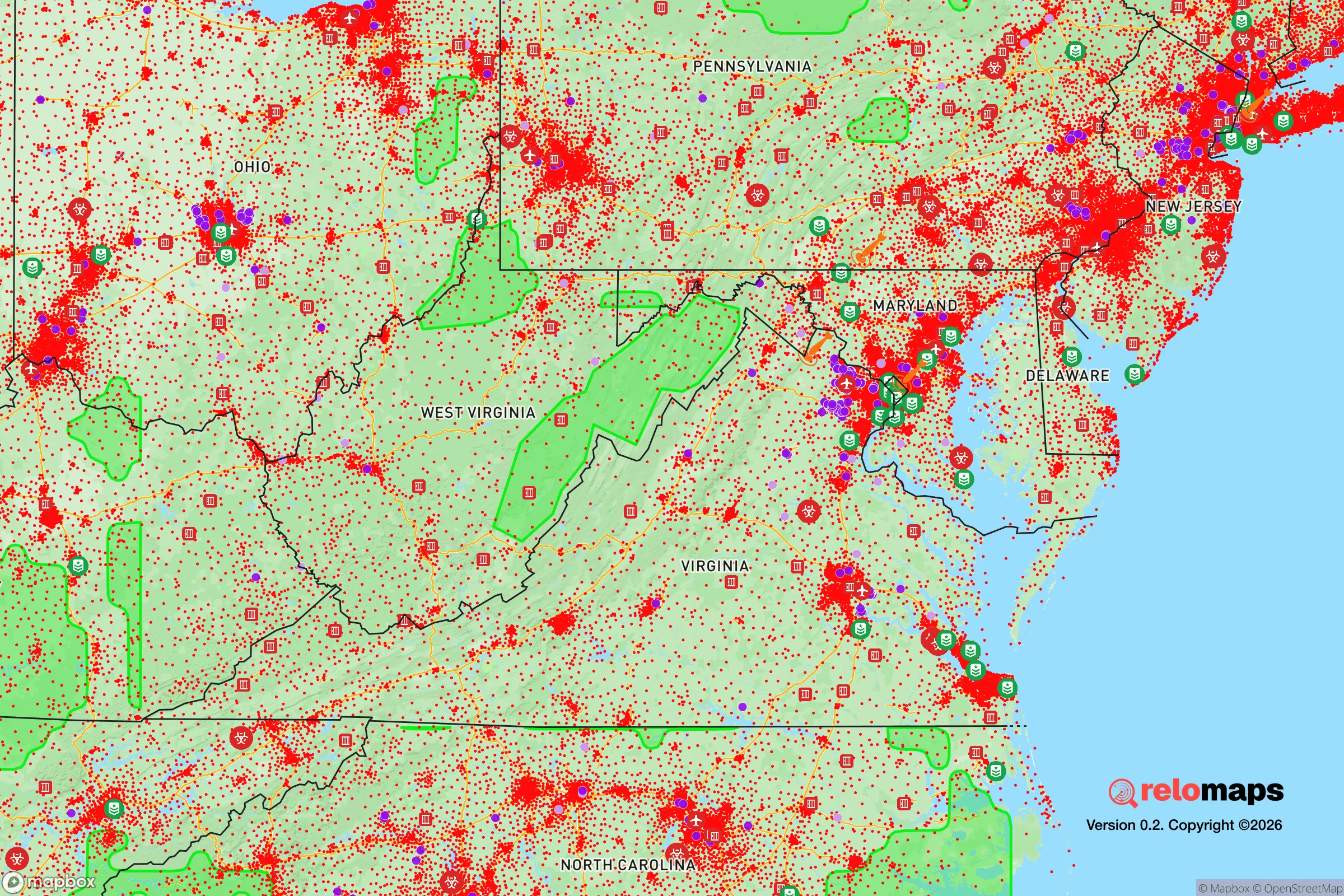
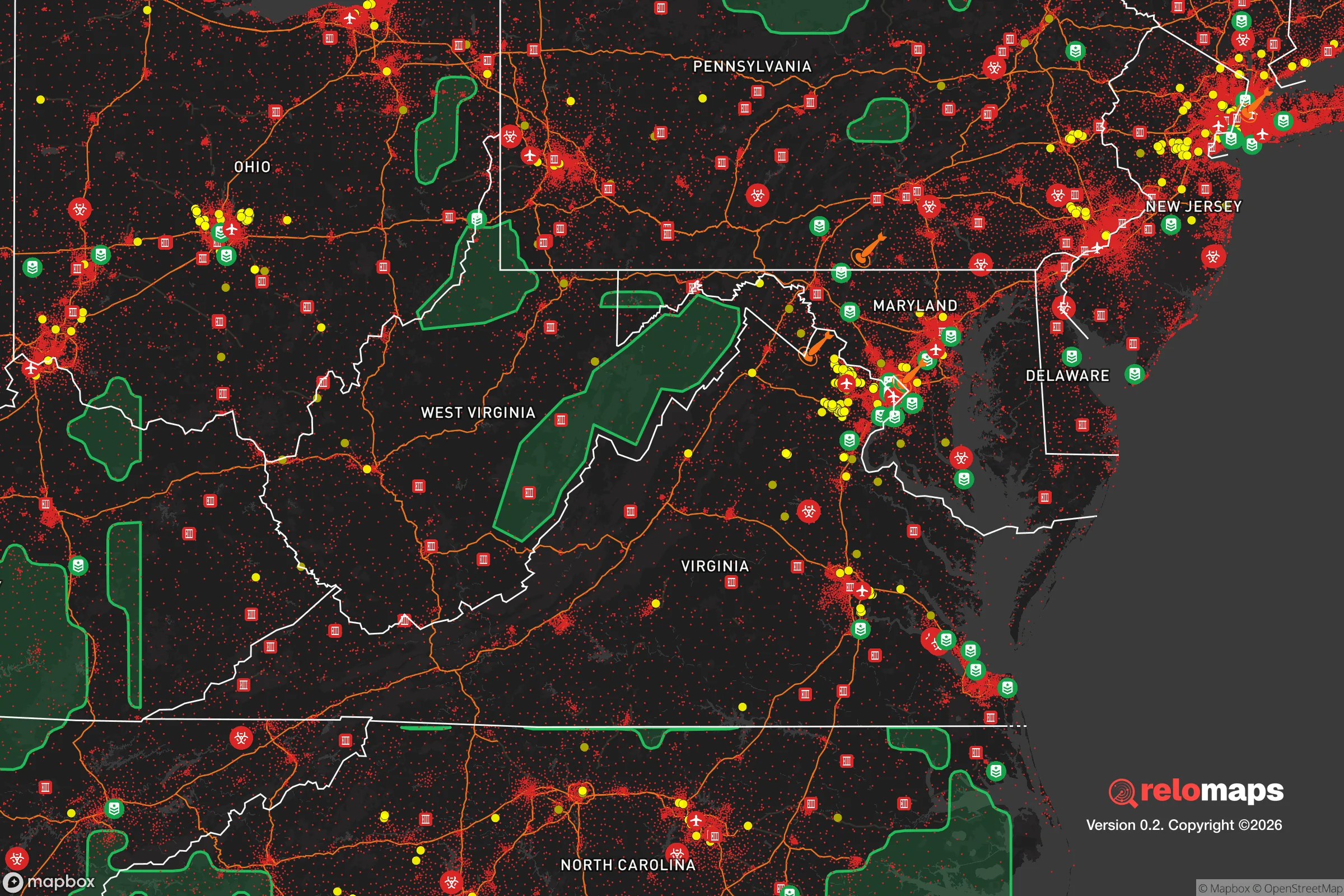


Important Note: For informational purposes only. This does not mean nothing bad ever happens in the green zones. Please use common sense. This is based on public data and modeled with AI. We tried to take a conservative approach but mistakes happen. We update this regularly as new information becomes available.
Solar Generator Recommendations
Backup power matters more here than in safer locations. We've picked three solar generators across budgets and capacity tiers — start with the budget unit if you only need a few essentials, or step up if you want to run a fridge and HVAC for days at a time.

Jackery Portable Power Station Explorer 300
Budget OptionPower on the Go: Weighing only 11 lbs, it's convenient to set up and store with book-sized foldable solar panels

BLUETTI Portable Power Station AC180
Designed for both indoor and outdoor scenarios, AC180 is highly capable as it has a robost capacity and continuous output power.

EF ECOFLOW DELTA Pro Ultra Power Station
Upgraded PickEcoFlow DELTA Pro Ultra is a whole-home energy system designed to grow with your family. Integrated with the Smart Home Panel 2, it scales to meet your evolving energy needs — keeping your home powered, intelligent, and secure through every stage of life.
We earn a commission, at no additional cost to you.
Strategic Assessment Analysis
Chesapeake Beach, Maryland, presents a mixed strategic picture for the conservative prepper or survivalist. Its location on the western shore of the Chesapeake Bay offers some natural advantages, but its proximity to the Washington D.C. metropolitan area introduces significant vulnerabilities that cannot be ignored. For a relocator prioritizing resilience, self-sufficiency, and a buffer from the chaos of urban collapse, this town requires a hard-eyed assessment of its trade-offs rather than a rosy marketing pitch.
Geographic position and natural advantages for long-term security
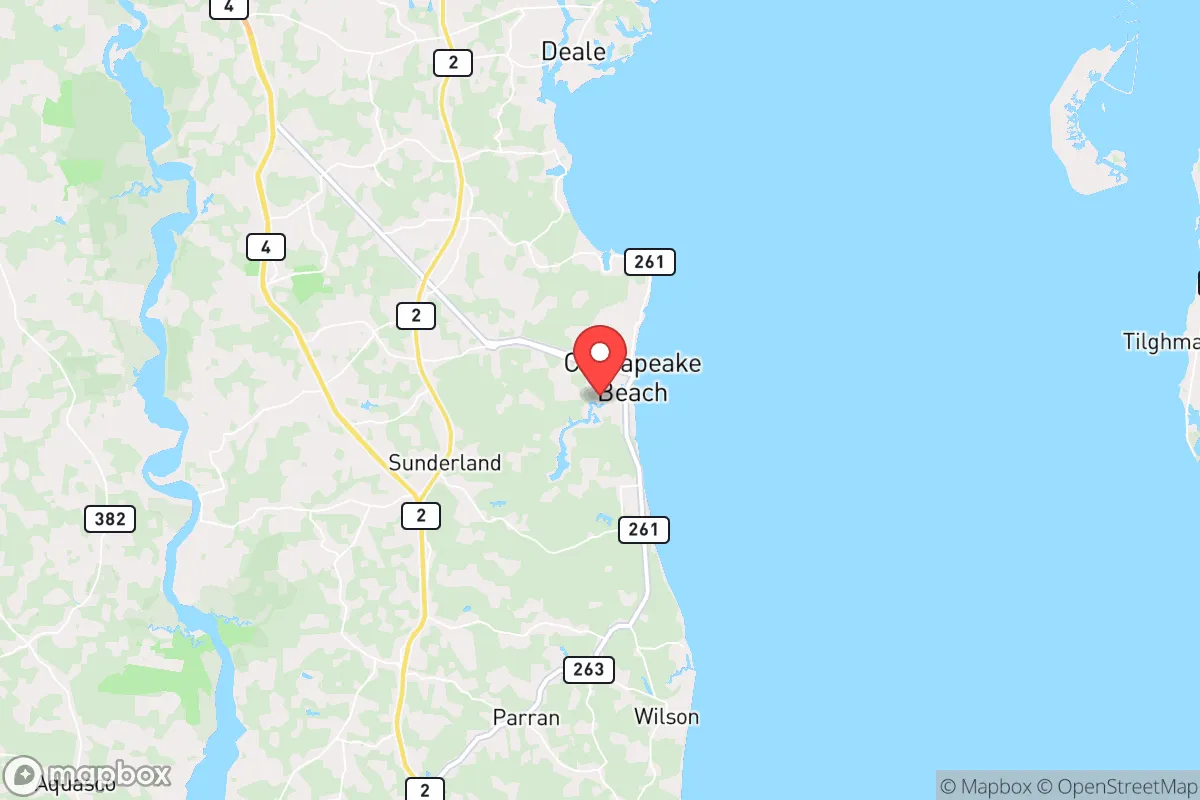
Chesapeake Beach sits roughly 30 miles southeast of the D.C. border, placing it within the suburban sprawl of the nation's capital but with a distinct coastal character. The town's position on the bay provides a natural barrier to the east—water is a formidable obstacle for any uncontrolled movement of people or vehicles during a crisis. The surrounding Calvert County is relatively rural compared to the D.C. suburbs to the north and west, with a mix of farmland, forest, and low-density residential development. This geography offers a degree of natural defensibility: the Patuxent River forms a western boundary, and the bay itself limits approach from the east. For a relocator, this means fewer potential ingress routes for a displaced population fleeing a major event in the capital. The area's elevation is low—typically 10 to 50 feet above sea level—but the terrain is not mountainous, which simplifies movement and construction for those looking to establish a more permanent, fortified homestead. The local climate is temperate, with four distinct seasons, which supports year-round gardening and small-scale agriculture, a critical factor for long-term food security.
Risks, exposures, and proximity to fallout-relevant landmarks
The single greatest liability of Chesapeake Beach is its proximity to Washington D.C., a primary target for any large-scale conflict or terrorist action. The town lies within the 30-mile "fallout zone" of a potential nuclear detonation in the capital, meaning that even if the blast itself is not a direct threat, radioactive fallout could arrive within hours depending on wind patterns. This is a non-negotiable risk for anyone serious about surviving a major geopolitical event. Beyond nuclear concerns, the D.C. metro area is a tinderbox for civil unrest. The population density of the region—over 6 million people in the broader metro—means that any breakdown in order, whether from economic collapse, political violence, or resource shortages, could trigger a mass exodus. Chesapeake Beach's main evacuation route, Maryland Route 260, is a two-lane road that quickly becomes a parking lot during summer weekends; during a crisis, it would be a choke point. The town also sits near the Calvert Cliffs Nuclear Power Plant, roughly 15 miles south. While the plant is operational and regulated, any incident there would compound the risks from D.C. Additionally, the area is vulnerable to hurricanes and nor'easters, which can cause flooding, power outages, and supply chain disruptions. Storm surge from the bay is a real threat for properties close to the water, and the region's aging infrastructure is not built for a prolonged grid-down scenario.
Practical resilience for a relocator: food, water, energy, and defensibility
For a relocator willing to accept the proximity risks, Chesapeake Beach offers some practical advantages for building a resilient lifestyle. Water access is a major plus: the bay provides a virtually unlimited source of non-potable water for sanitation and irrigation, and the area's groundwater is generally good for wells, though new well permits can be expensive and subject to county regulations. Rainwater catchment is also viable given the region's 40+ inches of annual precipitation. Food production is feasible on parcels of an acre or more, with sandy loam soils that drain well and support vegetables, fruit trees, and small livestock. The local farmers' market and a handful of independent farms offer some redundancy for food sourcing, but the area is not a major agricultural hub—most food is trucked in from outside the region, a vulnerability in a supply chain disruption. Energy independence is achievable with solar panels, as the area receives adequate sunlight, and many homes already have backup generators due to frequent storm-related outages. However, the local power grid is tied to the larger PJM interconnection, which is vulnerable to cyberattacks and regional blackouts. Defensibility is moderate: the town's layout is a mix of suburban subdivisions and scattered rural homes, meaning a relocator would need to choose a property with good sight lines, limited access points, and a buffer from neighbors. The local law enforcement presence is small—the Calvert County Sheriff's Office covers the area—and response times could be long in a widespread emergency. For a single individual or family, the key is to select a property that is not on a main road, has a well and septic, and is at least 10 miles from the town center to avoid the densest population clusters.
The overall strategic picture for Chesapeake Beach is one of calculated compromise. It is not a remote redoubt like the Appalachian mountains or the rural Midwest, but it offers a coastal buffer and a lower population density than the D.C. suburbs proper. For a relocator who values access to the bay for fishing, boating, and water security, and who is willing to invest in robust off-grid infrastructure—solar, well, septic, food storage, and a solid perimeter—this area can work as a mid-range fallback position. However, the proximity to D.C. and the Calvert Cliffs plant means that any major national crisis will likely involve this area in the fallout, both literally and figuratively. The conservative prepper should view Chesapeake Beach as a transitional location—a place to build skills and resources while maintaining a plan for a deeper retreat if the situation deteriorates. It is not a final destination for those seeking absolute isolation, but it is a defensible, resource-rich option for those who cannot or will not move farther from the coast. The bottom line: if you can accept the risk of being within the D.C. shadow, and you have the means to harden your property, Chesapeake Beach offers a viable, if not ideal, strategic foothold.

* Values derived from national, state, county, city and local statistics and may differ in a specific area. Last updated: 2026-04-22T03:14:06.000Z
Narrative content on this page is AI-generated and may contain mistakes. Verify any details that matter before acting on them.
ReloMaps may earn a commission from affiliate links at no extra cost to you.

