Photo: Wikipedia
Quality of Life in Chesapeake Beach, MD
A high quality of life with strong walkability, manageable living costs, healthy neighborhood signals, and solid amenity access.
What does Quality of Life tell us?
Quality of Life blends cost of living, nearby amenities, socioeconomic signals, and neighborhood character. City-level scores represent the whole municipality; individual neighborhoods can differ.
What does this tell us?
Quality of Life blends cost of living, nearby amenities, socioeconomic signals, and neighborhood character. City-level scores represent the whole municipality; individual neighborhoods can differ.
Cost of Living
39% above national average
The Real Cost of Living in Chesapeake Beach, MD for 2026
| Tier | Individual | Family (4) |
|---|---|---|
| Survival | $24k | $45k |
| Comfortable | $85k | $125k |
| Luxury | $160k+ | $248k+ |
| Elite (Top 5%) | $188k+ | $291k+ |
109%
The Area Signal
A metric tracking the socioeconomic signals of the area.
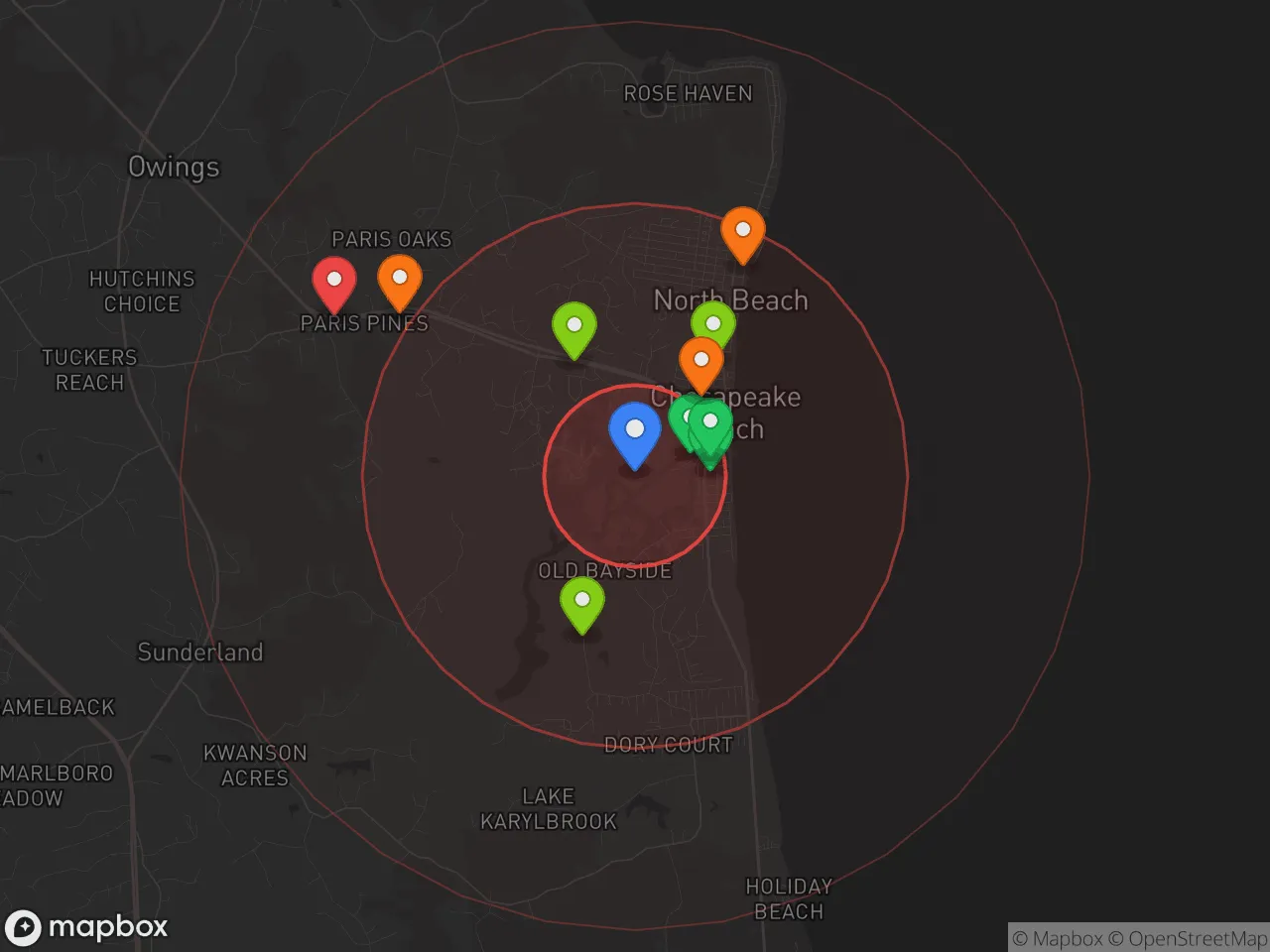
Hobbies
Explore the areaGroceries
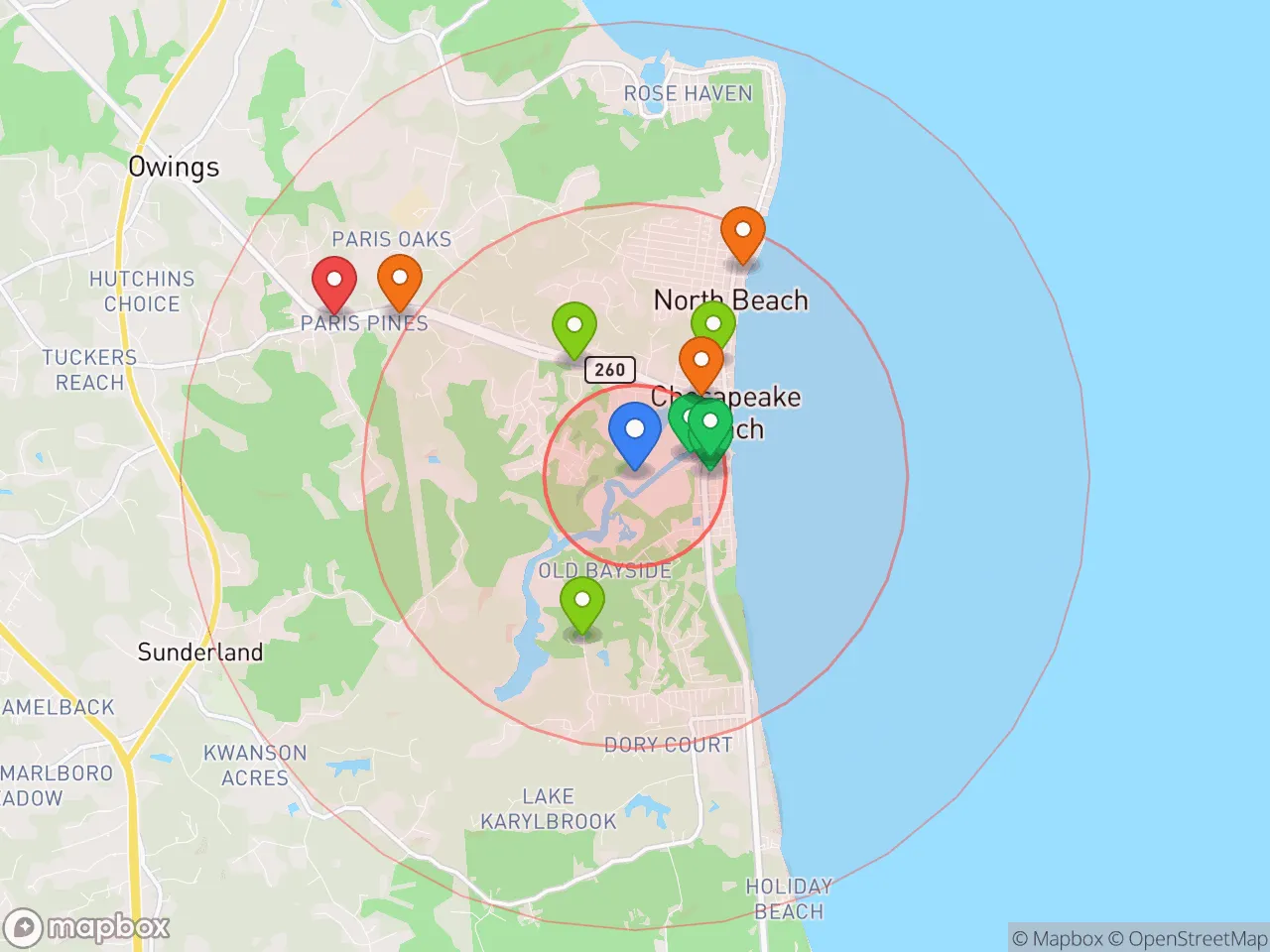
3 within 10 miles
Gas
17 within 10 miles
Hospital
1 within 20 miles
Airport
DCA — Ronald Reagan Washington National
Post Office
USPS — Chesapeake Beach, MD
Critical Amenities
Quality-of-Life Analysis
Chesapeake Beach, Maryland, is a small waterfront town in Calvert County that combines coastal living with a notably high cost of living, reflected in a composite index of 139 (100 = U.S. average). The community is predominantly composed of upper-middle-class professionals, retirees, and families who prioritize proximity to the Chesapeake Bay over urban affordability. With a median home value of $438,300 and a median rent of $1,490, the area attracts those who can absorb a premium for bay views, slower pace, and strong local schools, while commuters accept a grueling average drive of nearly 43 minutes to reach jobs in Washington, D.C., or Annapolis.
Cost of living and housing affordability compared to nearby areas
Chesapeake Beach’s cost of living sits 39% above the national average, driven almost entirely by housing. The median home value of $438,300 is roughly $100,000 higher than the Calvert County median and about $150,000 above the Maryland state median, placing it among the priciest ZIP codes in Southern Maryland. Renters face a median of $1,490 per month, which is competitive with nearby towns like North Beach and Deale but significantly cheaper than waterfront communities in Anne Arundel County such as Annapolis (where median rent exceeds $1,800). Property taxes in Calvert County are moderate at roughly 0.9% of assessed value, but homeowners insurance and flood insurance premiums can add $1,200–$2,000 annually for bayfront properties. For buyers, the trade-off is clear: you pay a 30–40% premium over inland Calvert County towns like Prince Frederick, but you gain direct water access and a lower crime rate than comparably priced suburbs in Prince George’s County.
What daily life is like for families and retirees
Daily life in Chesapeake Beach revolves around the water, with the town’s public beach, fishing pier, and the Chesapeake Beach Railway Trail providing year-round recreation. The Calvert County Public School system consistently ranks among Maryland’s top 10, with nearby Huntingtown High School and Northern High School both earning GreatSchools ratings of 8/10 or higher. Groceries and errands require a 10–15 minute drive to the shopping centers in Dunkirk or Prince Frederick, as the town itself has no full-service supermarket. Restaurants are limited to a handful of seafood spots and casual eateries along the boardwalk, so residents often cook at home or drive to larger hubs. The average commute of 42.99 minutes—one of the longest in the D.C. metro area—means many households have one partner working remotely or locally while the other endures a daily slog on MD-4 and I-95/495. Retirees appreciate the quiet streets, low property crime (Calvert County’s violent crime rate is 60% below the national average), and the town’s active senior center, but younger families may find the lack of nightlife and retail a drawback.
This combination of high housing costs, long commutes, and limited commercial amenities means Chesapeake Beach is best suited for established professionals and retirees who value waterfront tranquility, strong schools, and low crime over urban convenience. Remote workers with flexible schedules will find the quality of life highest, as they can enjoy the bay without the daily commute penalty. Budget-conscious buyers or renters should look inland to Prince Frederick or Owings, where median home values drop below $350,000 and commute times shorten by 10–15 minutes. For those who can afford the premium and accept the trade-offs, Chesapeake Beach offers a rare blend of small-town coastal character and access to the D.C. job market that few other Maryland communities can match.

Crime in Chesapeake Beach, MD
Higher crime rates than 57% of comparable U.S. locations.
Violent CrimeViolent Crime Analysis
Property CrimeProperty Crime Analysis
Crime Analysis
Chesapeake Beach, Maryland, presents a mixed safety profile for prospective residents. The town's violent crime rate of 351.4 incidents per 100,000 people is notably higher than the national average, while its property crime rate of 1,814.9 per 100,000 sits slightly below the national benchmark. As a small town within the orbit of the Washington, D.C. metropolitan area, Chesapeake Beach is subject to regional crime trends and the broader policy environment of Calvert County and the state of Maryland.
Crime in context
When compared to state and national figures, Chesapeake Beach's violent crime rate is a significant concern. The national violent crime rate in 2024 was approximately 380 per 100,000, meaning Chesapeake Beach's rate of 351.4 is close to the national average but still elevated for a town of its size. More critically, it is substantially higher than the average for rural Maryland communities. Property crime in Chesapeake Beach, at 1,814.9 per 100,000, is below the national average of roughly 1,950 per 100,000 but remains a tangible risk. A key factor for residents to consider is the influence of progressive prosecutorial policies in the broader region. Maryland's status as a reliably liberal state, with many district attorneys and judges prioritizing diversion programs and reduced sentencing, can lead to higher recidivism and more offenders remaining on the street. This ideological approach, while sympathetic to offenders, directly undermines public safety and victim justice, making the already elevated violent crime rate a more pressing concern than raw numbers alone suggest.
What residents experience
Daily life in Chesapeake Beach involves navigating a community where property crimes like theft from vehicles and burglaries are the most common incidents. Residents frequently report package theft and occasional vandalism, particularly in areas near the boardwalk and waterfront attractions. Violent crime, while less frequent, is not isolated to any single demographic and includes aggravated assaults and, in rare cases, robberies. The town's police department is active, but its resources are limited. The broader Calvert County Sheriff's Office provides backup, but response times can vary in more remote parts of the town. The presence of a progressive legal environment in Maryland means that even when arrests are made, offenders may face minimal jail time or be released on pretrial supervision, a pattern that erodes deterrence and frustrates victims. For families and retirees, this translates to a need for heightened vigilance—installing security systems, avoiding walking alone at night, and locking vehicles and homes at all times.
Neighborhood-level variation in Chesapeake Beach is modest but noticeable. The waterfront areas and the commercial corridor along Route 260 see higher foot traffic and a corresponding uptick in petty crime and disorder. The more residential, inland subdivisions—such as those near Chesapeake Avenue or along the back roads—tend to experience lower crime rates, though property crime remains a consistent threat. The town's proximity to larger, higher-crime areas like Prince George's County also means that some criminal activity is transient. Prospective residents should prioritize homes with good visibility from the street and consider joining or forming a neighborhood watch program. Overall, while Chesapeake Beach offers a coastal lifestyle, its safety picture is one where the data and the regional political climate warrant a cautious, informed approach.
* Values derived from national, state, county, city and local statistics and may differ in a specific area. Last updated: 2026-04-22T03:14:06.000Z
Narrative content on this page is AI-generated and may contain mistakes. Verify any details that matter before acting on them.
ReloMaps may earn a commission from affiliate links at no extra cost to you.

