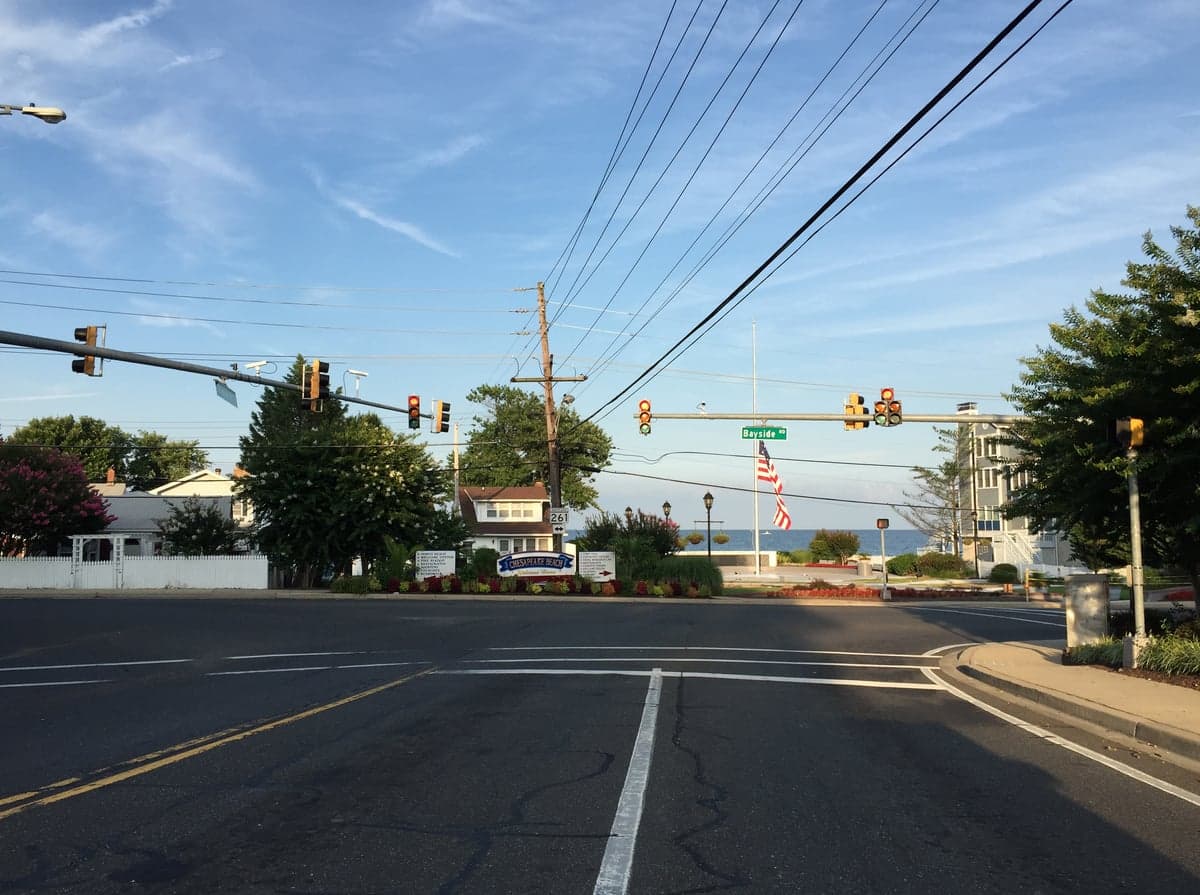
Photo: Wikipedia
Political ClimatePolitical Climate in Chesapeake Beach, MD
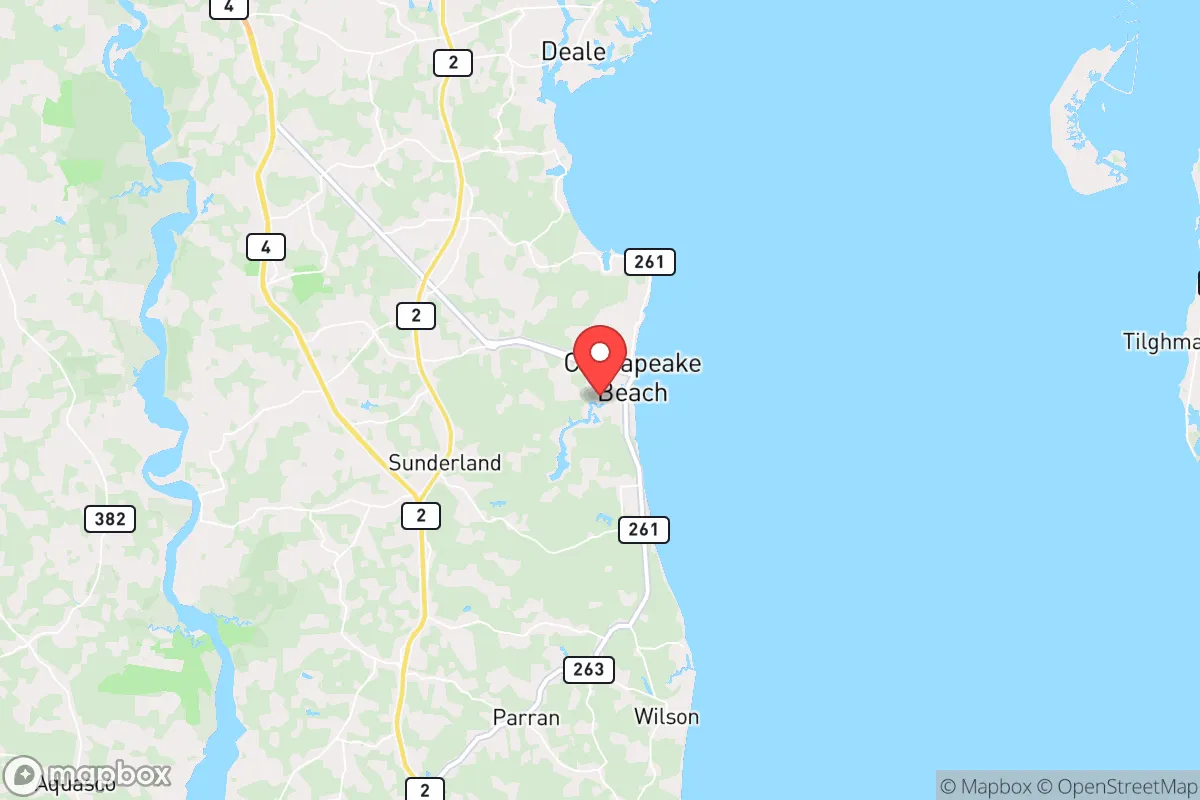
District shown is the primary district for this city’s centroid. Cities may span multiple districts.
Local Political AnalysisPolitical Analysis of Chesapeake Beach, MD
Chesapeake Beach, Maryland, sits in Calvert County, a place that used to be a solidly conservative stronghold but has been shifting left in recent years, now carrying a Cook PVI of D+17. That means the area leans heavily Democratic in federal elections, a stark contrast to the more traditional, family-oriented values that long defined this stretch of the Chesapeake Bay. While the town itself still has a quieter, more reserved feel than the bustling suburbs closer to D.C., the political winds have definitely changed, and it’s something you notice in local conversations and policy decisions.
How it compares
If you drive north up Route 4 toward Prince Frederick or further into Anne Arundel County, you’ll hit places like Dunkirk and Owings that still feel more like the old Calvert County—more rural, more skeptical of big government, and more likely to vote Republican. But Chesapeake Beach, with its proximity to the bay and its growing population of commuters to Washington, D.C., has become a bit of an outlier. Neighboring towns like North Beach and even parts of Lusby still lean more conservative, but the overall trend in Calvert County is unmistakable: the 2020 presidential election saw Biden win the county by a narrow margin, and the D+17 PVI reflects that the area now votes about 17 points more Democratic than the national average. That’s a big shift from just a decade ago, when the county was reliably red. For someone who remembers when local elections were decided on issues like property rights and school choice, it’s a jarring change.
What this means for residents
For residents who value personal freedoms and limited government, the shift is concerning. You’re seeing more progressive policies creep into local governance, from zoning restrictions that can feel like overreach to school board decisions that prioritize ideological agendas over academic excellence. The county’s growth has brought in folks from more liberal areas, and with them, a push for higher taxes, more regulations on small businesses, and a general attitude that government knows best. If you’re a long-time resident, you might feel like your voice is getting drowned out by newcomers who don’t share the same respect for individual liberty. The local government’s response to the pandemic, for example, was heavy-handed in many ways, with business closures and mask mandates that felt more like control than common sense. That kind of overreach is a red flag for anyone who believes in letting families and communities make their own choices.
Looking ahead, the trajectory isn’t promising. Younger families moving in from D.C. and Baltimore are bringing their politics with them, and the county’s demographic shift is likely to accelerate. In the near term, expect more debates over land use, school curriculum, and local taxes—all areas where progressive ideology tends to expand government’s role. Long term, if the trend continues, Chesapeake Beach could become a mirror of the more liberal enclaves to the north, where personal freedoms are increasingly secondary to government mandates. For now, the town still has a strong sense of community and a lot of folks who remember when things were different, but the cultural and policy distinctions are fading. If you value a place where your rights come first and the government stays out of your business, keep an eye on how local elections go—they’ll tell you everything about where this town is headed.

State Political ClimatePolitical Climate in Maryland
State Political AnalysisPolitical Environment in the State
Maryland has long been a reliable blue state, but its political climate is far more complex than a simple Democratic label suggests. The state’s overall partisan lean is solidly Democratic at the statewide level—no Republican has won a U.S. Senate seat since 1980, and the last GOP governor, Larry Hogan, was a moderate outlier who served from 2015 to 2023. Over the past 10-20 years, the dominant coalition has shifted from a mix of old-school machine Democrats and moderate Republicans to a more progressive, D.C.-suburb-driven majority. The trajectory is concerning for conservatives: the state has moved leftward on taxes, education, and social policy, even as rural and exurban areas have grown more Republican. If you’re considering a move here, you need to understand that the political center of gravity is in the Baltimore-Washington corridor, not the Eastern Shore or Western Maryland.
Urban vs. rural divide
The political map of Maryland is a textbook case of the urban-rural chasm. The Democratic stronghold is the I-95 corridor, anchored by Baltimore City and the D.C. suburbs of Montgomery County and Prince George’s County. These three jurisdictions alone account for roughly half the state’s population and deliver landslide Democratic margins—Montgomery County went 80% for Biden in 2020. Meanwhile, the rural and exurban counties form a deep red crescent. Garrett County in the far west is the most Republican county in the state, voting 73% for Trump. Carroll County, northwest of Baltimore, is a GOP stronghold where conservative families have fled the city. Harford County and Cecil County on the Eastern Shore are reliably red, though they’ve seen some suburbanization from the Baltimore metro. The key battleground is the “collar counties” like Anne Arundel (home to Annapolis) and Frederick County, which have trended blue as D.C. commuters move in. Frederick County, once a GOP bastion, flipped to Biden in 2020 by 10 points—a warning sign for conservatives looking for a foothold.
Policy environment
Maryland’s policy environment is increasingly progressive, with a tax-and-regulate posture that should give any freedom-minded person pause. The state has a progressive income tax system with rates up to 5.75%, plus a local “piggyback” tax that can push the combined rate over 8% in Baltimore City and Montgomery County. Property taxes are high, especially in the D.C. suburbs. The regulatory climate is business-friendly on paper but heavily tilted toward labor and environmental mandates. Education policy is a flashpoint: the Blueprint for Maryland’s Future law, passed in 2021, pours billions into public schools but also centralizes control in Annapolis, reducing local school board autonomy. On healthcare, Maryland operates an all-payer rate-setting system for hospitals, which keeps costs down but limits competition. Election laws are among the most liberal in the country: no-excuse mail-in voting, same-day registration, and automatic voter registration are all in place. For conservatives, the policy environment feels like a slow squeeze—more taxes, less local control, and a state government that sees itself as the solution to every problem.
Trajectory & freedom
Maryland is becoming less free by any objective measure, especially on economic liberty and personal rights. The most concerning recent legislation is the Firearm Safety Act of 2013, which banned assault weapons and limited magazine capacity to 10 rounds—one of the strictest gun laws in the nation. In 2023, the legislature passed a bill requiring a permit to purchase any rifle or shotgun, effectively ending the “gun show loophole” and adding a 10-day waiting period. On parental rights, the state passed the Transgender Health Equity Act in 2023, which prohibits medical providers from denying gender-affirming care based on a parent’s refusal to consent—essentially overriding parental authority for minors. Property rights have been eroded by the Maryland Department of the Environment’s aggressive wetlands and stormwater regulations, which can add years and thousands of dollars to development projects. The state also enacted a digital advertising tax in 2021, which was struck down by the courts but signals the legislature’s appetite for new revenue streams. The trajectory is clear: more regulation, higher taxes, and less individual autonomy.
Civil unrest & political movements
Maryland has a history of civil unrest that remains a live concern. The 2015 Baltimore riots after Freddie Gray’s death in police custody were a national flashpoint, with looting, arson, and a state of emergency that lasted a week. Since then, the city has seen periodic protests over policing, but the organized left has shifted to legislative activism—groups like Maryland Working Families Party and CASA de Maryland push for sanctuary policies and rent control. On the right, the Maryland Republican Party has been fractured between Hogan-style moderates and Trump-aligned conservatives, with the latter gaining ground in rural counties. Immigration politics are heated: Maryland is a sanctuary state under a 2023 law that limits cooperation between local law enforcement and ICE, a major concern for conservatives. Election integrity remains a sore point—the 2020 election saw widespread use of mail-in ballots, and the state’s automatic voter registration system has been criticized for enrolling non-citizens (a 2023 audit found 1,000+ non-citizens on the rolls). The most visible flashpoint for a new resident would be the constant tension between the D.C. suburbs’ progressive activism and the rural counties’ resistance to state mandates.
Projection
Over the next 5-10 years, Maryland will likely become more Democratic and more progressive. The demographic trends are clear: the D.C. suburbs are growing faster than the rest of the state, driven by high-paying federal jobs and tech migration. The rural counties are losing population or stagnating, which means their political influence will continue to shrink. The state legislature is already supermajority Democratic, and the governorship is likely to stay blue after Hogan’s departure. The biggest wild card is the in-migration of conservatives from other states—some are moving to Carroll, Harford, and Frederick counties for lower housing costs, but they’re often outnumbered by progressive transplants from D.C. and Baltimore. The Blueprint for Maryland’s Future will continue to drive up education spending and taxes, and the state’s gun laws will only get stricter. If you move here now, expect to see a state that is increasingly comfortable with high taxes, centralized control, and progressive social policies. The rural redoubts will hold, but they’ll be fighting a rear-guard action.
For a conservative considering a move, the bottom line is this: Maryland offers excellent schools, strong job markets, and beautiful natural landscapes, but you’ll pay for it in taxes and lost freedoms. If you’re looking for a state that respects your Second Amendment rights, protects parental authority, and keeps taxes low, Maryland is not that place. The best bet for a conservative is to target Carroll County or Garrett County, where local governments push back against Annapolis, but even there, state preemption laws limit what they can do. You’ll need to be politically engaged just to hold the line—and be prepared for the fact that the state’s trajectory is not on your side.
* Values derived from national, state, county, city and local statistics and may differ in a specific area. Last updated: 2026-04-22T03:14:06.000Z
Narrative content on this page is AI-generated and may contain mistakes. Verify any details that matter before acting on them.
ReloMaps may earn a commission from affiliate links at no extra cost to you.

