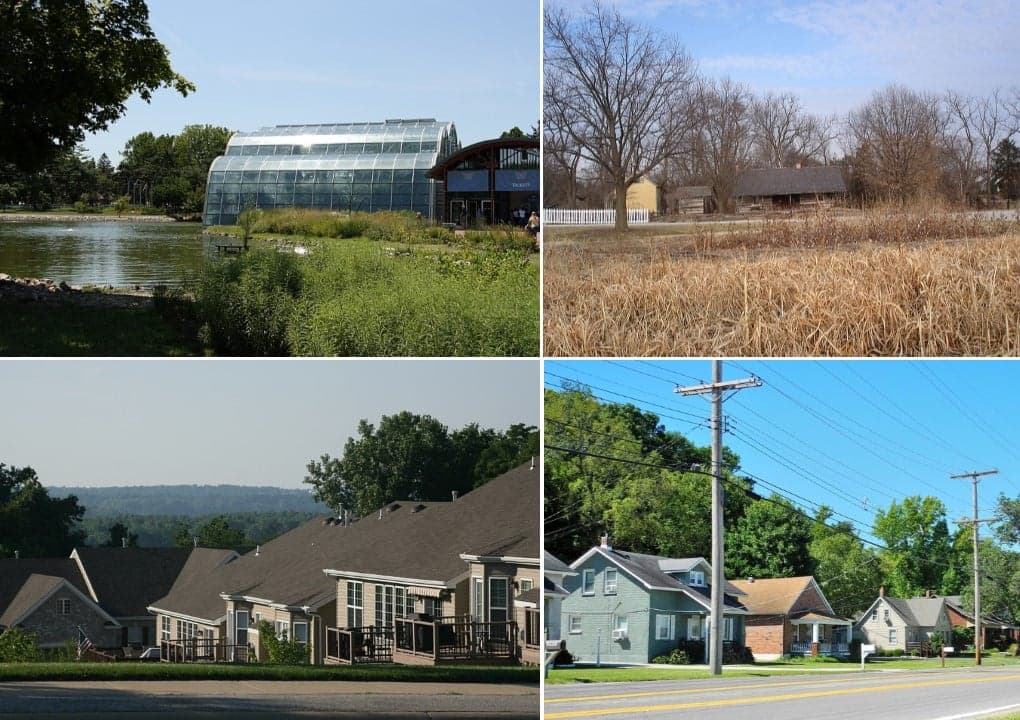
Photo: Wikipedia
Political ClimatePolitical Climate in Chesterfield, MO
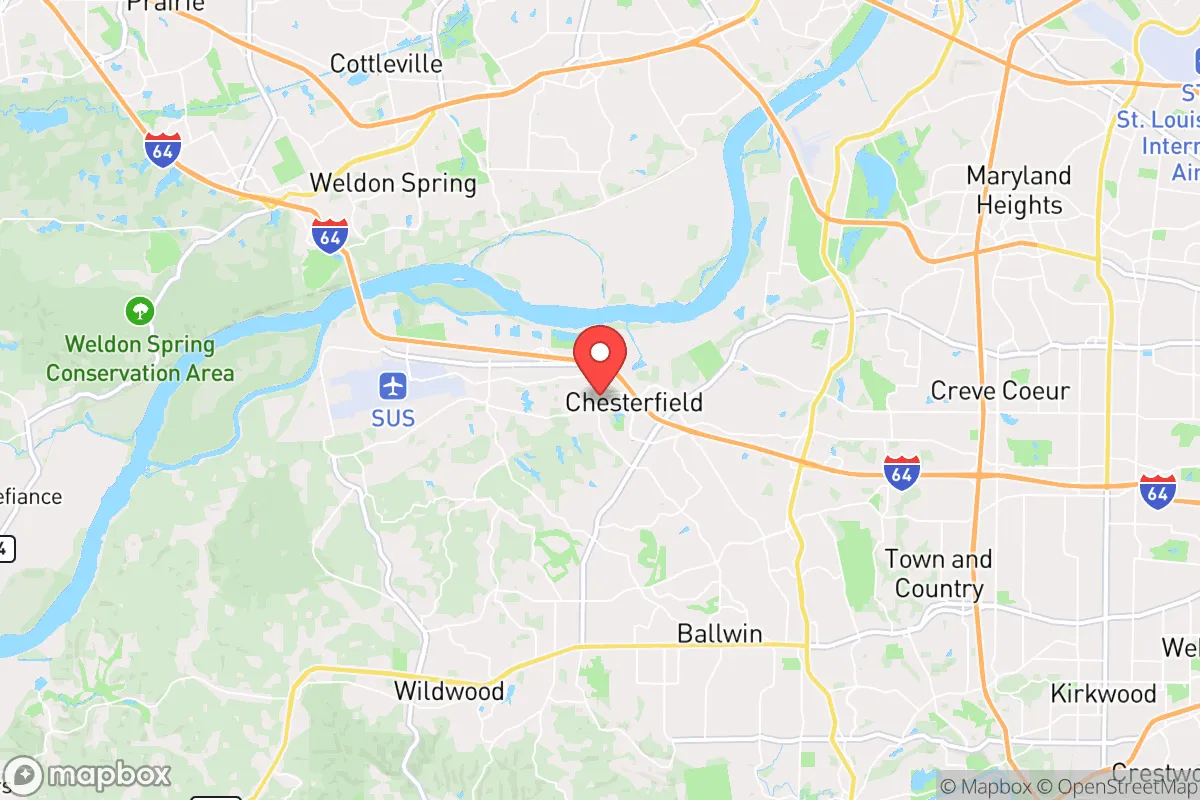
District shown is the primary district for this city’s centroid. Cities may span multiple districts.
Local Political AnalysisPolitical Analysis of Chesterfield, MO
Chesterfield has long been a reliably conservative stronghold in St. Louis County, with a Cook PVI of R+4 that reflects a solid, though not overwhelming, Republican lean. For decades, this area was a place where folks minded their own business, kept their taxes low, and expected the government to stay out of their lives. But if you’ve lived here as long as I have, you’ve noticed the political winds shifting—not dramatically, but steadily. The 2024 election saw the county as a whole trend bluer, but Chesterfield held the line better than most, with local races still favoring candidates who prioritize fiscal restraint and individual liberty. The real story, though, is the creeping influence of progressive policies from the county level, which has started to chafe against the traditional, live-and-let-live ethos of this community.
How it compares
Drive ten miles east into the City of St. Louis, and you’re in a completely different political universe—deep blue, with a Cook PVI of D+27. That’s where you see the kind of government overreach that makes Chesterfield residents uneasy: heavy-handed business mandates, tax hikes for social programs, and a general attitude that the state knows better than the individual. Even nearby Clayton, the county seat, has a more progressive tilt, with its higher property taxes and zoning restrictions that feel like a slow-motion squeeze on personal property rights. In contrast, Chesterfield still feels like a place where you can build a deck without a permit war, and where the school board meetings aren’t dominated by culture war debates. But the pressure is real. The county’s push for stricter environmental regulations and “equity” initiatives in local planning has started to trickle into Chesterfield’s municipal code, and that’s a red flag for anyone who values local control over their own backyard.
What this means for residents
For the average Chesterfield resident, the political climate means you’re still free to live your life largely as you see fit—for now. Property taxes are manageable compared to the city, and the local police department focuses on real crime, not ideological enforcement. But you have to stay vigilant. The county’s recent attempts to impose a plastic bag ban and a minimum wage hike that didn’t account for small business realities were fought off by Chesterfield’s city council, but barely. If you’re a homeowner, you’ll want to keep an eye on zoning proposals that could limit what you can do with your land. And if you’re a parent, the school district—Rockwood—still leans conservative in its curriculum and discipline policies, but the board elections are getting tighter every cycle. The bottom line: Chesterfield is a good place to raise a family if you value personal responsibility and limited government, but it’s not immune to the broader trends. You have to show up to vote in local primaries, because that’s where the real battles are fought.
Culturally, Chesterfield still feels like a slice of old-school Missouri—neighbors wave, the Fourth of July parade is a big deal, and the local chamber of commerce is full of small business owners who’d rather compete than comply with endless red tape. But there’s a growing tension between the county’s progressive agenda and the town’s conservative roots. You see it in the debates over mask mandates in schools (which were thankfully short-lived here) and in the push for “affordable housing” quotas that sound like a backdoor to government control of private property. The long-term trajectory depends on whether the next generation of residents—many of whom are moving in from the city for the schools and space—embrace the local culture or try to remake it in the image of the places they left. For now, Chesterfield remains a place where you can still breathe free, but you’d better keep one eye on the county council.

State Political ClimatePolitical Climate in Missouri
State Political AnalysisPolitical Environment in the State
Missouri has long been considered a bellwether state, but over the past 10-20 years, it has shifted decisively from a classic purple swing state to a solidly red one. The Show-Me State now leans Republican by roughly 10-15 points in statewide elections, driven by a massive rural-urban divide and a steady exodus of conservative voters from deep-blue St. Louis and Kansas City into the suburbs and exurbs. While the state still has pockets of Democratic strength in its two major metros and along the I-70 corridor, the overall trajectory is unmistakably conservative, with Republicans holding supermajorities in both chambers of the General Assembly and every statewide office except the governorship (which flipped back to red in 2024).
Urban vs. rural divide
The political map of Missouri is a study in contrasts. The two major population centers—St. Louis City and Kansas City—are deep blue, with Democratic margins often exceeding 50 points in presidential elections. But these cities are surrounded by a sea of red. The key battlegrounds are the suburban rings: St. Charles County (just west of St. Louis) and Clay County (north of Kansas City) have both moved sharply right over the past decade. St. Charles County, once a swing area, now votes Republican by 20+ points. Meanwhile, Greene County (Springfield) and Christian County (south of Springfield) are reliably red, with Christian County being one of the most conservative in the state. The rural "Bootheel" region in the southeast, along with the Ozarks and the northern plains, are deeply Republican, often voting 70-80% for GOP candidates. The only real blue outliers outside the major metros are Boone County (home to Columbia and the University of Missouri) and Jackson County (Kansas City proper), but these are increasingly islands in a conservative sea.
Policy environment
Missouri's policy environment is a mixed bag for conservatives, but trending in the right direction. The state has a flat income tax that was cut from 5.3% to 4.95% in 2023, with a trigger to drop further to 4.5% if revenue targets are met. Property taxes are relatively low, and there is no state estate tax. The regulatory climate is business-friendly, with a right-to-work law (repealed by ballot initiative in 2018, but still a point of contention) and a strong tort reform record. On education, Missouri has a robust charter school law in St. Louis and Kansas City, and the MOScholars program (passed in 2021) provides tax-credit scholarships for low-income students to attend private schools. However, the state still has a compulsory union dues regime for public-sector workers, which many conservatives view as a government overreach. Election laws are relatively secure: Missouri requires photo ID to vote, has no-excuse absentee voting, and has a 28-day early voting window (expanded in 2022). The state also passed a constitutional amendment in 2024 requiring all elections to be conducted by paper ballot, a win for election integrity advocates.
Trajectory & freedom
Missouri's trajectory on personal freedom is a tale of two trends. On the positive side for conservatives, the state has aggressively expanded Second Amendment rights. In 2021, Missouri passed the Second Amendment Preservation Act (SAPA), which declares federal gun laws that infringe on the right to keep and bear arms as "invalid" in Missouri. This law has been challenged in court but remains in effect, and it has made Missouri a haven for gun owners. On parental rights, the state passed a Parents' Bill of Rights in 2022, requiring school districts to notify parents of any changes to a student's mental, emotional, or physical health. The state also banned gender-affirming care for minors in 2023 (SB 49), overriding a gubernatorial veto. On medical freedom, Missouri has not mandated COVID-19 vaccines for any group, and the legislature has considered bills to ban vaccine passports. However, the state still has a statewide mask mandate that was never imposed, and local health departments retain significant power. The biggest concern for freedom-minded residents is the state's eminent domain record and the Kansas City Police Department being controlled by the state (a legacy of the 1930s), which some see as a local control issue. Overall, Missouri is becoming more free on cultural and gun issues, but less so on local governance and tax burdens, which remain moderate.
Civil unrest & political movements
Missouri has a history of civil unrest, most notably the 2014 Ferguson protests in St. Louis County, which sparked a national movement on police accountability. While those protests have largely subsided, the political aftershocks are still felt. The St. Louis region remains a flashpoint for racial and economic tensions, with the city's homicide rate consistently among the highest in the nation. On the right, the Missouri State Militia and other armed groups have been active in the Ozarks, particularly around Branson and Springfield, where there is a strong Second Amendment and anti-government sentiment. The Missouri Freedom Caucus in the state legislature has been a vocal force, pushing for more aggressive action on election integrity, immigration enforcement, and school choice. Immigration politics are relatively quiet in Missouri compared to border states, but there have been local ordinances in St. Charles County and Greene County declaring themselves "sanctuary cities for the unborn" (banning abortion within city limits). The state has also seen a rise in nullification rhetoric, with some counties passing resolutions declaring themselves "Second Amendment sanctuaries" and refusing to enforce federal gun laws. Election integrity remains a hot-button issue, with the 2020 and 2022 elections seeing widespread allegations of irregularities in St. Louis City, though no major fraud has been proven.
Projection
Over the next 5-10 years, Missouri is likely to become more conservative, not less. The demographic trends are clear: the rural and suburban populations are growing faster than the urban cores, and the in-migration from blue states (particularly Illinois and California) is largely conservative-leaning. The I-70 corridor from Kansas City to St. Louis is seeing the most growth, with towns like Warrensburg and Columbia becoming more politically mixed. However, the state's biggest challenge is the brain drain from rural areas, which could shift the balance of power slightly toward the suburbs. The Missouri General Assembly is expected to continue passing conservative legislation on education, guns, and abortion, but the governor's office may remain a check on the most extreme proposals. The biggest wildcard is the St. Louis City and Kansas City mayorships, which are likely to remain Democratic, creating a constant tension between state and local governments. For a conservative moving in now, expect to see a state that is increasingly friendly to traditional values, lower taxes, and personal liberty, but with persistent urban problems that will require vigilance.
Bottom line for a new resident: If you're looking for a state that respects your right to keep and bear arms, protects parental authority, and keeps taxes relatively low, Missouri is a solid choice. You'll find a welcoming community in the suburbs of St. Charles or the Ozarks around Springfield, but you'll need to be aware of the ongoing cultural battles in the cities. The state is on a clear conservative trajectory, but it's not a utopia—you'll still have to deal with local government overreach in some areas, and the urban crime problem in St. Louis and Kansas City is real. If you're willing to engage in the political process and help push the state further in the right direction, Missouri offers a fertile ground for conservative values to take root and grow.
* Values derived from national, state, county, city and local statistics and may differ in a specific area. Last updated: 2026-05-01T09:14:20.000Z
Narrative content on this page is AI-generated and may contain mistakes. Verify any details that matter before acting on them.
ReloMaps may earn a commission from affiliate links at no extra cost to you.

