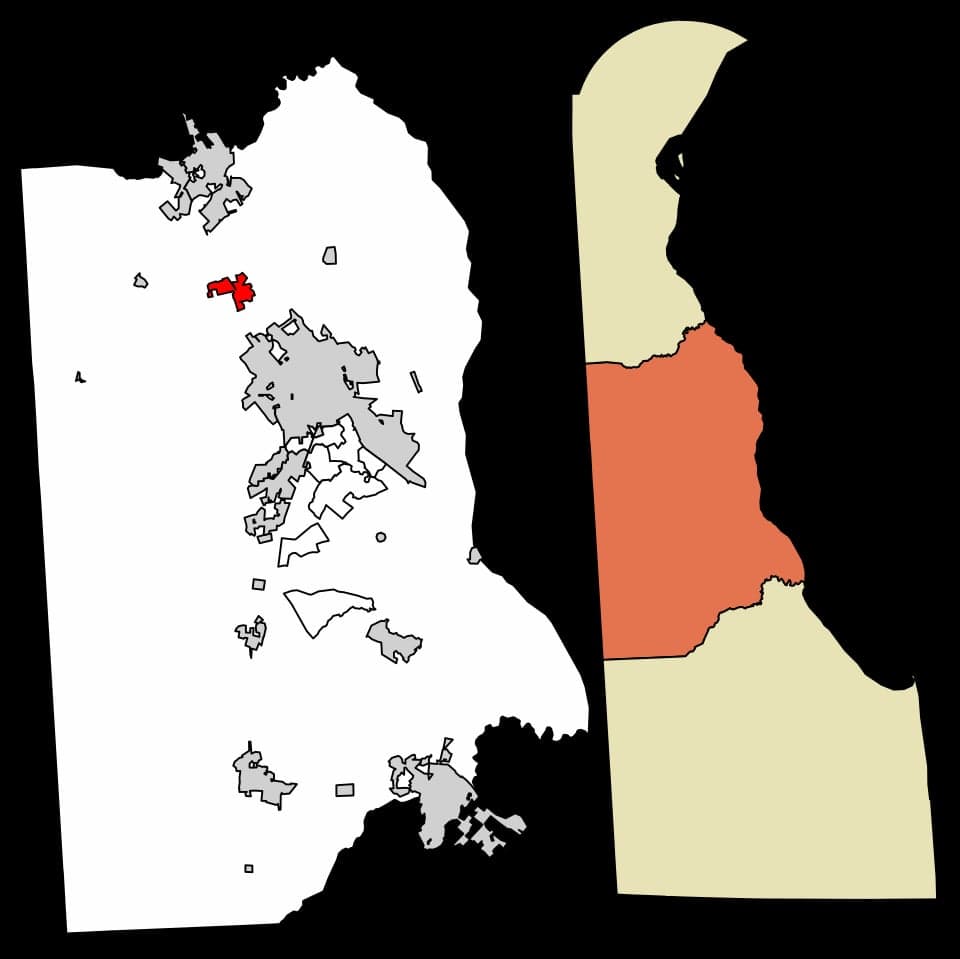
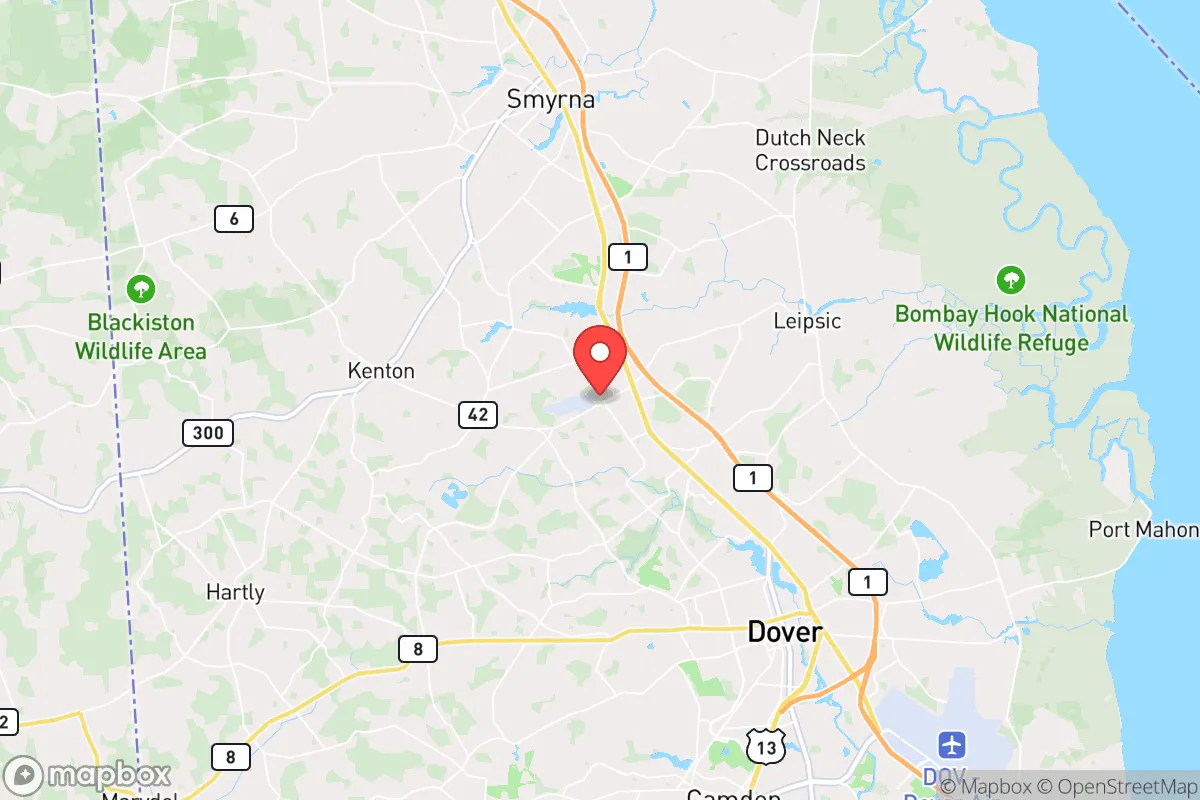
Photo: Wikipedia
Demographics of Cheswold, DE
Affluence Level in Cheswold, DE
A middle-class area roughly in line with national averages across income, home values, education, and employment.
People of Cheswold, DE
The people of Cheswold, Delaware today form a compact, racially diverse community of 1,833 residents, characterized by a near-even split between Black (38.8%) and White (40.6%) populations, with a significant Hispanic minority (12.3%). The town is notably less educated than state averages—only 16.6% hold a college degree—and has a small but present foreign-born population (4.2%), including tiny East/Southeast Asian (1.4%) and Indian subcontinent (0.9%) communities. Despite its small size, Cheswold carries a distinct identity as a working-class crossroads town in Kent County, where historic settlement patterns have created subtle neighborhood divisions that persist today.
How the city was settled and grew
Cheswold’s human history begins not with colonial settlement but with the railroad. Founded in 1856 as a station stop on the Delaware Railroad, the town was originally called "Cheswold Station" after a local landowner’s estate. The first wave of residents were railroad workers and farmers drawn by the junction of the rail line and the Dupont Highway (US 13). These early settlers were predominantly White farmers of English and Scots-Irish descent, who built homes along what is now Main Street and the surrounding grid of small streets like Railroad Avenue and Commerce Street. A small number of free Black families also settled in the area before the Civil War, establishing a cluster near what later became known as the East Side—the area east of the railroad tracks, which remains a historically Black neighborhood today. By 1900, Cheswold’s population hovered around 200, with the economy tied to agriculture (especially peaches and grain) and rail transport. The town incorporated in 1858, but growth remained slow through the early 20th century, with no major industrial or immigrant wave until after World War II.
Modern era (post-1965)
The post-1965 period brought the most significant demographic shifts. The Hart-Cellar Act of 1965 had little direct effect on Cheswold—its foreign-born population remains low at 4.2%—but domestic migration reshaped the town. The expansion of Dover Air Force Base (10 miles south) and the growth of manufacturing in Kent County drew Black families from the rural South and from nearby cities like Wilmington and Philadelphia. These new residents settled primarily in the West Cheswold area, west of US 13, where modest single-family homes were built in the 1970s and 1980s. Simultaneously, White families began moving to newer subdivisions in neighboring Camden and Wyoming, leaving Cheswold’s older housing stock—especially in the Historic Core around Main and Commerce streets—to become more affordable for lower-income households. The Hispanic population, which now stands at 12.3%, began arriving in the 1990s, drawn by agricultural work in Kent County’s poultry and produce industries. They concentrated in the South Cheswold area, near the railroad crossing, where rental properties and mobile homes offered cheap housing. The East/Southeast Asian and Indian subcontinent populations are tiny (1.4% and 0.9%, respectively) and are likely professionals or military-affiliated families connected to Dover AFB, scattered across the town without forming distinct ethnic enclaves.
The future
Cheswold’s population is trending toward greater diversity, but the pace is slow. The White share has declined from roughly 55% in 2000 to 40.6% today, while the Hispanic share has grown from under 5% to 12.3%. The Black population has remained stable around 38-40% for two decades. The town is not homogenizing into a single melting pot; rather, it is tribalizing into distinct neighborhoods: the East Side remains predominantly Black, West Cheswold is mixed but leaning Black and Hispanic, and the Historic Core is aging White. New development is limited—Cheswold has little undeveloped land and no major annexation plans—so future growth will likely come from infill housing and the conversion of older properties. The foreign-born population is unlikely to surge, as the town lacks the job base or ethnic networks to attract new immigrants. The next 10-20 years will probably see a slow increase in Hispanic share (perhaps to 18-20%) as families grow, while the White and Black shares converge toward parity. The college-educated share may rise modestly if Dover AFB personnel continue to choose Cheswold for its lower housing costs, but the town will remain a working-class, majority-minority community.
For a conservative-leaning individual or family considering relocation, Cheswold offers a racially diverse but economically modest environment where neighborhood identity matters more than town-wide cohesion. The town is becoming more Hispanic and slightly less White, but the changes are gradual and rooted in domestic migration, not international immigration. The bottom line: Cheswold is a stable, slow-growing working-class town where newcomers will find distinct neighborhoods shaped by decades of settlement patterns, and where the future looks more diverse but not dramatically different from the present.

* Values derived from national, state, county, city and local statistics and may differ in a specific area. Last updated: 2026-04-29T19:23:14.000Z
Narrative content on this page is AI-generated and may contain mistakes. Verify any details that matter before acting on them.
ReloMaps may earn a commission from affiliate links at no extra cost to you.

