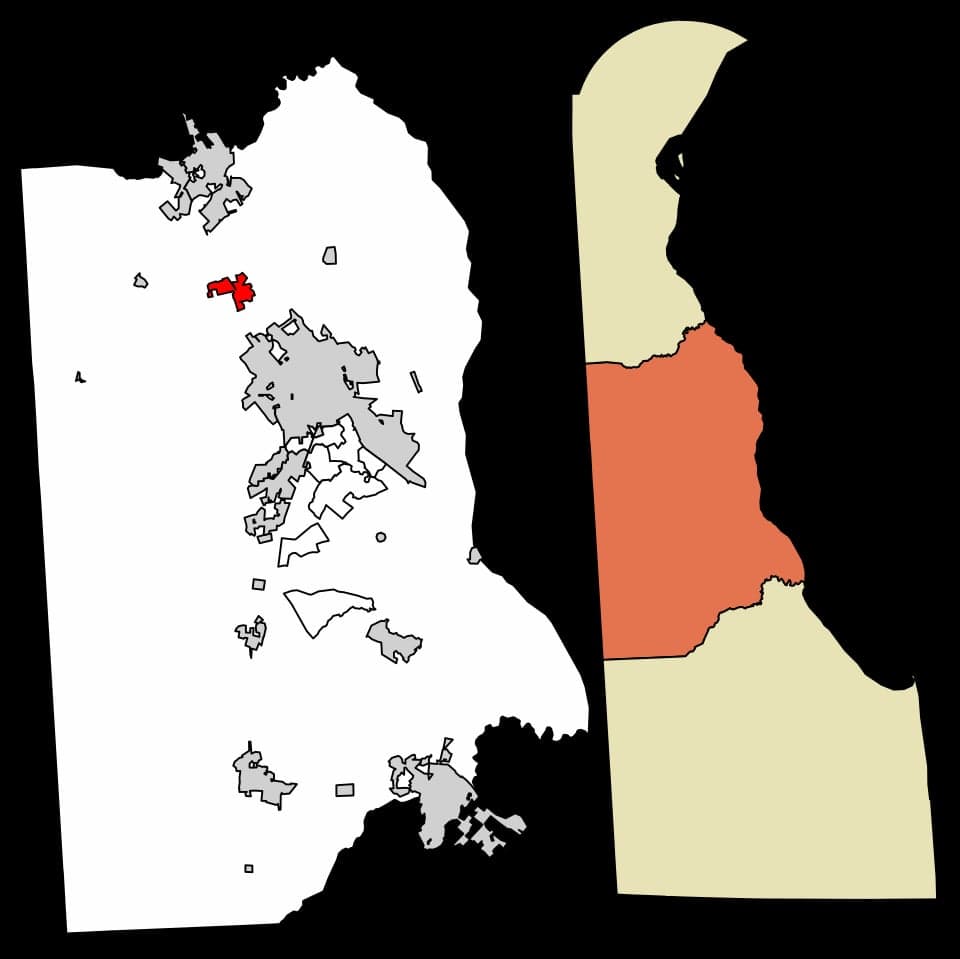
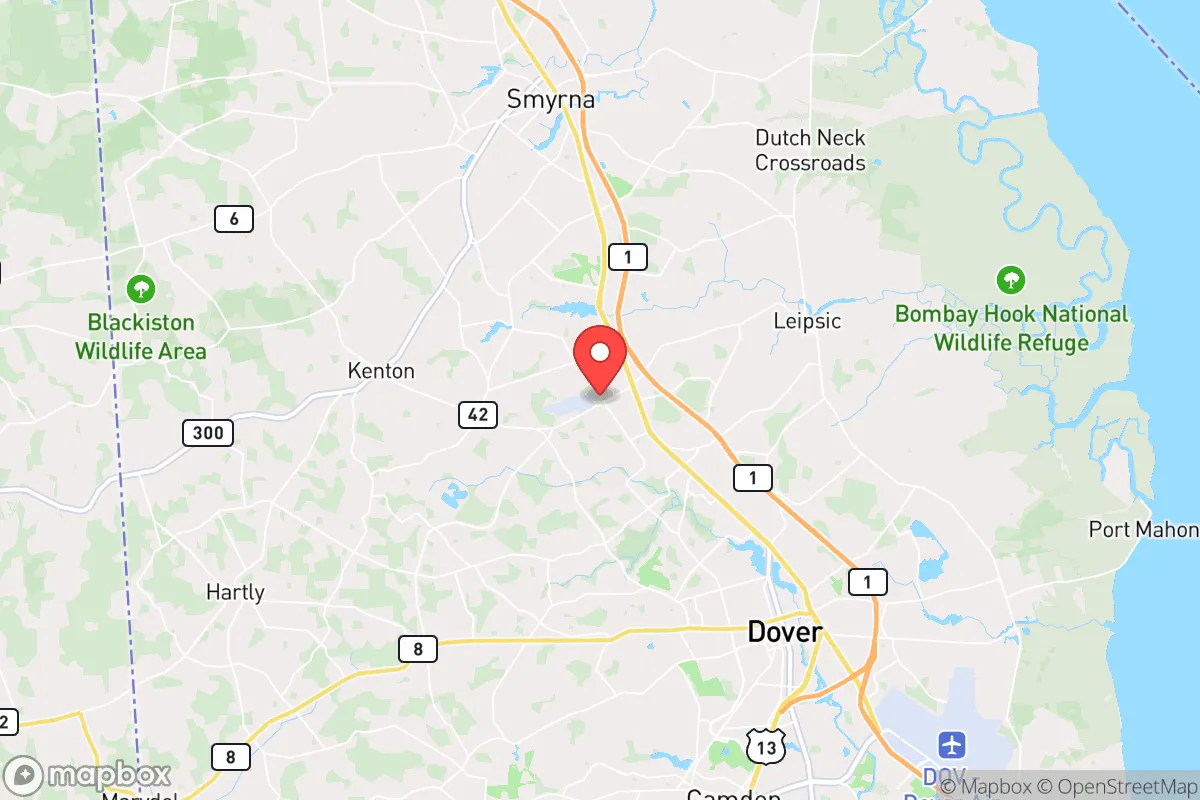
Photo: Wikipedia
Personal Sovereignty in Cheswold, DE
Viable for self-reliance. Generally workable, though some barriers may limit total independence.
What does Personal Sovereignty tell us?
Personal Sovereignty measures your capacity for self-reliance and independence with minimal government friction. Higher scores mean fewer barriers between you and the way you want to live... but it assumes you have the space you need and good neighbors.
What does this tell us?
Personal Sovereignty measures your capacity for self-reliance and independence with minimal government friction. Higher scores mean fewer barriers between you and the way you want to live... but it assumes you have the space you need and good neighbors.
State Policy
Energy independence: Importer (2% of energy produced in-state)
Personal Liberty
Homesteading

Personal Liberty Analysis
Cheswold, Delaware offers a mixed bag for those prioritizing personal sovereignty, with the state’s relatively low tax burden and permissive gun laws providing a foundation for autonomy, but its small-town governance and proximity to Dover mean that local regulations and state-level overreach can still intrude on daily life. For single individuals and parents seeking to minimize government interference, Cheswold’s position in Kent County—a more rural and conservative pocket of a blue state—creates a unique tension: you get the benefits of Delaware’s business-friendly tax structure and strong self-defense rights, but you must navigate a state government that has increasingly flexed its muscle on health mandates and property use. This analysis breaks down the key pillars of personal sovereignty—taxes, self-defense, self-reliance, and civil liberties—to help you decide if Cheswold aligns with a survivalist or prepper mindset.
Tax burden and regulatory posture: how Delaware’s policies affect your wallet and freedom
Delaware’s tax environment is a net positive for sovereignty-minded individuals, but it’s not a libertarian paradise. The state has no sales tax, which means every dollar you earn stays in your pocket—a significant advantage for preppers stockpiling supplies or parents budgeting for bulk purchases. Property taxes in Cheswold are among the lowest in the region, with Kent County’s average effective rate hovering around 0.55% of assessed value, roughly half the national average. However, Delaware’s personal income tax is progressive, topping out at 6.6% for high earners, and the state imposes a gross receipts tax on businesses that can trickle down to consumers. On the regulatory front, Delaware’s reputation as a corporate haven means less red tape for LLCs and small-scale enterprises—useful if you’re running a side hustle or a homestead-based business. But don’t mistake this for a hands-off approach: the state has a robust building code, environmental regulations on well water and septic systems, and a recent history of aggressive health mandates (e.g., COVID-era restrictions that were among the nation’s strictest). For a survivalist, the low tax burden is a win, but the regulatory posture requires vigilance—especially if you plan to modify your property without permits.
Self-defense and gun law specifics: what Delaware’s firearm statutes mean for your safety
Delaware is a shall-issue state for concealed carry, meaning that if you meet the basic requirements—age 21, clean background check, and a certified training course—the state must issue you a permit. This is a solid foundation for personal defense, but there are caveats. The state has a red flag law (Extreme Risk Protection Order) that allows authorities to seize firearms based on a complaint, which is a clear overreach for those who view due process as sacred. Additionally, Delaware bans “assault weapons” and high-capacity magazines under a 2022 law, though enforcement in rural Kent County is lax. Cheswold itself is a small town with a low violent crime rate—about 2.3 incidents per 1,000 residents in 2024—but the proximity to Dover (10 minutes away) means you’re close to urban crime patterns. For parents, the ability to keep a firearm in your home for protection is unrestricted, but carrying on school grounds is prohibited. The bottom line: Delaware’s gun laws are better than neighboring Maryland or New Jersey, but worse than states like Texas or Florida. If self-defense is a priority, you can legally arm yourself, but you’ll need to stay informed about legislative threats to your rights.
Self-reliance and homesteading viability: lot sizes, zoning, and off-grid feasibility in Cheswold
Cheswold’s rural character makes it a viable location for homesteading, but zoning restrictions and lot sizes require careful planning. The town itself is small—about 1,500 residents—and most residential lots range from 0.25 to 1 acre, with some larger parcels available on the outskirts. Kent County’s zoning code allows for agricultural uses on parcels over 5 acres, but within town limits, you’re limited to standard residential activities like gardening and small livestock (chickens are permitted, but pigs and goats require a special exception). Off-grid feasibility is mixed: Delaware has no state-level ban on rainwater collection, but well permits are required and septic systems must meet health department standards. Solar panels are allowed, but homeowners’ associations (HOAs) in some subdivisions may restrict their visibility—a potential headache for preppers. The state’s net metering policy is favorable, allowing you to sell excess power back to the grid. For parents, the ability to raise your own food and reduce reliance on supply chains is a real option here, but you’ll need to buy land outside Cheswold’s core to achieve true self-sufficiency. The biggest threat to self-reliance is the state’s growing appetite for environmental regulations—expect pushback if you try to build a root cellar or install a composting toilet without permits.
Personal liberties: parental rights, medical autonomy, speech, and property protections
Delaware’s record on personal liberties is a mixed bag that should give conservative-leaning individuals pause. On parental rights, the state has been a battleground: in 2023, it passed a law requiring schools to notify parents of curriculum changes, but it also mandates LGBTQ-inclusive materials, which some parents view as an infringement on their values. Medical autonomy is under threat—Delaware has a vaccine mandate for schoolchildren (with limited exemptions) and during the pandemic, it enforced some of the longest-lasting mask and vaccine mandates in the Northeast. For a survivalist, this signals a willingness to override personal health decisions. Free speech is generally protected, but the state has a hate crime statute that can be used to prosecute certain types of expression. Property rights are strong in theory—Delaware has no statewide rent control—but eminent domain is a concern, especially near Dover’s expanding infrastructure projects. The town of Cheswold itself has a small, hands-off government, but the state legislature in Dover is dominated by Democrats who have shown little restraint in expanding regulatory power. For parents, the ability to homeschool is unrestricted, and Delaware’s homeschool laws are among the most lenient in the region—no notification required, no testing mandates. This is a significant plus for those seeking to control their children’s education.
Overall, Cheswold offers a moderate level of personal sovereignty that is better than most of the Northeast but falls short of the deep-red states of the South or Mountain West. The low tax burden and permissive gun laws provide a solid foundation, but the state’s regulatory creep—especially on health mandates and property use—requires constant vigilance. For a survivalist or prepper, Cheswold is a viable base if you’re willing to engage in local politics and stay ahead of legislative changes. The proximity to Dover means you’re close to government activity, which can be a double-edged sword: you can monitor threats to your freedoms, but you’re also in the crosshairs. If you value low taxes and the right to bear arms above all else, Cheswold works. If you want minimal government interference in your medical choices, property modifications, and family decisions, you may find yourself fighting an uphill battle against a state that sees itself as a manager of your life. Compare this to a place like rural Texas or Idaho, where the sovereignty baseline is higher, and Cheswold becomes a compromise—acceptable, but not ideal, for those who prioritize maximum personal autonomy.

* Values derived from national, state, county, city and local statistics and may differ in a specific area. Last updated: 2026-04-29T19:23:14.000Z
Narrative content on this page is AI-generated and may contain mistakes. Verify any details that matter before acting on them.
ReloMaps may earn a commission from affiliate links at no extra cost to you.

