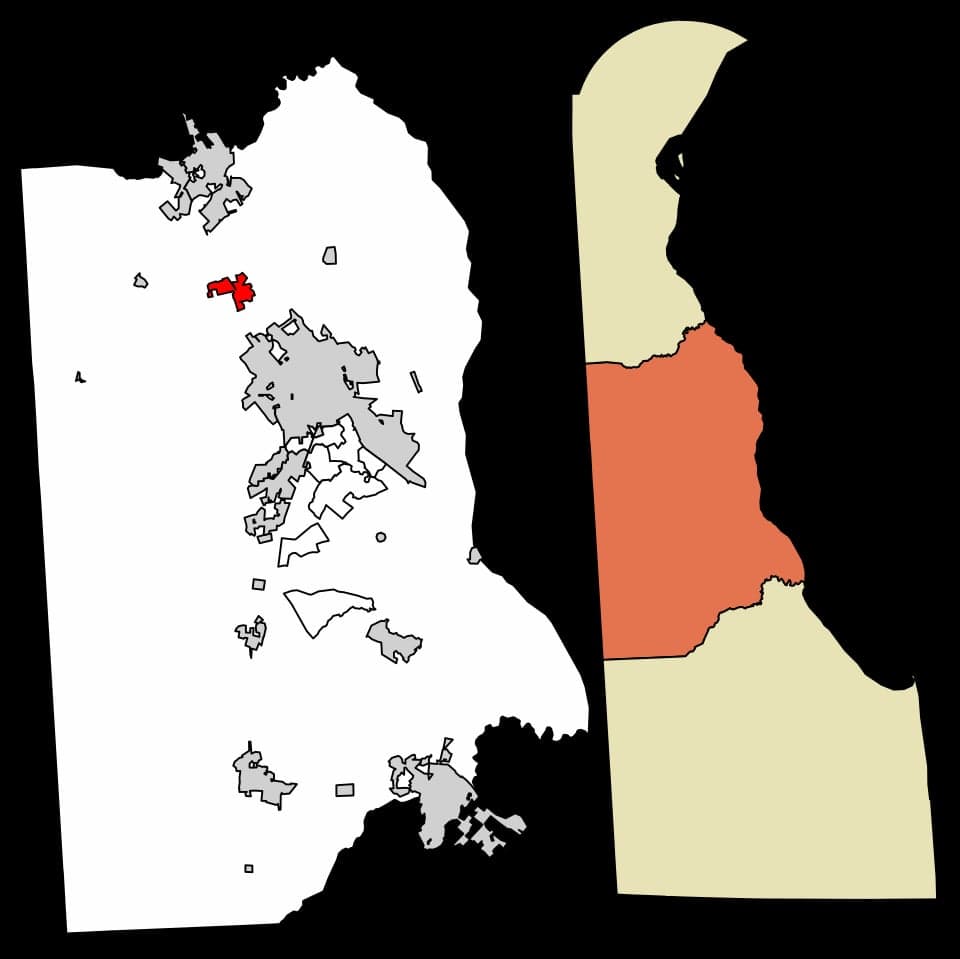
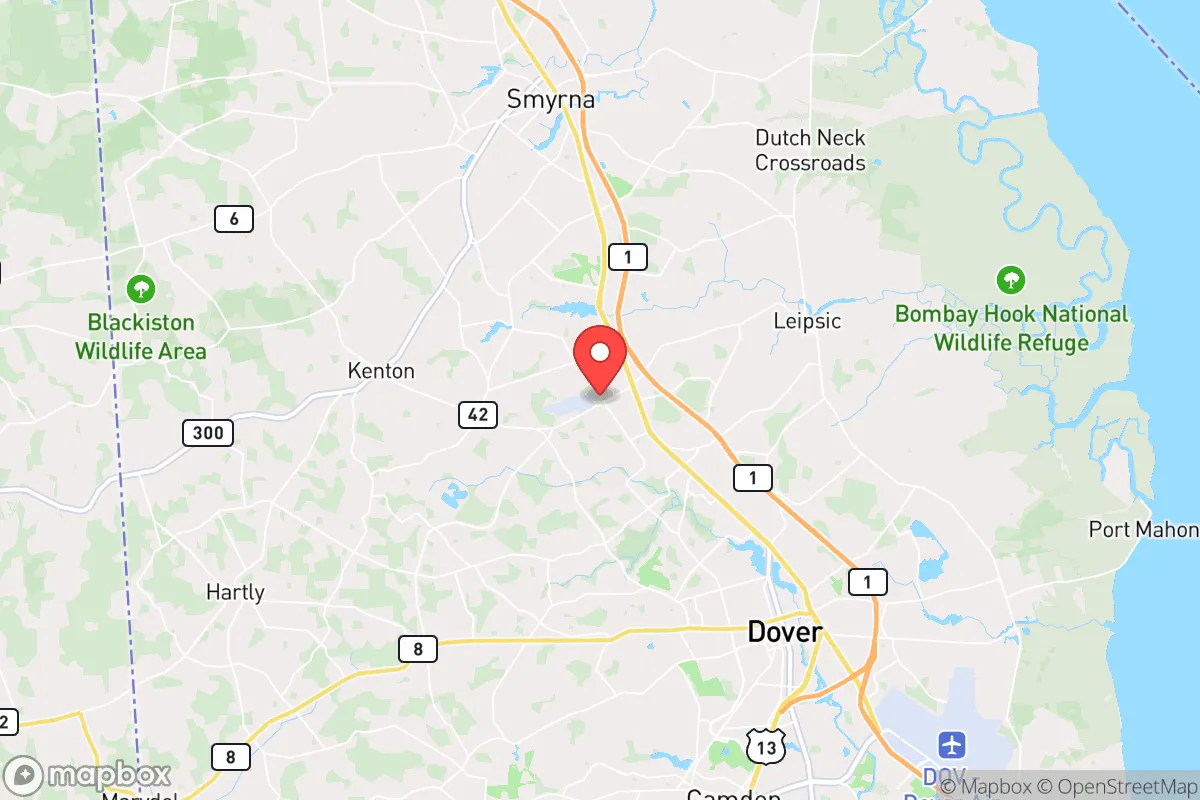
Photo: Wikipedia
Political ClimatePolitical Climate in Cheswold, DE
District shown is the primary district for this city’s centroid. Cities may span multiple districts.
Inherited from parent state — no local data available.
Local Political AnalysisPolitical Analysis of Cheswold, DE
Cheswold, Delaware, leans heavily Democratic, with a Cook PVI of D+8, meaning it votes about eight points more Democratic than the national average. That’s a pretty solid blue anchor for the area, and it’s been trending that way for a while now. If you’re looking at the political trajectory here, it’s not just about party registration—it’s about a steady shift toward progressive policies that a lot of us long-time residents find a bit concerning, especially when it comes to government overreach into personal freedoms and rights.
How it compares
To really get a feel for Cheswold’s politics, you gotta look at the towns around it. Head a few miles north to Smyrna, and you’ll find a more mixed bag—still leans blue, but with a stronger conservative undercurrent, especially in the rural parts. Smyrna’s got a lot of folks who work in trades or farming, and they’re not shy about pushing back on things like mask mandates or zoning rules that feel like they’re coming from Dover. Then you’ve got Dover itself, just south of Cheswold, which is even more Democratic—think D+10 or more—thanks to a bigger state government presence and a younger, more transient population. Cheswold sits right in the middle, but it’s definitely getting pulled toward Dover’s orbit. The contrast is sharpest when you compare it to places like Clayton or even parts of Kent County east of here, where you’ll see more Trump signs in yards and more chatter about property rights and school choice. Cheswold’s political climate feels like it’s losing that rural independence, slowly but surely.
What this means for residents
For folks living here, the political lean means you’re dealing with a local government that’s pretty aligned with state-level progressive priorities. That can translate into things like stricter land-use regulations, higher property taxes to fund social programs, and a school board that’s more focused on equity initiatives than on, say, keeping curriculum choices in parents’ hands. I’ve seen it firsthand—over the last decade, the town council has gotten more comfortable with ordinances that feel like they’re micromanaging daily life, from noise complaints to how you can use your own backyard. If you value personal freedoms—like the right to decide what’s best for your family without a bureaucrat’s stamp of approval—you might start feeling a little squeezed. The upside is that public services, like the library and parks, are well-funded, but that comes at a cost: less room for individual choice and more reliance on government solutions.
One thing that stands out culturally is how Cheswold’s identity is shifting. It used to be a quiet, tight-knit farming community where everyone knew each other, and politics was more about local issues than national battles. Now, with the influx of people from Dover and even from out of state, you’re seeing more progressive activism—things like climate action committees and diversity initiatives that feel like they’re imported from bigger cities. The policy distinction that bugs me most is the push for “equity” in housing and zoning, which often means more government control over private property. It’s a far cry from the days when you could build a shed without a permit or host a family gathering without worrying about noise complaints. Looking ahead, if the trend continues, Cheswold could become a smaller version of Dover—more regulated, less independent, and with a political culture that’s less tolerant of dissenting views. It’s not there yet, but the writing’s on the wall for those of us who remember when this town was a place where you could just live your life without so much oversight.

State Political ClimatePolitical Climate in Delaware
State Political AnalysisPolitical Environment in the State
Delaware has long been a blue state in presidential elections, backing Democrats by double digits in every cycle since 2008, but its political climate is far more nuanced than that headline suggests. The state’s small size and dense population mask a sharp urban-rural split, with the northern corridor from Wilmington to Newark driving the leftward lean while the southern counties of Kent and Sussex remain reliably conservative. Over the past 20 years, the state has shifted from a moderate, business-friendly swing state to a solidly Democratic stronghold, driven by rapid growth in the Wilmington suburbs and an influx of progressive transplants from the Northeast.
Urban vs. rural divide
The political map of Delaware is essentially a tale of three counties. New Castle County, home to over half the state’s population, is the Democratic engine. Wilmington, the largest city, and its suburbs like Newark and Bear deliver massive margins for Democrats—often 65-70% of the vote. This area is dominated by government workers, university faculty at the University of Delaware, and corporate professionals tied to the financial and chemical industries. In contrast, Kent County, anchored by Dover, is a true swing area; Dover itself leans Democratic due to its military and state government presence, but the surrounding farmland and small towns like Harrington and Smyrna vote red. Sussex County, the southernmost and fastest-growing, is the conservative stronghold. Towns like Lewes, Rehoboth Beach, and Georgetown have seen an influx of retirees and second-home owners, but the rural interior—places like Millsboro and Laurel—votes heavily Republican. The 2020 election saw Biden win Delaware by 19 points, but Trump carried Sussex County by 12 points, illustrating the deep geographic divide.
Policy environment
Delaware’s policy environment is a mixed bag that should give conservatives pause. The state has no sales tax, which is a plus, but its income tax rates are among the highest in the region, topping out at 6.6% for individuals. Property taxes are relatively low, but the state’s regulatory posture is decidedly progressive. In 2021, the legislature passed the Delaware Clean Energy Act, mandating 100% carbon-free electricity by 2035, which has driven up energy costs and discouraged new industrial investment. Education policy is dominated by the teachers’ union; the state has resisted school choice expansion, and charter school growth has been stagnant. Healthcare is heavily regulated, with a state-run insurance exchange and strict certificate-of-need laws that limit competition. On election law, Delaware is one of the most permissive states in the country: no-excuse absentee voting, same-day registration, and automatic voter registration are all in place. For a conservative, the policy environment feels like a slow but steady march toward a European-style social democracy, with the state government actively expanding its reach into daily life.
Trajectory & freedom
Over the past decade, Delaware has become less free by any objective measure. The most concerning trend for conservatives is the erosion of Second Amendment rights. In 2022, the legislature passed a permit-to-purchase law for handguns, a ban on so-called “assault weapons,” and a 10-round magazine limit. These laws were signed by Governor John Carney, a Democrat, and have survived initial legal challenges. Parental rights have also taken a hit: the state’s Department of Education has adopted policies that allow students to change their gender identity on school records without parental consent, and the state’s sex education curriculum is among the most explicit in the nation. On medical freedom, Delaware was an early adopter of COVID-19 vaccine mandates for healthcare workers and state employees, and it has not rolled back those policies. Property rights are under pressure from the state’s aggressive land-use planning, which has imposed growth boundaries in Sussex County that limit new development. The only bright spot for liberty-minded residents is the state’s lack of a sales tax, but that is cold comfort when every other lever of government is pulling left.
Civil unrest & political movements
Delaware has not seen the kind of large-scale civil unrest seen in other states, but there have been notable flashpoints. In 2020, Wilmington saw several nights of protests and looting following the George Floyd killing, with the National Guard called in to restore order. The state’s sanctuary policies are a growing concern: Delaware is a “sanctuary state” in practice, with state law prohibiting local law enforcement from cooperating with federal immigration authorities on civil detentions. This has led to tensions in Sussex County, where some local sheriffs have publicly refused to comply. On the right, the Delaware Republican Party has been revitalized by grassroots activists focused on election integrity and school board races. In 2022, a slate of conservative candidates won seats on the Sussex County school board, pushing back against critical race theory and gender ideology in classrooms. The state’s election integrity has been a hot-button issue; Delaware uses Dominion voting machines and has no voter ID requirement, which has fueled ongoing distrust among conservatives. A new resident would notice the political divide most acutely in the stark contrast between the liberal Wilmington suburbs and the conservative rural areas, where Trump flags still fly high.
Projection
Looking ahead 5-10 years, the trajectory is clear: Delaware will continue to move left, driven by demographic shifts and in-migration from the Northeast. The fastest-growing parts of the state are Sussex County’s coastal towns, which are attracting retirees from New York and New Jersey who bring their progressive voting habits with them. Meanwhile, the rural interior of Kent and Sussex counties is aging and losing population, weakening the conservative base. The state’s reliance on federal funding and the financial services industry makes it vulnerable to national economic trends, but the political momentum is firmly with the Democrats. A new resident moving in now should expect to see further restrictions on gun rights, more expansive government healthcare, and continued erosion of parental authority in schools. The only hope for a conservative resurgence lies in the school board and local government races, where grassroots activism can still make a difference. But at the state level, Delaware is likely to become more like its neighbor Maryland—a deep blue state with pockets of red resistance.
For a conservative considering a move to Delaware, the bottom line is this: you will find like-minded communities in the rural areas of Kent and Sussex counties, but you will be fighting an uphill battle against a state government that is increasingly hostile to your values. The tax burden is high, your gun rights are under assault, and your children’s education will be shaped by progressive ideology. If you value low taxes and personal freedom above all else, look elsewhere. But if you are willing to engage in the fight at the local level—school boards, county councils, and grassroots activism—Delaware offers a chance to make a real difference in a small state where every vote counts. Just know that the tide is against you, and it will take sustained effort to hold the line.
* Values derived from national, state, county, city and local statistics and may differ in a specific area. Last updated: 2026-04-29T19:23:14.000Z
Narrative content on this page is AI-generated and may contain mistakes. Verify any details that matter before acting on them.
ReloMaps may earn a commission from affiliate links at no extra cost to you.

