Photo: Wikipedia
Demographics of Cheverly, MD
Affluence Level in Cheverly, MD
A middle-class area roughly in line with national averages across income, home values, education, and employment.
People of Cheverly, MD
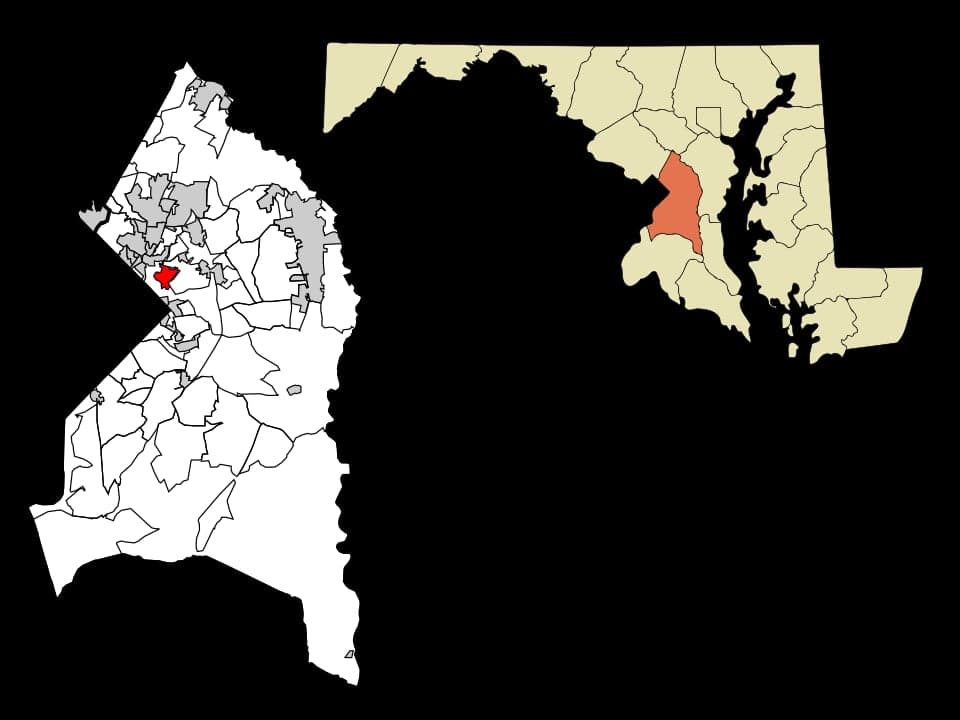
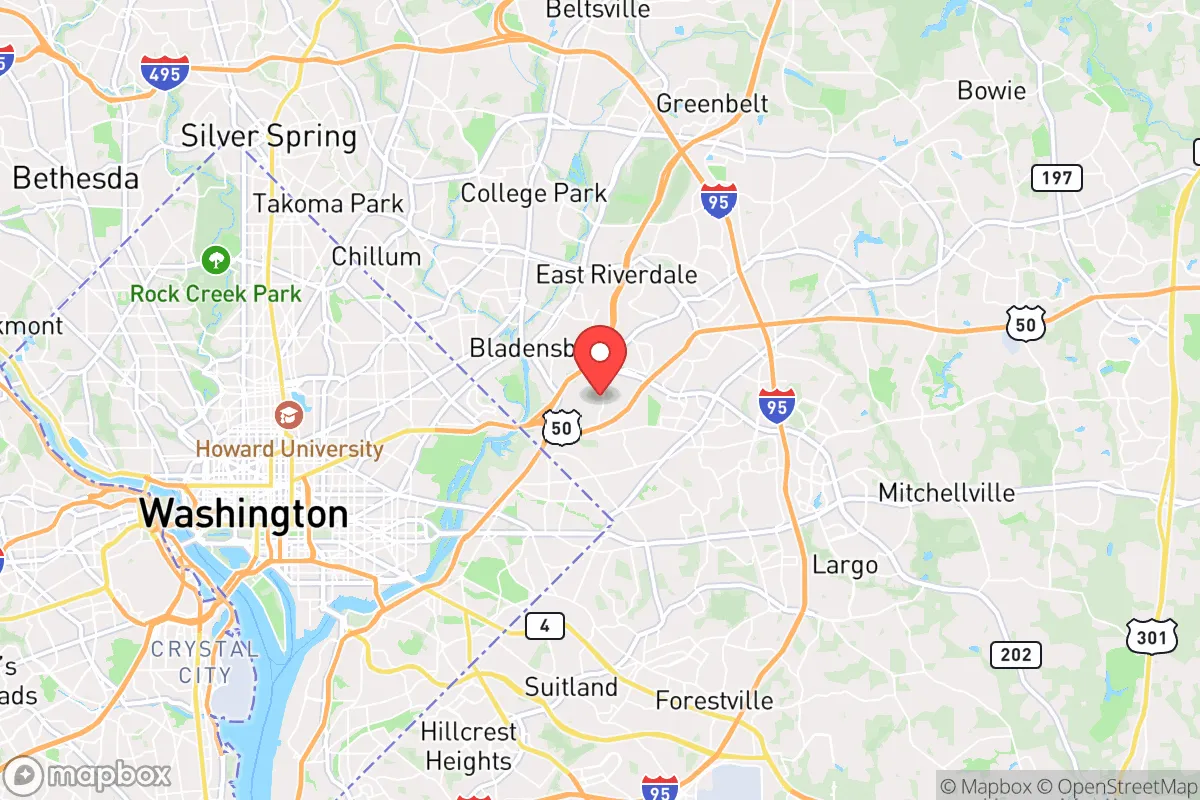
Today, Cheverly, Maryland is a densely settled, majority-Black inner suburb of Washington, D.C., with a population of 6,107 that is 39.3% Black, 27.5% White, 16.7% Hispanic, and 4.0% East/Southeast Asian, alongside a 1.9% Indian-subcontinent community. The city is notably well-educated—51.3% of adults hold a college degree—and has a foreign-born share of 14.7%, reflecting a mix of established Black families, newer Hispanic and Asian immigrants, and a shrinking White cohort. Cheverly’s identity is shaped by its planned-garden-suburb origins, its role as a stable middle-class enclave for federal employees, and its recent demographic diversification that has made it one of Prince George’s County’s more racially balanced communities.
How the city was settled and grew
Cheverly was founded in 1918 as a planned garden suburb on former tobacco plantation land, explicitly marketed to White federal employees working in Washington, D.C. The original developers, the Cheverly Land and Improvement Company, laid out curvilinear streets and large lots in the Cheverly Historic District, which remains the core of the original settlement. The first wave of residents were predominantly White, middle-class government clerks and professionals who commuted via the nearby Pennsylvania Railroad station. The Cheverly Hills neighborhood, developed in the 1920s and 1930s, absorbed the next wave of White families drawn by the New Deal’s expansion of federal employment. By 1950, Cheverly was nearly all-White, with a population of about 3,500, and its character was defined by its tree-lined streets, community pool, and civic associations that enforced racial covenants barring Black residents.
Modern era (post-1965)
The 1968 Fair Housing Act and the subsequent suburbanization of Black middle-class families from D.C. transformed Cheverly. White flight accelerated through the 1970s and 1980s, as Black professionals—many working for the federal government—moved into the Cheverly Terrace and Cheverly Station neighborhoods. By 1990, Cheverly had become a majority-Black suburb, a shift that mirrored Prince George’s County’s broader racial transition. The Kentland area, on the city’s eastern edge, absorbed a smaller wave of Hispanic families starting in the 2000s, drawn by affordable housing and proximity to D.C. construction and service jobs. More recently, the Cheverly Park neighborhood has seen an influx of East/Southeast Asian immigrants (4.0% of the population) and Indian-subcontinent families (1.9%), many of whom work in technology or healthcare. The White share has stabilized at 27.5%, concentrated in the historic district and among newer, younger families attracted by the city’s walkability and proximity to the D.C. metro.
The future
Cheverly’s population is likely to continue diversifying, but not at a rapid pace. The foreign-born share (14.7%) is moderate for a D.C. suburb, and the Hispanic and Asian communities are growing slowly through chain migration and natural increase, rather than a sudden influx. The Black majority is stable but aging, while the White share is plateauing as the historic district attracts a steady trickle of new residents. The city is not tribalizing into distinct ethnic enclaves—most neighborhoods remain mixed—but the Cheverly Hills area retains a slightly higher White concentration, while Kentland has a stronger Hispanic presence. Over the next 10–20 years, Cheverly will likely become slightly more Hispanic and Asian, but its core identity as a middle-class, majority-Black, college-educated suburb will persist. Gentrification pressure from D.C. is modest, as the city lacks a Metro station and its housing stock is mostly single-family homes, limiting rapid turnover.
For a conservative-leaning mover, Cheverly offers a stable, family-oriented community with strong civic engagement, good schools (within Prince George’s County), and a relatively low crime rate compared to neighboring areas. The population is becoming more diverse but remains anchored by long-term Black homeowners and federal employees, giving the city a grounded, middle-class character. It is not a place of rapid demographic upheaval, but of gradual, steady change—a safe bet for someone seeking a well-established D.C. suburb with a clear sense of its own history.

* Values derived from national, state, county, city and local statistics and may differ in a specific area. Last updated: 2026-04-22T00:25:24.000Z
Narrative content on this page is AI-generated and may contain mistakes. Verify any details that matter before acting on them.
ReloMaps may earn a commission from affiliate links at no extra cost to you.

