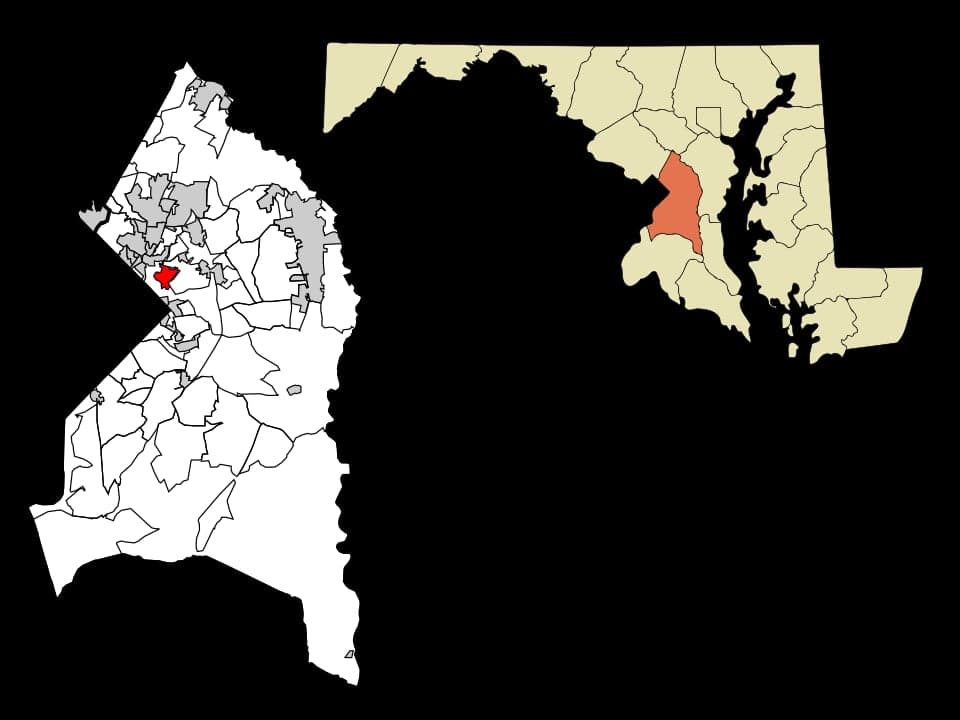
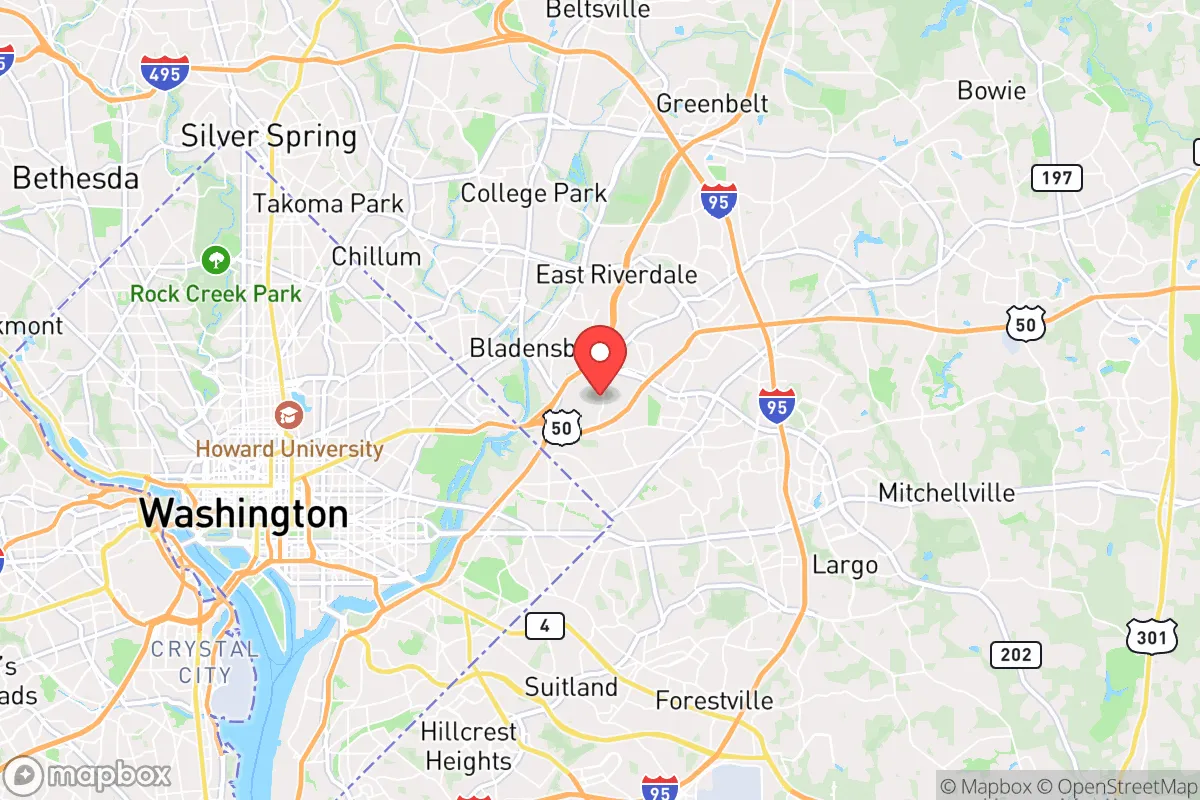
Photo: Wikipedia
Personal Sovereignty in Cheverly, MD
Viable for self-reliance. Generally workable, though some barriers may limit total independence.
What does Personal Sovereignty tell us?
Personal Sovereignty measures your capacity for self-reliance and independence with minimal government friction. Higher scores mean fewer barriers between you and the way you want to live... but it assumes you have the space you need and good neighbors.
What does this tell us?
Personal Sovereignty measures your capacity for self-reliance and independence with minimal government friction. Higher scores mean fewer barriers between you and the way you want to live... but it assumes you have the space you need and good neighbors.
State Policy
Energy independence: Importer (8% of energy produced in-state)
Personal Liberty
Homesteading

Personal Liberty Analysis
Cheverly, Maryland, presents a complex picture for those prioritizing personal sovereignty. While the town itself offers a tight-knit community and some degree of local control, it operates entirely within the framework of Prince George’s County and the State of Maryland—both of which impose significant constraints on individual autonomy. For a survivalist or prepper mindset, the key takeaway is that Cheverly provides a relatively stable, community-oriented base, but the state-level regulatory environment, particularly regarding taxation, self-defense, and property rights, creates substantial headwinds for those seeking maximum personal freedom. The trade-off is clear: you gain proximity to federal employment and a walkable, historic town, but you surrender a considerable amount of control over your own life to state and county authorities.
Tax burden and regulatory posture in Maryland
Maryland’s tax burden is among the highest in the nation, and Cheverly residents feel this acutely. The state levies a progressive income tax with rates up to 5.75%, and Prince George’s County adds its own income tax of 3.2%, bringing the combined top marginal rate to nearly 9%. Property taxes are also steep: the county rate is about $0.87 per $100 of assessed value, plus the state rate of $0.112, and Cheverly adds its own municipal tax. For a $400,000 home, expect annual property taxes around $4,000–$4,500. Sales tax is 6%, and the state taxes gasoline at $0.47 per gallon. This heavy taxation funds a large state government that actively regulates everything from vehicle emissions to building codes. For the prepper, this means less disposable income for supplies, land, or equipment, and a bureaucracy that can complicate any attempt to modify your property or start a home-based business. The regulatory posture is interventionist: Maryland has strict environmental regulations, a strong building code, and a permitting process that can delay even minor projects. There is little room for "off-grid" modifications without explicit county approval.
Self-defense and gun law specifics in Cheverly
This is the most restrictive area for personal sovereignty in Cheverly. Maryland is a "may-issue" state for concealed carry, meaning the state police have discretion to deny permits even after the Bruen decision. While the law has been challenged, the practical reality is that obtaining a carry permit requires a lengthy application, a training course, and a demonstrated "good and substantial reason" that goes beyond general self-defense. The state also bans "assault weapons" (defined by a feature-based test), limits magazine capacity to 10 rounds, and requires a seven-day waiting period for handgun purchases. Private firearm sales are illegal; all transfers must go through a licensed dealer with a background check. Cheverly itself has no additional gun laws beyond county and state statutes, but Prince George’s County police are known for aggressive enforcement. For the survivalist, this means your ability to defend your home and family is legally constrained. You cannot legally own many common defensive rifles, you cannot carry a concealed handgun without a hard-to-get permit, and you cannot quickly acquire a firearm in an emergency. This is a significant sovereignty deficit compared to states like Texas or Florida.
Self-reliance and homesteading viability in Cheverly
Cheverly is a densely developed, historic streetcar suburb with small lots—typically one-quarter to one-third of an acre. Zoning is primarily R-55 (residential, 5,500 square foot minimum lot size), which severely limits homesteading activities. Raising chickens is permitted with a permit and restrictions on roosters, but larger livestock like goats or pigs are prohibited. Gardening is allowed, but the small lot size and tree canopy limit sun exposure. Off-grid feasibility is essentially zero: the town mandates connection to municipal water and sewer, and solar panels require county permits and HOA-style architectural review. There is no practical way to achieve energy or water independence. For the prepper seeking self-reliance, Cheverly is a poor fit. You would need to look to rural areas of the state, like Garrett or Allegany counties, for land with acreage, fewer restrictions, and the ability to drill a well or install a septic system. Within Cheverly, the best you can do is a robust vegetable garden, a few chickens, and a well-stocked pantry—but you remain entirely dependent on the grid and municipal services.
Personal liberties: parental rights, medical autonomy, speech, and property
Maryland’s record on personal liberties is mixed, with a clear trend toward state control. Parental rights are under pressure: the state has passed laws that allow minors to consent to certain medical treatments (including mental health and substance abuse care) without parental notification, and the public school curriculum includes comprehensive sex education that parents cannot opt out of entirely. Medical autonomy was severely tested during the COVID-19 pandemic, with Maryland maintaining some of the longest-lasting mask and vaccine mandates in the region. The state also has a strict vaccine requirement for school attendance, with limited religious exemptions. Free speech is generally protected, but the state has broad hate crime laws and restrictions on "disorderly conduct" that can be used to limit protest. Property rights are weak: the state has strong eminent domain powers, and the county’s zoning and historic preservation ordinances can restrict what you do with your home. For the conservative-leaning individual, these factors create an environment where the state frequently overrides personal choice in the name of public health, safety, or equity. Cheverly’s local government is generally responsive, but it operates within a county and state framework that is increasingly hostile to individual autonomy.
Overall, Cheverly offers a low personal sovereignty score compared to most of the country. The combination of high taxes, restrictive gun laws, limited homesteading potential, and a state government that actively curtails parental and medical autonomy places it firmly in the "high regulation, low freedom" category. For the survivalist or prepper, it is a location to be approached with caution—best suited for those whose primary concern is community stability and proximity to federal employment, and who are willing to accept significant constraints on their personal freedoms in exchange. If maximum sovereignty is your goal, you would be better served by rural areas in the Midwest, the South, or the Mountain West. Cheverly is a compromise, not a stronghold, for those who value personal autonomy above all else.

* Values derived from national, state, county, city and local statistics and may differ in a specific area. Last updated: 2026-04-22T00:25:24.000Z
Narrative content on this page is AI-generated and may contain mistakes. Verify any details that matter before acting on them.
ReloMaps may earn a commission from affiliate links at no extra cost to you.

