Photo: Wikipedia
Political ClimatePolitical Climate in Cheverly, MD
District shown is the primary district for this city’s centroid. Cities may span multiple districts.
Local Political AnalysisPolitical Analysis of Cheverly, MD
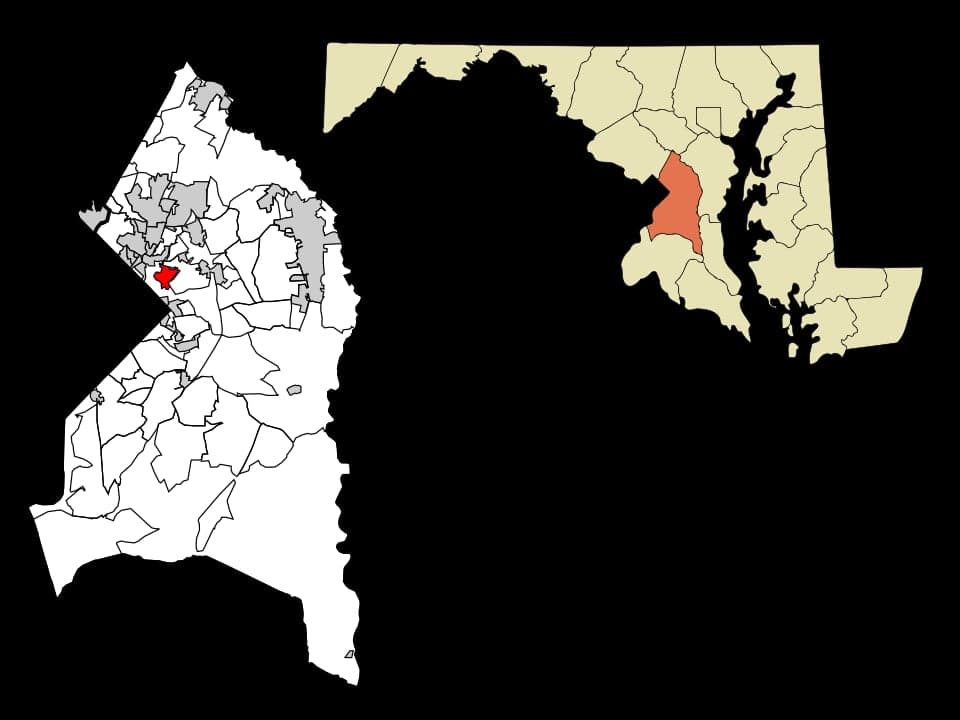
Cheverly, Maryland, is about as deep blue as it gets in this state, and that’s not a recent development. With a Cook PVI of D+39, this town has been a Democratic stronghold for decades, and the political trajectory here has only accelerated leftward over the past ten years. If you’re looking for a place where conservative values like limited government, personal responsibility, and fiscal restraint still hold sway, Cheverly is probably not going to be your cup of tea. The local government and most of your neighbors lean hard into progressive policies, and that shift has been pretty steady since around 2016.
How it compares
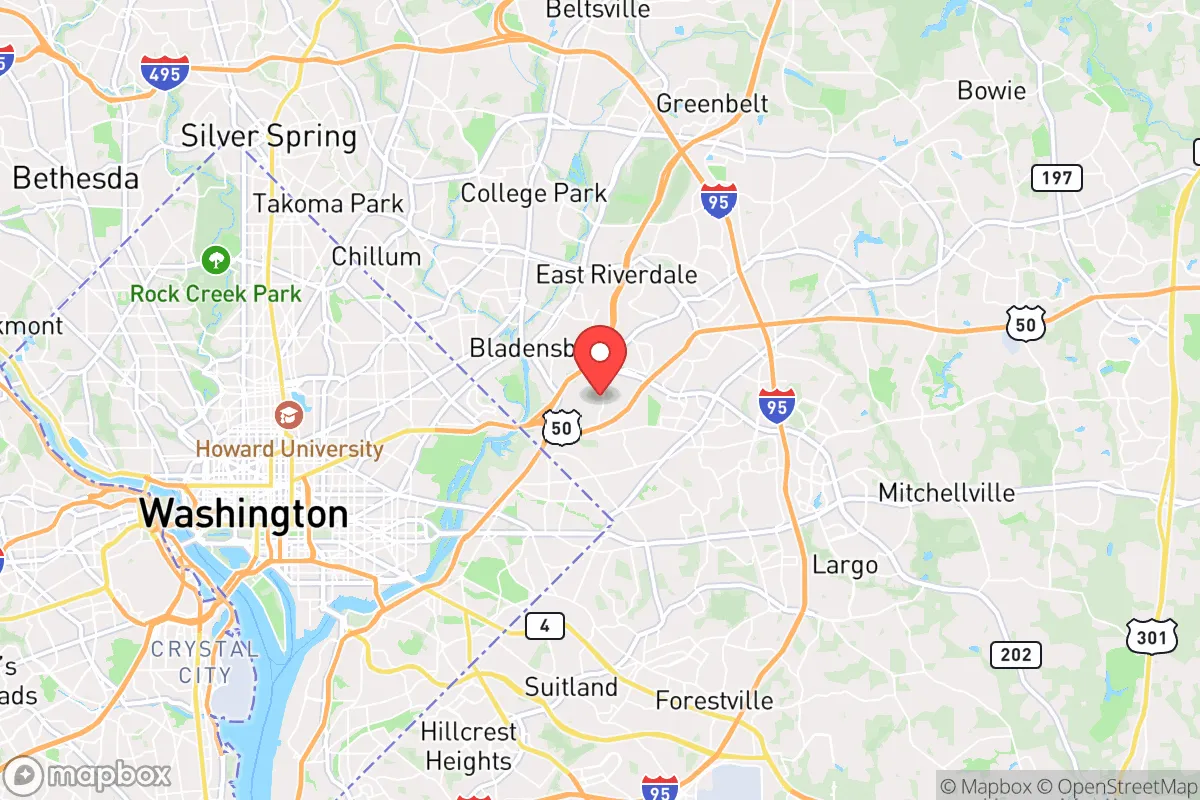
To really understand Cheverly’s political climate, you have to look at the surrounding area. Drive ten minutes north to Bowie, and you’ll find a more moderate, family-oriented suburb that still votes blue but with a much softer touch—think D+10 or so. Head west into Hyattsville or Mount Rainier, and you’re in similar territory to Cheverly, with a heavy progressive tilt. But the real contrast is just a few miles south in Upper Marlboro, where you’ll find more traditional, church-going families and a slightly more conservative-leaning electorate, especially in the rural pockets. Cheverly, though, is its own bubble. It’s a small, walkable town where the local council and civic associations are dominated by activists who push for things like sanctuary city policies, defunding the police rhetoric, and aggressive zoning changes that prioritize density over single-family home neighborhoods. It’s a far cry from the quiet, self-reliant community it was back in the 1990s.
What this means for residents
For a conservative or even a moderate living here, the day-to-day reality can feel like a constant battle against government overreach. The town council has a habit of getting involved in personal choices—from what you can plant in your front yard to how many cars you can park on your street. There’s a strong push for higher property taxes to fund social programs and green initiatives, even as basic services like road maintenance and trash pickup get squeezed. If you value your Second Amendment rights, you’ll find Cheverly’s local ordinances and the surrounding Prince George’s County laws to be some of the most restrictive in the state. And don’t expect much pushback on school policies either; the local school board has embraced critical race theory and gender ideology curricula without much public debate. It’s a place where the loudest voices in the room are the ones demanding more regulation, not less.
Looking ahead, the trend isn’t encouraging. The influx of younger, out-of-state transplants—many from D.C. and New York—is only reinforcing the progressive majority. Local elections are rarely competitive, and the few conservative voices that remain are often drowned out. If you’re considering a move here, be prepared for a community where your personal freedoms—especially around property rights, school choice, and self-defense—are increasingly seen as negotiable. It’s a friendly town in many ways, but the political climate is one where you’ll need to pick your battles carefully, or just keep your head down and focus on your own backyard.

State Political ClimatePolitical Climate in Maryland
State Political AnalysisPolitical Environment in the State
Maryland has long been one of the most reliably Democratic states in the nation, with a partisan lean of roughly D+14 in presidential elections over the past two decades. The state hasn’t voted for a Republican presidential candidate since George H.W. Bush in 1988, and Democrats control every statewide office, both chambers of the General Assembly, and hold a 2-1 advantage in the U.S. House delegation. However, that blue veneer masks a deeply fractured political landscape—the liberal Baltimore-Washington corridor dominates elections, while the rest of the state grows increasingly red. Over the last 10-20 years, the Democratic coalition has consolidated power through aggressive gerrymandering and a growing population of federal employees and suburban professionals, while rural and exurban counties have swung hard right, creating a state that feels like two different countries depending on where you live.
Urban vs. rural divide
The political map of Maryland is a textbook case of the urban-rural chasm. The entire state’s Democratic majority is generated by just two jurisdictions: Montgomery County (suburban DC) and Prince George’s County (majority-Black suburban DC), which together cast nearly a third of all votes in the state. Baltimore City adds another deep-blue anchor. These three areas produce margins of 70-85% for Democrats, overwhelming the rest of the state. Meanwhile, the Eastern Shore—places like Queen Anne’s County and Worcester County (Ocean City)—vote 60-65% Republican. Western Maryland, including Garrett County and Allegany County (Cumberland), is even more conservative, often hitting 70% GOP. The exurban counties that once were swing areas have shifted: Harford County (northeast of Baltimore) and Carroll County (west of Baltimore) are now reliably red, while Frederick County—once a bellwether—has trended blue as DC commuters flood in. The divide isn’t just about cities versus farms; it’s about the massive federal workforce in the DC suburbs versus everyone else. A new resident moving to Hagerstown or Salisbury will find a very different political culture than someone settling in Bethesda or Columbia.
Policy environment
Maryland’s policy environment is heavily progressive, driven by the supermajority in Annapolis. The state has a graduated income tax that tops out at 5.75% (plus local piggyback taxes that can push the combined rate over 9%), one of the highest in the nation. Property taxes are locally set but generally high, especially in the DC suburbs. Sales tax is 6%, but it’s applied to a broad base including many services. The regulatory posture is business-unfriendly: Maryland ranks near the bottom in business climate surveys, with complex environmental regulations, a high minimum wage ($15.00 as of 2024, indexed to inflation), and aggressive energy mandates. Education policy is a mixed bag—the state spends more per pupil than almost any other, but outcomes are mediocre, with persistent achievement gaps in Baltimore City and Prince George’s. Healthcare is heavily regulated, with a state-based insurance exchange and Medicaid expansion under the ACA. Election laws are among the most liberal in the country: no-excuse mail-in voting, same-day registration, automatic voter registration, and early voting. The state also has a strict gun control regime, including a ban on “assault weapons,” a handgun permit requirement that was recently tightened, and a magazine capacity limit. For a conservative-leaning individual, the policy environment feels like a constant headwind—higher taxes, more regulation, and less personal autonomy than in neighboring Pennsylvania or Virginia.
Trajectory & freedom
Maryland is moving decisively in the direction of less personal freedom, not more. The most visible recent example is the Gun Safety Act of 2023, which expanded the list of banned firearms, restricted where permit holders can carry (including “sensitive places” like bars and public transportation), and required liability insurance for gun owners. This law was passed over the veto of Governor Wes Moore (D), who has made gun control a signature issue. On parental rights, the state passed the Transgender Health Equity Act in 2023, which prohibits medical providers from denying gender-affirming care to minors based on parental objection—effectively overriding parental consent in some cases. The state also expanded abortion access via the Abortion Care Access Act (2022), which allows nurse practitioners and physician assistants to perform abortions and requires private insurance to cover the procedure with no cost-sharing. On the tax front, the state has resisted broad-based tax cuts, though it did pass a modest retirement income tax exemption for some seniors in 2023. Property rights are under pressure from the Blueprint for Maryland’s Future education funding plan, which will require massive new local tax increases to fund its $4 billion annual price tag. Medical autonomy took a hit with the state’s strict COVID-19 vaccine mandates for healthcare workers, which remain in effect. For someone who values freedom, the trajectory is clear: Annapolis is adding new restrictions every session, and the supermajority shows no sign of relenting.
Civil unrest & political movements
Maryland has a history of political flashpoints that a new resident would notice. The 2015 Baltimore riots following the death of Freddie Gray were a national story, exposing deep racial tensions and a dysfunctional police department. Since then, the city has seen a sustained activist movement around criminal justice reform, leading to the Maryland Police Accountability Act of 2021, which repealed the Law Enforcement Officers’ Bill of Rights and created a statewide use-of-force standard. On the right, the Maryland Shall Issue gun rights group is active and has successfully challenged some restrictions in court, but the legislative environment remains hostile. Immigration politics are a constant flashpoint: Maryland is a sanctuary state, with a 2023 law (the Maryland Dignity Act) that prohibits state and local law enforcement from cooperating with federal immigration enforcement in most circumstances. This has created tension in counties like Frederick and Harford, where local sheriffs have resisted. Election integrity is a live issue: the state’s mail-in voting system was expanded permanently after the 2020 election, and while there have been no major scandals, many conservatives remain skeptical of the lack of voter ID requirements. Organized protests are common in Annapolis and Baltimore, with left-leaning groups dominating the Capitol grounds, but conservative rallies—particularly around gun rights and parental rights—have grown in size and frequency in recent years. A new resident in Annapolis or Baltimore will see political activism as a regular part of life, while those in Hagerstown or the Eastern Shore will find a quieter, more traditionally conservative civic culture.
Projection
Over the next 5-10 years, Maryland is likely to become even more Democratic and more progressive, driven by demographic trends. The DC suburbs continue to grow as federal employment expands and remote workers from higher-cost areas move in. Montgomery County alone is projected to add 100,000 residents by 2030, all of whom will vote overwhelmingly blue. Meanwhile, rural counties are losing population, reducing their political clout. The 2020 redistricting, which was among the most gerrymandered in the country, will likely be reinforced after the 2030 census. The state’s tax burden will increase as the Blueprint for Maryland’s Future funding kicks in, and new progressive priorities—like a state-level wealth tax or a public option for health insurance—are likely to pass. The Republican Party is increasingly confined to the Eastern Shore, Western Maryland, and a few exurban pockets, with little hope of winning statewide office. For a conservative-leaning person moving in now, the realistic expectation is that the political environment will become more restrictive over time, not less. The best-case scenario is that a Republican governor might win in a wave year (as Larry Hogan did in 2014 and 2018), but the legislature will remain a supermajority obstacle to any conservative policy changes.
The bottom line for a new resident: If you’re moving to Maryland, you’re moving to a state where the government will take a larger share of your income, impose more regulations on your daily life, and actively work to limit your personal freedoms in areas like gun ownership, parental rights, and medical choice. The urban centers are vibrant and diverse, but they come with a political price tag. The rural and exurban areas offer a more conservative lifestyle, but you’ll still be subject to state-level policies you likely oppose. If you value low taxes, limited government, and personal autonomy, Maryland is a tough place to call home—and it’s only getting tougher.
* Values derived from national, state, county, city and local statistics and may differ in a specific area. Last updated: 2026-04-22T00:25:24.000Z
Narrative content on this page is AI-generated and may contain mistakes. Verify any details that matter before acting on them.
ReloMaps may earn a commission from affiliate links at no extra cost to you.

