Photo: Wikipedia
Demographics of Chickasha, OK
Affluence Level in Chickasha, OK
A low-income area with significant economic hardship. Household wealth and educational attainment are well below national averages.
People of Chickasha, OK
Chickasha, Oklahoma, is a small, predominantly white city of 16,349 residents with a deeply rooted, working-class character shaped by its agricultural and energy history. The population is notably homogenous — 71.6% white, 9.0% Hispanic, and 6.5% Black — with a foreign-born share of just 1.2%, well below the national average. Its identity is tied to the University of Science and Arts of Oklahoma (USAO) and a quiet, family-oriented lifestyle, though the city faces the challenge of a low college attainment rate (20.3%) and a slowly aging demographic profile.
How the city was settled and grew
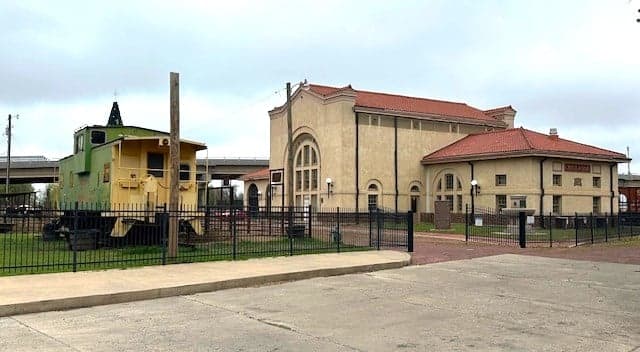
Chickasha was founded in 1892 as a railroad town on the Chicago, Rock Island and Pacific line, carved from the former Chickasaw Nation lands after the Land Run of 1889 and the subsequent allotment of tribal territories. The city’s original population was overwhelmingly white settlers from the Midwest and Upper South, drawn by the promise of cheap land and the railroad’s economic anchor. The first wave clustered around the original townsite, which today forms the Downtown Historic District, centered on Choctaw Avenue and 4th Street, where early merchants and railroad workers built wood-frame homes and storefronts. A second wave of white tenant farmers and small landowners arrived during the 1900s–1910s oil boom, settling in the West Side neighborhoods near the oil fields, an area that remains predominantly white and working-class today. Black settlers, who came as part of the post-Reconstruction Great Migration, established a distinct community in the South Side neighborhood around 2nd Street and Kansas Avenue, where the historic Booker T. Washington School (now a community center) anchored the area through the Jim Crow era. Hispanic presence was minimal until the mid-20th century, with a small number of Mexican railroad workers and farm laborers settling near the East Side rail yards, a pattern that would later expand.
Modern era (post-1965)
After the 1965 Hart-Cellar Act, Chickasha saw only modest demographic change, reflecting its limited economic draw and geographic isolation. The white population remained dominant, but the Black community on the South Side gradually shrank as younger generations left for larger cities like Oklahoma City and Dallas, leaving an aging population. The Hispanic share grew slowly from the 1970s onward, driven by agricultural labor in Grady County’s cotton and peanut fields, with new arrivals settling in the East Side near the rail corridor and in the Northwest Heights subdivision, a newer development built in the 1980s. East/Southeast Asian communities (0.5%) are a tiny presence, mostly tied to USAO’s international student program and small businesses, with no distinct ethnic enclave. The Indian subcontinent population is effectively zero (0.0%), and Arab communities are absent from the data. Suburbanization in the 1990s and 2000s pushed some white families into newer subdivisions like Shadow Lake Estates on the city’s northern edge, while the older core neighborhoods — Downtown, West Side, and South Side — experienced population decline and housing stock aging. The city’s foreign-born share (1.2%) is among the lowest in Oklahoma, indicating minimal recent immigration.
The future
Chickasha’s population is likely to continue its slow homogenization, with the white share remaining stable or slightly declining as the Hispanic share grows gradually through natural increase and limited new arrivals. The Black population is expected to hold steady or shrink further, as out-migration to larger metros continues. The city’s low college attainment rate (20.3%) and reliance on agriculture, energy, and the university suggest it will not attract significant new immigrant or professional populations in the next 10–20 years. The East Side and Northwest Heights may see modest Hispanic growth, but the overall trend is toward an older, whiter, and more economically stagnant demographic profile. No major new ethnic enclaves are forming, and the city remains largely tribalized by neighborhood — white families in the West Side and newer subdivisions, Black residents concentrated in the South Side, and Hispanic households in the East Side — with little mixing.
For a conservative-leaning individual or family considering a move, Chickasha offers a stable, low-crime, and culturally traditional environment with a clear sense of place, but it is not a destination for those seeking diversity or rapid economic opportunity. The city is becoming a quieter, more insular version of itself — a place where roots run deep, but the branches are not spreading far.

* Values derived from national, state, county, city and local statistics and may differ in a specific area. Last updated: 2026-04-25T13:52:07.000Z
Narrative content on this page is AI-generated and may contain mistakes. Verify any details that matter before acting on them.
ReloMaps may earn a commission from affiliate links at no extra cost to you.

