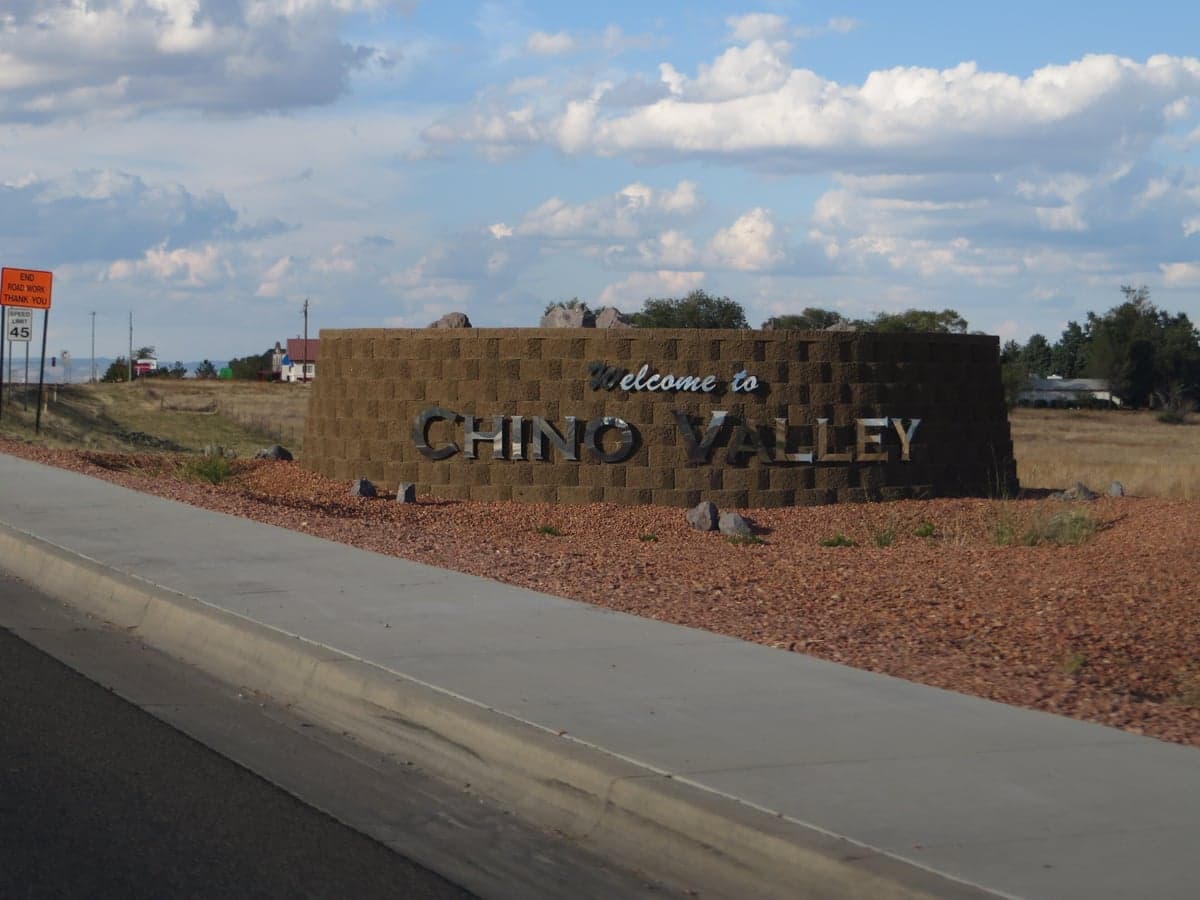
Photo: Wikipedia
Strategic Assessment of Chino Valley, AZ
Meaningful friction. Expect exposure to either population pressure, blast zones, or natural disaster risk. Consider buying a retreat property.
What does the Strategic Assessment tell us?
Our Strategic Assessment grades tactical survivability of an area. Major population centers, military targets, fallout zones, natural disasters, and border exposure all drive risk — lower exposure means a more defensible position in a crisis.
This is heavily inspired by Joel Skousen's Strategic Relocation book. Highly recommended you checkout the book ($)What does this tell us?
Our Strategic Assessment grades tactical survivability of an area. Major population centers, military targets, fallout zones, natural disasters, and border exposure all drive risk — lower exposure means a more defensible position in a crisis.
This is heavily inspired by Joel Skousen's Strategic Relocation book. Highly recommended you checkout the book ($)Strategic Pillars

Key Distances
Regional Safe Places
Below is our recommended "safe zones" in Arizona and the surrounding area based on our strategic heuristics. For most people, it's unrealistic to live in a “safe zone” full-time due to work, family or other personal reasons. They tend to be more rural. However, many of these areas are perfect for second homes and retreat properties that double as a vacation home or even a short-term rental.
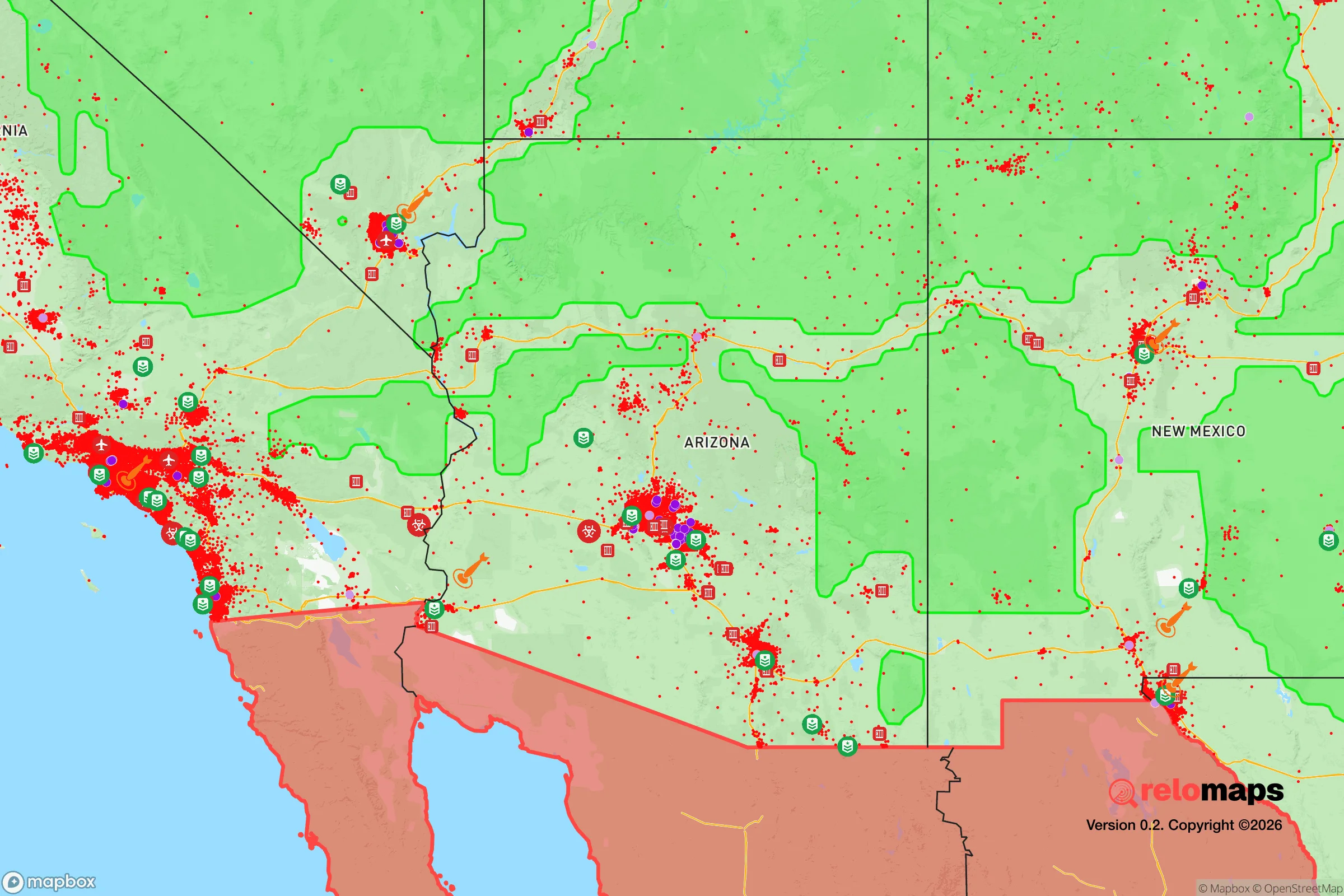
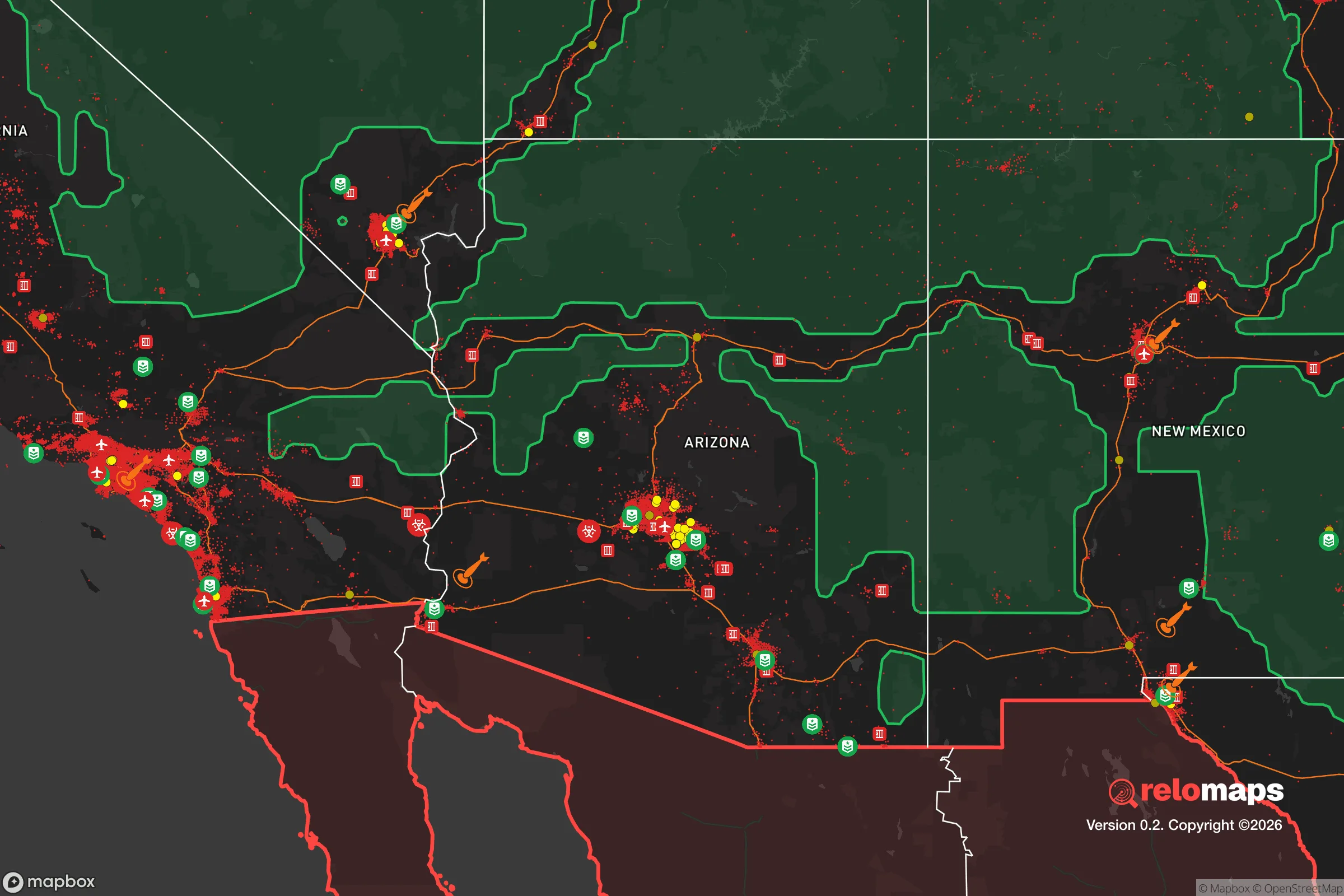


Important Note: For informational purposes only. This does not mean nothing bad ever happens in the green zones. Please use common sense. This is based on public data and modeled with AI. We tried to take a conservative approach but mistakes happen. We update this regularly as new information becomes available.
Solar Generator Recommendations
Backup power matters more here than in safer locations. We've picked three solar generators across budgets and capacity tiers — start with the budget unit if you only need a few essentials, or step up if you want to run a fridge and HVAC for days at a time.

Jackery Portable Power Station Explorer 300
Budget OptionPower on the Go: Weighing only 11 lbs, it's convenient to set up and store with book-sized foldable solar panels

BLUETTI Portable Power Station AC180
Designed for both indoor and outdoor scenarios, AC180 is highly capable as it has a robost capacity and continuous output power.

EF ECOFLOW DELTA Pro Ultra Power Station
Upgraded PickEcoFlow DELTA Pro Ultra is a whole-home energy system designed to grow with your family. Integrated with the Smart Home Panel 2, it scales to meet your evolving energy needs — keeping your home powered, intelligent, and secure through every stage of life.
We earn a commission, at no additional cost to you.
Strategic Assessment Analysis
Chino Valley, Arizona, sits in a strategic sweet spot that preppers and conservative relocators should take seriously: close enough to the infrastructure of Prescott and Phoenix to access supplies and medical care, yet far enough to avoid the blast radius, civil unrest, and population-density risks that make big cities a liability in a crisis. The town’s location in Yavapai County, at roughly 4,700 feet elevation, offers a moderate high-desert climate that avoids the extreme heat of the Valley of the Sun while still providing year-round access and a long growing season. For someone thinking about long-term stability, water availability, and defensible space, Chino Valley checks several boxes that many other Arizona towns do not.
Geographic position and natural advantages for long-term stability
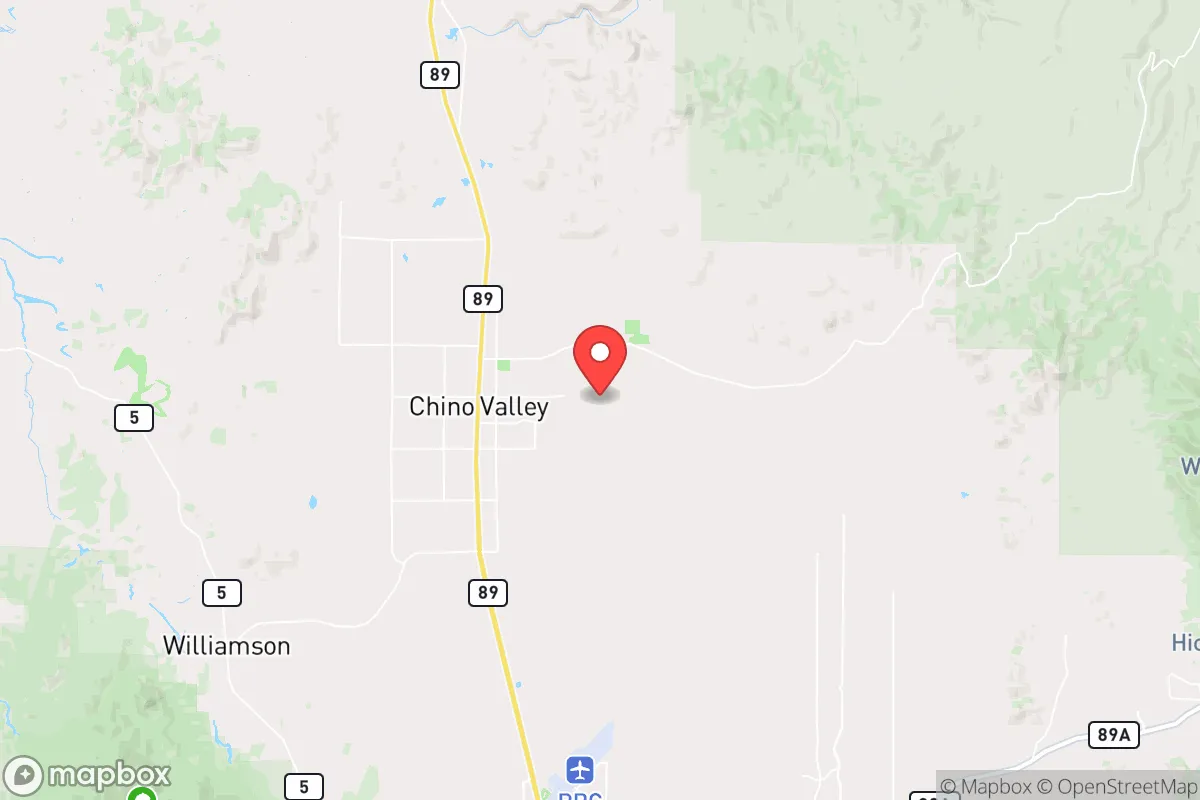
Chino Valley sits on the eastern edge of the Chino Valley basin, a broad, flat agricultural area that historically supported ranching and farming. The town is roughly 20 miles north of Prescott and about 90 miles northwest of Phoenix, placing it outside the immediate suburban sprawl of the state’s major population centers. The surrounding terrain is a mix of open grasslands, rolling hills, and piñon-juniper woodlands, offering multiple egress routes if the main highways—AZ-89 and AZ-89A—become compromised. The area’s elevation means summer highs rarely exceed 95°F, and winter lows dip into the 20s, which reduces the risk of heat-related infrastructure failures and makes off-grid solar and battery systems more efficient than in lower-elevation desert towns. The Big Chino Valley aquifer, which underlies the region, is a significant groundwater resource; while it’s being drawn down by Prescott’s growing demand, it still provides a more reliable water table than many other parts of Arizona. For a relocator, the ability to drill a well and maintain a private water supply is a major advantage over cities dependent on the Central Arizona Project canal, which is vulnerable to disruption from earthquakes, sabotage, or drought politics.
Risks, exposures, and proximity to fallout-relevant landmarks
No location is without vulnerabilities, and Chino Valley has a few that a strategic relocator must weigh. The town is roughly 50 miles from the Prescott National Forest, which has a history of large wildfires—the 2013 Yarnell Hill Fire and the 2021 Rafael Fire both burned within 30 miles. While Chino Valley itself is mostly grassland and agricultural land, which reduces direct wildfire risk to structures, smoke and evacuation orders can still disrupt daily life. More critically, the area is within 100 miles of Luke Air Force Base near Phoenix, a major fighter wing base that could be a target in a conflict scenario. The same proximity that provides access to medical and supply chains also means that a major event in Phoenix—whether civil unrest, a dirty bomb, or a biological release—would send refugees north along AZ-89 and I-17, potentially overwhelming Chino Valley’s resources. The Prescott area, including Chino Valley, has seen significant population growth since 2020, which means that the “rural” feel is increasingly suburbanized. The town’s water rights are also contested: the Big Chino Water Ranch, a Prescott-owned groundwater pumping project, has been controversial with local ranchers and residents who worry about long-term aquifer depletion. For a prepper, this means that securing a property with grandfathered water rights or a deep well is essential, not optional.
Practical resilience for a relocator: food, water, energy, and defensibility
For someone looking to build a resilient homestead, Chino Valley offers a workable baseline. The growing season runs roughly April through October, with enough chill hours for apples, pears, and stone fruits, and the soil—mostly sandy loam—drains well and is workable with basic equipment. Local farmers’ markets and the Prescott Farmers Market provide backup food sources, but a serious prepper will want to establish a garden and possibly a small orchard within the first year. Water is the critical variable: the town’s municipal water comes from wells, but a private well is the gold standard. Drilling depths in the area range from 200 to 600 feet, and costs have risen, but a well plus a solar pump and storage tanks can provide a truly independent water supply. Solar potential is excellent—the area averages over 260 sunny days per year—and net metering is available through Arizona Public Service, though the regulatory environment for solar has become less favorable in recent years. For defensibility, Chino Valley’s layout is a mixed bag. The town is spread out, with many properties on acreage, which provides buffer and line of sight. However, the main roads are limited, and a determined group could block access to the area. The local sheriff’s office in Yavapai County is generally conservative and pro-Second Amendment, which is a positive for those concerned about self-defense. The nearest Level 1 trauma center is in Prescott (Dignity Health Yavapai Regional Medical Center), about 25 minutes away, which is acceptable for routine emergencies but a vulnerability in a mass casualty event when that facility could be overwhelmed.
Overall, Chino Valley presents a viable option for the conservative relocator who wants to be out of the immediate blast zone of Phoenix but still within a day’s drive of major resources. The trade-offs are real: the water situation requires due diligence, the wildfire risk is non-zero, and the growth of the Prescott area means that the “bug out” location of 2020 is now a bedroom community with its own vulnerabilities. But for someone willing to invest in a well, solar, and a defensible property with good soil, Chino Valley offers a solid foundation for long-term resilience. It’s not a remote survivalist compound—it’s a practical, middle-ground location that balances access with security. If you’re serious about being prepared, this is a place to look at hard, but only after you’ve done the homework on water rights, fire mitigation, and your specific property’s defensibility. The strategic picture is positive, but it’s not a guarantee—nowhere is.

* Values derived from national, state, county, city and local statistics and may differ in a specific area. Last updated: 2026-05-01T06:03:36.000Z
Narrative content on this page is AI-generated and may contain mistakes. Verify any details that matter before acting on them.
ReloMaps may earn a commission from affiliate links at no extra cost to you.

