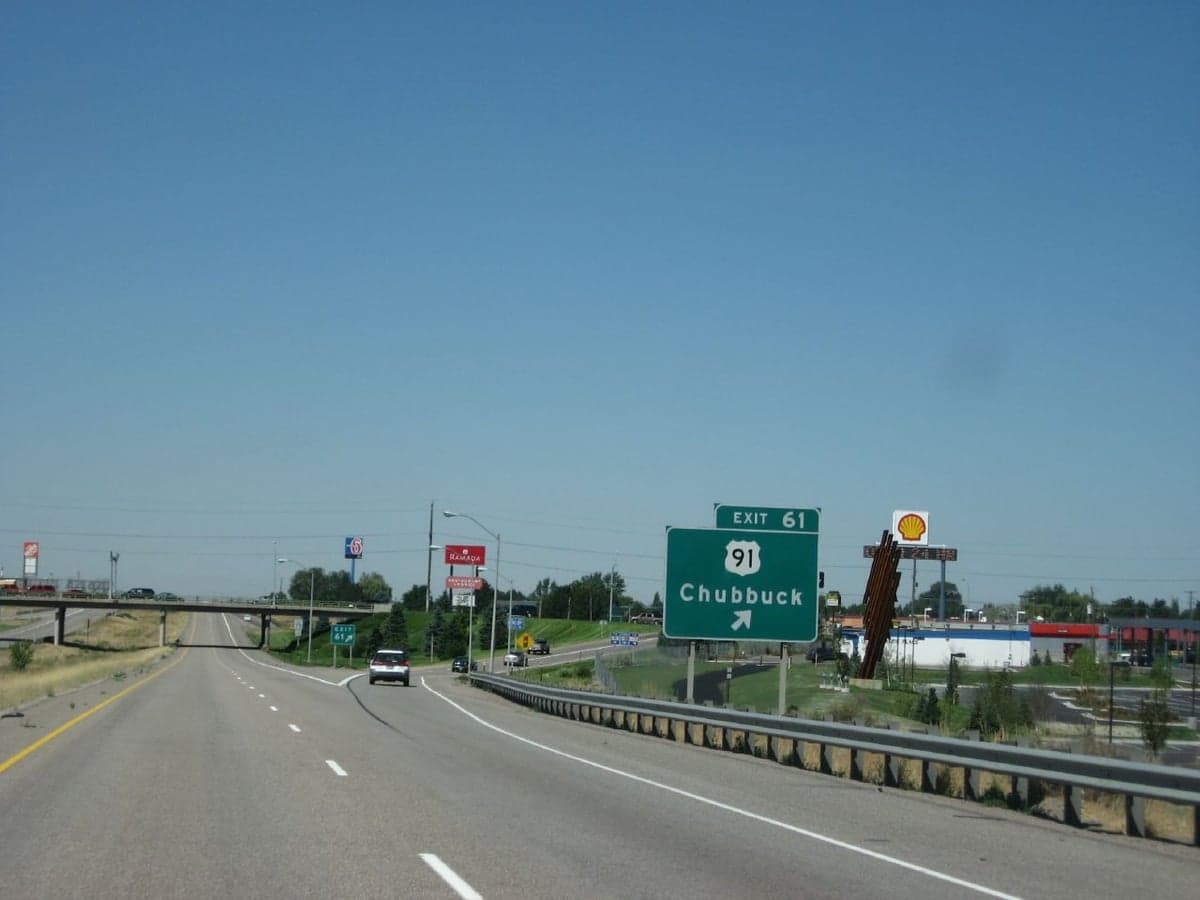
Photo: Wikipedia
Demographics of Chubbuck, ID
Affluence Level in Chubbuck, ID
A middle-class area roughly in line with national averages across income, home values, education, and employment.
People of Chubbuck, ID
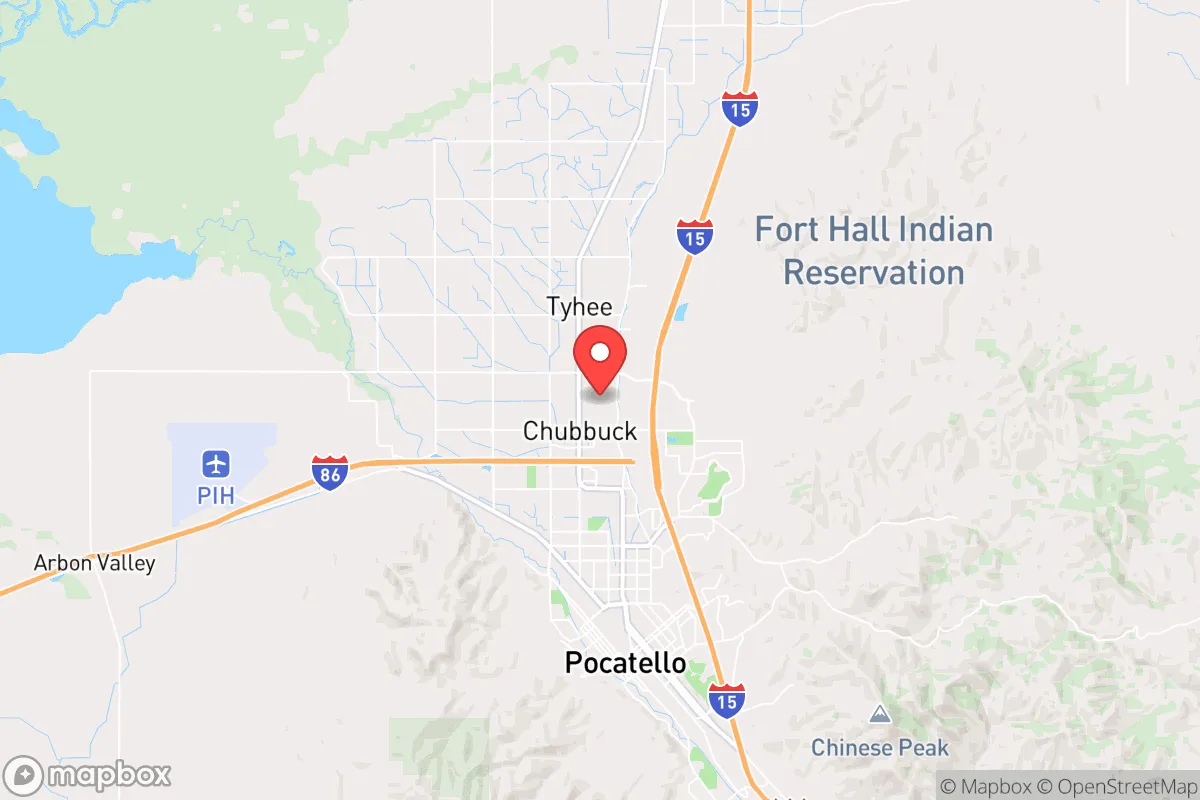
Today, Chubbuck, Idaho, is a predominantly white, working-to-middle-class community of roughly 15,900 residents, distinguished by its low foreign-born population of just 1.2% and a growing Hispanic minority of 14.1%. The city functions largely as a residential and commercial extension of Pocatello, with a character shaped by its agricultural roots and a population density that feels suburban rather than rural. Its identity is quietly conservative, with a notable share of families and individuals drawn by affordable housing and proximity to regional employment in education, healthcare, and light manufacturing.
How the city was settled and grew
Chubbuck was not a pioneer-era settlement but a railroad town that emerged in the late 19th century, named after a local rancher, George Chubbuck. The original population was almost entirely white, drawn by the arrival of the Oregon Short Line Railroad in the 1880s and the promise of work in agriculture and rail maintenance. Early settlers clustered near the tracks in what is now the Old Town Chubbuck district, a modest grid of homes and small businesses that still anchors the city’s historic core. Through the early 20th century, the population grew slowly, fed by homesteaders and farmers of Northern European descent—primarily English, German, and Scandinavian stock—who worked the surrounding potato and wheat fields. The city remained a small, insular farming community until the post-World War II era, when the expansion of the nearby Idaho National Laboratory (then the National Reactor Testing Station) and the growth of Idaho State University in Pocatello began pulling in a new wave of domestic migrants.
Modern era (post-1965)
The 1965 Hart-Cellar Act had minimal direct impact on Chubbuck; the city’s foreign-born population remains negligible at 1.2%, and its racial composition has shifted primarily through domestic migration and natural increase. The major demographic change since the 1970s has been the growth of the Hispanic population, now 14.1%, driven by families moving from the American Southwest and Mexico for agricultural and construction work. These households have concentrated in the Pocatello Creek and North Chubbuck neighborhoods, where older, more affordable housing stock and proximity to farm labor routes made settlement practical. The white population, at 77.3%, remains the overwhelming majority, with many families living in the newer subdivisions of Highland Estates and South Chubbuck, areas developed from the 1990s onward to accommodate commuters to Pocatello and the Idaho National Laboratory. The East/Southeast Asian population is tiny at 0.5%, and the Indian subcontinent population is a negligible 0.1%, reflecting the city’s lack of the professional and tech-sector magnets that draw these groups to larger Idaho cities like Boise. The Black population is virtually absent at 0.2%. Suburbanization has been the dominant force: Chubbuck’s population more than doubled between 1980 and 2020, with most growth occurring in low-density, single-family-home subdivisions that reinforce its car-dependent, family-oriented character.
The future
Chubbuck’s population is heading toward gradual diversification, but the pace will likely remain slow. The Hispanic share is projected to continue rising through both higher birth rates and continued in-migration for agricultural and service-sector jobs, potentially reaching 20-25% within 20 years. However, the city is not tribalizing into distinct ethnic enclaves; Hispanic households are dispersing across the Pocatello Creek and North Chubbuck areas rather than forming a single barrio, and assimilation into the broader community is the norm. The white population is aging slightly, but the city’s affordable housing and family-friendly reputation continue to attract younger white families from elsewhere in the Intermountain West. The foreign-born population is unlikely to rise significantly given the lack of refugee resettlement programs or major immigrant-employing industries in the immediate area. The East/Southeast Asian and Indian populations will likely remain tiny, as Chubbuck lacks the tech and university employment that draws these groups to larger Idaho cities.
For a conservative-leaning individual or family considering relocation, Chubbuck is becoming a slightly more diverse but still overwhelmingly white, family-oriented suburb. Its demographic trajectory points toward a slow, organic increase in Hispanic representation, but without the rapid ethnic change or cultural friction seen in larger metropolitan areas. The city remains a stable, low-crime, and affordable option for those who prioritize space, safety, and a traditional small-city lifestyle within commuting distance of Pocatello’s amenities.

* Values derived from national, state, county, city and local statistics and may differ in a specific area. Last updated: 2026-05-03T20:23:39.000Z
Narrative content on this page is AI-generated and may contain mistakes. Verify any details that matter before acting on them.
ReloMaps may earn a commission from affiliate links at no extra cost to you.

