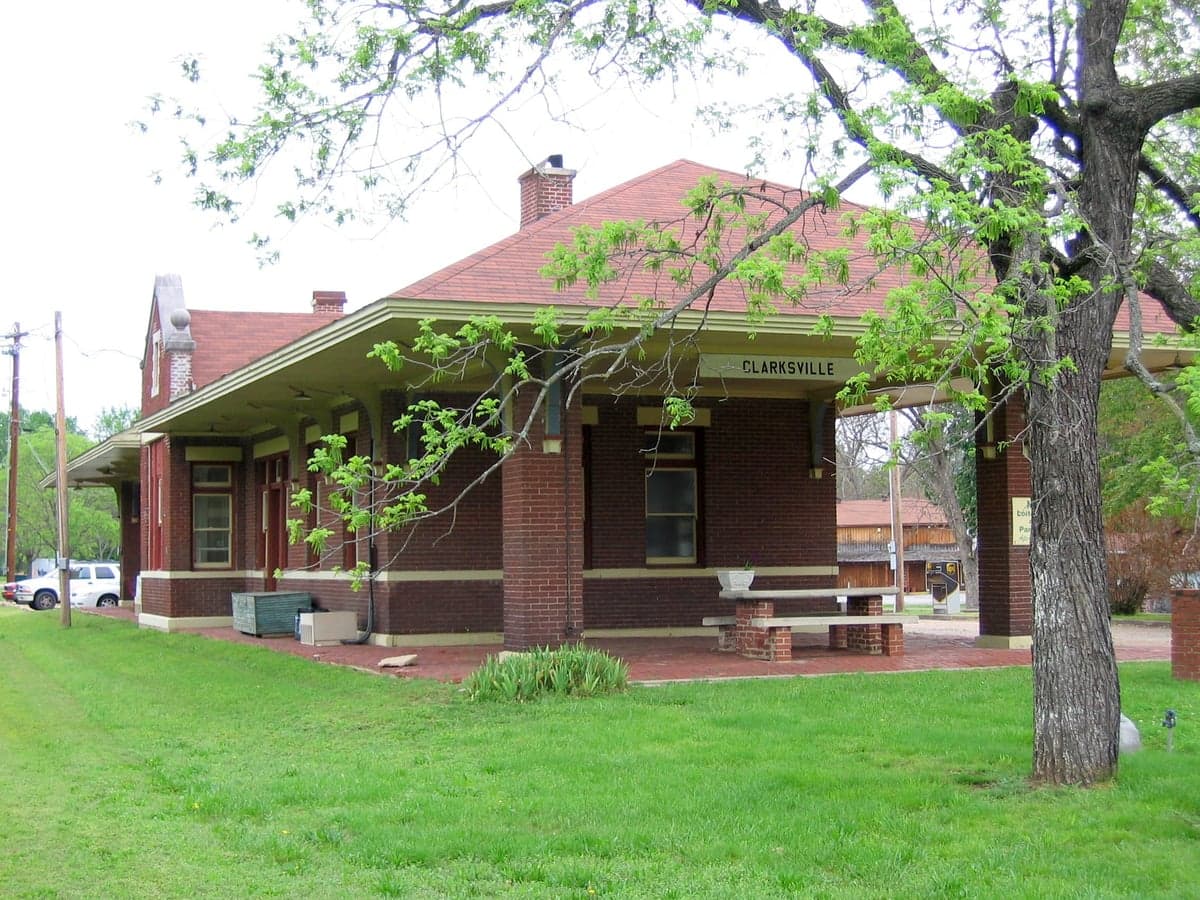
Photo: Wikipedia
Personal Sovereignty in Clarksville, AR
Viable for self-reliance. Generally workable, though some barriers may limit total independence.
What does Personal Sovereignty tell us?
Personal Sovereignty measures your capacity for self-reliance and independence with minimal government friction. Higher scores mean fewer barriers between you and the way you want to live... but it assumes you have the space you need and good neighbors.
What does this tell us?
Personal Sovereignty measures your capacity for self-reliance and independence with minimal government friction. Higher scores mean fewer barriers between you and the way you want to live... but it assumes you have the space you need and good neighbors.
State Policy
Energy independence: Importer (35% of energy produced in-state)
Personal Liberty
Homesteading

Personal Liberty Analysis
Clarksville, Arkansas, offers a notably high degree of personal sovereignty compared to many other regions in the United States, particularly for those who prioritize minimal government interference in daily life. The town sits in Johnson County, a rural area where the culture of self-reliance is not just a preference but a practical necessity, and where state-level preemption laws shield local ordinances from encroaching on Second Amendment rights and property freedoms. For the individual or family operating from a survivalist or prepper mindset, Clarksville represents a strategic foothold in a state that consistently ranks among the most liberty-oriented in the nation, with a legal and regulatory environment that largely leaves people to manage their own affairs.
Tax burden and regulatory posture: How Arkansas compares to high-tax states
Arkansas maintains a tax and regulatory posture that is deliberately friendly to those seeking to keep more of their earnings and operate without excessive bureaucratic oversight. The state's income tax is a flat 4.4% as of 2025, with a top marginal rate that has been steadily declining, and there is no state-level estate or inheritance tax—a critical factor for those looking to pass property and assets to the next generation without government confiscation. Property taxes in Johnson County are among the lowest in the state, with an effective rate typically around 0.5% to 0.6% of assessed value, meaning a $200,000 home might incur an annual tax bill of roughly $1,100. Sales tax in Clarksville is 9.5% (state plus local), which is moderate, but the lack of a state tax on groceries or prescription drugs provides a buffer. More importantly, Arkansas is a right-to-work state with minimal business licensing requirements for small-scale operations, and there are no state-level mandates for paid sick leave or similar labor regulations that burden small homesteads or side businesses. For the prepper, this means less of your income is siphoned off to fund programs you may not support, and the state's regulatory footprint is light enough that you can build a workshop, start a small farm, or operate a home-based trade without needing a stack of permits.
Self-defense and gun law specifics: Constitutional carry and castle doctrine in Arkansas
Arkansas is a constitutional carry state, meaning that as of 2021, any law-abiding adult 18 or older can carry a concealed or open firearm without a permit. This is a foundational element of personal sovereignty in Clarksville, as it removes the government's role as a gatekeeper to self-defense. The state also has a strong castle doctrine and a stand-your-ground law, codified in Arkansas Code § 5-2-620, which explicitly states that a person has no duty to retreat from any place they are lawfully present and may use deadly force if they reasonably believe it is necessary to prevent imminent death or great bodily harm. There are no firearm registration requirements, no state-level bans on standard-capacity magazines, and no "red flag" laws that allow for temporary seizure of firearms without due process. For the prepper, this legal environment means your defensive capabilities are not subject to the whims of local politicians—state preemption laws prevent cities like Clarksville from enacting their own gun control ordinances, so you don't have to worry about the town council suddenly restricting magazine sizes or storage requirements. The only notable restriction is that carrying a firearm into a posted federal building or a school zone (with exceptions for those with a concealed carry license) remains off-limits, but for daily life in rural Johnson County, the legal landscape is about as permissive as it gets in the continental U.S.
Self-reliance and homesteading viability: Lot sizes, zoning, and off-grid feasibility
Clarksville's rural character makes it a strong candidate for those seeking to establish a self-sufficient homestead. Zoning in Johnson County is minimal—outside the city limits, there are virtually no restrictions on keeping livestock, building outbuildings, or constructing alternative housing like tiny homes or earth-sheltered structures. Lot sizes in the unincorporated areas commonly range from 1 to 20 acres, with prices often under $5,000 per acre for raw land, making it feasible to acquire a parcel large enough for a substantial garden, a few head of cattle, or a solar array. The city itself has some basic zoning for residential areas, but it is not aggressive; you can typically keep chickens and even a goat within city limits on a standard lot, though you'd want to check the specific plat. Off-grid living is legally viable in Johnson County: there are no state laws requiring connection to a municipal water or sewer system, and the county does not mandate building permits for agricultural structures under a certain size. Solar panels, rainwater catchment, and composting toilets are all permissible, provided you meet basic health department standards for septic systems. The local utility, Ozark Electric Cooperative, has a net metering policy that allows you to sell excess solar power back to the grid, but for the hardcore prepper, you can simply disconnect entirely without legal penalty. The main practical constraint is water—well drilling is common, but you'll need to budget $5,000 to $15,000 for a drilled well depending on depth, as the Ozark aquifer is reliable but deep in some areas.
Personal liberties: Parental rights, medical autonomy, speech, and property
Arkansas has been at the forefront of protecting parental rights in education and medical decisions. The state's LEARNS Act, passed in 2023, expanded school choice and explicitly affirms parents' authority over their children's education, including the right to opt out of any curriculum or activity they find objectionable. There are no state-level vaccine mandates for school attendance—parents can claim a philosophical or religious exemption without hassle. Medical autonomy is similarly robust: Arkansas does not have a state-level health insurance exchange mandate, and there are no laws requiring COVID-19 vaccination for employment or public access. The state also passed the Medical Ethics and Diversity Act, which protects healthcare providers and patients from being forced to participate in procedures they object to on moral or religious grounds. Free speech is protected under the Arkansas Constitution, which has its own free speech clause that has been interpreted broadly by state courts, and there are no state-level hate speech laws that could be used to chill political or religious expression. Property rights are strongly defended: Arkansas has a right-to-farm law that protects agricultural operations from nuisance lawsuits, and the state's eminent domain laws are among the most restrictive in the country, requiring a clear public use and just compensation. For the prepper, this means you can speak your mind about government overreach, refuse medical interventions you don't trust, and raise your children according to your own values without fear of state intervention—at least for now.
Overall, Clarksville offers a level of personal sovereignty that is increasingly rare in the United States. The combination of constitutional carry, low taxes, minimal zoning, strong parental rights, and a culture of self-reliance places it in the top tier of American towns for those who prioritize freedom from government overreach. While no location is a perfect sanctuary—Arkansas still has a state income tax and the federal government's reach remains inescapable—Clarksville provides a legal and practical foundation for a life built on personal responsibility and preparedness. For the individual or family looking to step back from the encroaching regulatory state, this corner of the Ozarks is a solid strategic choice.

* Values derived from national, state, county, city and local statistics and may differ in a specific area. Last updated: 2026-04-30T01:06:46.000Z
Narrative content on this page is AI-generated and may contain mistakes. Verify any details that matter before acting on them.
ReloMaps may earn a commission from affiliate links at no extra cost to you.

