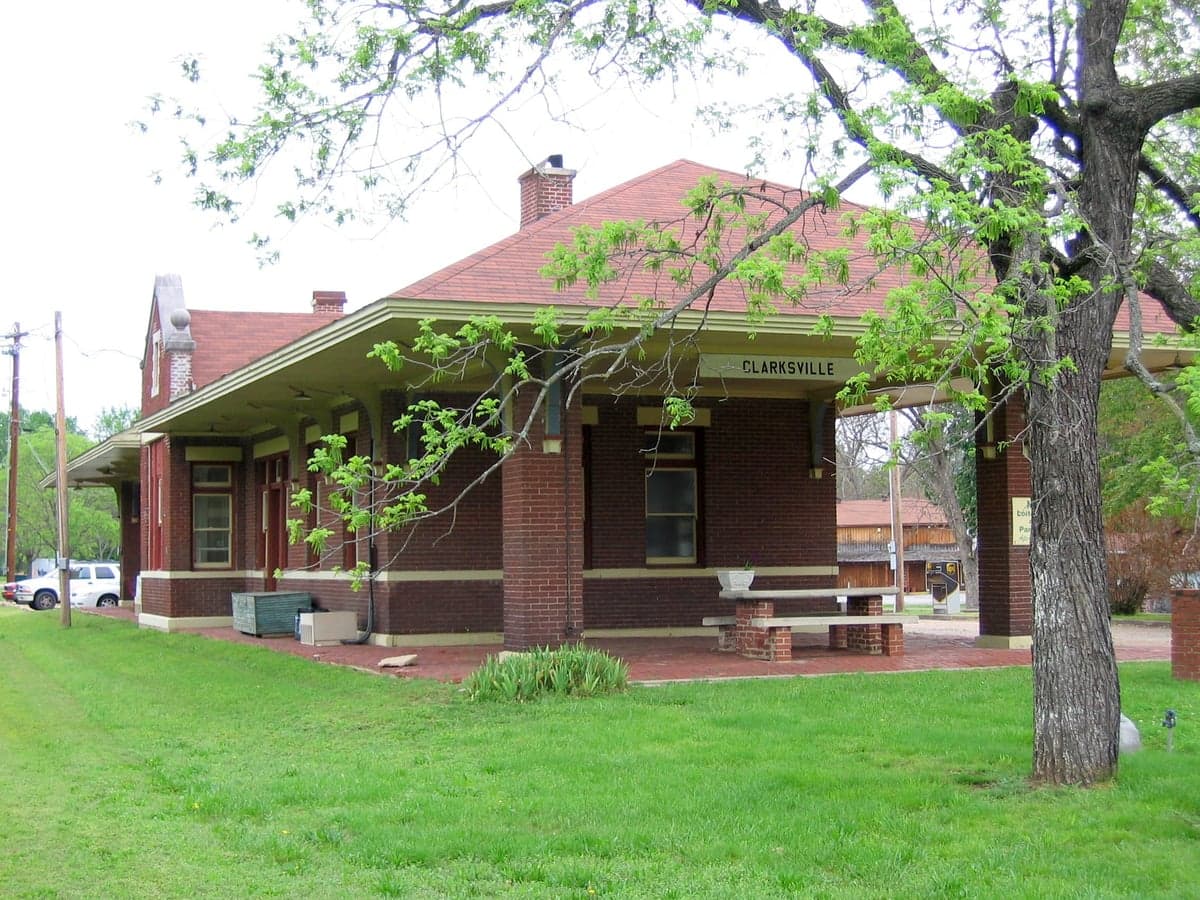
Photo: Wikipedia
Strategic Assessment of Clarksville, AR
Workable tactical position. Some exposure to population density or targets, but generally defensible in a crisis.
What does the Strategic Assessment tell us?
Our Strategic Assessment grades tactical survivability of an area. Major population centers, military targets, fallout zones, natural disasters, and border exposure all drive risk — lower exposure means a more defensible position in a crisis.
This is heavily inspired by Joel Skousen's Strategic Relocation book. Highly recommended you checkout the book ($)What does this tell us?
Our Strategic Assessment grades tactical survivability of an area. Major population centers, military targets, fallout zones, natural disasters, and border exposure all drive risk — lower exposure means a more defensible position in a crisis.
This is heavily inspired by Joel Skousen's Strategic Relocation book. Highly recommended you checkout the book ($)Strategic Pillars

Key Distances
Regional Safe Places
Below is our recommended "safe zones" in Arkansas and the surrounding area based on our strategic heuristics. For most people, it's unrealistic to live in a “safe zone” full-time due to work, family or other personal reasons. They tend to be more rural. However, many of these areas are perfect for second homes and retreat properties that double as a vacation home or even a short-term rental.
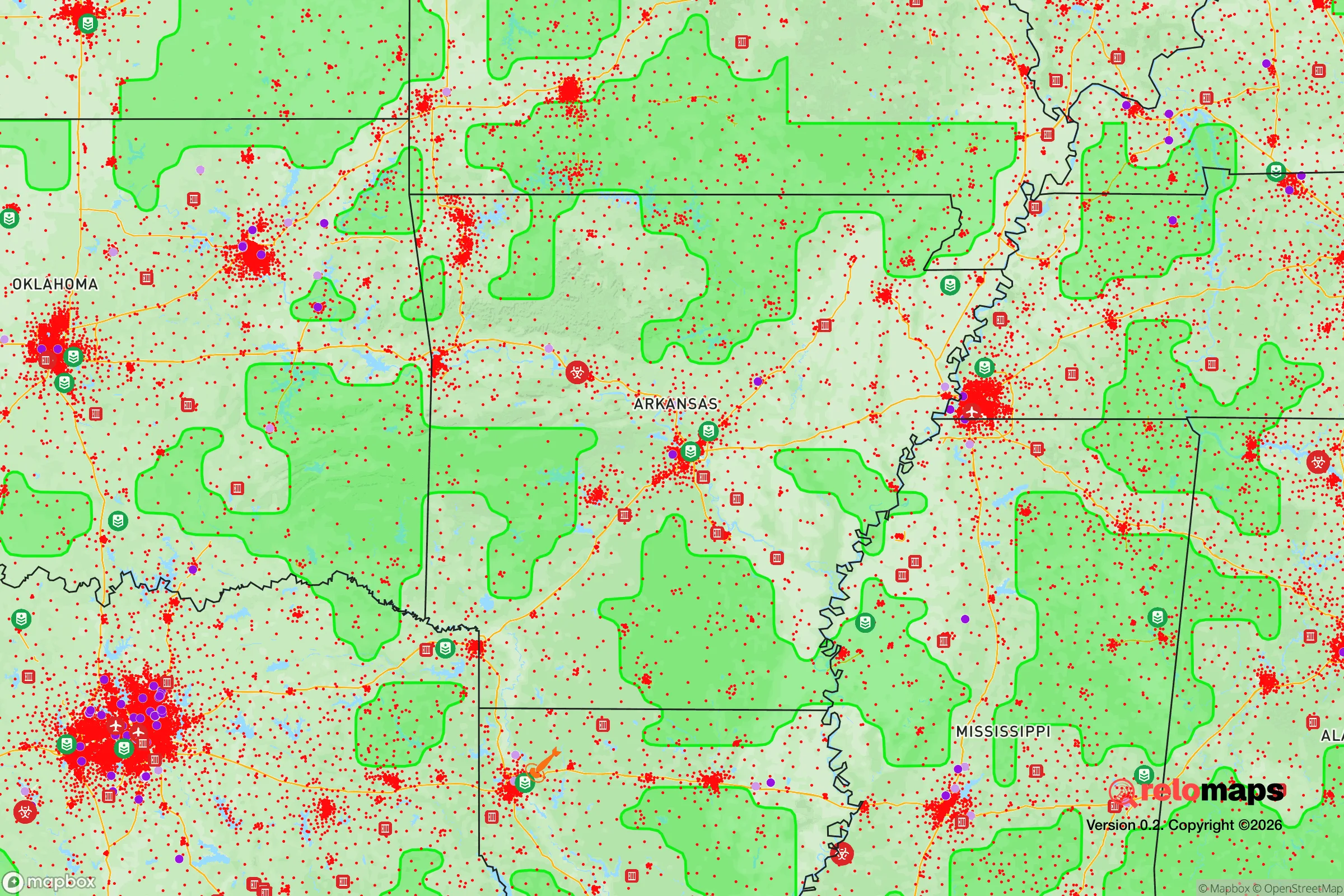
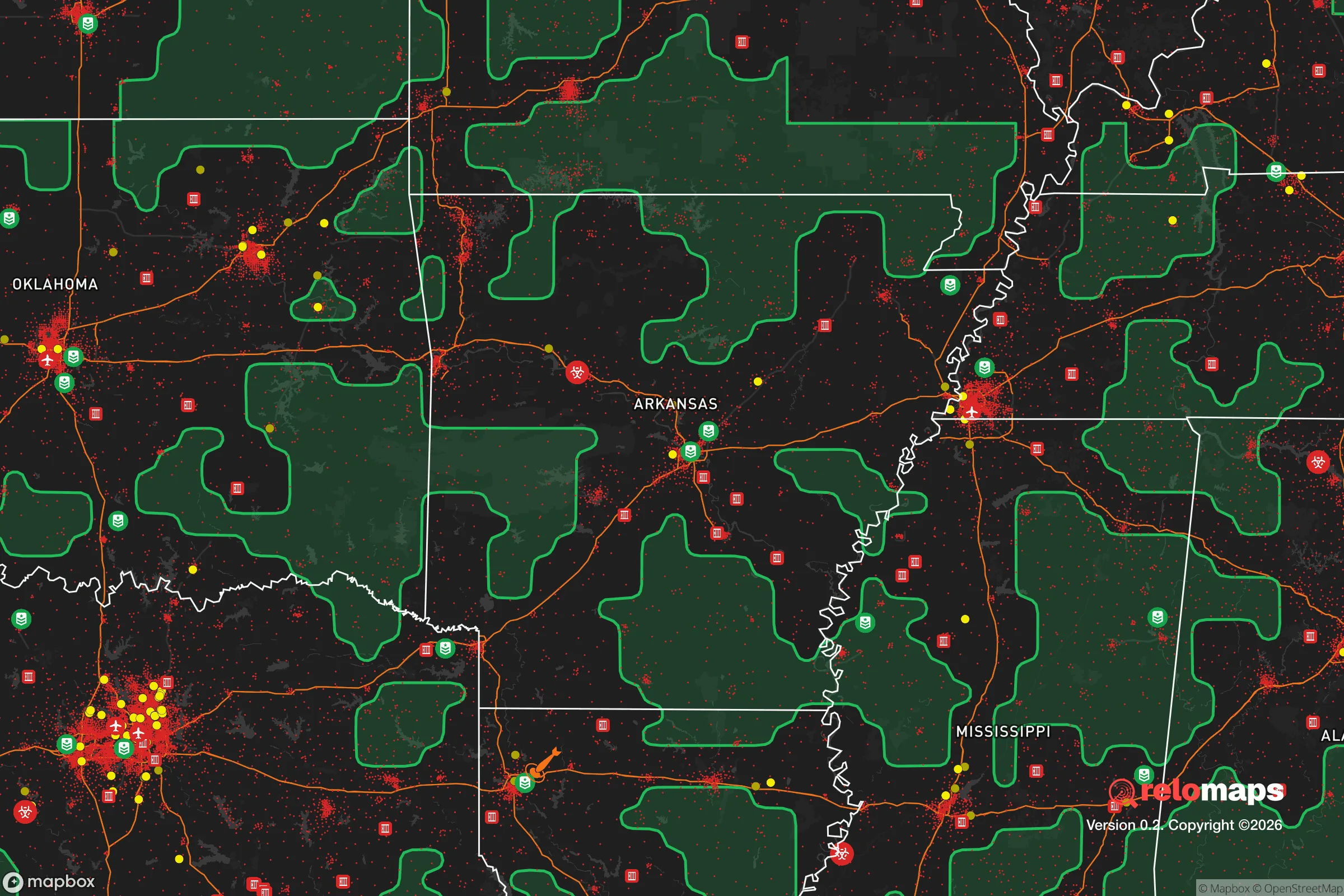


Important Note: For informational purposes only. This does not mean nothing bad ever happens in the green zones. Please use common sense. This is based on public data and modeled with AI. We tried to take a conservative approach but mistakes happen. We update this regularly as new information becomes available.
Solar Generator Recommendations
Backup power matters more here than in safer locations. We've picked three solar generators across budgets and capacity tiers — start with the budget unit if you only need a few essentials, or step up if you want to run a fridge and HVAC for days at a time.

Jackery Portable Power Station Explorer 300
Budget OptionPower on the Go: Weighing only 11 lbs, it's convenient to set up and store with book-sized foldable solar panels

BLUETTI Portable Power Station AC180
Designed for both indoor and outdoor scenarios, AC180 is highly capable as it has a robost capacity and continuous output power.

EF ECOFLOW DELTA Pro Ultra Power Station
Upgraded PickEcoFlow DELTA Pro Ultra is a whole-home energy system designed to grow with your family. Integrated with the Smart Home Panel 2, it scales to meet your evolving energy needs — keeping your home powered, intelligent, and secure through every stage of life.
We earn a commission, at no additional cost to you.
Strategic Assessment Analysis
Clarksville, Arkansas, offers a compelling strategic position for those prioritizing resilience and self-sufficiency in an uncertain future. Tucked into the Arkansas River Valley at the foot of the Boston Mountains, this town of roughly 10,000 people sits far enough from major metropolitan centers to avoid the worst of urban collapse scenarios, yet remains connected enough for resupply and information flow. For a conservative-leaning relocator concerned with civic unrest, supply chain disruptions, or mass casualty events, Clarksville presents a blend of geographic insulation, resource access, and community scale that merits serious consideration.
Geographic position and natural advantages for long-term security
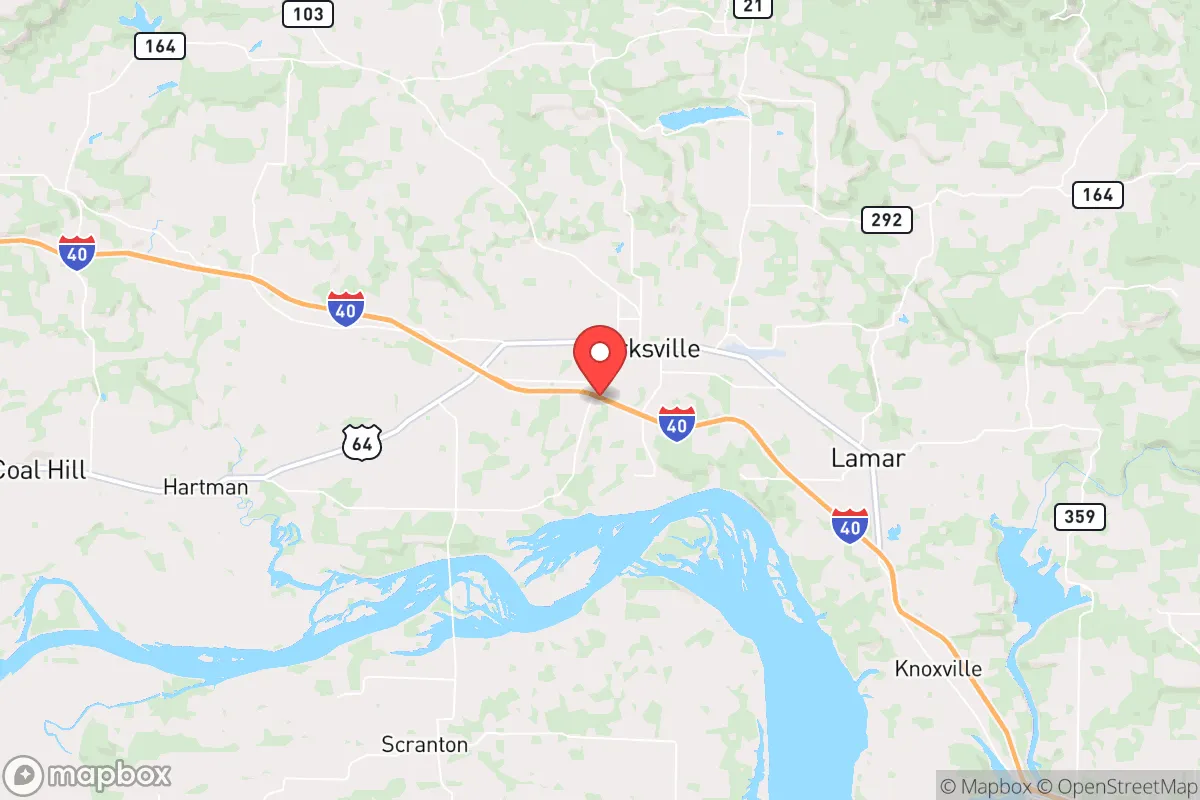
Clarksville’s location is its primary strategic asset. It lies roughly 100 miles northwest of Little Rock and 110 miles east of Tulsa, placing it outside the immediate fallout zones of those cities while still within a day’s drive for essential trade or medical evacuation. The town sits along Interstate 40, a major east-west artery, but the surrounding terrain—steep ridges, hardwood forests, and the Ozark National Forest to the north—provides natural barriers that slow movement and create defensible chokepoints. The Arkansas River, which flows just south of town, offers a reliable water source and potential transportation corridor if roads become compromised. The Boston Mountains to the north are sparsely populated, offering retreat options into public lands where a prepared individual could establish a remote cache or bug-out location. The region’s moderate climate means fewer extreme weather events than the Plains or Gulf Coast, though tornadoes remain a seasonal risk. For a prepper, the combination of elevation, forest cover, and distance from population centers makes Clarksville a strong candidate for a semi-rural base of operations.
Risks, exposures, and proximity to fallout-relevant landmarks
No location is without vulnerabilities, and Clarksville has several that demand attention. The town is within 50 miles of the Arkansas Nuclear One plant near Russellville, a pressurized water reactor that, while well-regulated, represents a potential radiation hazard in a catastrophic failure or targeted attack. Prevailing winds from the southwest could carry fallout toward Clarksville in such an event, so a prepper should have potassium iodide stocks and a plan for sheltering or moving north into the Ozarks. Interstate 40, while useful, also funnels traffic from both coasts, making it a likely route for refugees fleeing coastal disasters or civil unrest. A major event could turn the highway into a liability, bringing transient populations through the area. The town itself has a small police force and a county sheriff’s office with limited resources; in a prolonged grid-down scenario, law enforcement would be stretched thin. Additionally, the nearby city of Fayetteville (about 60 miles northwest) and Fort Smith (45 miles southwest) are regional hubs that could become targets for unrest or resource competition. Clarksville’s relative obscurity works in its favor, but a relocator must accept that no place in the continental U.S. is truly remote from these risks.
Practical resilience for a relocator: food, water, energy, and defensibility
For daily life and crisis preparedness, Clarksville offers several practical advantages. The surrounding Johnson County is agricultural, with cattle farms, hay fields, and small-scale vegetable operations. A relocator with land can establish gardens, raise livestock, and barter with neighbors who already practice subsistence farming. Water is abundant: the Arkansas River, multiple creeks (Spadra Creek, Piney Creek), and groundwater wells are all viable sources, though testing and filtration are essential due to agricultural runoff. The Ozark aquifer provides reliable well water at moderate depths (100-300 feet), and a hand pump or solar-powered pump can keep water flowing without grid power. Energy resilience is achievable: the area gets ample sun for solar panels (roughly 210 sunny days per year), and the forested terrain offers biomass for heating and cooking. Wood stoves are common in rural homes, and propane delivery is available from local suppliers. Defensibility is moderate: the town’s layout is compact, with a historic square and residential streets that can be monitored, but the real strength lies in the surrounding rural properties. A homestead on a ridge with a single access road, good sightlines, and a well-stocked root cellar would be hard to approach undetected. The local gun culture is strong—Arkansas is a shall-issue state for concealed carry, and Johnson County has a history of hunting and marksmanship—so a relocator will find like-minded neighbors who take security seriously. The biggest practical gap is medical infrastructure: the local hospital, Johnson Regional Medical Center, is a small critical-access facility. For serious trauma or chronic care, a trip to Fayetteville or Little Rock is necessary, which is a vulnerability in a collapse scenario. Stockpiling antibiotics, trauma kits, and learning basic field medicine is non-negotiable here.
The overall strategic picture for Clarksville is one of calculated trade-offs. It is not a fortress, nor is it a remote wilderness retreat. It is a working-class town in a region that still values self-reliance, community ties, and preparation. For a single individual or family willing to invest in land, water security, and off-grid energy, Clarksville provides a base that can weather many of the shocks that concern conservative preppers: economic collapse, supply chain failures, civil unrest, and even limited nuclear events. The proximity to I-40 and the nuclear plant are real concerns, but they are manageable with planning. The area’s low cost of living (median home price around $180,000), low property taxes, and lack of state income tax on retirement income make it financially sustainable for long-term preparation. The community is predominantly conservative, religious, and rural—demographics that align with a prepper mindset and reduce the likelihood of ideological conflict with neighbors. Clarksville won’t make headlines as a prepper paradise, but for someone looking to put down roots in a place that can hold its own when things go sideways, it deserves a hard look.

* Values derived from national, state, county, city and local statistics and may differ in a specific area. Last updated: 2026-04-30T01:06:46.000Z
Narrative content on this page is AI-generated and may contain mistakes. Verify any details that matter before acting on them.
ReloMaps may earn a commission from affiliate links at no extra cost to you.

