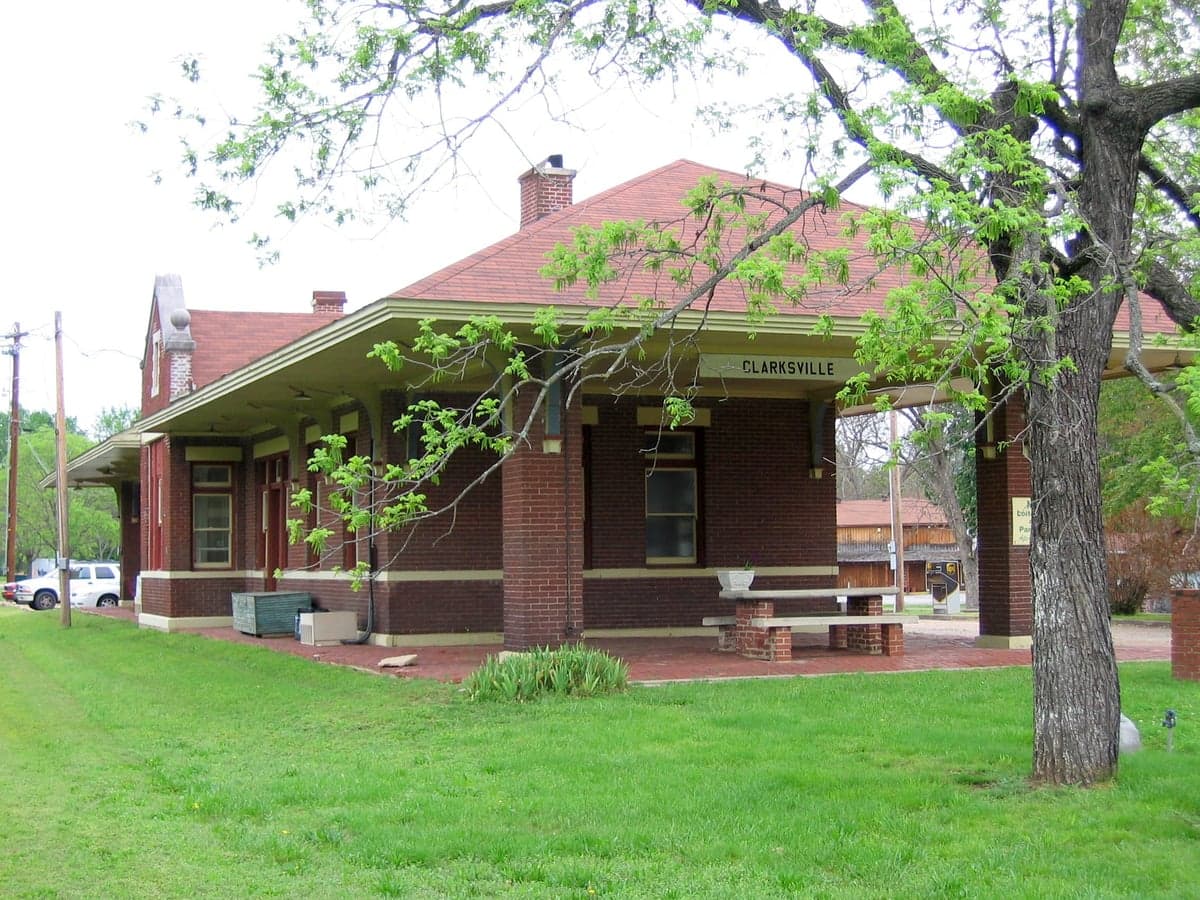
Photo: Wikipedia
Political ClimatePolitical Climate in Clarksville, AR
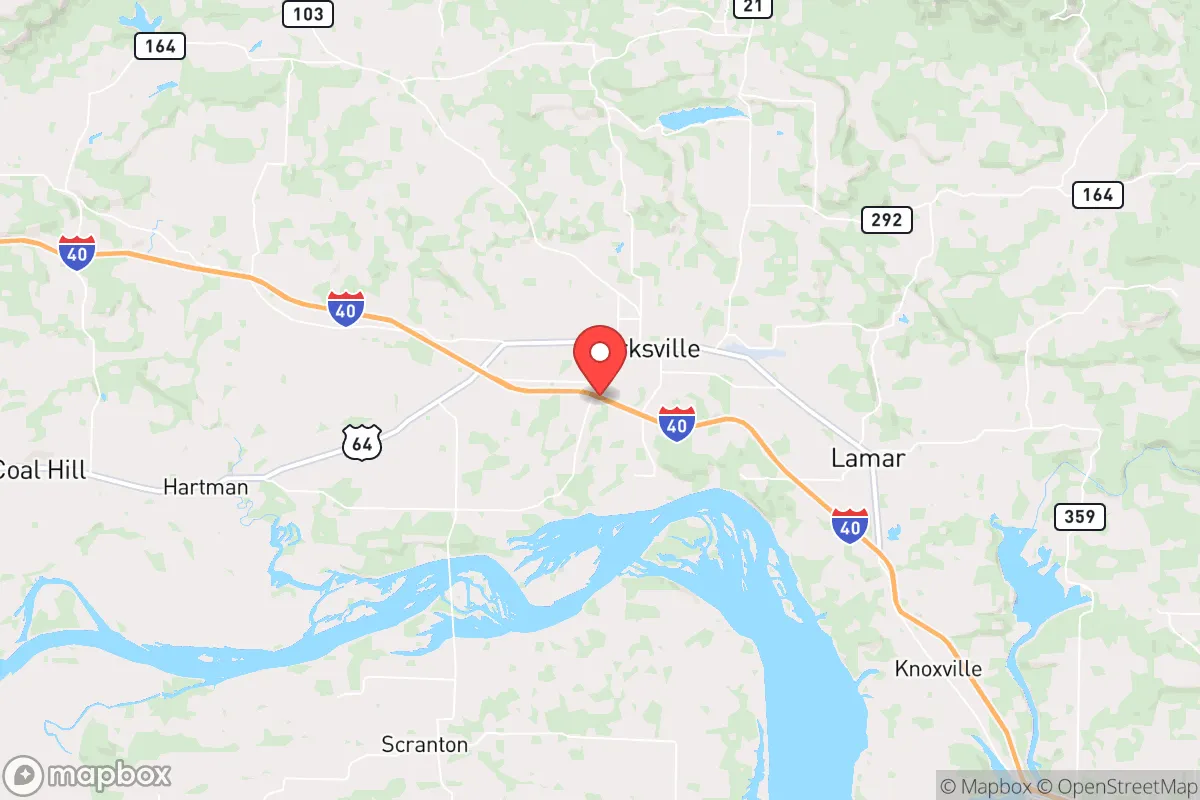
District shown is the primary district for this city’s centroid. Cities may span multiple districts.
Local Political AnalysisPolitical Analysis of Clarksville, AR
Clarksville, Arkansas, sits deep in solidly conservative territory, with a Cook PVI of R+20 that reflects generations of small-government, self-reliance values. The county has voted Republican by wide margins in every presidential election since 2000, and local offices are held overwhelmingly by conservatives who prioritize limited taxation, gun rights, and local control over schools and land use. That said, you can feel a subtle shift in the air — not a blue wave, but a slow creep of progressive influence from Fayetteville and Springdale, about 45 minutes east, where the University of Arkansas and tech-sector growth have brought younger, more left-leaning transplants. Longtime residents will tell you the change is real, even if the voting totals haven't flipped yet.
How it compares
Drive 20 minutes east to Russellville, and you'll find a similar conservative tilt, though its larger industrial base and Arkansas Tech University introduce a slightly more moderate streak. Head west toward Ozark or Alma, and the politics stay reliably red, with fewer transplants and a stronger agricultural identity. The real contrast is with Fayetteville itself, which votes blue by double digits and has embraced policies like sanctuary-city resolutions, mask mandates, and diversity-equity-inclusion programs in city government. Clarksville residents watch that with raised eyebrows — it's the kind of government overreach into personal freedoms that feels foreign here. The county's R+20 rating isn't just a number; it reflects a community that still believes the best government is the one closest to the people, and that Washington or Little Rock should stay out of local business.
What this means for residents
For families and individuals who value personal autonomy — whether it's choosing how to educate your kids, deciding on medical treatments, or exercising your Second Amendment rights — Clarksville offers breathing room. There are no city-level rental registries, no strict noise ordinances, and the county sheriff's office takes a hands-off approach to non-violent personal choices. Property taxes remain among the lowest in the state, and there's no city income tax. The downside? If you're hoping for rapid infrastructure improvements or progressive social programs, you'll be disappointed. The local government moves slowly and deliberately, often rejecting state or federal grants that come with strings attached. Some residents grumble about the lack of public transit or affordable housing initiatives, but most accept it as the price of keeping government small and non-intrusive.
One cultural distinction worth noting: Clarksville is home to University of the Ozarks, a small private liberal arts college that brings a slightly more diverse and academically-minded population into town. That influence is visible in local arts events and a handful of coffee shops, but it hasn't shifted the political needle much. The college itself stays politically neutral, and its students tend to keep their activism on campus. Looking ahead, the biggest wild card is growth pressure from the northwest Arkansas corridor. As Fayetteville and Springdale become more expensive, some families are moving east into Johnson County, bringing different voting habits with them. If that trend accelerates over the next decade, Clarksville's R+20 rating could edge toward R+15 or even R+10 — still conservative, but less reliably so. For now, though, the area remains a place where a person can live without feeling like the government is looking over their shoulder, and that's exactly how most folks here want it to stay.

State Political ClimatePolitical Climate in Arkansas
State Political AnalysisPolitical Environment in the State
Arkansas has been a reliably red state for decades, but don't let the simple label fool you — the political climate here is more layered than a simple Republican vs. Democrat map suggests. The state has shifted from a moderate-to-conservative Democratic stronghold in the 1990s to a solidly Republican one today, with the GOP now holding supermajorities in both chambers of the legislature and all six federal offices. Over the last 10-20 years, the real story has been the collapse of the old conservative Democratic coalition in the Delta and the Ozarks, replaced by a more uniform, culturally conservative Republican base that dominates from the Missouri line down to the Louisiana border.
Urban vs. rural divide
The political map of Arkansas is starkly divided between a handful of urban islands and a vast, deeply red rural expanse. The two major metros — Little Rock (Pulaski County) and Fayetteville (Washington County) — are the only real blue dots on the map. Pulaski County voted for Joe Biden by about 10 points in 2020, while Washington County has been trending purple for a decade, flipping to Biden by a narrow margin in 2020 after going for Trump in 2016. Bentonville and Rogers in the northwest are more conservative than Fayetteville proper, but the entire region is seeing an influx of out-of-state transplants from California and Texas, which is slowly diluting the traditional Republican advantage. Meanwhile, the rest of the state — from the Arkansas River Valley through the Ozarks and down into the Delta — is deeply red. Jonesboro in the northeast and Fort Smith in the west are reliably conservative, while rural counties like Stone and Van Buren routinely deliver 75-80% of their vote to Republicans. The Delta counties, once the backbone of the old Democratic machine, have flipped hard: Mississippi County voted for Trump by 20 points in 2020 after backing Obama in 2012.
Policy environment
Arkansas's policy environment is broadly conservative, but with some notable exceptions that frustrate the right. The state has a flat income tax of 4.4% (down from 6% in 2015) and a sales tax that averages around 9.5% when local levies are included — high for a red state. Property taxes are low, with a median effective rate of about 0.6%. On education, the state passed the Arkansas LEARNS Act in 2023, a major school choice bill that created universal Education Freedom Accounts (vouchers) and banned "critical race theory" and "indoctrination" in public schools — a win for parental rights. However, the state also expanded Medicaid under the private option (Arkansas Works) in 2013, which remains a sore point for many conservatives who see it as an expansion of government dependency. On election integrity, Arkansas has a voter ID law and requires proof of citizenship to register, but it also offers early voting and no-excuse absentee voting — a mixed bag for those who want stricter controls. The state has a constitutional carry law (permitless carry) for firearms, passed in 2021, and a near-total abortion ban triggered by the Dobbs decision, with no exceptions for rape or incest.
Trajectory & freedom
On the freedom front, Arkansas has been moving in the right direction over the last five years, but there are warning signs. The Arkansas LEARNS Act (2023) expanded school choice and parental rights, while the Second Amendment Protection Act (2021) nullified federal gun laws in the state — a strong statement against federal overreach. The state also passed a medical marijuana program (2016) and a limited medical psilocybin research bill (2023), showing some openness to medical freedom. However, the state's emergency powers law (the Public Health Emergency Act) was used aggressively by Governor Asa Hutchinson during COVID, including mask mandates and business closures, which many conservatives saw as a government overreach. The legislature has since passed a bill limiting the governor's emergency powers, but the memory lingers. On property rights, Arkansas has a strong right-to-farm law protecting agricultural operations from nuisance lawsuits, but there's no statewide preemption on local zoning, meaning cities like Fayetteville have imposed rent control and inclusionary zoning — a creeping progressive trend that worries property rights advocates.
Civil unrest & political movements
Arkansas has been relatively quiet on the civil unrest front compared to states like Oregon or Minnesota, but there have been flashpoints. In 2020, Little Rock saw several nights of protests after George Floyd's death, with some property damage and a heavy police response. The state's sanctuary city ban (2019) prohibits any local government from adopting policies that limit cooperation with federal immigration enforcement, and there have been no serious challenges to it. On the right, the Arkansas Freedom Fund and local chapters of Moms for Liberty have been active in school board races, particularly in Bentonville and Rogers, pushing back against LGBTQ curriculum and critical race theory. The Arkansas Sovereignty Act (2021) was introduced but failed to pass — it would have asserted state nullification of federal laws, a sign of the growing nullification sentiment among the grassroots. Election integrity remains a hot topic: the 2020 election saw no major fraud scandals in Arkansas, but the legislature passed Act 249 (2021) requiring signature verification on absentee ballots, and there's ongoing debate about the security of electronic voting machines used in counties like Pulaski and Washington.
Projection
Over the next 5-10 years, Arkansas is likely to remain solidly red, but the nature of that red is shifting. The northwest corridor — Bentonville, Rogers, Fayetteville — is growing fast, attracting young professionals and remote workers from blue states. This influx is already making Washington County more competitive for Democrats and could turn it into a swing district within a decade. Meanwhile, the Delta continues to depopulate, which will further concentrate political power in the conservative suburbs and rural areas. The state's Republican supermajority is unlikely to be threatened, but the internal dynamics are changing: the old guard of business-friendly, Chamber-of-Commerce Republicans is being challenged by a more populist, culturally conservative wing that wants to push further on school choice, gun rights, and immigration enforcement. Expect more legislation on parental rights in education, further tax cuts, and possibly a push for a state-level school voucher expansion. The biggest wild card is the growth of the northwest — if that region continues to attract left-leaning transplants, it could create a real political battleground in the state within 15 years.
For a new resident, the bottom line is this: Arkansas offers a low-tax, gun-friendly, culturally conservative environment that is broadly aligned with traditional values, but it's not a libertarian paradise. The state government has a history of using emergency powers aggressively, and local governments in the northwest are experimenting with progressive policies like rent control. If you're moving here for freedom, you'll find plenty of it in the rural areas and smaller towns, but keep an eye on the northwest — that's where the political future of the state is being shaped, and it's not all good news for conservatives.
* Values derived from national, state, county, city and local statistics and may differ in a specific area. Last updated: 2026-04-30T01:06:46.000Z
Narrative content on this page is AI-generated and may contain mistakes. Verify any details that matter before acting on them.
ReloMaps may earn a commission from affiliate links at no extra cost to you.

