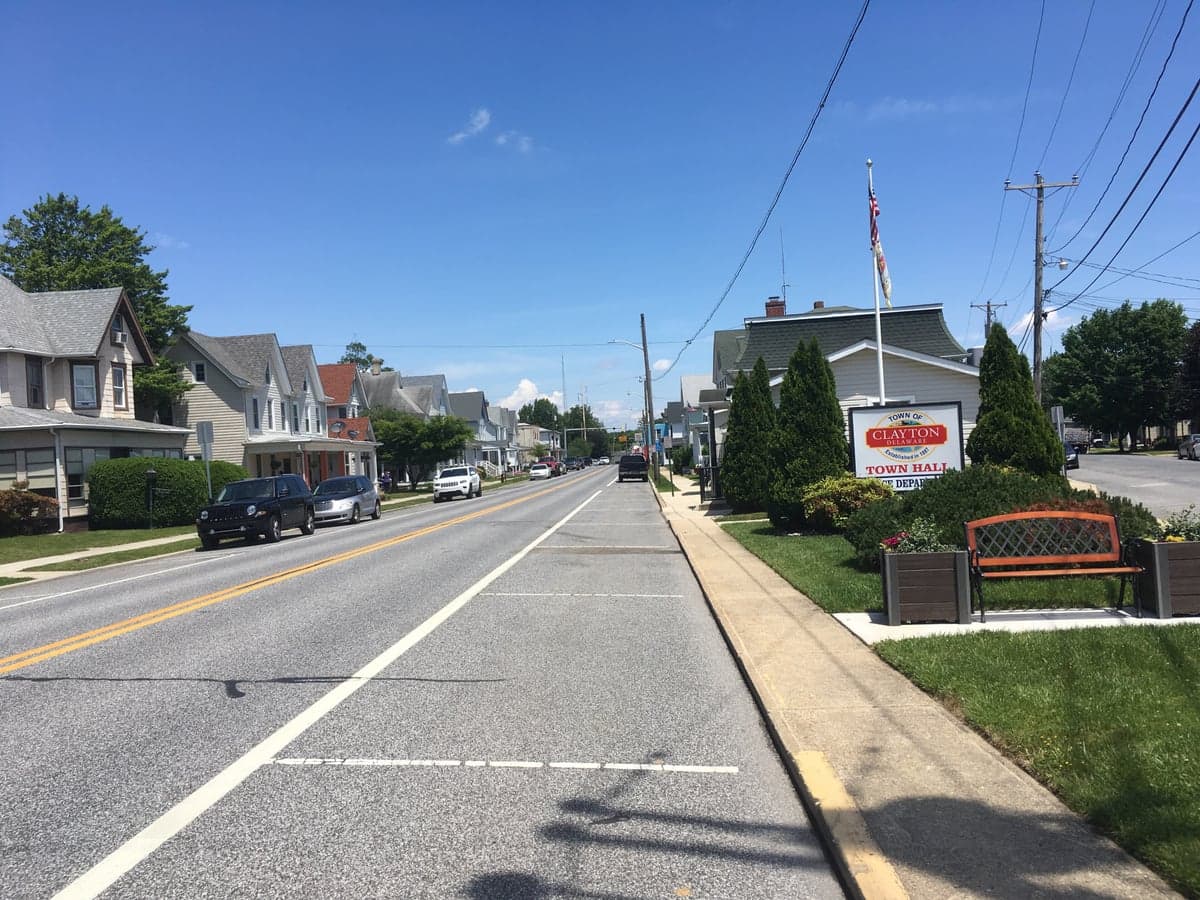
Photo: Wikipedia
Strategic Assessment of Clayton, DE
Multiple tactical vulnerabilities. Population density, target proximity, or disaster risk are likely compounding. A retreat property and exit planning is required.
What does the Strategic Assessment tell us?
Our Strategic Assessment grades tactical survivability of an area. Major population centers, military targets, fallout zones, natural disasters, and border exposure all drive risk — lower exposure means a more defensible position in a crisis.
This is heavily inspired by Joel Skousen's Strategic Relocation book. Highly recommended you checkout the book ($)What does this tell us?
Our Strategic Assessment grades tactical survivability of an area. Major population centers, military targets, fallout zones, natural disasters, and border exposure all drive risk — lower exposure means a more defensible position in a crisis.
This is heavily inspired by Joel Skousen's Strategic Relocation book. Highly recommended you checkout the book ($)Strategic Pillars

Key Distances
Regional Safe Places
Below is our recommended "safe zones" in Delaware and the surrounding area based on our strategic heuristics. For most people, it's unrealistic to live in a “safe zone” full-time due to work, family or other personal reasons. They tend to be more rural. However, many of these areas are perfect for second homes and retreat properties that double as a vacation home or even a short-term rental.
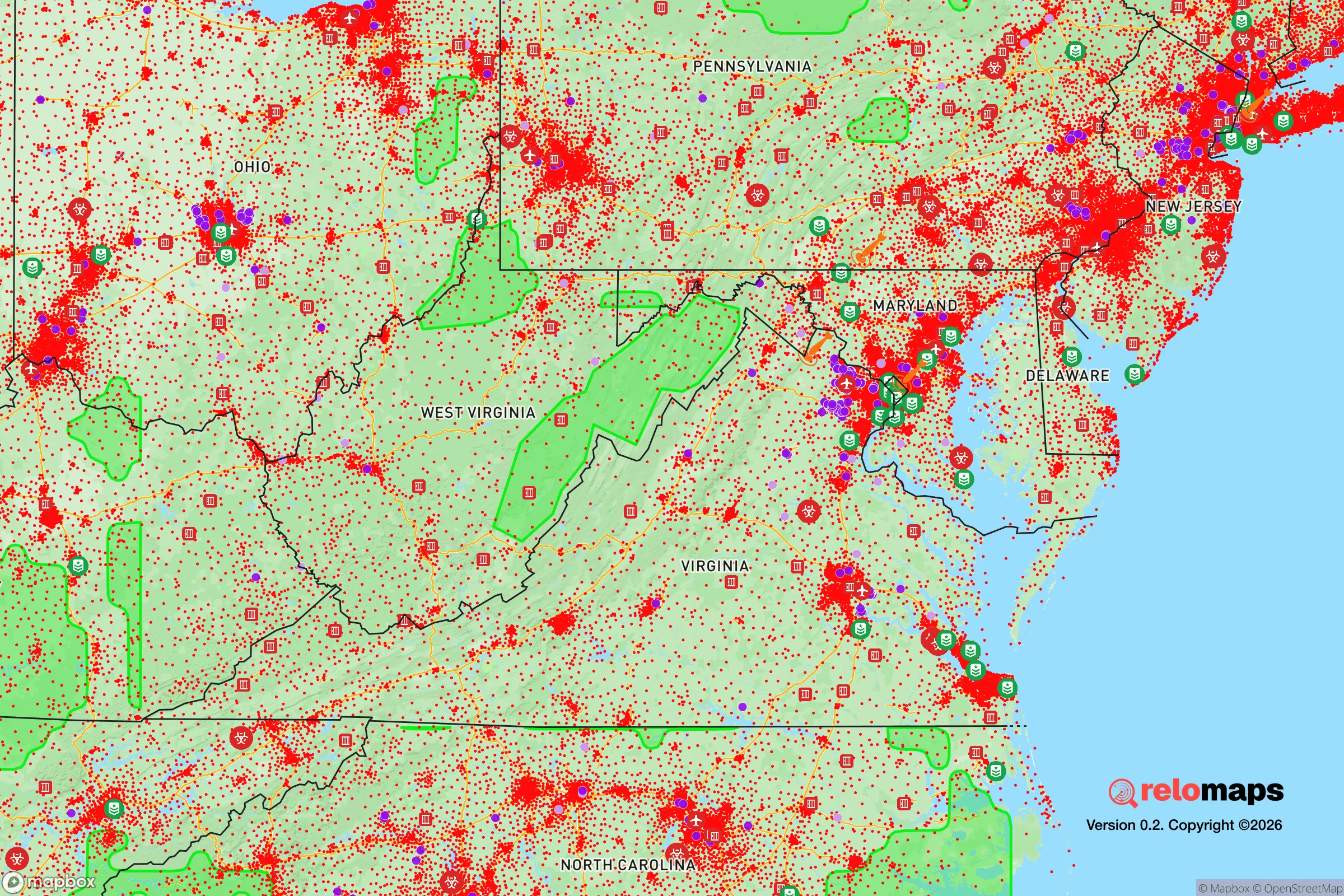
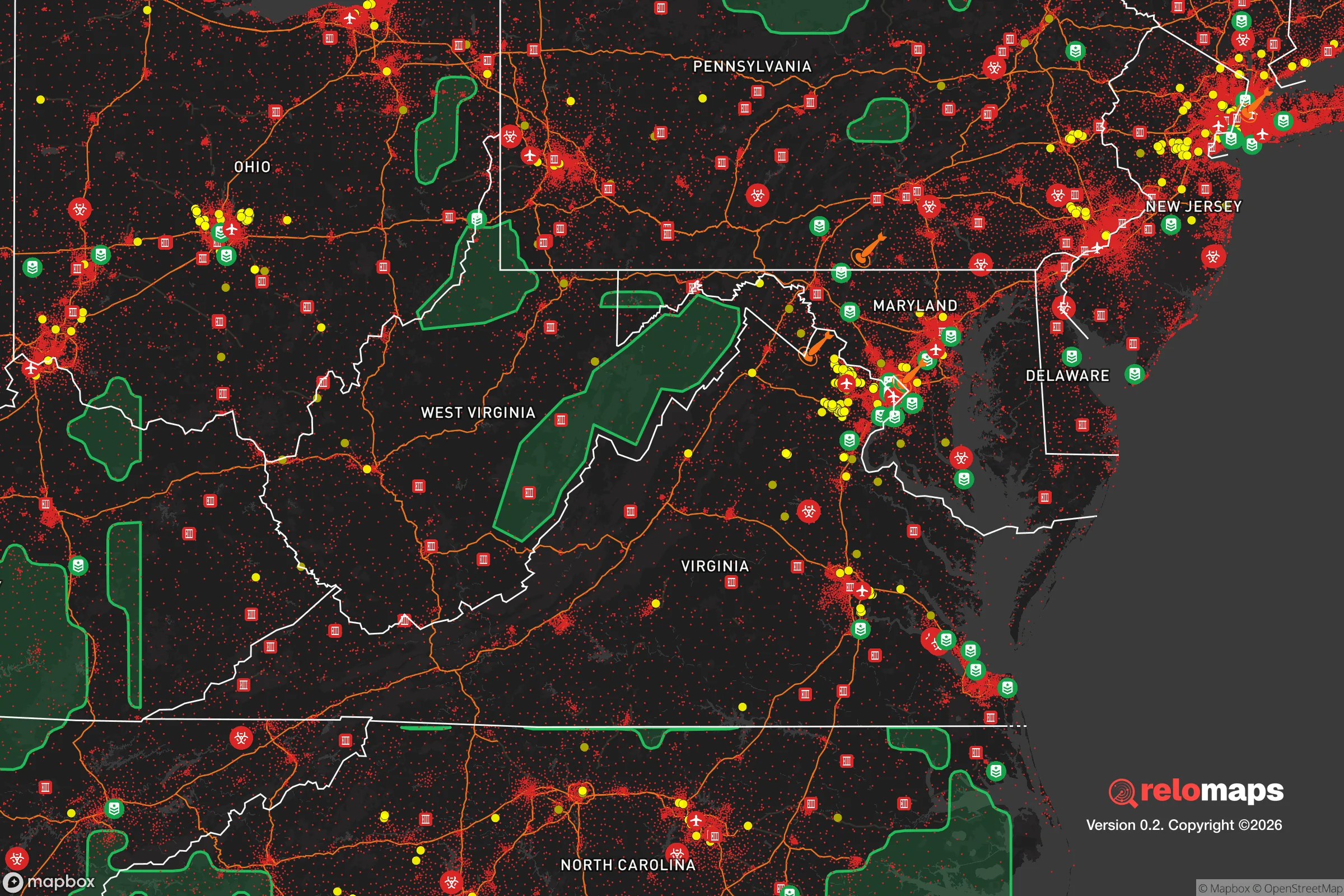


Important Note: For informational purposes only. This does not mean nothing bad ever happens in the green zones. Please use common sense. This is based on public data and modeled with AI. We tried to take a conservative approach but mistakes happen. We update this regularly as new information becomes available.
Solar Generator Recommendations
Backup power matters more here than in safer locations. We've picked three solar generators across budgets and capacity tiers — start with the budget unit if you only need a few essentials, or step up if you want to run a fridge and HVAC for days at a time.

Jackery Portable Power Station Explorer 300
Budget OptionPower on the Go: Weighing only 11 lbs, it's convenient to set up and store with book-sized foldable solar panels

BLUETTI Portable Power Station AC180
Designed for both indoor and outdoor scenarios, AC180 is highly capable as it has a robost capacity and continuous output power.

EF ECOFLOW DELTA Pro Ultra Power Station
Upgraded PickEcoFlow DELTA Pro Ultra is a whole-home energy system designed to grow with your family. Integrated with the Smart Home Panel 2, it scales to meet your evolving energy needs — keeping your home powered, intelligent, and secure through every stage of life.
We earn a commission, at no additional cost to you.
Strategic Assessment Analysis
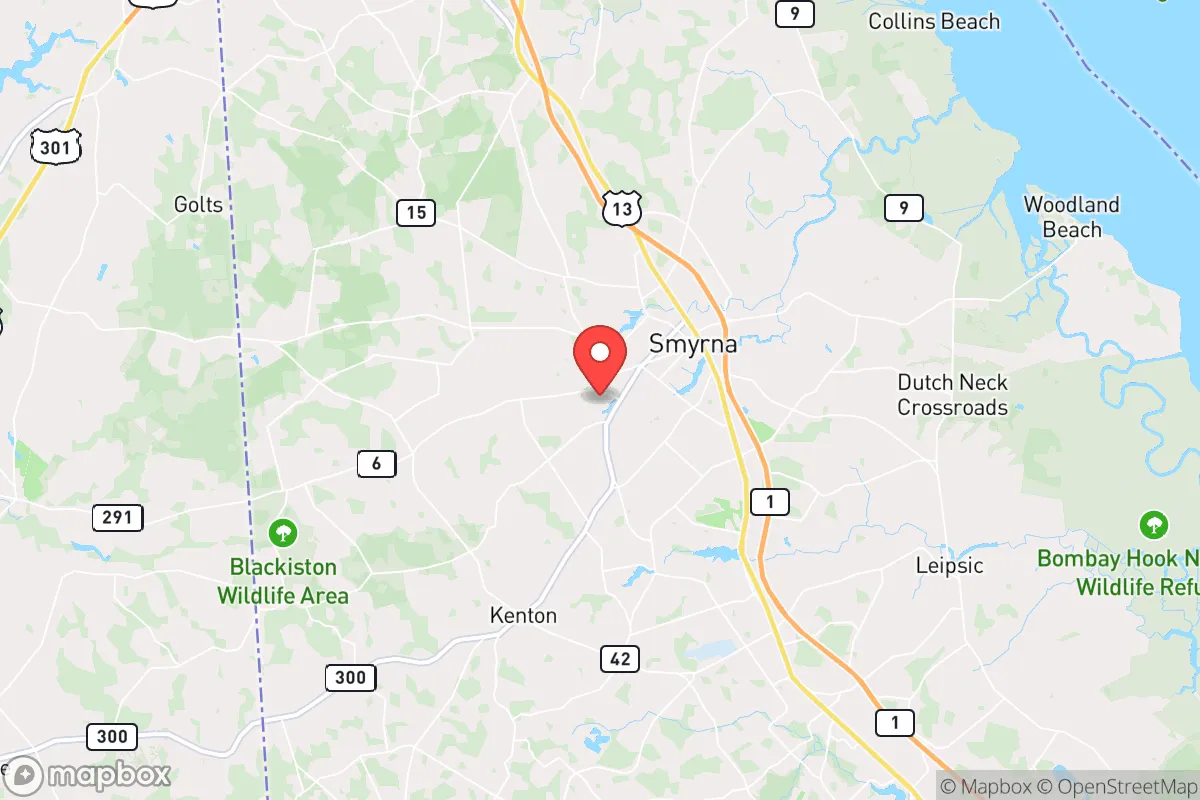
Clayton, Delaware, offers a strategic balance of rural seclusion and logistical access that makes it a serious contender for those prioritizing resilience and self-sufficiency. Located in the central part of the state, roughly 20 miles south of Dover and 30 miles north of the Chesapeake Bay Bridge, this small town sits outside the immediate blast radius of major metropolitan targets while still being within a day’s drive of critical supply routes and alternate living zones. For a relocator with a prepper mindset, Clayton’s low population density—under 4,000 residents as of the 2020 census—combined with its position in Kent County’s agricultural belt, provides a foundation for long-term sustainability that many coastal or suburban options simply cannot match.
Geographic position and natural advantages for long-term sustainability
Clayton’s geographic location is its strongest asset for a survival-oriented relocation. The town sits on the Delmarva Peninsula, a region naturally insulated by water on three sides—the Delaware Bay to the east, the Chesapeake Bay to the west, and the Atlantic Ocean to the south. This peninsula geography creates a natural chokepoint: the only land access is via the narrow isthmus near the C&D Canal, roughly 15 miles north of Clayton. In a scenario of widespread civil unrest or supply chain collapse, this chokepoint can be monitored or even controlled, limiting the flow of displaced populations from the Baltimore-Washington corridor. The area’s flat, fertile soils support extensive agriculture—Kent County has over 1,200 farms covering 40% of its land—meaning local food production is not just possible but already established. The water table is high, with the Columbia Aquifer providing reliable groundwater at depths of 50 to 100 feet, making well drilling a viable option for off-grid water. Clayton also benefits from a temperate climate with moderate rainfall (around 45 inches annually), reducing the risk of prolonged drought that plagues more arid regions. These natural advantages mean a relocator can realistically achieve a degree of self-sufficiency in food and water without extreme measures.
Risks, exposures, and proximity to fallout-relevant landmarks
No location is without vulnerabilities, and Clayton has several that demand attention. The most immediate concern is its proximity to the Dover Air Force Base, located just 20 miles northeast. While the base is a military asset, it is also a high-value target in any conflict scenario involving state actors. A ground burst or airburst at Dover AFB could produce radioactive fallout that, depending on wind patterns, might affect Clayton within hours. The prevailing winds in Delaware are from the west and northwest, which would push fallout from a Dover strike toward the Atlantic, but a shift to easterly winds could direct contamination southwest toward Clayton. Additionally, the town lies within 50 miles of the Salem and Hope Creek nuclear power plants in New Jersey, across the Delaware Bay. A major accident or sabotage at these facilities could release radioactive material that travels across the bay, though the water barrier provides some dilution. Clayton is also within 100 miles of the Philadelphia metropolitan area (population 6 million) and 120 miles of Baltimore (2.8 million). In a collapse scenario, these population centers could generate massive refugee flows south along US-13 and DE-1, the two main arteries passing through Clayton. The town’s small police force—typically fewer than 10 officers—would be overwhelmed in such a situation. Flooding is another risk: Clayton sits near the Smyrna River and is in a low-lying area; heavy rain events, which are increasing with climate volatility, can cause localized flooding that disrupts road access. The 2023 Delaware Flood Risk Report lists parts of Kent County as having moderate to high flood risk, particularly along the river corridors.
Practical resilience for a relocator: food, water, energy, and defensibility
For a relocator serious about preparedness, Clayton offers a workable baseline that can be upgraded with effort. Food security is strong: the surrounding farmland produces corn, soybeans, wheat, and poultry. Local farmers’ markets operate in nearby Smyrna and Dover, and the area has several u-pick operations for fruits and vegetables. A relocator with land can establish a substantial garden; the growing season runs from April to October, with a frost-free period of about 190 days. Water is accessible: most rural properties in the area rely on private wells, and the water quality from the Columbia Aquifer is generally good, though testing for agricultural runoff (nitrates) is advisable. Rainwater collection is also feasible, with average annual precipitation supporting a 1,000-square-foot roof yielding roughly 28,000 gallons per year. Energy independence is achievable: Clayton receives about 4.5 peak sun hours per day, making solar photovoltaic systems viable. Net metering is available through Delaware’s utilities, but for off-grid scenarios, battery storage (e.g., lithium-ion or lead-acid) is necessary. Wood heating is an option, as the area has mixed hardwood forests, but sourcing firewood sustainably requires acreage. Defensibility is moderate: Clayton’s layout is a traditional small town with a central grid and outlying subdivisions. The best defensive posture is to secure a property on the outskirts with good sightlines and limited road access. The town’s low population density means fewer potential threats, but also fewer allies—building a trusted network of like-minded neighbors is critical. The nearest major hospital is Bayhealth Kent General in Dover, 20 minutes away, which is a vulnerability if medical infrastructure collapses. For long-term resilience, consider stockpiling antibiotics, trauma supplies, and basic surgical tools, as rural healthcare access is limited.
The overall strategic picture for Clayton, DE, is one of cautious optimism for the prepared relocator. It is not a hardened bunker location, nor is it a remote wilderness retreat—but it occupies a sweet spot for those who want to be within striking distance of resources while maintaining a buffer from the chaos of major urban centers. The combination of agricultural self-sufficiency, groundwater availability, and a defensible peninsula geography gives it a resilience profile that outperforms most suburban options in the Mid-Atlantic. The risks from Dover AFB and nuclear plants are real but manageable with proper planning—a fallout shelter, a radiation detector, and a pre-planned evacuation route west toward the Chesapeake Bay or south toward the Eastern Shore. The biggest wildcard is population pressure from the north; a relocator should have a plan to secure their property and community before a crisis hits. For a conservative-minded individual or family looking to plant roots in a place that can weather the coming storms—whether economic, political, or environmental—Clayton deserves a serious look. It’s not perfect, but in a world where perfect doesn’t exist, it’s a solid bet.

* Values derived from national, state, county, city and local statistics and may differ in a specific area. Last updated: 2026-04-29T22:34:11.000Z
Narrative content on this page is AI-generated and may contain mistakes. Verify any details that matter before acting on them.
ReloMaps may earn a commission from affiliate links at no extra cost to you.

