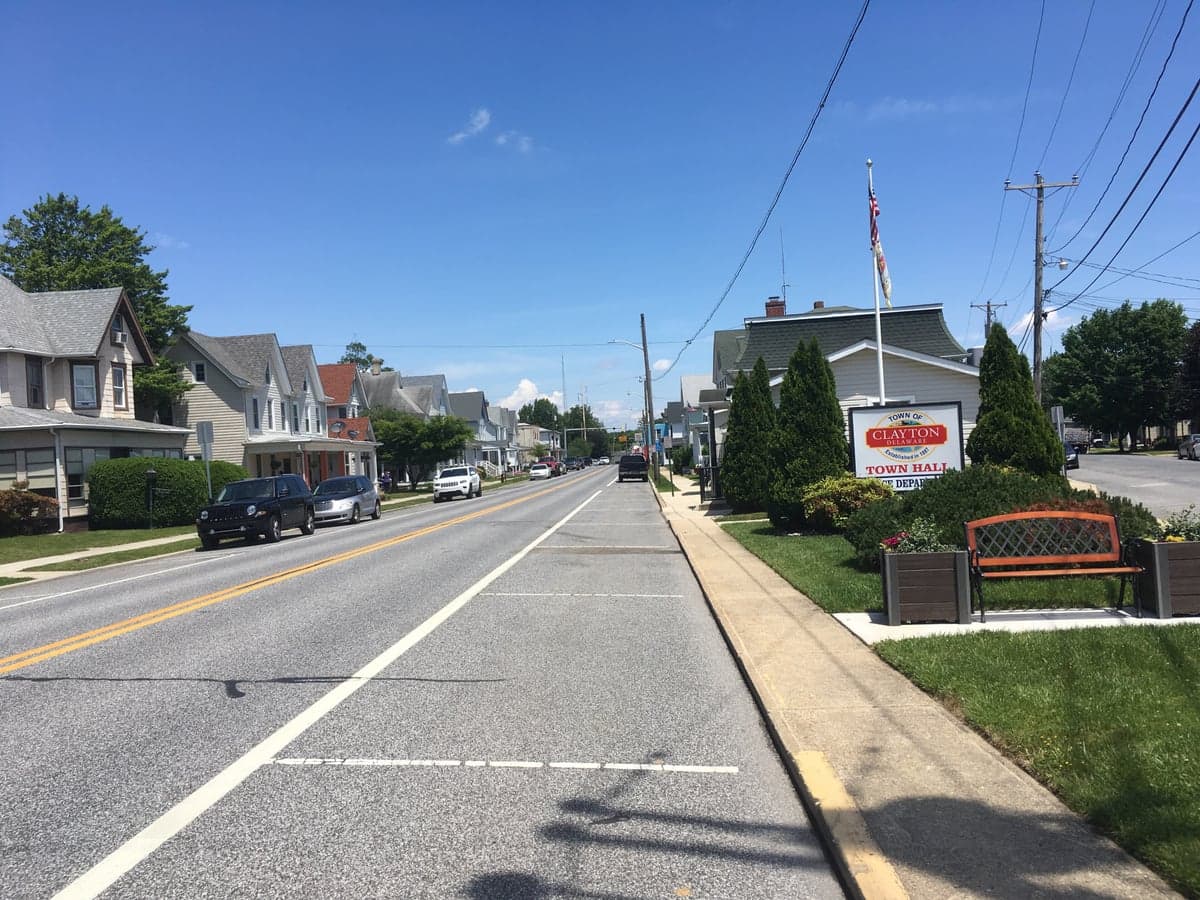
Photo: Wikipedia
Political ClimatePolitical Climate in Clayton, DE
District shown is the primary district for this city’s centroid. Cities may span multiple districts.
Inherited from parent state — no local data available.
Local Political AnalysisPolitical Analysis of Clayton, DE
Clayton, Delaware, has been shifting leftward in recent years, and the Cook PVI of D+8 tells you everything you need to know about where the political winds are blowing. It wasn't always this way—this used to be a quiet, rural corner where folks kept to themselves and expected the same from their government. But as the Wilmington and Philadelphia sprawl creeps down 13, we're seeing a wave of new residents who bring a very different set of priorities. The local elections are starting to reflect that, and it's a trend that's got a lot of us who've been here a while paying close attention.
How it compares
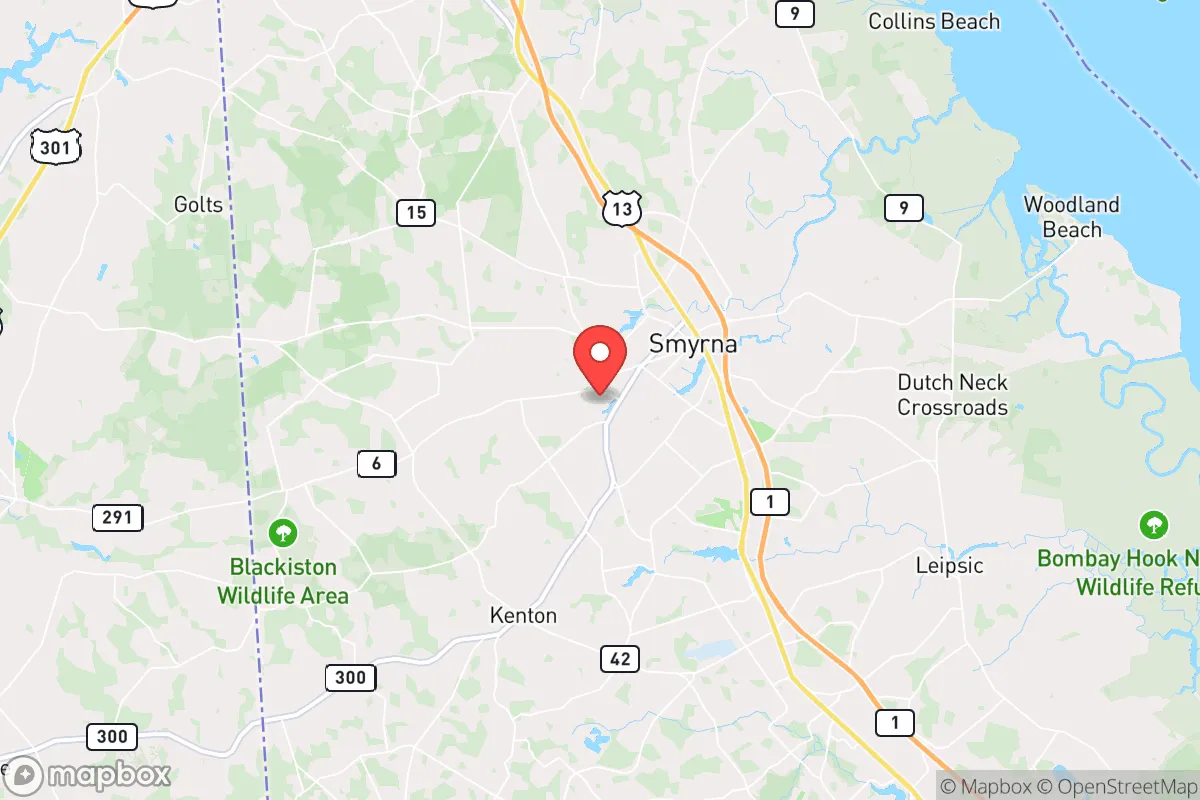
Drive ten minutes north to Smyrna, and you'll feel a different energy—still more of a purple area, with a strong conservative backbone that keeps things balanced. Head west toward Dover, and you're in a solidly blue stronghold, where state government jobs and a younger, more transient population push the needle hard left. Clayton sits right in the middle of that corridor, but it's leaning harder into Dover's orbit every year. The contrast is stark: in the 2024 primary, you saw Clayton precincts backing progressive candidates by margins that would have been unthinkable a decade ago, while just a few miles away in rural Kent County, the same races went the other way. It's a reminder that this isn't a statewide shift—it's a localized one, driven by newcomers who don't share the same concerns about property rights, school choice, or the Second Amendment that have always been the bedrock around here.
What this means for residents
For those of us who value personal freedom and limited government, the writing is on the wall. The county council and school board are starting to feel the pressure from activist groups pushing things like equity audits and restrictive land-use ordinances that make it harder to do what you want with your own property. The tax burden is creeping up, too, as the county expands services to match the new demographic's expectations. If you're a long-time resident who just wants to be left alone, you're going to find yourself fighting more battles at town hall meetings than you ever did before. The local police department is still solid, but there's chatter about "reimagining public safety" that has a lot of us worried about where that leads. It's not a crisis yet, but the trajectory is clear, and it's why you're seeing more "For Sale" signs pop up from families who've been here for generations.
On the cultural side, the biggest change is the erosion of that live-and-let-live attitude that made Clayton a great place to raise kids. There's more pressure to conform to a certain set of social values, especially in the schools, where you'll see curriculum shifts that prioritize activism over academics. The local churches and volunteer fire companies are still the heart of the community, but they're increasingly at odds with the new town council's priorities. If you're looking for a place where your rights are respected and the government stays out of your business, Clayton is still a decent option—but you'd better get involved now, because the window is closing. Keep an eye on the next few election cycles; if the trend holds, this could look a lot like Newark in another ten years, and that's a future a lot of us are trying to avoid.

State Political ClimatePolitical Climate in Delaware
State Political AnalysisPolitical Environment in the State
Delaware has long been a blue state in presidential elections, but its political climate is far more nuanced than the statewide vote suggests. The state’s Democratic lean is driven overwhelmingly by the northern New Castle County suburbs—particularly Wilmington, Newark, and the I-95 corridor—while the southern two-thirds of the state, including Kent and Sussex counties, remain reliably Republican. Over the past 20 years, the state has shifted leftward on social and cultural issues, but a growing conservative foothold in the coastal and agricultural south has created a sharp urban-rural divide that defines Delaware politics today.
Urban vs. rural divide
The political map of Delaware is a tale of two regions. New Castle County—home to roughly 55% of the state’s population—votes Democratic by wide margins, often 60-70% in statewide races. Wilmington, the state’s largest city, is a Democratic stronghold, while Newark (home to the University of Delaware) and the affluent suburbs like Greenville and Hockessin lean left on social issues but are more moderate on fiscal matters. In contrast, Kent County (Dover, Milford) and Sussex County (Georgetown, Lewes, Rehoboth Beach) vote Republican by similar margins. Sussex County, in particular, has become a GOP bastion, with many retirees and second-home owners from the Mid-Atlantic moving in. The 2020 presidential election saw Joe Biden win Delaware by 19 points, but Sussex County voted for Trump by 10 points, and Kent County was nearly tied. The divide is not just partisan—it’s cultural. Southern Delaware feels more like the Eastern Shore of Maryland, with a slower pace, lower taxes, and a strong hunting and fishing tradition, while the north is increasingly suburban and professional.
Policy environment
Delaware’s policy environment reflects its split personality. On taxes, the state has a progressive income tax structure (top rate of 6.6%) and no sales tax, which is a draw for many. But property taxes are among the lowest in the nation, especially in Sussex County, where a $400,000 home might carry only $1,200 in annual property taxes. That’s a major selling point for conservatives. However, the regulatory posture is increasingly progressive. Delaware has no right-to-work law, and union influence is strong in the public sector and construction. Education policy is a flashpoint: the state’s school funding system is heavily reliant on local property taxes, which creates disparities between wealthy suburbs and rural areas. In 2021, the legislature passed a law requiring all public schools to teach LGBTQ-inclusive history, which drew backlash from conservative parents. On election laws, Delaware has same-day voter registration and no-excuse absentee voting, which conservatives view as ripe for fraud, though no major scandals have emerged. The state also has a strict gun control regime: a 2022 law banned the sale of assault-style weapons and high-capacity magazines, and a 2023 law required a permit to purchase a handgun. These laws passed without a single Republican vote.
Trajectory & freedom
Over the past five years, Delaware has moved decisively toward more government intervention in personal liberties. The 2022 assault weapons ban and the 2023 permit-to-purchase law are the most significant gun restrictions in state history. Governor John Carney (D) signed both, despite heavy opposition from rural sheriffs and gun rights groups. On medical freedom, Delaware was an early adopter of COVID-19 vaccine mandates for state employees and healthcare workers, and the state still has some of the strictest public health emergency powers on the East Coast. Parental rights have eroded: in 2023, the legislature passed a law prohibiting schools from notifying parents if a child changes their gender identity or pronouns without the child’s consent. This has sparked a major backlash, with conservative parents organizing school board takeovers in Sussex County. On property rights, Delaware’s coastal zone regulations are among the most restrictive in the region, limiting development near beaches and wetlands. The state also has a high corporate income tax (8.7%), but its business-friendly Court of Chancery keeps corporate headquarters coming. The net trajectory is clear: Delaware is becoming less free on social and economic issues, especially for gun owners, parents, and small businesses.
Civil unrest & political movements
Delaware has not seen the large-scale protests of bigger states, but there have been notable flashpoints. In 2020, Wilmington saw several nights of protests and looting after George Floyd’s death, with businesses boarded up for weeks. The state’s sanctuary policies are a quiet but persistent issue: Delaware is not a formal sanctuary state, but several municipalities, including Wilmington and Newark, have policies limiting cooperation with ICE. This has led to tensions with conservative lawmakers in Dover, who have introduced bills to ban sanctuary policies—none have passed. Election integrity is a hot-button topic: in 2020, Delaware’s universal mail-in voting law was struck down by the state Supreme Court as unconstitutional, but the legislature quickly passed a revised version. Conservatives remain skeptical, and the state GOP has pushed for voter ID laws, which have gone nowhere. The most visible political movement is the rise of the Sussex County Republican Party, which has become a powerhouse in local elections, flipping several county council seats and school boards. The “Parents Matter” movement, focused on school transparency, has held rallies in Dover and Georgetown. On the left, the Delaware Working Families Party has gained influence in Wilmington, pushing for rent control and police reform.
Projection
Looking ahead five to ten years, Delaware’s political trajectory is likely to continue its current path: the north will get bluer, the south will get redder, and the state will remain blue overall. In-migration is accelerating, with many New Yorkers and New Jerseyans moving to Sussex County’s beach towns, but these newcomers tend to be moderate or even left-leaning, which could slowly shift the south’s politics. The state’s population is aging, and younger voters in New Castle County are more progressive than their parents. The gun control laws are unlikely to be repealed, and parental rights battles will intensify. The biggest wildcard is the state’s budget: Delaware faces a looming pension crisis and a reliance on corporate franchise taxes, which could force tax hikes or spending cuts. For a conservative moving in, the practical takeaway is that you’ll find a welcoming community in Sussex or Kent County, but you’ll be fighting an uphill battle on state-level policy. The state’s low property taxes and lack of sales tax are genuine advantages, but you’ll have to accept that your vote on social issues will likely be in the minority.
Bottom line for a new resident: If you’re a conservative looking for a low-tax, rural lifestyle with good hunting and fishing, Delaware’s southern counties are a solid choice—just don’t expect the state government to reflect your values. You’ll need to get involved locally, especially on school boards and county councils, to protect your freedoms. The north is a different world entirely, and the political divide is only getting sharper. Choose your county carefully, because in Delaware, your ZIP code determines your political reality.
* Values derived from national, state, county, city and local statistics and may differ in a specific area. Last updated: 2026-04-29T22:34:11.000Z
Narrative content on this page is AI-generated and may contain mistakes. Verify any details that matter before acting on them.
ReloMaps may earn a commission from affiliate links at no extra cost to you.

