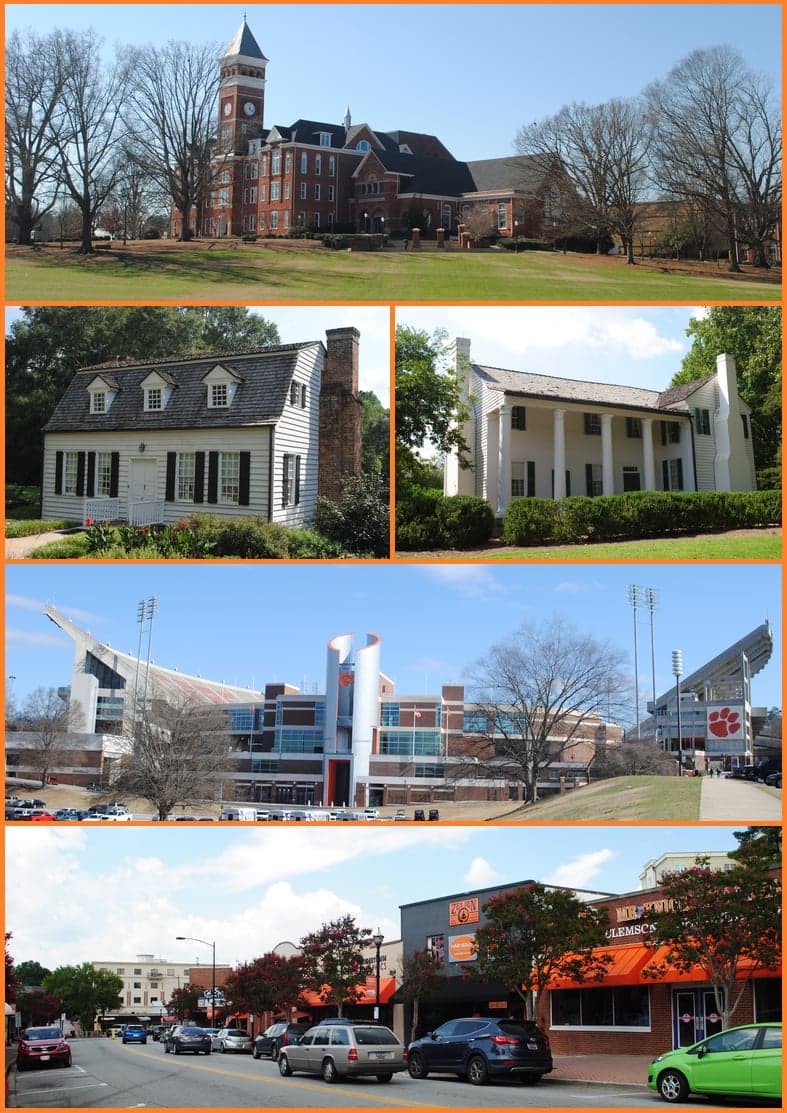
Photo: Wikipedia
Quality of Life in Clemson, SC
A high quality of life with strong walkability, manageable living costs, healthy neighborhood signals, and solid amenity access.
What does Quality of Life tell us?
Quality of Life blends cost of living, nearby amenities, socioeconomic signals, and neighborhood character. City-level scores represent the whole municipality; individual neighborhoods can differ.
What does this tell us?
Quality of Life blends cost of living, nearby amenities, socioeconomic signals, and neighborhood character. City-level scores represent the whole municipality; individual neighborhoods can differ.
Cost of Living
1% above national average
The Real Cost of Living in Clemson, SC for 2026
| Tier | Individual | Family (4) |
|---|---|---|
| Survival | $16k | $29k |
| Comfortable | $70k | $103k |
| Luxury | $90k+ | $139k+ |
| Elite (Top 5%) | $151k+ | $234k+ |
48%
The Area Signal
A metric tracking the socioeconomic signals of the area.
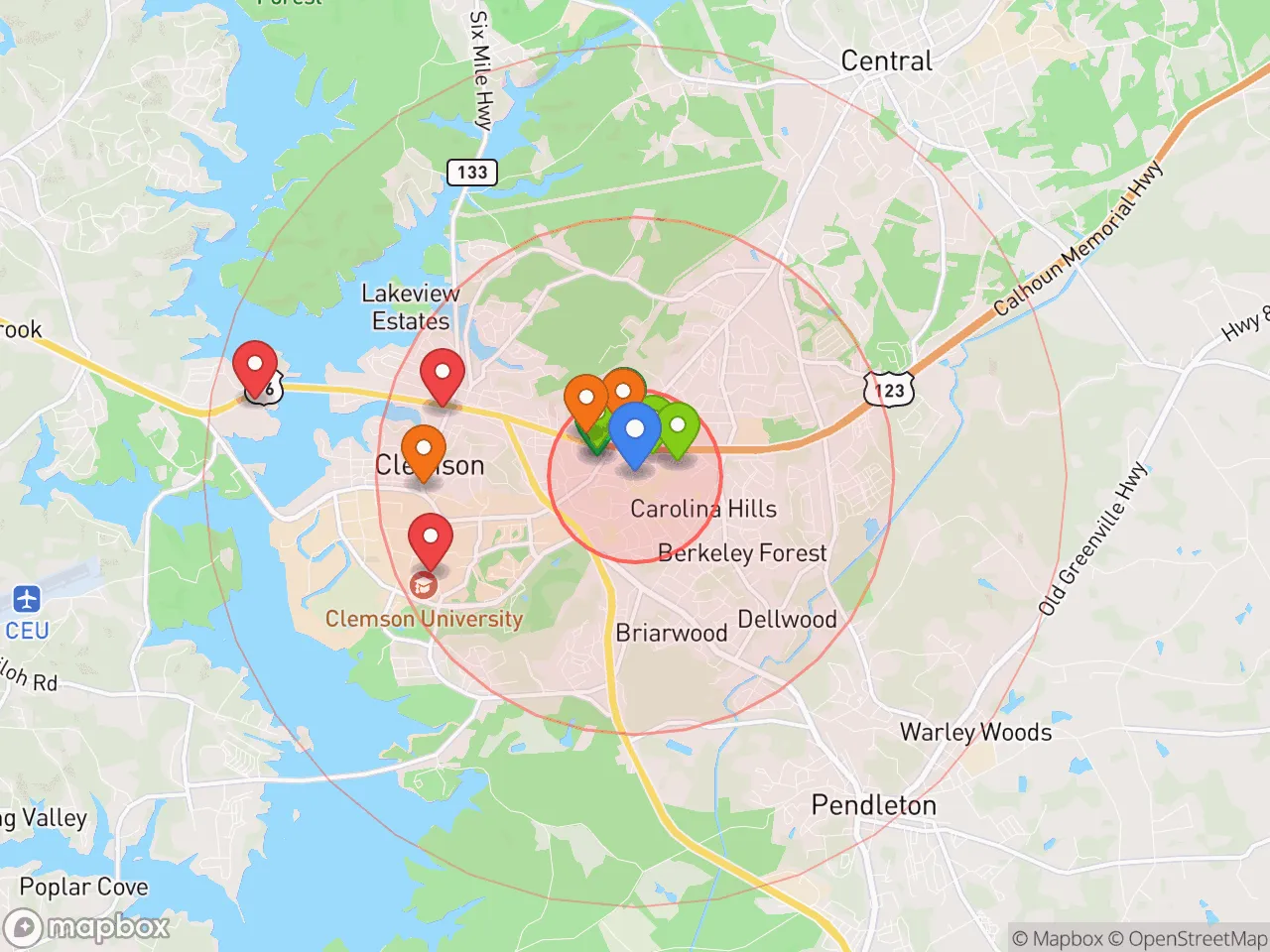
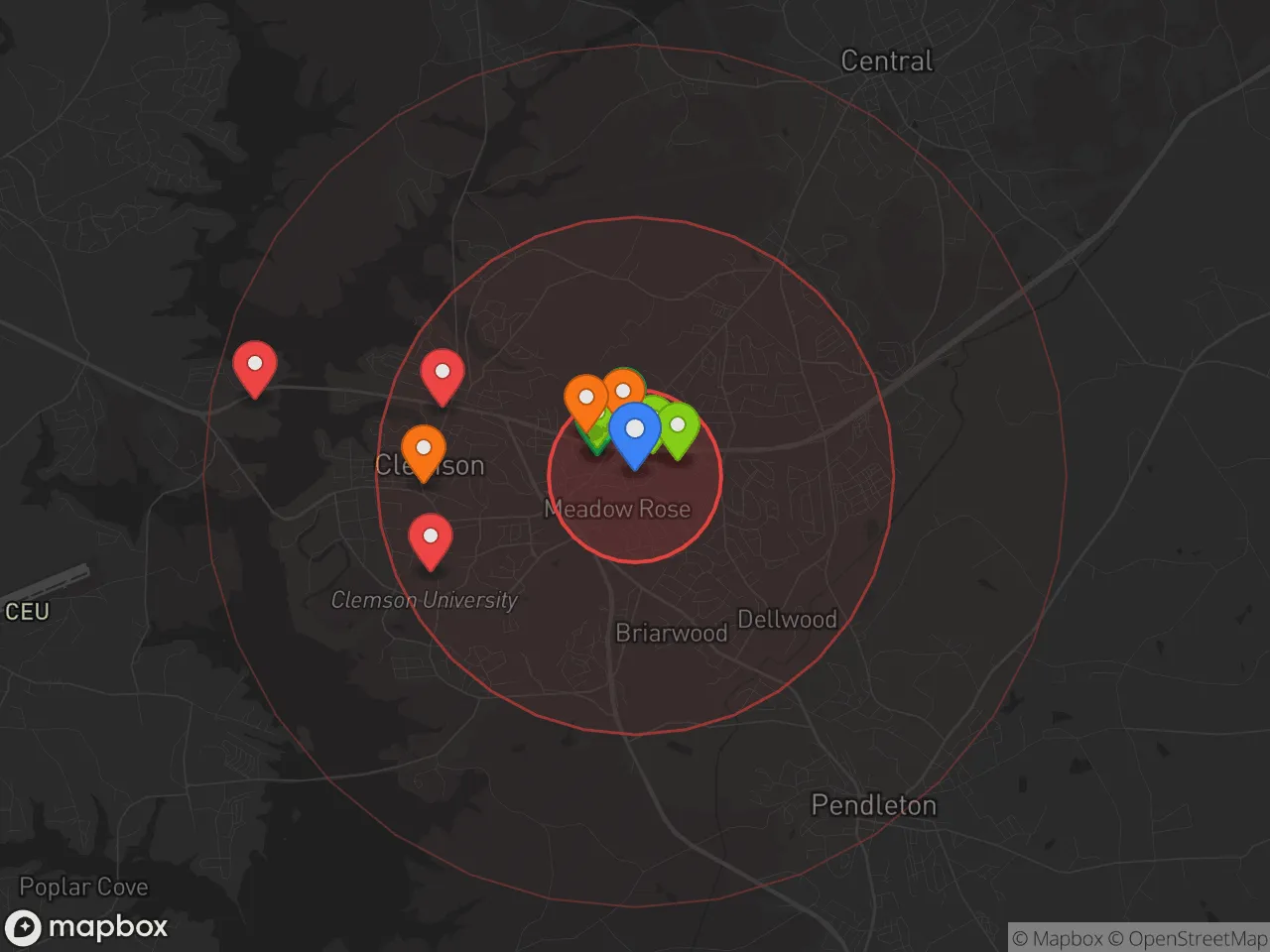
Hobbies
Explore the areaGroceries
4 within 10 miles
Gas
20 within 10 miles
Hospital
7 within 20 miles
Airport
CLT — Charlotte Douglas International
Post Office
USPS — Clemson, SC
Critical Amenities
Quality-of-Life Analysis
Clemson, South Carolina, is a college town shaped by Clemson University, giving it a distinctly educated, youthful, and relatively affluent population compared to the broader Upstate region. With a cost-of-living index of 101—just one point above the national average—the area offers a surprising balance of academic energy and suburban comfort, attracting professors, researchers, and families who value walkable neighborhoods and a strong sense of community.
Cost of living, housing costs, and how they compare to nearby areas
Housing in Clemson is the primary driver of its slightly above-average cost of living. The median home value sits at $359,100, which is notably higher than in nearby towns like Central or Pendleton, where similar homes can be found for 10–15% less. Renters fare better, with a median rent of $972—well below the national median of roughly $1,200—largely due to a mix of student apartments and older single-family rentals. The average commute of just 19.5 minutes is significantly shorter than the national average of 27 minutes, meaning residents save both time and money on transportation. For comparison, commuting from Anderson or Greenville to Clemson adds 10–15 minutes each way, making in-town living a clear trade-off for higher home prices but lower daily costs.
What daily life is like for families, amenities, and local schools
Daily life in Clemson revolves around the university campus and Lake Hartwell, which provides year-round recreation from boating to hiking at the nearby Clemson Experimental Forest. The city’s public schools, part of Pickens County School District, are well-regarded, with Clemson Elementary and Riverside Middle School both earning above-average state ratings. Grocery and retail options are concentrated along Highway 93 and the downtown core, anchored by a Publix and a growing number of local restaurants and breweries. The rhythm of life shifts noticeably during football season, when home games draw over 80,000 visitors and transform the town into a high-energy event hub. For families, the presence of the university means access to cultural events, youth sports programs, and a low violent crime rate—about 60% below the national average—though property crime is slightly elevated in student-heavy rental zones.
Who thrives in Clemson and what to consider before moving
Clemson is best suited for university-affiliated professionals, remote workers who value a short commute, and families seeking a tight-knit, outdoorsy community with strong schools. Retirees may find the seasonal football crowds and student rental turnover disruptive, while those seeking urban nightlife or diverse employment outside academia will likely prefer Greenville, 35 miles north. The area’s affordability relative to its amenities makes it a strong choice for buyers willing to pay a premium for walkability and lake access, but renters and first-time buyers should compare prices in Central or Seneca to stretch their budget further. Overall, Clemson offers a high quality of life for those who align with its academic, recreational, and seasonal rhythms.

Crime in Clemson, SC
Generally safer than 64% of comparable U.S. locations.
Violent CrimeViolent Crime Analysis
Property CrimeProperty Crime Analysis
Crime Analysis
Clemson presents a notably safe environment relative to national benchmarks, with its violent crime rate of 127.4 incidents per 100,000 residents sitting well below the U.S. average. However, the property crime rate of 1,370 per 100,000 is elevated compared to many small towns, reflecting the transient student population and the presence of high-value targets like electronics and bicycles on and around campus. The overall safety picture is shaped by a mix of a dedicated university police force, a relatively insular community, and the broader legal climate of Pickens County.
Crime in context
Clemson’s violent crime rate is roughly 65% lower than the national average and significantly below the South Carolina state average of approximately 490 per 100,000. This places the city among the safest in the Upstate region for violent offenses like assault and robbery. Property crime, while higher than the national average of about 1,950 per 100,000, is still lower than many comparably sized college towns. The high property crime figure is driven almost entirely by larceny-theft, particularly from vehicles and unlocked dormitories, rather than by burglary or motor vehicle theft. Pickens County, where Clemson is located, has historically elected conservative sheriffs and prosecutors, which correlates with a more traditional approach to law enforcement and sentencing compared to larger, more progressive metro areas. This local judicial philosophy tends to prioritize public safety and victim accountability, contributing to the area's low violent crime figures.
What residents experience
For most residents, daily life in Clemson feels safe. The university’s police force maintains a visible presence, and the campus is well-lit with emergency call boxes and a robust blue-light system. Off-campus, the City of Clemson Police Department patrols a compact area. The most common safety complaints are property-related: theft from unlocked cars, package theft from porches, and bicycle theft are recurring issues, especially near student housing complexes and during football game weekends when crowds are large. Violent crime is rare and typically involves individuals who know each other, not random acts against the general public. Residents in neighborhoods like Old Central or the historic district report very low incident rates, while areas with high student turnover, such as those near College Avenue, see more property crime.
Neighborhood-level variation is modest but worth noting. The area immediately surrounding the university, including the Clemson Downs and Shiloh Farms subdivisions, consistently reports the lowest crime rates. The more transient zones near the Hartwell Village shopping center and along Highway 93 experience slightly higher property crime. Overall, Clemson’s combination of a low violent crime rate, a conservative local justice system, and a proactive police presence makes it a safe choice for families and professionals, provided they take standard precautions against theft.
* Values derived from national, state, county, city and local statistics and may differ in a specific area. Last updated: 2026-04-30T01:18:24.000Z
Narrative content on this page is AI-generated and may contain mistakes. Verify any details that matter before acting on them.
ReloMaps may earn a commission from affiliate links at no extra cost to you.

