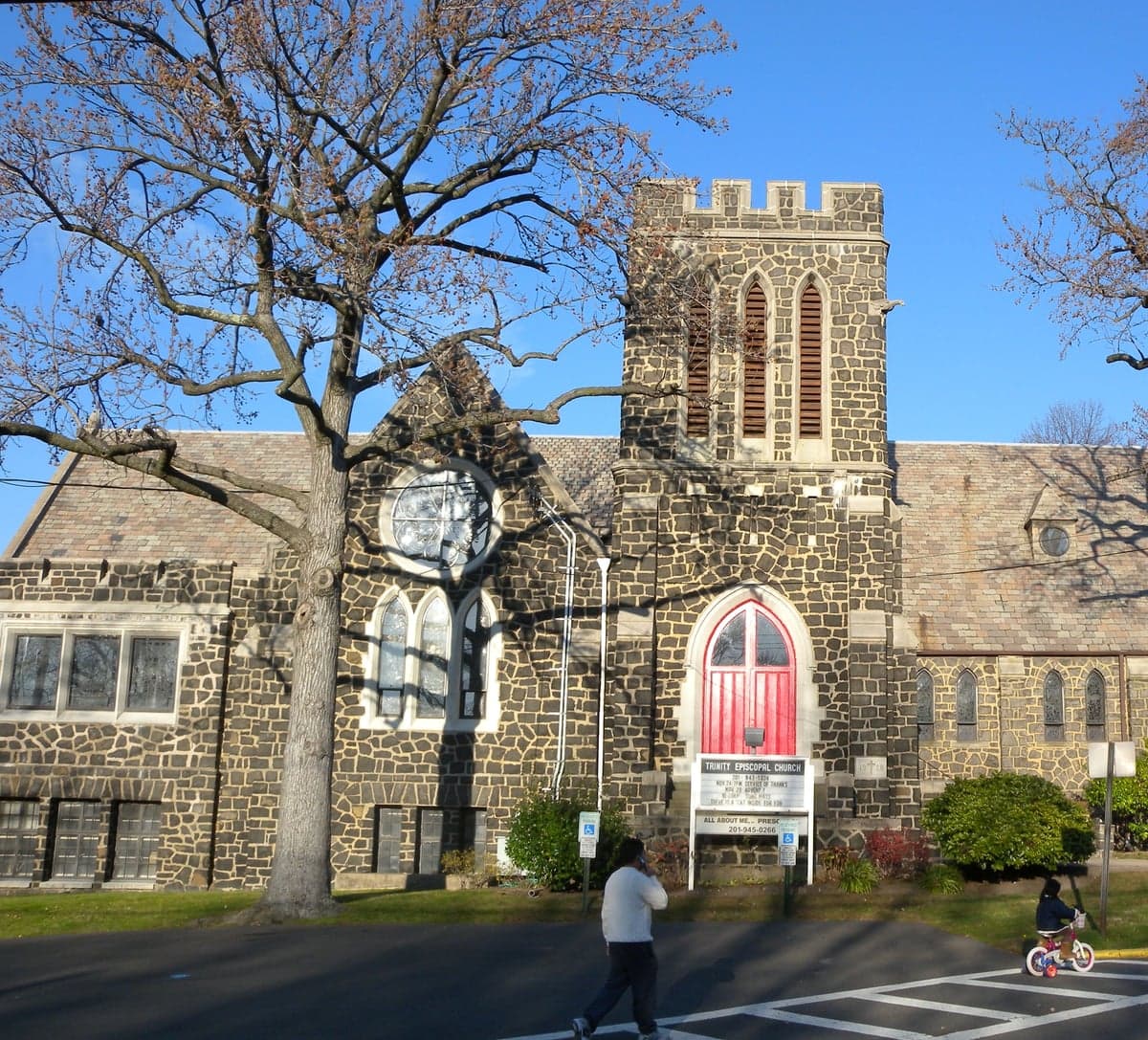
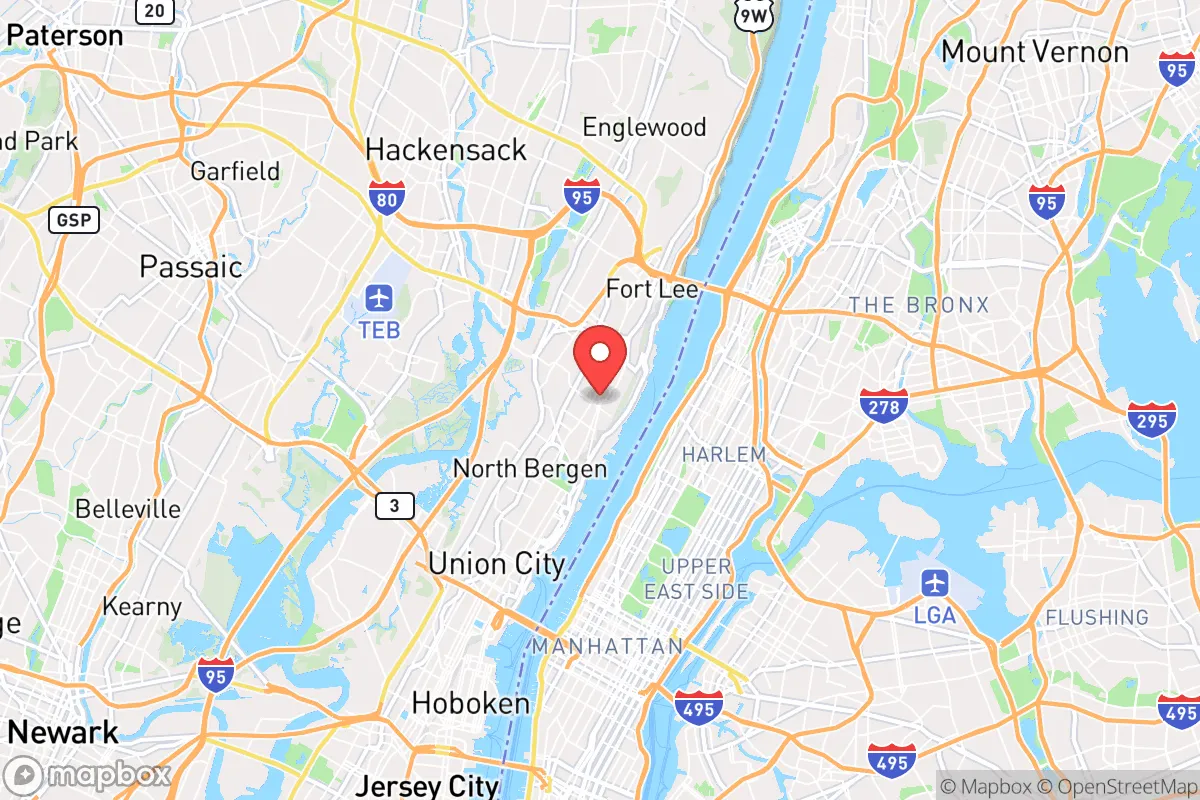
Photo: Wikipedia
Demographics of Cliffside Park, NJ
Affluence Level in Cliffside Park, NJ
A middle-class area roughly in line with national averages across income, home values, education, and employment.
People of Cliffside Park, NJ
Cliffside Park, New Jersey, is a densely packed urban borough of 25,580 residents perched on the Palisades cliffs overlooking the Hudson River and Manhattan. Its population is notably diverse, with a White plurality of 45.0%, a large Hispanic community at 32.4%, and significant East/Southeast Asian (11.1%) and Indian subcontinent (2.1%) populations, all within a single square mile. The city is characterized by its high density, a strong immigrant presence (15.2% foreign-born), and a well-educated workforce (42.4% holding a bachelor’s degree or higher), making it a distinctively global and upwardly mobile suburb just minutes from Midtown Manhattan.
How the city was settled and grew
Cliffside Park’s development was a product of the late 19th and early 20th centuries, driven entirely by its dramatic geography and proximity to New York City. The land was originally part of a larger tract owned by the Zabriskie family, and the borough was formally incorporated in 1895. The first major wave of settlement came with the construction of the Palisades Interstate Park and the extension of streetcar lines, which made the cliffside location accessible to commuters. The original population was overwhelmingly German and Irish working-class families, who built the early frame houses and rowhomes in neighborhoods like Edgewater Terrace and the area around Gorge Road, drawn by the promise of affordable land with spectacular views. A second wave of Italian and Polish immigrants arrived in the 1910s and 1920s, settling in the flatter, lower-lying sections near the Hudson River, particularly around River Road and the Palisade Avenue corridor, where they found work in the area’s factories and docks. By 1930, the borough was a solidly ethnic, working-class enclave, with a population that had already reached nearly 15,000.
Modern era (post-1965)
The post-1965 immigration reforms dramatically reshaped Cliffside Park’s human landscape. The first major shift was the arrival of Cuban and Puerto Rican families in the 1970s and 1980s, who established a strong Hispanic presence in the central and western parts of the borough, particularly in the neighborhoods around Anderson Avenue and Boulevard East. This was followed by a wave of Korean and Chinese immigrants beginning in the 1990s, who were drawn by the borough’s excellent public schools and its proximity to the growing Asian commercial hubs in nearby Fort Lee and Palisades Park. These East/Southeast Asian communities concentrated in the newer high-rise apartment buildings and condominiums along River Road and the Palisade Avenue corridor, transforming the skyline. More recently, a smaller but notable influx of Indian families (2.1% of the population) has settled in the same areas, attracted by the same educational and commuting advantages. The White population, which was over 90% in 1970, has declined to 45.0% as these immigrant groups have grown, though many long-time Italian and Irish families remain in the older single-family homes of Edgewater Terrace and the hillside streets off Gorge Road.
The future
The population of Cliffside Park is trending toward greater diversity and higher density, but not toward homogenization. The Hispanic share (32.4%) is stable and well-established, with second- and third-generation families now a major part of the civic fabric. The East/Southeast Asian community (11.1%) is the fastest-growing segment, driven by continued migration from China and Korea, and is likely to approach 15-18% within a decade as new luxury towers are built along the riverfront. The Indian subcontinent population (2.1%) is small but growing steadily, and is expected to double as families seek alternatives to the even more expensive towns of Bergen County. The White population is likely to continue a slow decline, but the borough’s excellent schools and transit access will keep it from becoming a majority-minority city in the near term. The key trend is tribalization into distinct enclaves: the riverfront high-rises are increasingly Asian and Indian, the central Anderson Avenue corridor remains heavily Hispanic, and the older hillside neighborhoods are still predominantly White and older. This is not a melting pot but a mosaic of distinct communities living side by side.
For a conservative-leaning individual or family considering a move, Cliffside Park offers a stable, safe, and highly educated environment where property values are supported by relentless demand from New York City commuters. The borough is becoming more diverse and more dense, but it remains a place where distinct ethnic and cultural communities maintain their own institutions and identities. The bottom line: Cliffside Park is a dense, upwardly mobile, and increasingly Asian and Hispanic suburb that rewards those who value proximity to Manhattan and strong public schools over suburban sprawl or cultural homogeneity.

* Values derived from national, state, county, city and local statistics and may differ in a specific area. Last updated: 2026-04-29T21:16:11.000Z
Narrative content on this page is AI-generated and may contain mistakes. Verify any details that matter before acting on them.
ReloMaps may earn a commission from affiliate links at no extra cost to you.

