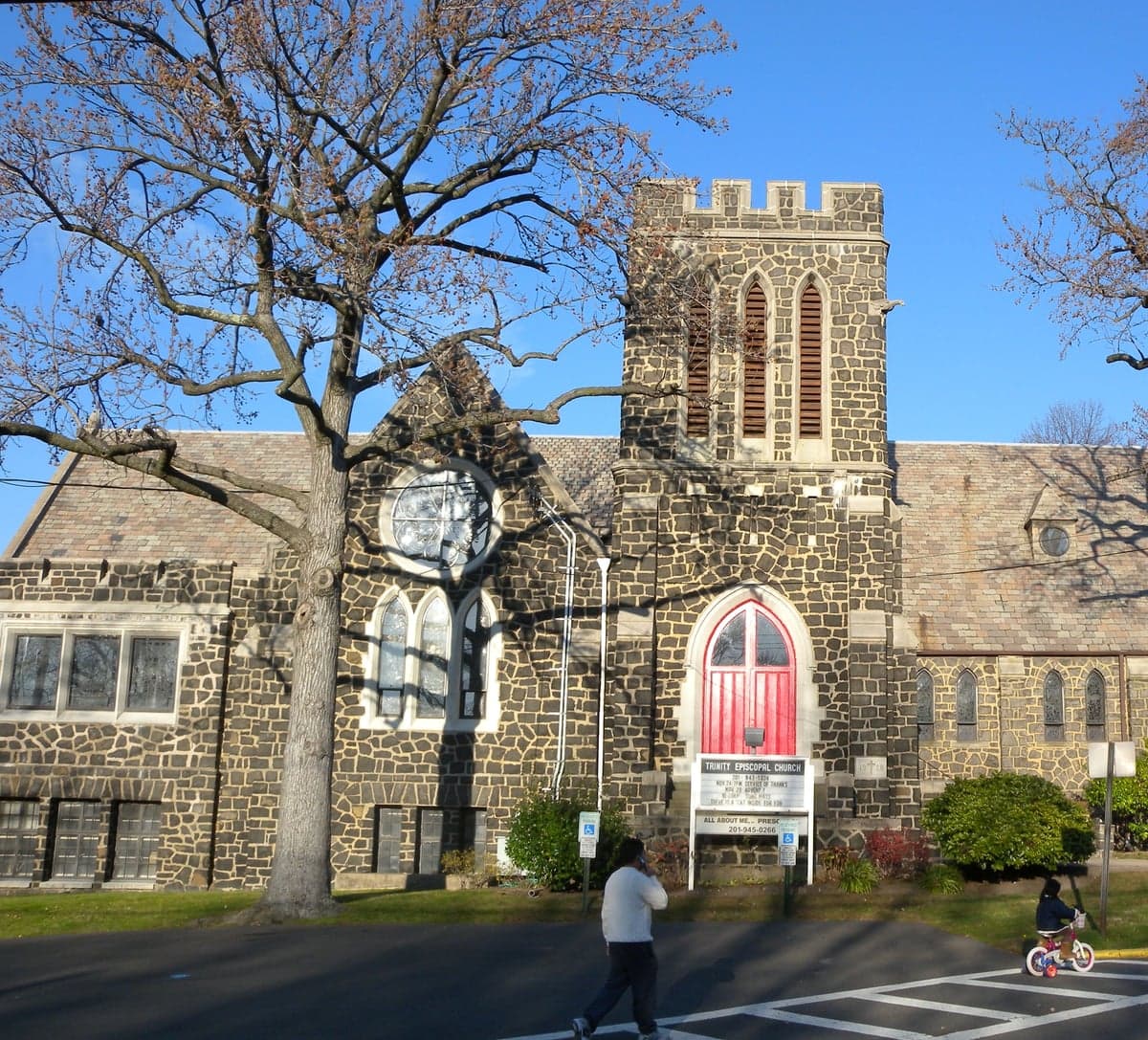
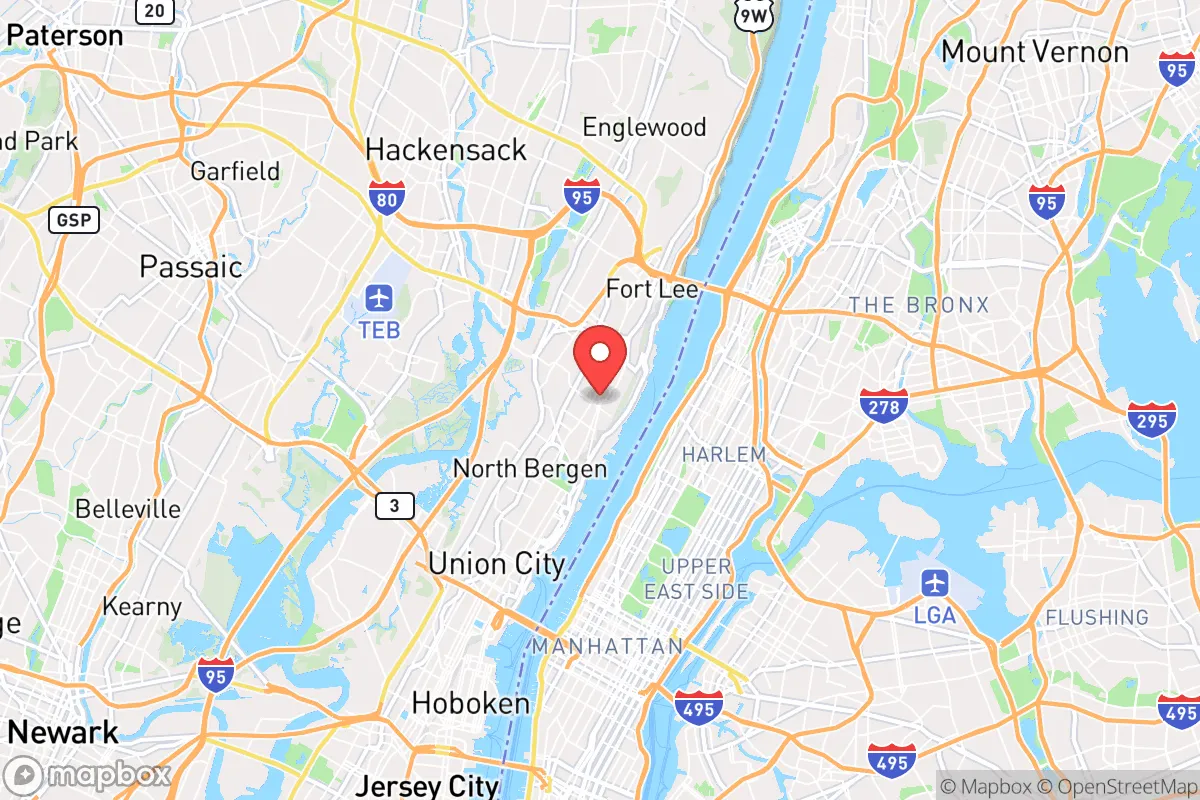
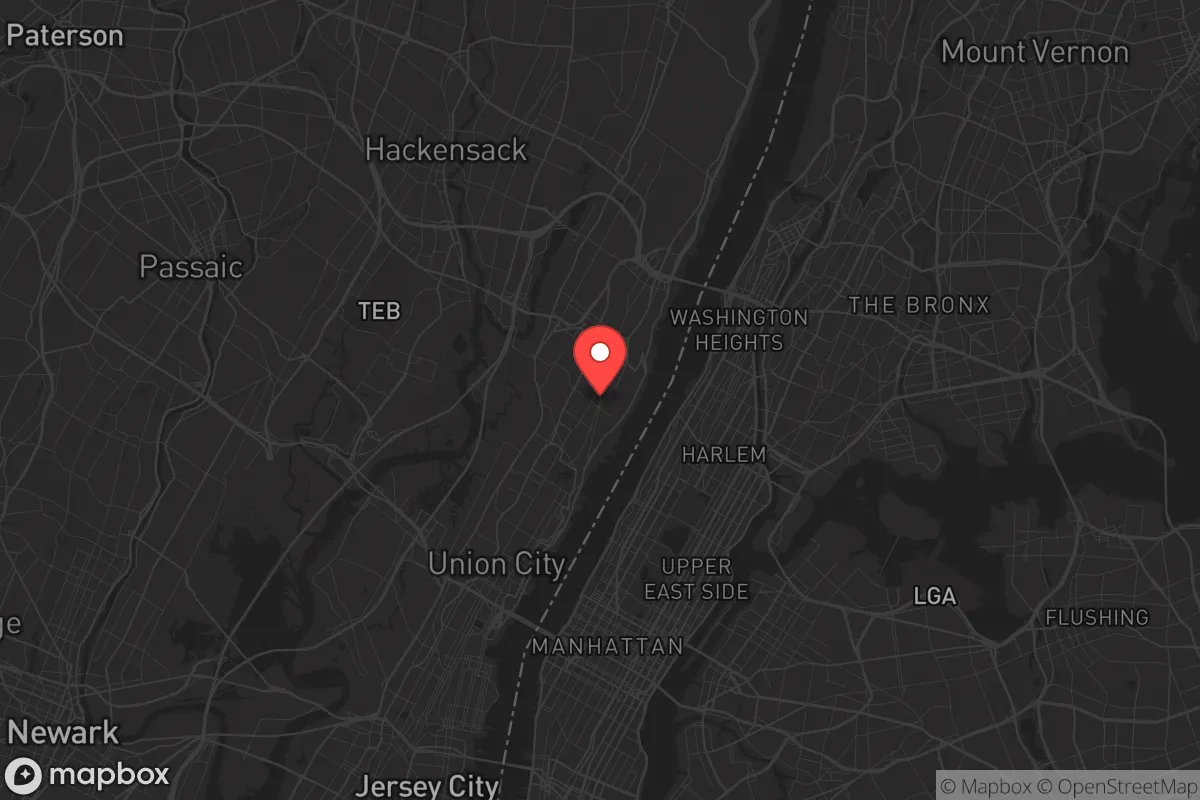
Photo: Wikipedia
Strategic Assessment of Cliffside Park, NJ
High tactical risk. This location is likely close to major population centers, strategic targets, or sits in a high-disaster corridor. A retreat property and careful exit planning is required.
What does the Strategic Assessment tell us?
Our Strategic Assessment grades tactical survivability of an area. Major population centers, military targets, fallout zones, natural disasters, and border exposure all drive risk — lower exposure means a more defensible position in a crisis.
This is heavily inspired by Joel Skousen's Strategic Relocation book. Highly recommended you checkout the book ($)What does this tell us?
Our Strategic Assessment grades tactical survivability of an area. Major population centers, military targets, fallout zones, natural disasters, and border exposure all drive risk — lower exposure means a more defensible position in a crisis.
This is heavily inspired by Joel Skousen's Strategic Relocation book. Highly recommended you checkout the book ($)Strategic Pillars

Key Distances
Regional Safe Places
Below is our recommended "safe zones" in New Jersey and the surrounding area based on our strategic heuristics. For most people, it's unrealistic to live in a “safe zone” full-time due to work, family or other personal reasons. They tend to be more rural. However, many of these areas are perfect for second homes and retreat properties that double as a vacation home or even a short-term rental.
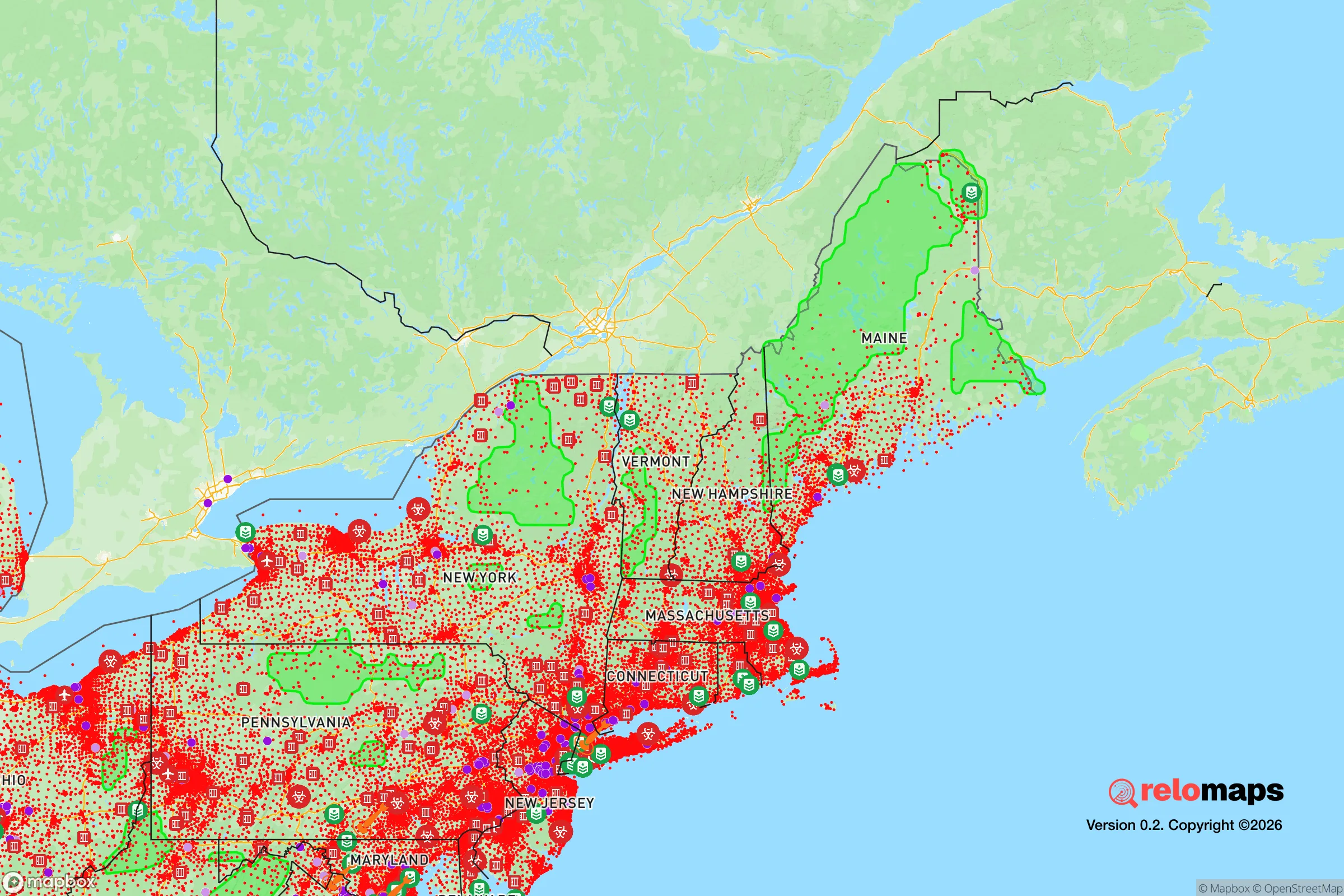
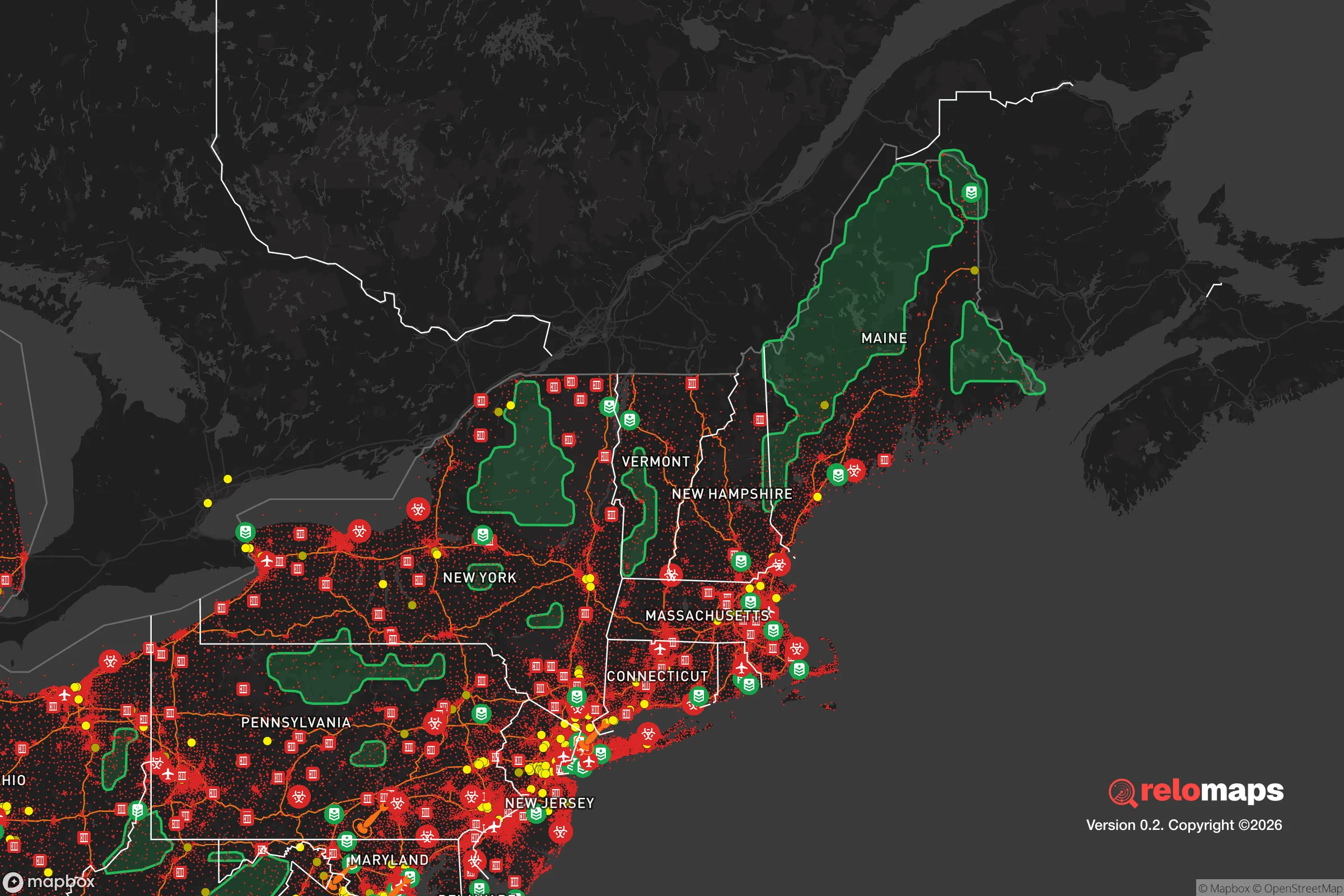


Important Note: For informational purposes only. This does not mean nothing bad ever happens in the green zones. Please use common sense. This is based on public data and modeled with AI. We tried to take a conservative approach but mistakes happen. We update this regularly as new information becomes available.
Solar Generator Recommendations
Backup power matters more here than in safer locations. We've picked three solar generators across budgets and capacity tiers — start with the budget unit if you only need a few essentials, or step up if you want to run a fridge and HVAC for days at a time.

Jackery Portable Power Station Explorer 300
Budget OptionPower on the Go: Weighing only 11 lbs, it's convenient to set up and store with book-sized foldable solar panels

BLUETTI Portable Power Station AC180
Designed for both indoor and outdoor scenarios, AC180 is highly capable as it has a robost capacity and continuous output power.

EF ECOFLOW DELTA Pro Ultra Power Station
Upgraded PickEcoFlow DELTA Pro Ultra is a whole-home energy system designed to grow with your family. Integrated with the Smart Home Panel 2, it scales to meet your evolving energy needs — keeping your home powered, intelligent, and secure through every stage of life.
We earn a commission, at no additional cost to you.
Strategic Assessment Analysis
Cliffside Park, New Jersey, sits in a precarious strategic position that demands serious consideration for anyone prioritizing long-term resilience and preparedness. Its primary advantage—immediate proximity to New York City—is also its most glaring vulnerability in a crisis scenario, making it a location that requires a clear-eyed assessment of trade-offs rather than a simple recommendation. For the conservative prepper or survivalist, this is not a bug-out destination but a potential staging ground that demands a robust plan for both sheltering in place and rapid evacuation.
Geographic position and natural advantages for a prepper
Cliffside Park occupies a narrow strip of land along the Palisades, the steep cliffs that rise directly from the Hudson River. This elevated position offers a genuine natural defensive advantage: the cliffs provide a commanding view of the river and the Manhattan skyline, making it difficult for any ground-level approach from the east to go undetected. The elevation also means the area is less prone to storm surge flooding than low-lying communities directly on the river, a critical factor for anyone concerned with hurricane or severe weather events. The town's roughly 2.5 square miles are densely developed, but the Palisades Interstate Park system runs along the cliff edge, offering a thin green buffer and potential emergency access routes northward. The Hudson River itself is a major water source, though treating it for drinking would require significant filtration and chemical treatment. The underlying geology—the Palisades diabase sill—provides stable bedrock, which is a positive for any underground shelter or reinforced basement construction. However, the town's small size and high population density (over 8,000 people per square mile) mean that any natural advantage is quickly offset by the sheer number of people competing for the same limited resources.
Risks, exposures, and proximity to fallout-relevant landmarks
The most significant risk for Cliffside Park is its location directly across the Hudson from Midtown Manhattan, roughly 8 miles from the Lincoln Tunnel entrance. In a mass casualty event, a nuclear detonation, or a large-scale terrorist attack targeting New York City, this town would be in the immediate danger zone for fallout, secondary blast effects, and the chaotic mass exodus of millions of people. The Lincoln Tunnel and the George Washington Bridge, both within a few miles, would become impassable chokepoints. The town is also within the blast radius of any major industrial accident at the numerous chemical plants and refineries along the New Jersey Turnpike corridor, particularly the Bayway Refinery in Linden, about 15 miles south. The densely packed residential and commercial buildings create a fire risk in a prolonged grid-down scenario, and the narrow, winding streets—many of which dead-end at the cliff—make evacuation by vehicle a nightmare. The presence of multiple hospitals, including Palisades Medical Center in nearby North Bergen, is a double-edged sword: a resource in a localized emergency, but a target for looting and overwhelmed capacity in a regional crisis. For the survivalist, the key takeaway is that Cliffside Park is a high-risk, high-exposure location that offers no strategic depth—you are essentially living on the front lines of any event that affects the New York metropolitan area.
Practical resilience for a relocator: food, water, energy, and defensibility
For someone considering a move here with a prepper mindset, the practical challenges are substantial. Food security is extremely low: the town has no significant agricultural land, and the few local grocery stores would be stripped within hours of a crisis. You would need to stockpile at least 90 days of food per person, and that stockpile would need to be hidden or secured against looting. Water is a major concern: the municipal supply comes from the Passaic Valley Water Commission, a centralized system vulnerable to contamination or failure. A backup plan would require a high-capacity water filter (like a Berkey or a reverse osmosis system) and a supply of storage containers, plus knowledge of how to access and treat Hudson River water. Energy resilience is possible but limited: rooftop solar is feasible on the many flat-roofed apartment buildings and houses, but the town's tree cover and the cliff's shadowing effect reduce efficiency. A natural gas generator is a more reliable option, but natural gas lines are also vulnerable to earthquake or sabotage. Defensibility is poor: the dense, multi-unit housing stock means you cannot easily secure a perimeter. A single-family home with a basement and a fenced yard is the best option, but such properties are rare and expensive. The best defensive strategy is to have a pre-planned bug-out location at least 50 miles inland, with a vehicle kept fueled and ready, and a route that avoids the major bridges and tunnels. In short, Cliffside Park is a location for a prepper who is prepared to be highly self-sufficient and who has a clear, practiced evacuation plan for the first 24 hours of a crisis.
The overall strategic picture for Cliffside Park is one of extreme trade-offs. It offers the economic and social benefits of being near New York City, but those benefits evaporate in a crisis. For the conservative relocator focused on long-term resilience, this is not a place to build a permanent survival retreat. It is a location that demands constant vigilance, a substantial pre-existing stockpile, and a well-rehearsed exit strategy. The cliffs provide a natural observation post, but they also trap you against the river. The proximity to Manhattan is a liability, not an asset. If you are single and can maintain a low profile, with a vehicle and a bug-out plan, it might serve as a temporary base. For a family, the risks likely outweigh the benefits. The prudent move is to look further inland, toward the more defensible and resource-rich areas of northwestern New Jersey or Pennsylvania, where population density drops and natural water sources and agricultural land become available. Cliffside Park is a place to pass through, not to dig in.

* Values derived from national, state, county, city and local statistics and may differ in a specific area. Last updated: 2026-04-29T21:16:11.000Z
Narrative content on this page is AI-generated and may contain mistakes. Verify any details that matter before acting on them.
ReloMaps may earn a commission from affiliate links at no extra cost to you.

