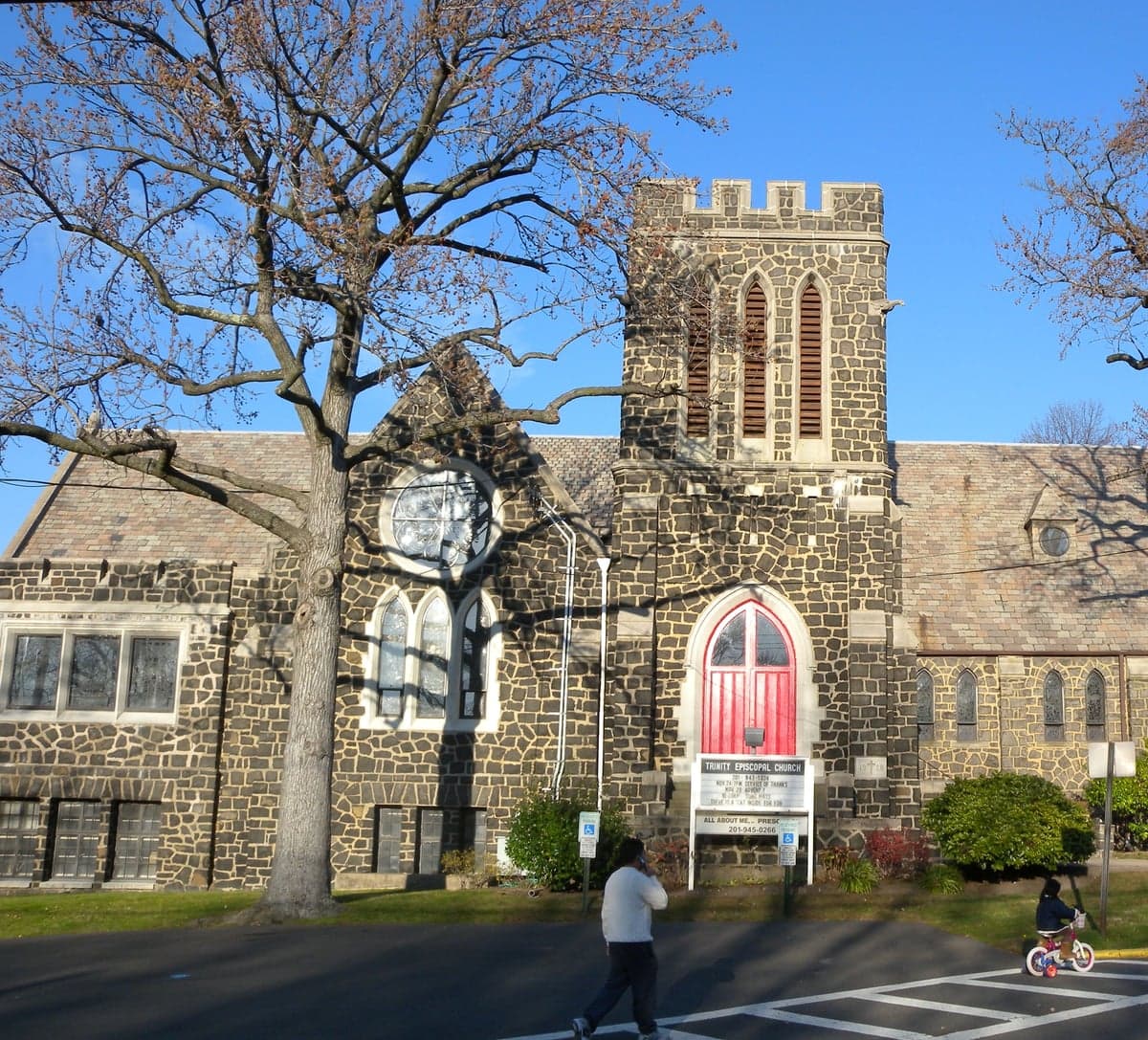
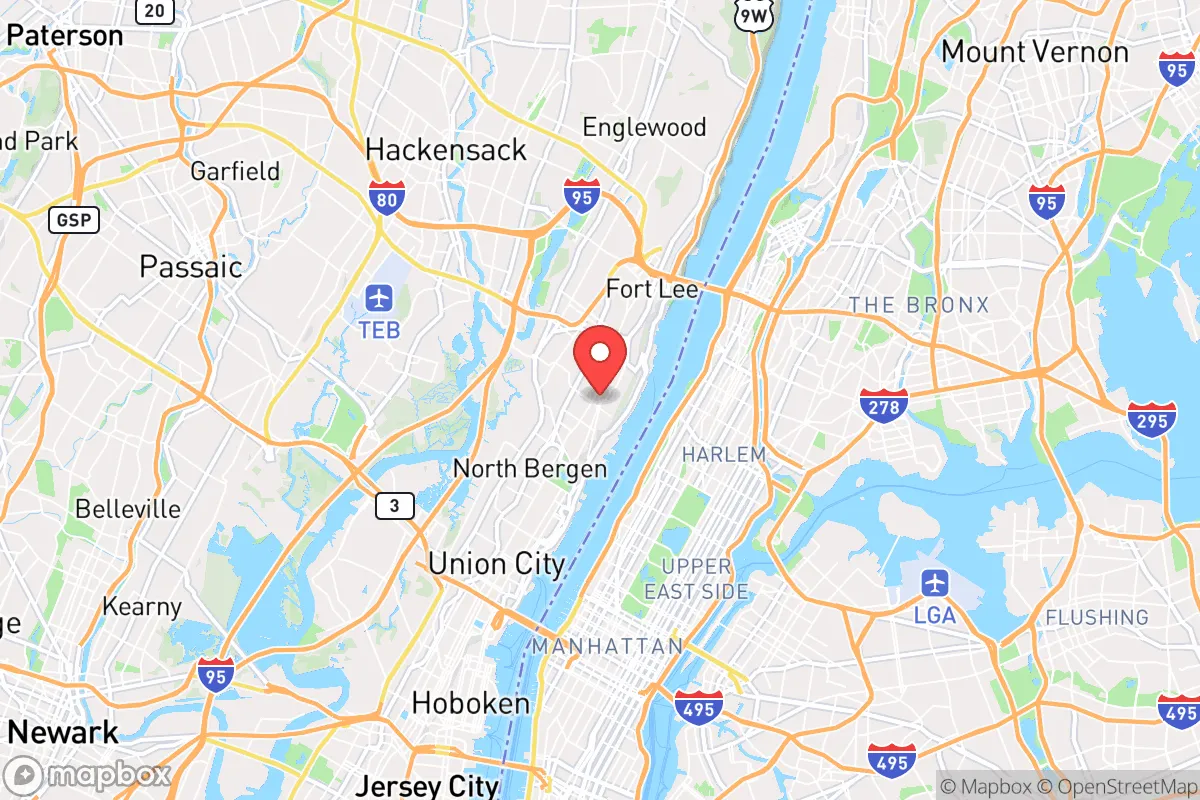
Photo: Wikipedia
Personal Sovereignty in Cliffside Park, NJ
Viable for self-reliance. Generally workable, though some barriers may limit total independence.
What does Personal Sovereignty tell us?
Personal Sovereignty measures your capacity for self-reliance and independence with minimal government friction. Higher scores mean fewer barriers between you and the way you want to live... but it assumes you have the space you need and good neighbors.
What does this tell us?
Personal Sovereignty measures your capacity for self-reliance and independence with minimal government friction. Higher scores mean fewer barriers between you and the way you want to live... but it assumes you have the space you need and good neighbors.
State Policy
Energy independence: Importer (8% of energy produced in-state)
Personal Liberty
Homesteading

Personal Liberty Analysis
Cliffside Park, New Jersey, presents a complex environment for personal sovereignty, where the state's heavy regulatory footprint and high tax burden significantly constrain individual autonomy. For a survivalist or prepper mindset, this densely populated Bergen County borough offers limited opportunities for self-reliance, with strict gun laws, minimal homesteading potential, and a political culture that leans heavily toward government oversight. While the area provides proximity to urban resources, the trade-offs in personal freedoms are substantial, making it a location where strategic relocation requires careful consideration of how much control you're willing to cede to state and local authorities.
Tax burden and regulatory climate in Cliffside Park
New Jersey consistently ranks among the highest-taxed states in the nation, and Cliffside Park is no exception. The effective property tax rate hovers around 2.3% of assessed value, meaning a home valued at $400,000 carries an annual tax bill of roughly $9,200. Combined with a state income tax that tops out at 10.75% for high earners, the financial squeeze on households is severe. For a prepper focused on financial resilience, this tax burden directly reduces the capital available for supplies, land, or emergency funds. The regulatory environment is equally restrictive: New Jersey's state-level mandates on everything from vehicle emissions to building codes are among the nation's strictest. Local zoning in Cliffside Park, a borough of just 1.8 square miles, leaves little room for deviation from standard residential use. The state's COAH (Council on Affordable Housing) requirements force municipalities to approve high-density developments, further limiting property rights and personal space. For anyone seeking to minimize government overreach, the cumulative effect is a system that demands constant compliance and significant financial extraction.
Self-defense rights and gun law specifics in New Jersey
New Jersey's gun laws are among the most restrictive in the United States, and Cliffside Park residents must navigate a dense web of regulations that severely limit self-defense options. The state requires a Firearms Purchaser Identification Card (FPID) for long guns and a separate permit for each handgun purchase, with a mandatory 30-day waiting period between handgun transactions. Concealed carry was effectively impossible for most residents until the 2022 Supreme Court decision in NYSRPA v. Bruen, but New Jersey's response has been to impose a "sensitive places" law that bans firearms in a broad range of locations, including parks, libraries, and private businesses unless the owner explicitly allows them. The state's ammunition purchasing restrictions require a separate permit and background check for each transaction, creating logistical hurdles for stockpiling. Magazine capacity is capped at 10 rounds, and "assault weapons" are broadly defined, banning many common semi-automatic rifles. For a prepper, these laws mean that self-defense planning must account for legal risk, limited carry options, and the need for meticulous record-keeping. The political climate in Bergen County leans heavily Democratic, so local law enforcement is unlikely to be sympathetic to challenges against these restrictions.
Self-reliance and homesteading viability in a dense urban borough
Cliffside Park's urban density and small lot sizes make traditional homesteading nearly impossible. The median lot size is approximately 5,000 square feet, with many homes on lots under 4,000 square feet. Zoning regulations prohibit livestock, and even backyard chickens are subject to strict permitting and neighbor notification requirements. The borough's soil quality is poor for gardening, with much of the land being fill from past industrial use, and the proximity to the Hudson River means saltwater intrusion can affect groundwater. Off-grid living is not feasible: the borough mandates connection to municipal water and sewer systems, and solar panel installations require extensive permitting and approval from the local planning board. For a survivalist, the lack of space for food production, water storage, or alternative energy systems is a critical limitation. The nearest rural areas with homesteading potential are in Sussex County or northwestern New Jersey, a 90-minute drive without traffic. In a grid-down scenario, Cliffside Park's population density of over 20,000 people per square mile would create severe resource competition and security challenges.
Personal liberties: parental rights, medical autonomy, and property control
New Jersey's state-level policies significantly erode parental rights and medical autonomy. The state mandates comprehensive sex education in public schools, including instruction on gender identity and sexual orientation, with no opt-out provision for parents who object. Vaccine mandates for school attendance are strict, with only narrow medical exemptions allowed. During the COVID-19 pandemic, New Jersey maintained some of the longest-lasting mask and vaccine mandates in the country, and the state's emergency powers remain broad, allowing the governor to issue executive orders with limited legislative oversight. Medical autonomy is further constrained by the state's physician-assisted suicide law, which some conservatives view as a slippery slope, and by strict regulations on alternative medicine and supplement sales. Property rights are limited by the state's eminent domain powers, which have been used aggressively for redevelopment projects, and by rent control ordinances in Cliffside Park that restrict what landlords can charge. For a prepper concerned about government overreach, these policies create an environment where personal decisions—from healthcare to education to property use—are subject to state approval.
Overall, Cliffside Park offers a low level of personal sovereignty compared to many other areas in the United States. The combination of high taxes, restrictive gun laws, limited homesteading potential, and aggressive state oversight of personal choices makes it a challenging location for those prioritizing autonomy and self-reliance. For a survivalist or prepper, the borough's only strategic advantage is its proximity to New York City's resources, but that comes at the cost of living under one of the most regulatory-heavy state governments in the nation. If relocation is an option, states like New Hampshire, Texas, or Idaho offer far greater freedom in taxation, self-defense, and property rights. For those who must remain in the Northeast, rural areas of Pennsylvania or upstate New York provide a better balance of access and autonomy than Cliffside Park can deliver.

* Values derived from national, state, county, city and local statistics and may differ in a specific area. Last updated: 2026-04-29T21:16:11.000Z
Narrative content on this page is AI-generated and may contain mistakes. Verify any details that matter before acting on them.
ReloMaps may earn a commission from affiliate links at no extra cost to you.

