Photo: Wikipedia
Political ClimatePolitical Climate in Clive, IA
District shown is the primary district for this city’s centroid. Cities may span multiple districts.
Local Political AnalysisPolitical Analysis of Clive, IA
Clive, Iowa, sits in a pocket of the Des Moines metro that has historically leaned conservative, and the Cook PVI of R+2 reflects that—it's a place where folks generally believe in minding your own business and keeping government out of your wallet and your life. But I've lived here long enough to see the winds shifting, and not always for the better. The area used to be reliably red, with most neighbors voting for limited government and personal responsibility, but as the metro has grown and attracted more people from out of state, you can feel a slow creep of progressive ideology that worries a lot of us who remember when Clive was a quiet, no-nonsense community. It's not a dramatic flip, but the trajectory is concerning if you value individual freedoms and local control.
How it compares
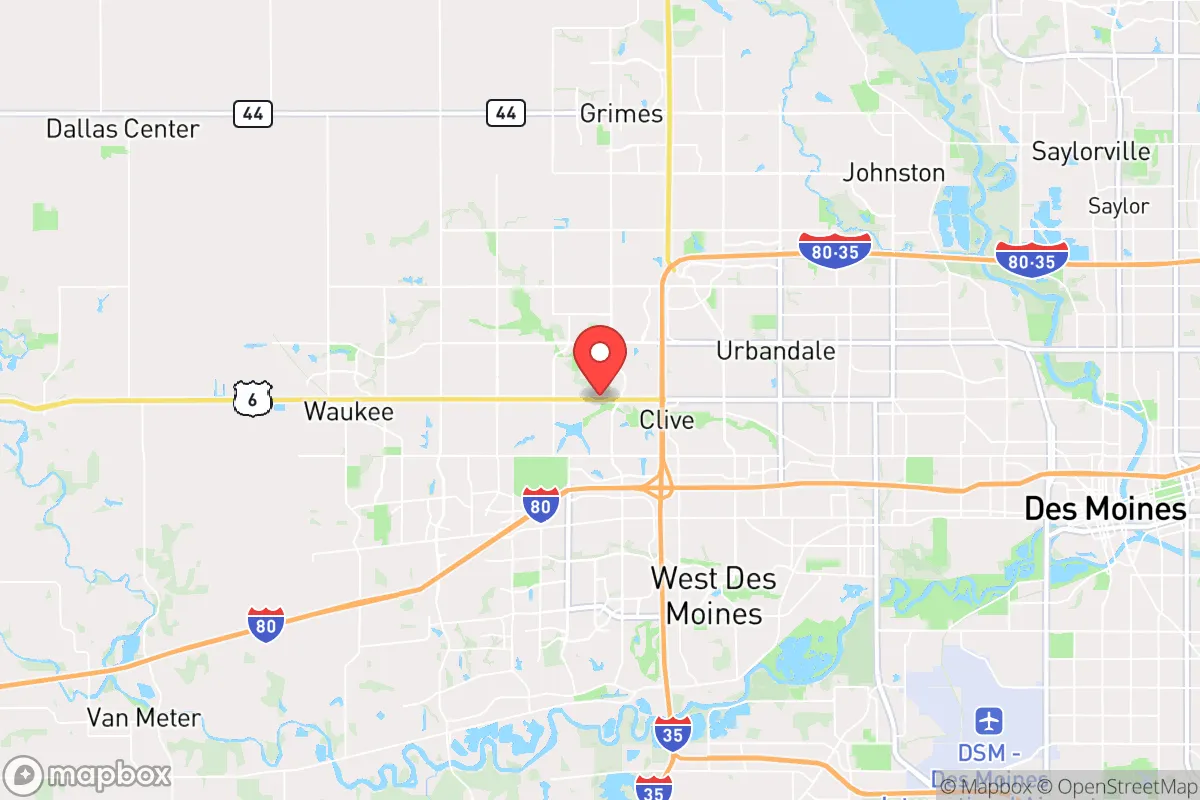
If you drive ten minutes east into Des Moines proper, you'll hit a much bluer vibe—the city council there has pushed things like higher taxes and more social programs that feel like government overreach to me. West Des Moines, just south of Clive, is a mixed bag; it's still fairly conservative overall, but you see more young families moving in who bring big-city ideas about zoning and regulations. Head north to Ankeny or west to Waukee, and you'll find communities that have held onto their conservative roots a bit tighter, with lower taxes and fewer mandates. Clive itself is caught in the middle—it's not as red as the rural counties to the north, but it's not as blue as the urban core. The R+2 rating tells you it's a swing area, and that's exactly what makes it vulnerable to the kind of progressive policies that erode personal freedoms over time. I've watched school board meetings and city council sessions where the old guard of fiscal conservatives is slowly being replaced by folks who think the government should have a say in everything from what you can build on your property to how you run your business.
What this means for residents
For someone like me who values the Second Amendment, low property taxes, and the right to make my own choices without a bureaucrat's permission, Clive is still a decent place to live—but you have to stay vigilant. The local government hasn't gone full progressive yet, but you see it in small ways: more regulations on short-term rentals, talk of "equity" initiatives in schools, and a general willingness to spend taxpayer money on pet projects that don't benefit the average family. If you're looking to move here, I'd say it's still a safe bet for conservative values, but don't expect it to stay that way without active involvement. The nearby towns of Urbandale and Johnston are trending in a similar direction, so if you want a truly conservative stronghold, you might look further out to places like Adel or Grimes. But if you're willing to keep an eye on local elections and push back against government overreach, Clive offers a good quality of life with decent schools and safe neighborhoods—just know that the political climate is a battleground, and the progressive side is gaining ground every year.
One thing that sets Clive apart culturally is its strong sense of community events and local businesses, which tend to attract people who value tradition over change. The annual Clive Festival and the farmers market are still places where you can chat with neighbors who share your concerns about the direction of the state. But I've noticed more yard signs for progressive candidates in recent cycles, and the local library has started hosting events that feel more like activism than education. If you're a conservative who believes in limited government and personal responsibility, Clive is still worth considering—just come prepared to be part of the fight to keep it that way. The next few election cycles will tell us a lot about whether this area holds the line or slides further into the kind of top-down control that so many of us moved here to escape.

State Political ClimatePolitical Climate in Iowa
State Political AnalysisPolitical Environment in the State
Iowa has been a reliably Republican state in presidential elections since 2016, but its political identity is more nuanced than a simple red-state label suggests. The state’s overall partisan lean is roughly R+6, driven by a coalition of rural conservatives, evangelical Christians, and a growing number of fiscally conservative suburbanites, though a persistent Democratic stronghold in the eastern metro areas keeps the map competitive. Over the past 20 years, Iowa has shifted from a classic purple swing state—voting for Obama in 2008 and 2012—to a solidly red one, with Republicans now holding unified control of the governorship, both legislative chambers, and three of four U.S. House seats. This trajectory reflects a broader realignment where cultural and economic conservatism has consolidated outside the state’s few urban centers.
Urban vs. rural divide
The political map of Iowa is a textbook case of the urban-rural split. The Des Moines metro area (Polk, Dallas, and Warren counties) is the state’s Democratic engine, with Polk County delivering 60% of its vote to Joe Biden in 2020. However, even here, the suburbs are shifting: Dallas County, once a swing area, has trended right, flipping from Obama in 2012 to Trump in 2020 by 8 points. The Iowa City area (Johnson County) is the state’s most liberal enclave, home to the University of Iowa and consistently voting 70%+ Democratic. In contrast, the rest of the state is deeply red. Sioux County in the northwest, a Dutch Reformed stronghold, routinely gives Republicans 80%+ of the vote. Pottawattamie County (Council Bluffs) and Woodbury County (Sioux City) are more competitive but lean Republican, while rural counties like Kossuth and Emmet in the north have flipped hard red since 2016. The key takeaway: if you live outside the Des Moines–Iowa City–Cedar Rapids corridor, you’re in solidly conservative territory.
Policy environment
Iowa’s policy environment is among the most conservative in the Midwest, with a strong emphasis on low taxes and limited government. The state has a flat income tax of 3.9% (phasing down to 3.5% by 2026), no inheritance tax, and a property tax system that caps annual increases for homeowners. Governor Kim Reynolds signed a 2023 law eliminating the state’s corporate income tax entirely by 2027. On education, Iowa passed a universal school choice program in 2023, allowing any family to use state funds for private or homeschool expenses—a major win for parental rights. Healthcare policy is mixed: the state expanded Medicaid under the Affordable Care Act, but has since imposed work requirements for able-bodied adults. Election laws tightened in 2021 with a law requiring absentee ballot applications to be returned by mail (not drop boxes), shortening the early voting window, and banning private funding for elections. For a conservative, the policy environment is largely favorable, though the Medicaid expansion remains a point of contention among libertarian-leaning residents.
Trajectory & freedom
Iowa is moving decisively toward greater personal freedom in several key areas, but with some caveats. On gun rights, the state became a permitless carry state in 2021, allowing any law-abiding adult to carry a concealed firearm without a permit. The same year, a “stand your ground” law was enacted, removing the duty to retreat in self-defense situations. On parental rights, the 2023 “Parental Rights in Education” law requires schools to notify parents of any changes in a student’s mental or physical health, and bans instruction on sexual orientation and gender identity through sixth grade. Medical freedom took a hit with the 2023 law banning gender-affirming care for minors, which conservatives view as protecting children from irreversible procedures. However, the state’s COVID-era restrictions were among the lightest in the nation—no mask mandates, no vaccine passports, and businesses stayed open. Property rights are strong, with no statewide zoning mandates and low property taxes. The trajectory is clearly toward more freedom for conservatives, though the state’s heavy reliance on agricultural subsidies and ethanol mandates (the Renewable Fuel Standard) remains a point of friction for free-market purists.
Civil unrest & political movements
Iowa has seen relatively little civil unrest compared to coastal states, but there have been notable flashpoints. The 2020 Black Lives Matter protests in Des Moines and Iowa City were largely peaceful, though a few instances of property damage occurred. The state’s response was measured, with the governor deploying the Iowa National Guard only briefly. On the right, the “Iowa Freedom Rallies” in Des Moines (2020–2021) drew thousands protesting COVID restrictions, and the state’s “Moms for Liberty” chapter has been active in school board races, particularly in Ankeny and Waukee. Immigration politics are relatively quiet—Iowa has no sanctuary cities, and a 2023 law requires local law enforcement to cooperate with ICE. Election integrity remains a hot topic: the 2020 audit in Linn County (Cedar Rapids) found no widespread fraud, but the 2021 voting law was passed in response to concerns about ballot security. A new resident would notice the absence of visible political street battles—most activism happens in school board meetings and county GOP conventions, not on the streets.
Projection
Over the next 5–10 years, Iowa is likely to become more solidly Republican, driven by two demographic trends. First, the state’s rural population is aging and shrinking, but those who remain are voting even more heavily Republican. Second, in-migration from blue states (particularly Illinois and California) is concentrated in the Des Moines suburbs, where new arrivals tend to be fiscally conservative but socially moderate. This could create a tension between the libertarian-leaning suburbs and the socially conservative rural base. The state’s current political leadership is aging—Governor Reynolds is term-limited in 2026—and the next governor will likely be a Republican from the same mold. The wildcard is the state’s growing Latino population, particularly in Storm Lake and Denison, which has historically leaned Democratic but is culturally conservative. If Republicans can make inroads there, Iowa could become as red as Nebraska. For a conservative moving in now, expect a decade of continued Republican dominance, with occasional intra-party fights over school funding and ethanol policy.
For a new resident, the bottom line is that Iowa offers a high degree of personal freedom, low taxes, and a political environment that respects parental rights and gun ownership. The trade-off is a relatively homogeneous culture and limited urban amenities outside Des Moines. If you value a state where your vote counts in a meaningful way and where government stays out of your business, Iowa is a strong bet. Just be prepared for cold winters and a political landscape that, while conservative, still has a few purple pockets worth watching.
* Values derived from national, state, county, city and local statistics and may differ in a specific area. Last updated: 2026-04-23T04:09:26.000Z
Narrative content on this page is AI-generated and may contain mistakes. Verify any details that matter before acting on them.
ReloMaps may earn a commission from affiliate links at no extra cost to you.

