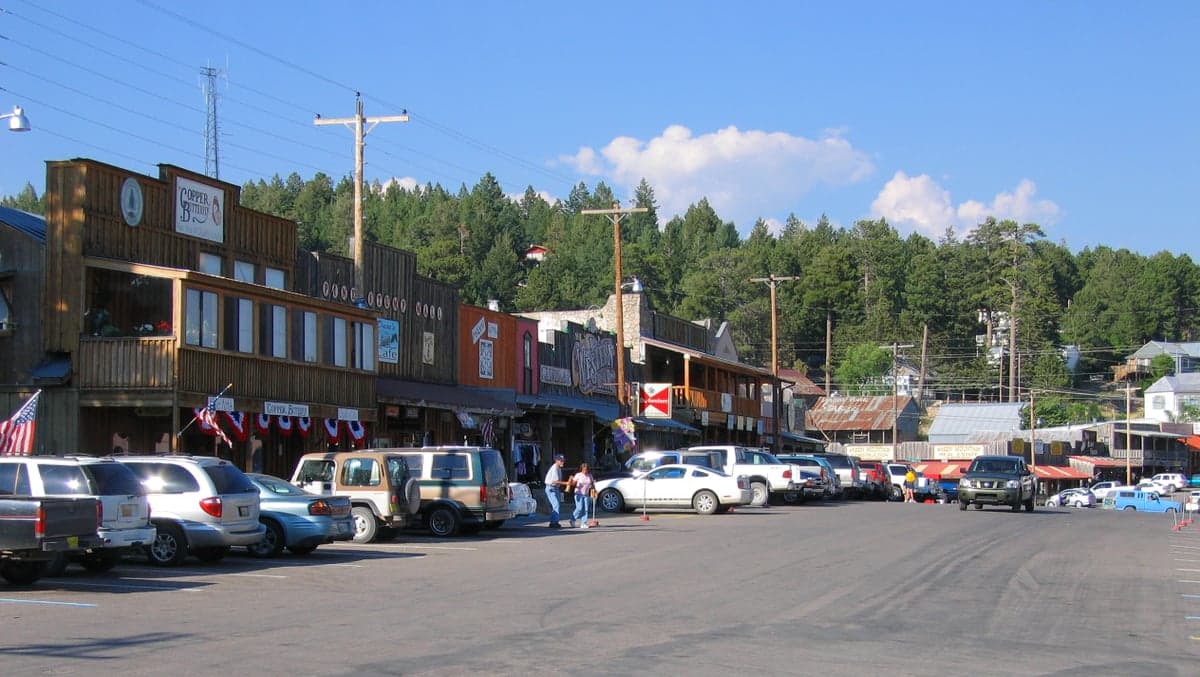
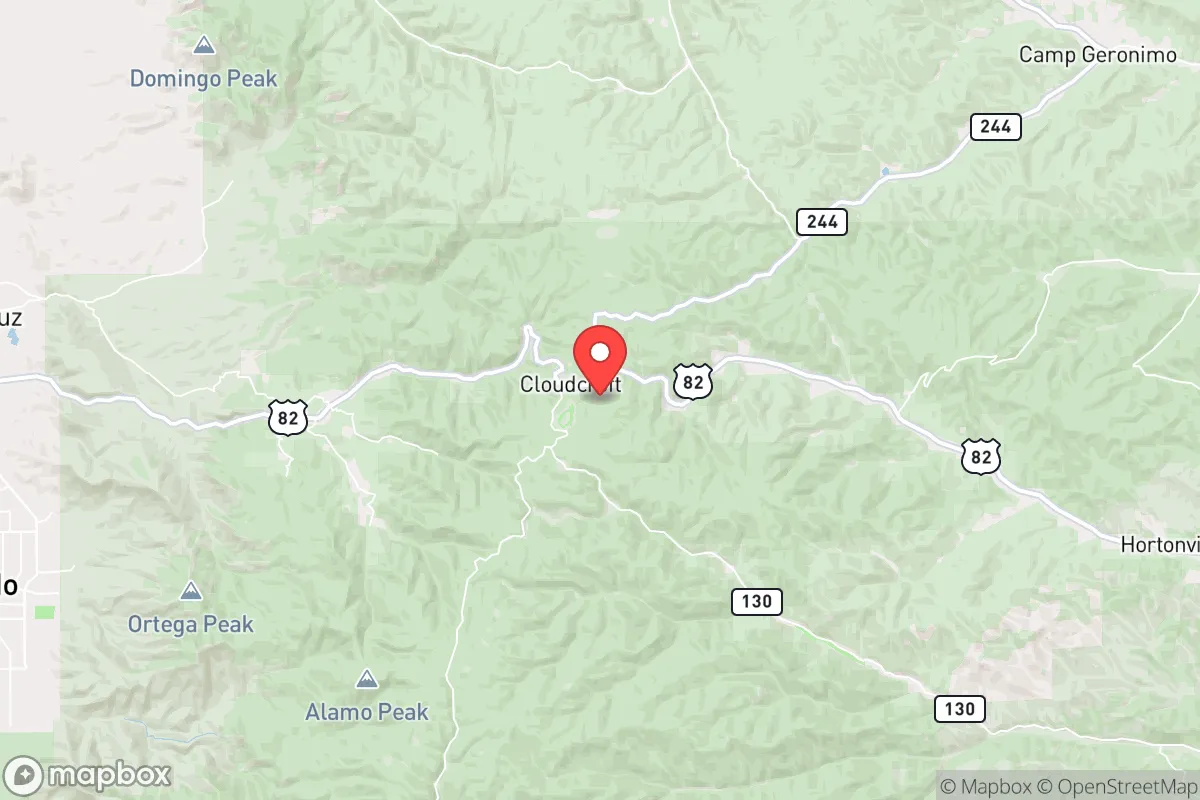
Photo: Wikipedia
Personal Sovereignty in Cloudcroft, NM
Strong independent fundamentals that actively favor personal liberty and low regulation.
What does Personal Sovereignty tell us?
Personal Sovereignty measures your capacity for self-reliance and independence with minimal government friction. Higher scores mean fewer barriers between you and the way you want to live... but it assumes you have the space you need and good neighbors.
What does this tell us?
Personal Sovereignty measures your capacity for self-reliance and independence with minimal government friction. Higher scores mean fewer barriers between you and the way you want to live... but it assumes you have the space you need and good neighbors.
State Policy
Energy independence: Net exporter (250% of energy produced in-state)
Personal Liberty
Homesteading

Personal Liberty Analysis
Cloudcroft, New Mexico, offers a notably high degree of personal sovereignty for those seeking to live outside the shadow of heavy-handed government overreach, particularly when compared to coastal blue states or even larger New Mexico cities like Albuquerque or Santa Fe. The village’s remote mountain setting, small population (roughly 700 permanent residents), and Otero County’s generally conservative lean create an environment where individual autonomy is the default, not the exception. For the survivalist or prepper, this translates into fewer intrusive regulations, a community that values self-reliance, and a legal framework that largely leaves you alone to live your life as you see fit—provided you’re not looking for handouts or expecting the state to solve your problems.
Tax burden and regulatory posture: How New Mexico compares to neighboring states
New Mexico’s overall tax burden is moderate, but the state’s regulatory posture is a mixed bag that requires careful navigation. The state income tax is progressive, topping out at 5.9% for individuals earning over $210,000, which is higher than Texas (0%) but lower than California (13.3%). Property taxes in Otero County are a bright spot: the effective rate is around 0.7% of assessed value, well below the national average of 1.1%, and far below states like Illinois (2.1%) or New York (1.7%). This means your land and home in Cloudcroft won’t be a recurring financial anchor. Sales tax in the village is about 8.4% (state + local), which is higher than Texas but typical for the region. The real regulatory win for Cloudcroft is its rural character: Otero County has minimal zoning compared to urbanized areas, and the village itself has a light touch on building codes and land use. You won’t face the kind of permit battles or environmental reviews common in Colorado mountain towns like Durango or Boulder. However, New Mexico’s state-level bureaucracy can be slow and inefficient—expect delays on vehicle registration, business licenses, or any interaction with the state’s online portals. For the prepper, the key takeaway is that local governance in Cloudcroft respects property rights and doesn’t burden you with excessive fees or red tape, but you’ll still have to deal with a state government that leans left on environmental and labor regulations.
Self-defense and gun law specifics: What you need to know about carry, storage, and restrictions
New Mexico is a shall-issue state for concealed carry permits, meaning if you meet the basic requirements (21+, clean background, training course), the state must issue the permit. There is no discretionary denial by a sheriff or local board, which is a critical protection against arbitrary government overreach. Open carry is legal without a permit for anyone 19 or older, and the state preempts local governments from enacting stricter gun ordinances—so Cloudcroft cannot ban firearms in public spaces. Magazine capacity is not restricted, and there is no state-level assault weapons ban. However, there are two significant caveats for the sovereignty-minded. First, New Mexico passed a red flag law (Extreme Risk Firearm Protection Order) in 2020, which allows law enforcement or family members to petition a court to temporarily seize firearms from someone deemed a danger. This law has been used sparingly in rural counties like Otero, but it remains a tool for potential abuse if political winds shift. Second, the state requires background checks on all private firearm sales, including between individuals at gun shows or online—a restriction that doesn’t exist in neighboring Texas or Arizona. For the prepper, this means you should plan to stock up on firearms and ammunition before moving, or buy from private parties in a way that complies with state law. Self-defense laws in New Mexico are generally favorable: you have no duty to retreat in your home or vehicle (castle doctrine), and the state recognizes stand-your-ground principles in public spaces, though the law is less explicit than in Texas or Florida. Otero County’s sheriff is known to be pro-Second Amendment, and the local culture strongly supports armed self-defense. If you’re concerned about government overreach in this area, Cloudcroft is a safe harbor relative to states like California, New York, or Colorado, but you should be aware that New Mexico’s state-level laws are more restrictive than the most gun-friendly states.
Self-reliance and homesteading viability: Lot sizes, zoning, and off-grid feasibility
Cloudcroft’s high-altitude environment (8,600 feet) presents both opportunities and challenges for the self-reliant homesteader. Lot sizes in the village proper are typically small (0.25 to 1 acre), but the surrounding unincorporated areas of Otero County offer parcels from 2 to 40 acres at prices far below what you’d find in Colorado or Montana—think $5,000 to $15,000 per acre for raw land with mountain views. Zoning in the county is minimal: there are no restrictions on keeping chickens, goats, or even larger livestock on parcels over 1 acre, and you can build a primary residence without a county building permit as long as you meet basic septic and well requirements. Off-grid living is legally feasible, but with caveats. New Mexico state law requires that any habitable dwelling have a source of potable water and a sewage disposal system—so you can’t just pitch a tent and call it a homestead. However, you can drill a well (costs $5,000–$15,000 depending on depth) and install a septic system ($3,000–$8,000) without needing a connection to municipal utilities. Solar power is common in the area, and Otero County has no net metering restrictions that would penalize you for generating your own electricity. The biggest challenge is the climate: the growing season is short (May to September), and the soil is rocky and alkaline, making large-scale gardening difficult without raised beds or greenhouses. Hunting is excellent—elk, mule deer, and turkey are abundant in the Lincoln National Forest that surrounds Cloudcroft—and fishing in nearby streams is a reliable protein source. For the prepper, the combination of cheap land, lax zoning, and legal off-grid infrastructure makes Cloudcroft a viable location for a retreat or homestead, provided you’re willing to adapt to high-altitude conditions and accept that you’ll need to import most of your food during winter months.
Personal liberties: Parental rights, medical autonomy, speech, and property protections
On the spectrum of personal liberties, Cloudcroft and Otero County lean heavily toward individual freedom, especially when compared to states that have aggressively expanded government control over family and medical decisions. Parental rights are strong in New Mexico, but the state has not passed any specific laws codifying parental authority over education or medical decisions—unlike Florida or Texas, which have explicit parental rights bills. In practice, Otero County schools are conservative-leaning, and parents have significant influence over curriculum and activities. The state does not mandate COVID-19 vaccines for school attendance, and there are no mask mandates in effect as of 2026. Medical autonomy is a mixed bag: New Mexico allows nurse practitioners and physician assistants to prescribe medications independently, which can be a boon for rural access, but the state also has a vaccine mandate for healthcare workers that remains on the books (though enforcement is lax in rural areas). Telehealth is widely available, and you can consult with out-of-state providers for specialized care. Free speech protections are robust—New Mexico has no hate speech laws that criminalize political or religious expression, and local law enforcement in Otero County is unlikely to enforce any state-level speech restrictions. Property rights are the strongest pillar: New Mexico’s constitution explicitly protects the right to acquire, possess, and protect property, and the state has no statewide rent control or land use restrictions that would limit your ability to build, fence, or develop your land. Eminent domain abuse is rare in rural counties. The one area where the state overreaches is in environmental regulations on water rights—New Mexico has a complex prior appropriation system that can make it difficult to claim new water rights for irrigation or livestock. If you buy land with existing water rights, you’re in good shape; if not, you’ll need to drill a well for domestic use only. Overall, Cloudcroft offers a high degree of personal sovereignty in the areas that matter most to conservatives and preppers: family decisions, medical choices, speech, and property control.
In the broader landscape of American personal sovereignty, Cloudcroft ranks well above the national average for those who value autonomy over convenience. It’s not a libertarian utopia—New Mexico’s state-level red flag law, private sale background checks, and water rights bureaucracy are real constraints—but the local culture, low taxes, minimal zoning, and strong property rights create an environment where you can live largely on your own terms. Compared to the regulatory stranglehold of California, the surveillance state of New York, or the creeping collectivism of Colorado’s Front Range, Cloudcroft offers a genuine alternative for the survivalist or prepper seeking a base of operations. The trade-offs are real: harsh winters, limited healthcare access, and a two-hour drive to the nearest major city (El Paso). But if your priority is freedom from government interference in your daily life, your family, and your preparations, Cloudcroft is one of the better options in the Southwest—a place where the state is a distant presence, not a constant overseer.

* Values derived from national, state, county, city and local statistics and may differ in a specific area. Last updated: 2026-05-28T19:04:18.000Z
Narrative content on this page is AI-generated and may contain mistakes. Verify any details that matter before acting on them.
ReloMaps may earn a commission from affiliate links at no extra cost to you.

