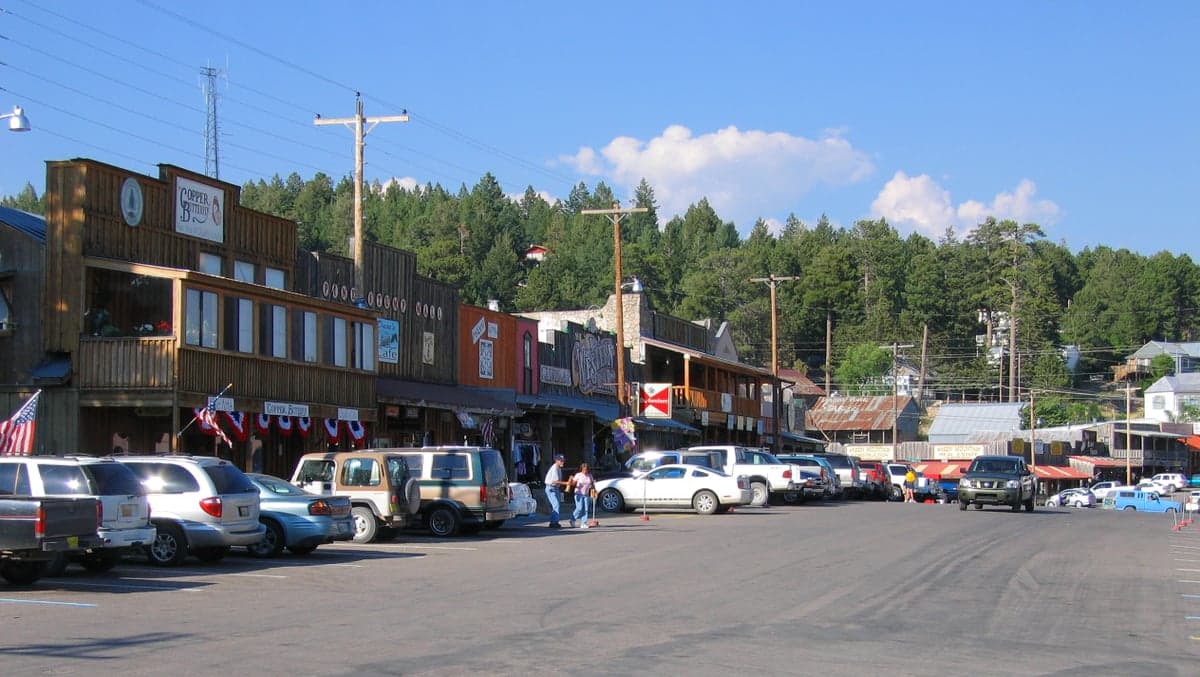
Photo: Wikipedia
Political ClimatePolitical Climate in Cloudcroft, NM
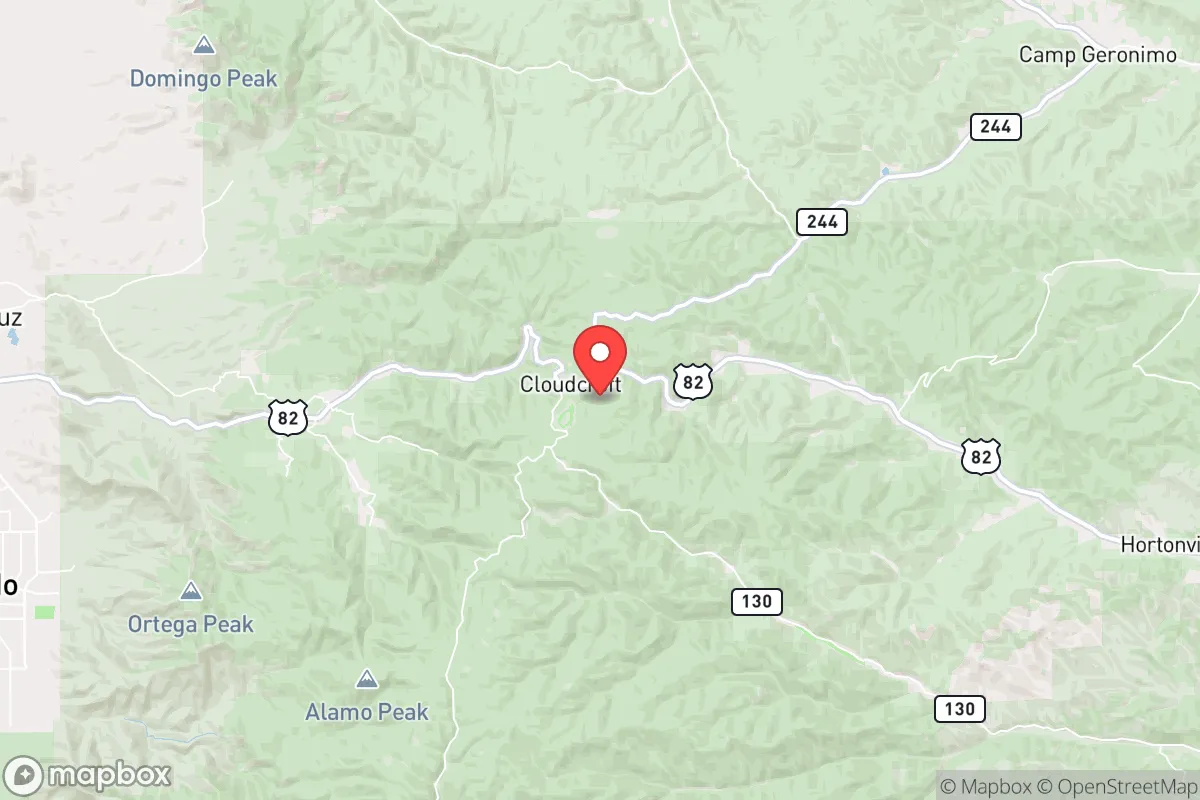
District shown is the primary district for this city’s centroid. Cities may span multiple districts.
Local Political AnalysisPolitical Analysis of Cloudcroft, NM
Cloudcroft, New Mexico, has long been a quiet pocket of conservative common sense in a state that’s been drifting leftward, and the numbers back that up. With a Cook PVI of EVEN, this mountain village is a true swing area, but in practice, it leans noticeably to the right of the surrounding state, which carries a D+3 rating. You’ll find a lot of folks here who value personal responsibility, low taxes, and the freedom to live without a government checklist for every decision—values that feel increasingly rare in places like Albuquerque or Santa Fe.
How it compares
When you stack Cloudcroft up against the rest of New Mexico, the contrast is stark. The state as a whole has trended blue for years, driven by urban centers like Albuquerque and Las Cruces, where progressive policies on everything from energy to land use have taken hold. Meanwhile, Cloudcroft sits in Otero County, which voted heavily Republican in recent cycles—think 70% or more for GOP candidates in presidential races. Drive 20 minutes down the mountain to Alamogordo, and you’ll see a similar conservative streak, but it’s not as tight-knit or independent-minded as Cloudcroft. The difference is that here, people actually talk about the Second Amendment and property rights like they’re non-negotiable, not talking points. The state’s D+3 PVI reflects a legislature that’s pushed for stricter gun laws, higher minimum wages, and more environmental regulations—all things that make a lot of Cloudcroft residents shake their heads. It’s not that we’re against change; it’s that we want change that respects individual choice, not mandates from Santa Fe.
What this means for residents
For anyone living here or thinking about moving, the political climate shapes daily life in real ways. You’ve got more breathing room on personal freedoms—less government overreach into how you run your small business, what you do on your own land, or how you educate your kids. The local schools and county commission tend to reflect that, keeping things practical rather than ideological. But there’s a growing concern: as New Mexico’s state government pushes harder on progressive agendas—like renewable energy mandates that hike utility costs or land-use restrictions that limit development—Cloudcroft feels the squeeze. It’s a constant battle to keep local control, and you can see it in the way folks show up for county meetings or vote in local elections. The trajectory is worrying if you value liberty; the state’s shift means more pressure on rural areas to conform, and Cloudcroft’s EVEN PVI shows it’s not immune to that pull. Long-term, if the trend continues, you might see more state-level policies that clash with the community’s independent spirit.
Culturally, Cloudcroft stands apart from the rest of New Mexico in a way that’s hard to miss. You won’t find the same push for identity politics or top-down social engineering here. Instead, it’s a place where neighbors help neighbors, and the biggest political fights are about keeping the forest service from over-regulating access to public lands or stopping a new tax on small businesses. The policy distinctions are clear: while Santa Fe talks about equity and sustainability, Cloudcroft talks about freedom and self-reliance. If you’re looking for a place where you can live your life without a bureaucrat looking over your shoulder, this is still one of the best spots in the state—but keep an eye on the horizon, because the winds from the capital are blowing stronger every year.

State Political ClimatePolitical Climate in New Mexico
State Political AnalysisPolitical Environment in the State
New Mexico has long been a reliably Democratic state at the federal level, with a Cook PVI of D+3, but that label hides a deeply fractured political landscape. The state’s dominant coalition is a mix of urban progressives in Albuquerque and Santa Fe, unionized government workers, and a significant Hispanic electorate that leans left on social services but is often more moderate on cultural issues. Over the last 10-20 years, the state has shifted noticeably leftward on energy, education, and social policy, driven by a growing activist class in the Rio Grande corridor, while rural and oil-patch counties have become increasingly Republican and resentful of Santa Fe’s one-party rule.
Urban vs. rural divide
The political map of New Mexico is a tale of two worlds. Bernalillo County (Albuquerque) and Santa Fe County together cast nearly half the state’s votes, and they are deep blue — Santa Fe County went +41 points for Biden in 2020. These metros are home to the state’s government apparatus, the University of New Mexico, and a growing class of remote workers and retirees from California and Colorado, all of whom push the culture leftward. Meanwhile, the southeastern corner — Lea County (Hobbs) and Eddy County (Carlsbad) — are the state’s reddest strongholds, voting +40 to +50 points Republican, fueled by the oil and gas industry and a libertarian-leaning, pro-energy culture. The middle Rio Grande valley, including Las Cruces and Doña Ana County, is a swing area that leans Democratic but is more conservative on border security and gun rights than Santa Fe. The rural north, places like Taos and Mora, are culturally liberal but economically struggling, creating a strange mix of anti-corporate populism and progressive social policy.
Policy environment
Santa Fe’s policy environment has become increasingly activist and top-down. New Mexico’s personal income tax is progressive, with a top rate of 5.9%, and the state recently expanded the child tax credit and created a new state-level earned income credit, both of which increase the tax burden on higher earners. The gross receipts tax (essentially a sales tax on services and goods) is among the highest in the nation, often exceeding 8% in cities like Albuquerque and Santa Fe, hitting small businesses and consumers hard. On energy, the state has aggressively pursued a green agenda: the 2019 Energy Transition Act mandates 100% carbon-free electricity by 2045, which is already driving up electricity rates and discouraging new natural gas investment. Education policy is a flashpoint — the state’s public schools consistently rank near the bottom nationally, and the legislature has resisted school choice expansion, though a 2024 bill created a modest charter school funding increase. Healthcare is heavily regulated, with a state-run insurance exchange and strict certificate-of-need laws that limit new hospital construction. Election laws are permissive: same-day registration, no-excuse absentee voting, and automatic voter registration are all in place, which critics argue undermines election integrity. The state also has a sanctuary policy (the 2019 New Mexico Immigrant Trust Act) that limits local law enforcement cooperation with federal immigration authorities.
Trajectory & freedom
Over the past five years, New Mexico has become less free in several key areas, particularly for gun owners, parents, and taxpayers. In 2021, the legislature passed a red-flag law (HB 129) allowing courts to temporarily seize firearms from individuals deemed a risk, without a criminal conviction or mental health adjudication. That same year, the state repealed its preemption law, allowing cities like Albuquerque and Santa Fe to pass their own gun restrictions — Santa Fe immediately banned firearms in city buildings and parks. On parental rights, the 2023 Healthy Families Act mandated paid sick leave for all workers, which small business owners say is a burden, and the state has resisted any form of education savings accounts or universal school choice. Medical autonomy took a hit with the 2021 passage of a law requiring COVID-19 vaccine mandates for state employees and contractors, though that has since been partially rolled back. Property rights are under pressure from the state’s Land Use Planning Act, which gives Santa Fe more control over local zoning decisions, particularly around renewable energy projects. The only bright spot for freedom advocates was the 2023 repeal of the state’s antiquated ban on carrying firearms in vehicles without a permit, but that was a minor win in an otherwise restrictive trend.
Civil unrest & political movements
New Mexico has seen its share of political flashpoints. The 2020 protests in Albuquerque over George Floyd’s death turned violent, with the toppling of a statue of Juan de Oñate and a series of arson attacks on police vehicles. The state’s sanctuary policy has made it a focal point in the immigration debate — in 2022, the governor deployed the National Guard to the border, but only for “humanitarian” purposes, refusing to assist federal enforcement. The Otero County Commission’s 2022 refusal to certify primary election results (over concerns about Dominion voting machines) became a national story, highlighting deep distrust in election integrity in rural areas. The New Mexico Civil Guard, a militia group, has been active in border surveillance operations near Sunland Park and Columbus, occasionally clashing with local activists. On the left, the Santa Fe Dreamers Project and other immigrant advocacy groups have organized protests against ICE detention facilities in Torrance County. The state also saw a significant protest in 2023 over the proposed nuclear waste storage facility near Carlsbad, which united environmentalists and local conservatives against the federal government.
Projection
Looking ahead 5-10 years, New Mexico is likely to continue its leftward drift, but with growing friction. The demographic trends favor the blue areas: Albuquerque and Santa Fe are growing slowly, while rural counties are losing population. The influx of remote workers from blue states, particularly to Santa Fe and Taos, will further shift the culture. However, the oil and gas industry in the southeast remains a powerful economic force, and any major federal policy changes on energy could either boost or devastate those communities. The state’s fiscal health is precarious — it relies heavily on oil and gas revenue, and the green transition could create a budget crisis. Expect more progressive legislation on housing (rent control is being debated), healthcare (a public option is likely), and education (more funding for public schools, but still no school choice). The rural-urban divide will likely widen, with more counties considering secession talk — the “New Mexico 51st state” movement in the southeast has been quiet but not dead. For a conservative moving in now, the state will feel increasingly like a blue island in a red region, with Santa Fe’s policies clashing with local values in the oil patch and the borderlands.
For a new resident, the bottom line is this: New Mexico offers beautiful landscapes, a low cost of living, and a slower pace of life, but you’ll be living under a state government that is actively expanding its reach into your wallet, your family’s education, and your Second Amendment rights. If you’re moving to the southeast (Hobbs, Carlsbad), you’ll find a community that shares your values but is constantly fighting Santa Fe. If you’re moving to Albuquerque or Santa Fe, you’ll be in the heart of the progressive experiment. The state is not a lost cause for conservatives — there are strong local networks and a vibrant rural culture — but you should expect to be politically outnumbered and to see policies you disagree with coming from the capitol. Choose your county carefully, and get involved in local politics if you want to push back.
* Values derived from national, state, county, city and local statistics and may differ in a specific area. Last updated: 2026-05-28T19:04:18.000Z
Narrative content on this page is AI-generated and may contain mistakes. Verify any details that matter before acting on them.
ReloMaps may earn a commission from affiliate links at no extra cost to you.

