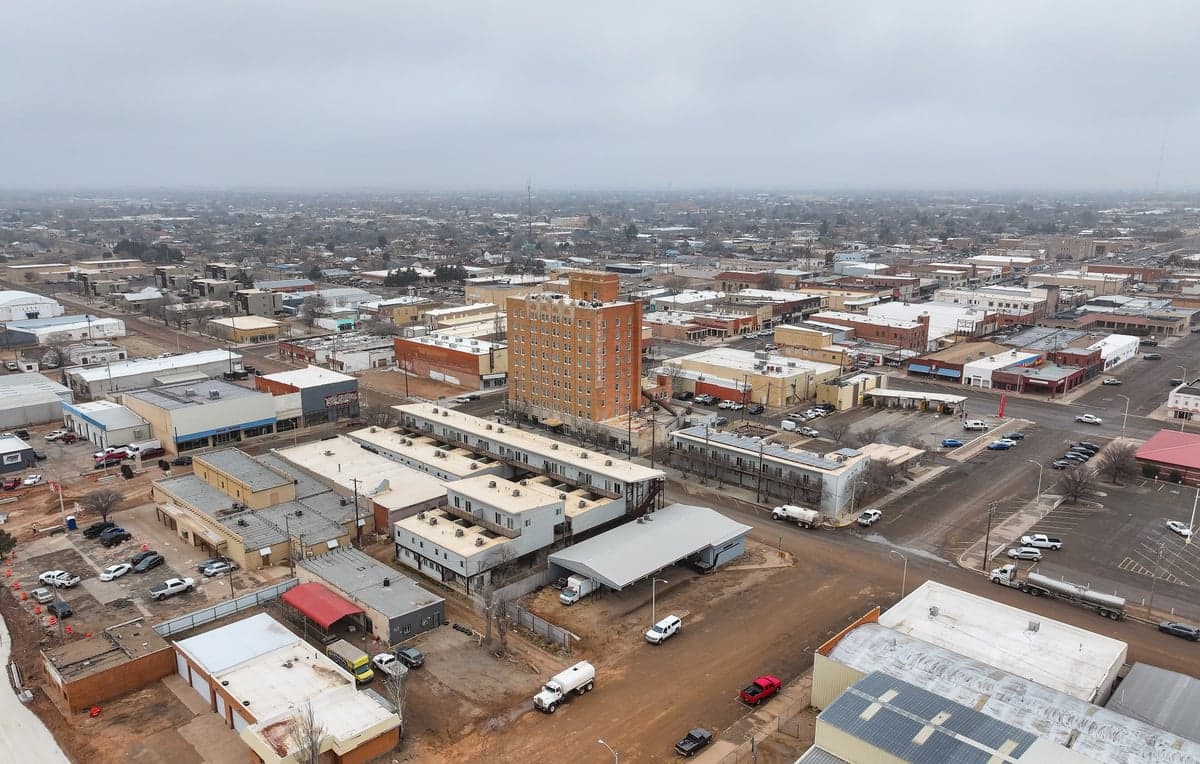
Photo: Wikipedia
Political ClimatePolitical Climate in Clovis, NM
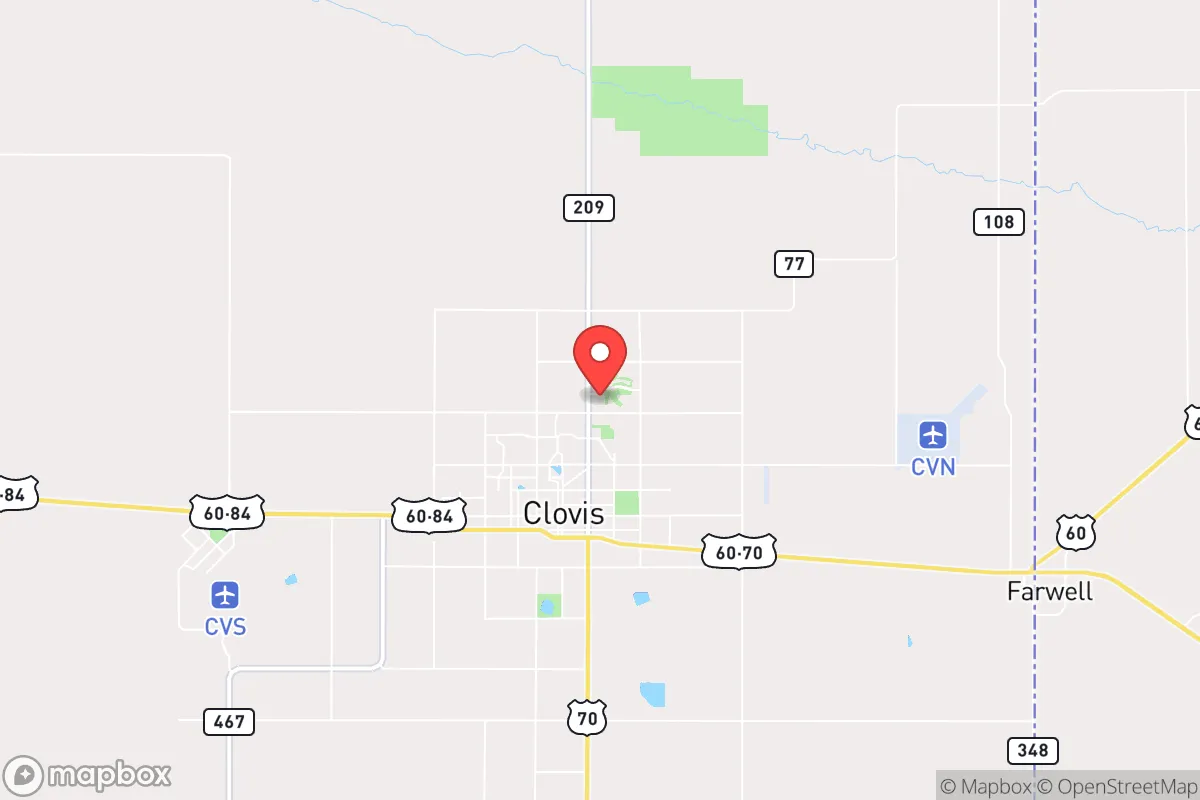
District shown is the primary district for this city’s centroid. Cities may span multiple districts.
Local Political AnalysisPolitical Analysis of Clovis, NM
Clovis, New Mexico, has long been a place where folks value their independence and don’t take kindly to being told how to live their lives. While the Cook PVI rating of D+3 might suggest a slight Democratic lean on paper, the reality on the ground is far more nuanced—this is a community that has historically voted for conservative candidates, especially at the local and state levels, and remains skeptical of the progressive agenda creeping in from places like Santa Fe and Albuquerque. Over the past decade, you’ve seen a slow but noticeable shift as national politics trickles down, with more residents feeling uneasy about government overreach into personal freedoms, from gun rights to school curriculum. The trajectory here isn’t a hard swing left, but rather a defensive posture—people are digging in, watching closely, and pushing back against policies that feel like they’re coming from out of touch bureaucrats.
How it compares
Drive an hour west to Portales, and you’ll find a similar conservative vibe, though it’s a bit more college-town influenced by Eastern New Mexico University. Head north to Tucumcari, and you’re in even redder territory—those folks are downright hostile to any hint of progressive policy. The real contrast comes when you compare Clovis to Santa Fe or Albuquerque, where the political climate is night and day. In Clovis, you won’t see the same enthusiasm for things like strict environmental regulations or expansive social programs that feel like they’re micromanaging daily life. Instead, the local conversation tends to focus on practical concerns: keeping taxes low, protecting Second Amendment rights, and ensuring that government stays out of your business. The D+3 rating feels like a statistical artifact of a few precincts near Cannon Air Force Base or transient populations, not a reflection of the town’s core values.
What this means for residents
For someone living here, the political climate means you can still have a real conversation about personal responsibility without being labeled an extremist. You won’t find the same level of government intrusion into things like land use or business operations that you might in more progressive areas. That said, there’s a growing concern about the long-term direction—especially with state-level policies coming out of Santa Fe that feel like they’re designed for the urban core, not for rural communities like Clovis. Issues like water rights, energy regulations, and education mandates are where the rubber meets the road, and residents are increasingly vocal about wanting local control. The near-term future looks like a continued tug-of-war: Clovis will likely stay conservative in spirit, but you’ll need to keep an eye on state-level elections and court rulings that could impose top-down changes.
Culturally, Clovis stands out for its strong military presence from Cannon Air Force Base, which brings in a mix of folks from all over the country, but the base itself tends to reinforce conservative values like discipline and self-reliance. You’ll also notice a deep-rooted agricultural tradition that prizes hard work and minimal government interference. Policy-wise, the town has resisted things like sanctuary city status or aggressive diversity initiatives that feel performative, preferring to focus on practical community needs. The biggest red flag for long-time residents is the slow creep of progressive ideology through school boards and local commissions—if that trend continues, you might see more friction between the town’s traditional values and outside pressure. For now, though, Clovis remains a place where you can still live your life without the government breathing down your neck, and that’s something worth holding onto.

State Political ClimatePolitical Climate in New Mexico
State Political AnalysisPolitical Environment in the State
New Mexico has been a reliably blue state in presidential elections for two decades, but its political landscape is far more nuanced than a simple partisan label suggests. The state's overall lean is driven by a powerful coalition of urban progressives in Albuquerque and Santa Fe, combined with a large Hispanic electorate that has historically favored Democrats, though that loyalty is showing cracks. Over the last 10-20 years, the state has shifted leftward on cultural and economic issues, but a growing conservative counter-movement in the eastern and southern counties, fueled by oil and gas wealth and in-migration from Texas, is creating a real political tension that any conservative considering a move here needs to understand.
Urban vs. rural divide
The political map of New Mexico is a story of two starkly different worlds. The urban core of Albuquerque (Bernalillo County) and Santa Fe (Santa Fe County) are deep blue strongholds, with Santa Fe County routinely voting over 70% Democratic. These metros drive the state's leftward tilt, powered by government workers, university faculty, and a growing creative class. In contrast, the southeastern corner—Hobbs, Carlsbad, and Roswell in Lea and Eddy counties—votes as red as any part of Texas, with Lea County going +40 points for Trump in 2024. The rural north, including Taos and Las Vegas, is a mix of liberal enclaves and traditional Hispanic communities that are increasingly skeptical of progressive overreach. The key battleground is Las Cruces (Doña Ana County), a growing border city that has trended purple as its population diversifies and becomes more economically conservative. A conservative moving to New Mexico should know that your vote matters most outside the I-25 corridor.
Policy environment
New Mexico's policy environment is a mixed bag that should give any freedom-minded person pause. The state has a progressive income tax with rates up to 5.9%, and while there is no state sales tax on groceries, the gross receipts tax (GRT) is notoriously high—often exceeding 8% in cities like Santa Fe. The regulatory posture is heavy, especially in the energy sector, where the current administration has pushed for a rapid transition away from oil and gas, despite that industry funding nearly 40% of the state budget. Education policy is a flashpoint: the state has a universal school voucher program (the Opportunity Scholarship Act), but it's administered through a bureaucracy that many conservatives find intrusive. Healthcare is dominated by the state's Medicaid expansion, which covers nearly half the population, and there is a growing push for a public option. Election laws are a concern for conservatives: New Mexico has automatic voter registration, same-day registration, and no voter ID requirement, which has led to persistent allegations of fraud in close races, particularly in the 2020 and 2022 cycles. The state also has a "red flag" law (HB 87) that allows for temporary firearm seizure without a criminal conviction, a major red flag for Second Amendment supporters.
Trajectory & freedom
On the trajectory of personal freedom, New Mexico is a state in flux, and the direction is concerning for conservatives. The last five years have seen a clear expansion of government power. The 2021 Energy Transition Act mandated a 100% carbon-free electricity grid by 2045, effectively killing new coal and natural gas plants and threatening the economic base of towns like Farmington and Gallup. On parental rights, the state passed the Healthy Families Act in 2022, which mandates paid sick leave for all workers, a policy many conservatives see as a burden on small businesses. More troubling is the 2023 Reproductive Health Care Act, which removed nearly all restrictions on abortion and expanded taxpayer funding for the procedure, making New Mexico a destination for late-term abortions from neighboring Texas. On the positive side, the state has a constitutional carry law (permitless concealed carry) that passed in 2021, a rare win for gun rights. However, the overall trend is toward more regulation, higher taxes, and a government that sees itself as the primary provider of solutions, not a protector of individual liberty.
Civil unrest & political movements
New Mexico has seen its share of political flashpoints. The 2020 protests in Albuquerque and Santa Fe were intense, with the toppling of the Spanish conquistador statue in Albuquerque's Old Town and ongoing clashes over the removal of historical monuments. The state is a sanctuary state for illegal immigrants, with a 2019 law (HB 83) prohibiting state and local law enforcement from cooperating with federal immigration authorities, a policy that has strained relations with border communities like Sunland Park and Columbus. On the right, the New Mexico Civil Guard and other militia groups have been active in the southern border region, conducting their own patrols and clashing with activists. Election integrity remains a live issue: the 2020 and 2022 elections saw multiple lawsuits over ballot harvesting and voter roll maintenance, and the state's refusal to audit its voter rolls has left many conservatives deeply skeptical. A new resident will notice the visible presence of both progressive activism in the cities and a quieter, but determined, conservative resistance in the rural areas.
Projection
Looking ahead 5-10 years, the trajectory is not favorable for conservatives, but there are reasons for cautious optimism. The demographic shift is the key driver: the state's population is aging and shrinking, with young, educated progressives moving to Albuquerque and Santa Fe, while conservative families and retirees are leaving for Texas and Arizona. However, the oil and gas boom in the Permian Basin (southeastern New Mexico) is bringing in a wave of conservative workers from Texas, and if this trend continues, it could flip a few state House seats in the next redistricting cycle. The biggest wildcard is the Hispanic vote: if the national trend of Hispanic voters moving right continues, New Mexico could become a competitive state within a decade. For now, expect the state to remain blue, but with a growing, vocal conservative minority that is increasingly organized. A conservative moving in now should plan to be part of that resistance, not expect the state to change overnight.
For a conservative considering relocation, New Mexico offers a beautiful landscape and a lower cost of living than many Western states, but the political climate is a serious trade-off. You'll find like-minded communities in the eastern and southern counties, but you'll be fighting uphill against a state government that is increasingly progressive on taxes, regulation, and cultural issues. If you value low taxes, gun rights, and local control, you'll want to settle in Hobbs or Carlsbad, not Santa Fe. If you're willing to engage in the political fight, your vote will matter more here than in a deep red state. But if you're looking for a place where your values are the default, New Mexico is not that place—yet.
* Values derived from national, state, county, city and local statistics and may differ in a specific area. Last updated: 2026-05-01T04:24:37.000Z
Narrative content on this page is AI-generated and may contain mistakes. Verify any details that matter before acting on them.
ReloMaps may earn a commission from affiliate links at no extra cost to you.

