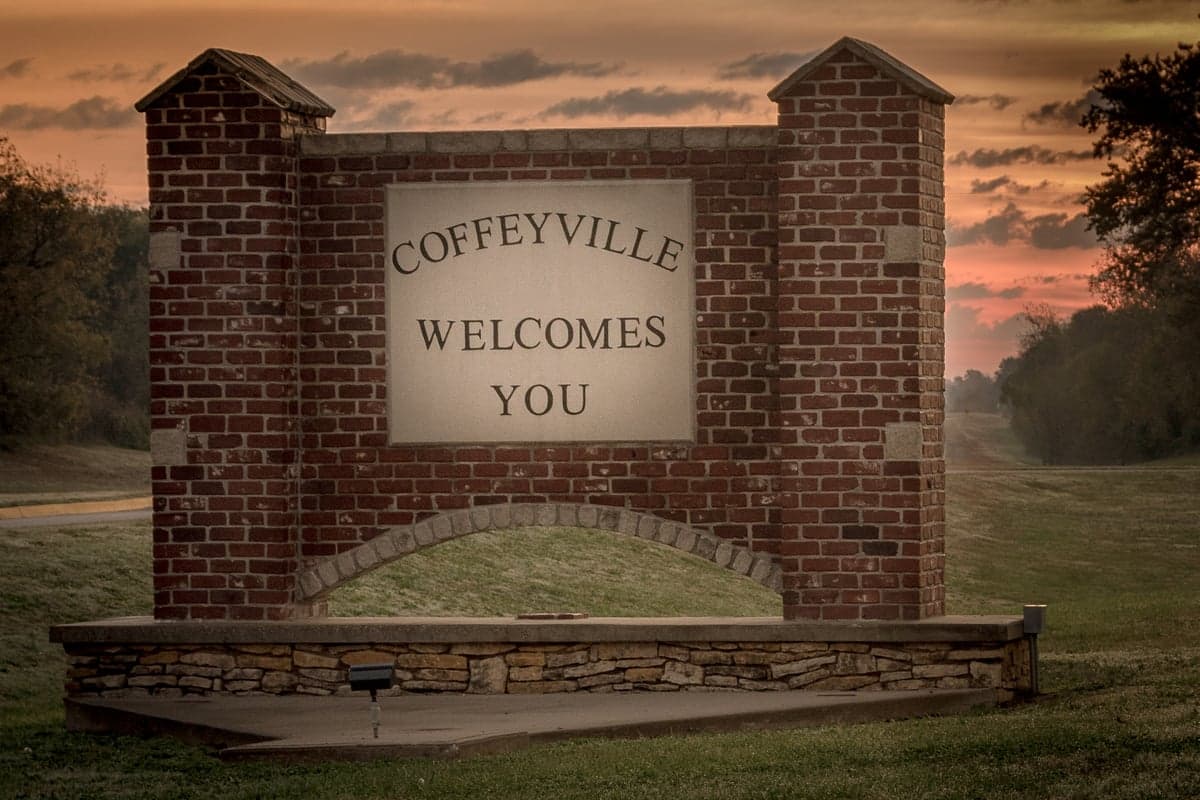
Photo: Wikipedia
Strategic Assessment of Coffeyville, KS
Workable tactical position. Some exposure to population density or targets, but generally defensible in a crisis.
What does the Strategic Assessment tell us?
Our Strategic Assessment grades tactical survivability of an area. Major population centers, military targets, fallout zones, natural disasters, and border exposure all drive risk — lower exposure means a more defensible position in a crisis.
This is heavily inspired by Joel Skousen's Strategic Relocation book. Highly recommended you checkout the book ($)What does this tell us?
Our Strategic Assessment grades tactical survivability of an area. Major population centers, military targets, fallout zones, natural disasters, and border exposure all drive risk — lower exposure means a more defensible position in a crisis.
This is heavily inspired by Joel Skousen's Strategic Relocation book. Highly recommended you checkout the book ($)Strategic Pillars

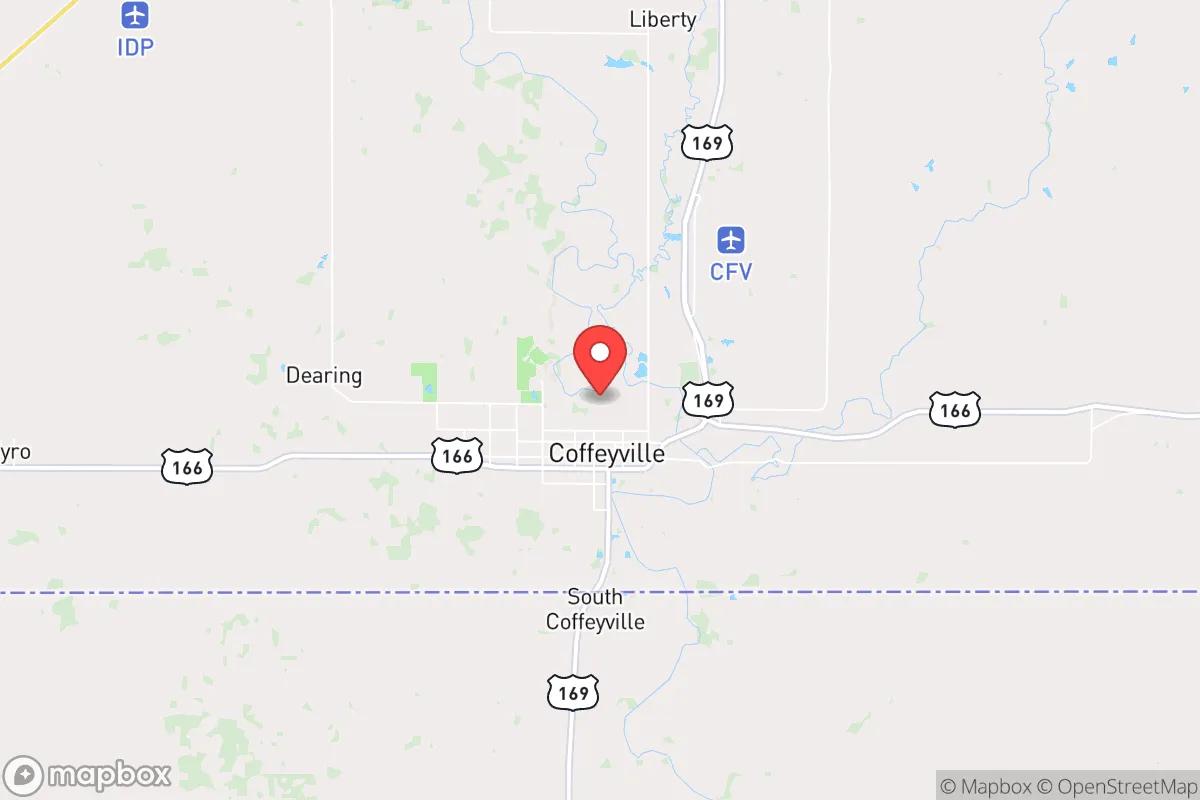
Key Distances
Regional Safe Places
Below is our recommended "safe zones" in Kansas and the surrounding area based on our strategic heuristics. For most people, it's unrealistic to live in a “safe zone” full-time due to work, family or other personal reasons. They tend to be more rural. However, many of these areas are perfect for second homes and retreat properties that double as a vacation home or even a short-term rental.
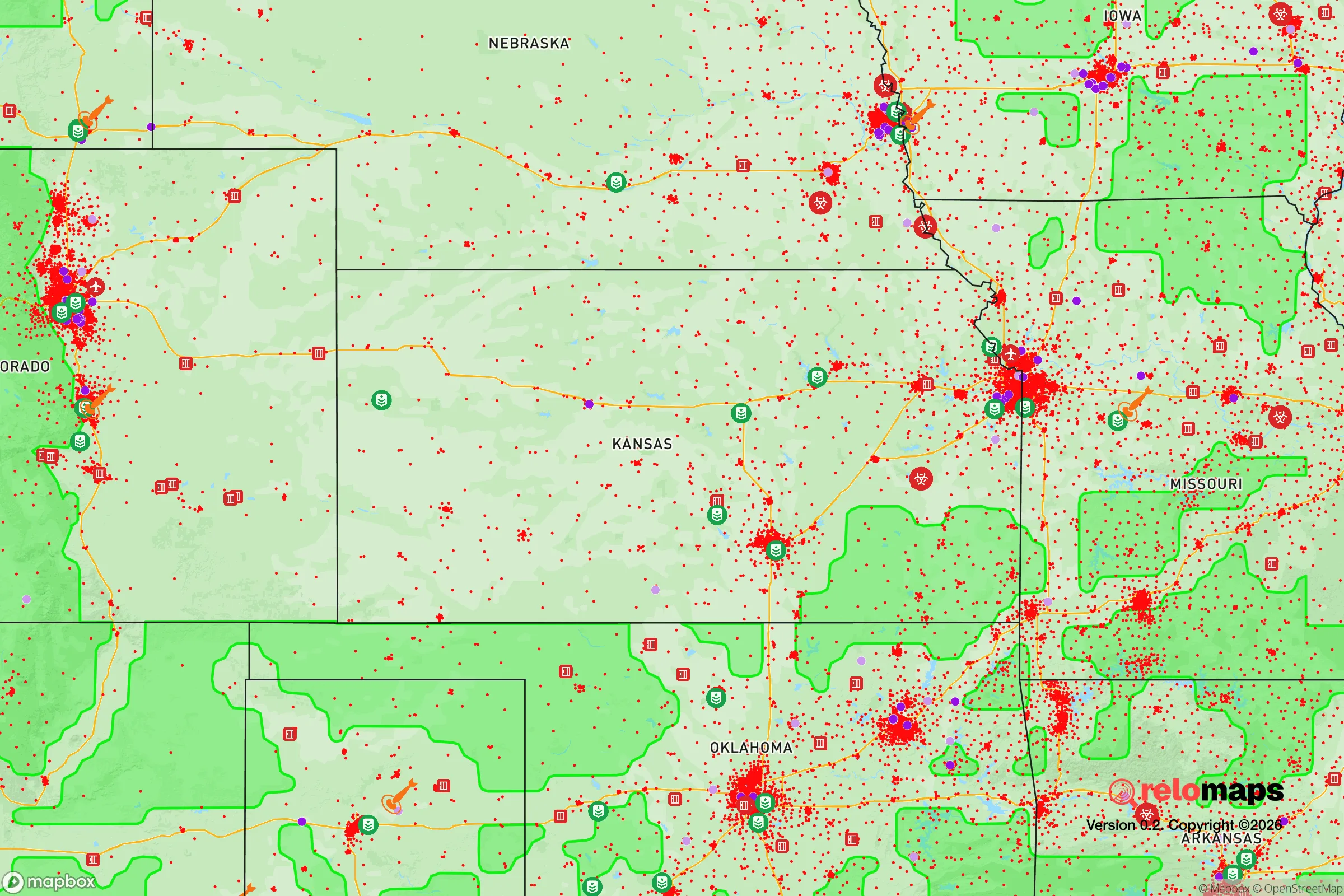
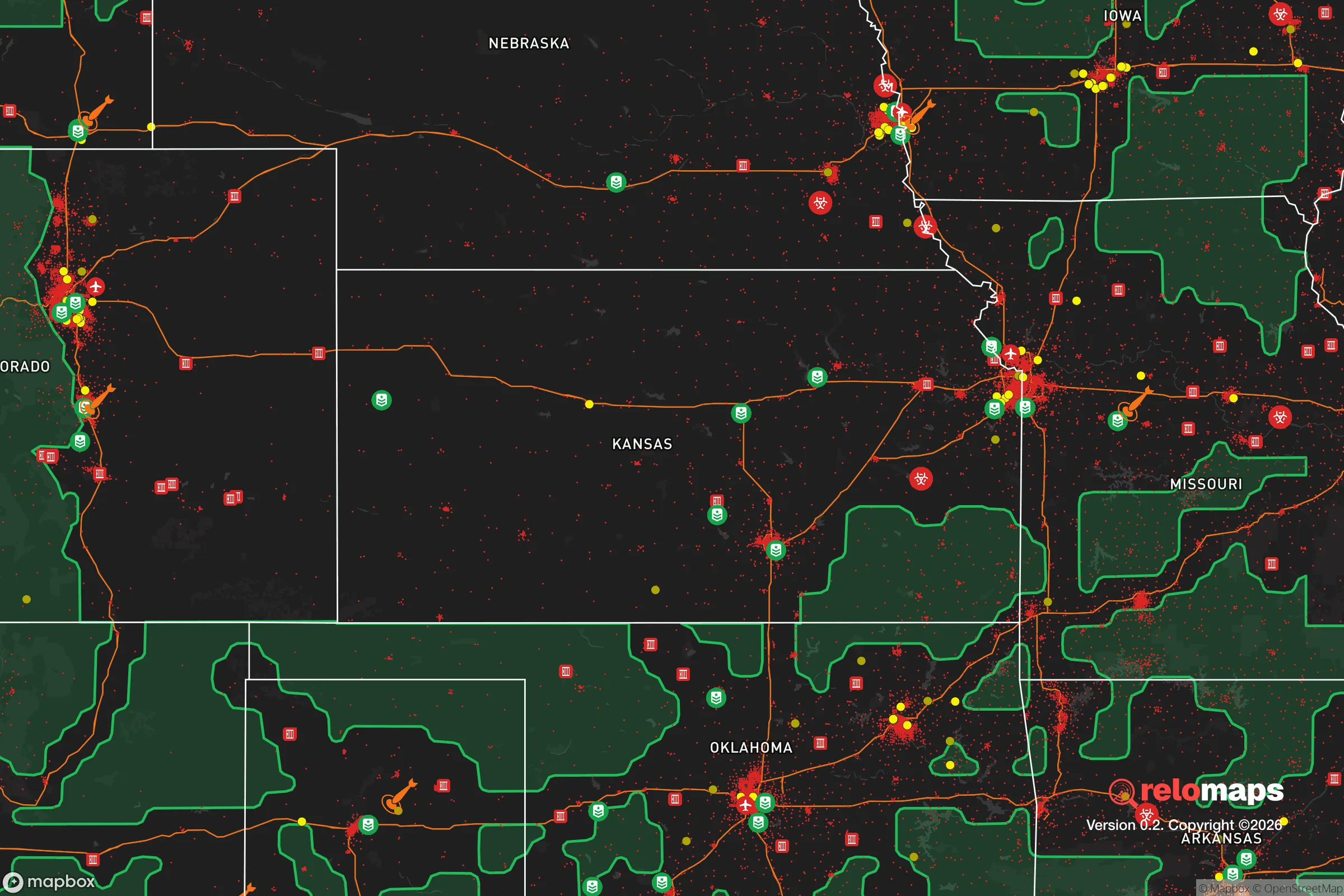


Important Note: For informational purposes only. This does not mean nothing bad ever happens in the green zones. Please use common sense. This is based on public data and modeled with AI. We tried to take a conservative approach but mistakes happen. We update this regularly as new information becomes available.
Solar Generator Recommendations
Backup power matters more here than in safer locations. We've picked three solar generators across budgets and capacity tiers — start with the budget unit if you only need a few essentials, or step up if you want to run a fridge and HVAC for days at a time.

Jackery Portable Power Station Explorer 300
Budget OptionPower on the Go: Weighing only 11 lbs, it's convenient to set up and store with book-sized foldable solar panels

BLUETTI Portable Power Station AC180
Designed for both indoor and outdoor scenarios, AC180 is highly capable as it has a robost capacity and continuous output power.

EF ECOFLOW DELTA Pro Ultra Power Station
Upgraded PickEcoFlow DELTA Pro Ultra is a whole-home energy system designed to grow with your family. Integrated with the Smart Home Panel 2, it scales to meet your evolving energy needs — keeping your home powered, intelligent, and secure through every stage of life.
We earn a commission, at no additional cost to you.
Strategic Assessment Analysis
Coffeyville, Kansas, presents a compelling strategic case for the prepper or survivalist seeking a resilient relocation destination, primarily due to its position in the southeastern corner of the state, far from major population centers and their associated risks. This small city of roughly 9,000 people sits in a region that offers a blend of agricultural self-sufficiency, low population density, and relative geographic isolation—key factors for anyone concerned about civil unrest, supply chain collapse, or mass casualty events. While not without its own vulnerabilities, Coffeyville’s location and community character provide a foundation that many other Midwestern towns cannot match, especially for those prioritizing long-term stability over short-term convenience.
Geographic position and natural advantages for long-term security
Coffeyville’s primary strategic asset is its location. It sits in Montgomery County, roughly 80 miles north of Tulsa, Oklahoma, and 150 miles south of Kansas City—close enough to access regional resources in a stable scenario, but far enough to avoid the fallout zones, civil unrest, and infrastructure collapse that would likely accompany a major urban crisis. The city is nestled in the Verdigris River valley, which provides a reliable water source and fertile bottomland for small-scale agriculture. The surrounding terrain is gently rolling prairie and woodland, offering natural cover and defensible positions for those with property outside the city limits. The area’s climate is temperate, with four distinct seasons, allowing for year-round food production and moderate heating demands. For a relocator, this means you can realistically establish a self-sufficient homestead with a well, solar panels, and a garden without fighting extreme weather or arid conditions. The nearest major military or strategic target is likely McConnell Air Force Base in Wichita (about 100 miles northwest), which is far enough to reduce direct fallout risk but close enough to be a concern if a major conflict escalates. Overall, Coffeyville’s geographic isolation is a net positive for those seeking to avoid the chaos of urban collapse.
Risks, exposures, and proximity to fallout-relevant landmarks
No location is without risk, and Coffeyville has its share. The most immediate natural threat is the Verdigris River itself—the city experienced catastrophic flooding in 2007 and 2019, with the 2007 event inundating much of the downtown area. For a prepper, this means any property within the floodplain is a hard no; you’ll want to secure land on higher ground east or west of the river. Tornadoes are a seasonal reality, as the area sits in the heart of Tornado Alley, so a reinforced safe room or basement is non-negotiable. On the man-made risk side, Coffeyville is about 40 miles from the Kansas City Southern Railway mainline and the BNSF line that runs through nearby Parsons—both are potential targets for sabotage or disruption in a national crisis. The city itself has a small refinery (CVR Energy) and a fertilizer plant, which could be local hazards in a disaster scenario but are unlikely to be primary targets. The nearest major population center, Tulsa, is a potential flashpoint for civil unrest due to its size and economic disparities. However, Coffeyville’s distance and lack of strategic value (no major military bases, no nuclear plants, no major government hubs) mean it’s unlikely to be a direct target in a conflict. The real risk is being caught in the crossfire of regional instability if Tulsa or Wichita collapse and refugees flood outward. That said, the area’s low population density and limited road network (primarily US-169 and US-166) make it easier to control access and screen incoming traffic than a suburban sprawl.
Practical resilience for a relocator: food, water, energy, and defensibility
For the individual or family looking to live off the grid or in a semi-self-sufficient manner, Coffeyville’s practical resilience is solid. The surrounding farmland is some of the most productive in Kansas, with corn, soybeans, and wheat as staples. Local farmers’ markets and co-ops exist, but for serious preppers, the real value is in the land itself—acreage outside town is affordable, with prices often under $3,000 per acre for raw land. Water is accessible via wells (the Ozark Plateau aquifer is reliable here), and the Verdigris River provides a backup source, though you’ll need filtration. Energy independence is feasible: the area gets ample sun for solar panels, and wind is consistent enough for small turbines. Natural gas is available in town, but rural properties rely on propane or wood. Defensibility is a mixed bag. The city itself is compact and walkable, with a grid layout that could be secured with checkpoints, but it’s not designed for siege. The real advantage is the surrounding countryside—rolling hills, wooded creek bottoms, and scattered farmsteads offer numerous positions for a retreat property. The local population is predominantly conservative, rural, and self-reliant, which means you’ll find like-minded neighbors who value firearms, hunting, and community mutual aid. The Montgomery County Sheriff’s Office is professional but understaffed, so in a crisis, you’re largely on your own—which is exactly how most preppers want it. The nearest major hospital is in Coffeyville (Coffeyville Regional Medical Center), but it’s a small facility; for serious trauma, you’d need to go to Tulsa or Wichita, which is a vulnerability in a mass casualty event. Stocking your own medical supplies and training in basic emergency care is a must.
In the overall strategic picture, Coffeyville, Kansas, is a solid B+ relocation option for the conservative-minded prepper. It’s not a perfect fortress—no place is—but it offers a rare combination of affordable land, reliable water, productive soil, and genuine isolation from the urban chaos that will likely define the next decade. The risks are manageable: avoid the floodplain, build a tornado shelter, and establish a network of trusted locals. The biggest downside is the lack of immediate access to specialized medical care and the potential for regional instability if Tulsa or Wichita collapse. But for someone willing to put in the work—dig a well, mount solar panels, plant a garden, and get to know your neighbors—Coffeyville provides a realistic foundation for long-term survival. It’s not a glamorous choice, but in a world where glamour is a liability, that’s precisely the point. If you’re serious about getting out of the rat race and into a defensible, self-sufficient lifestyle, this corner of Kansas deserves a hard look.

* Values derived from national, state, county, city and local statistics and may differ in a specific area. Last updated: 2026-04-29T22:40:35.000Z
Narrative content on this page is AI-generated and may contain mistakes. Verify any details that matter before acting on them.
ReloMaps may earn a commission from affiliate links at no extra cost to you.

