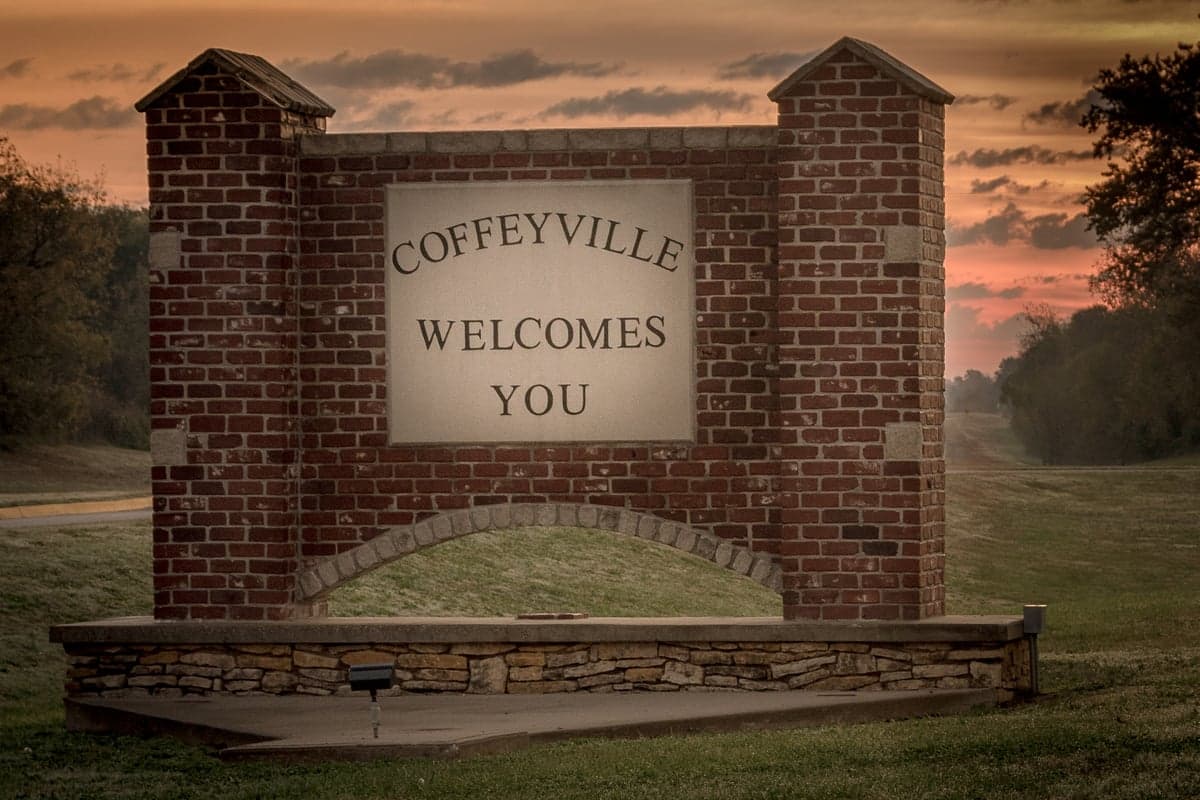
Photo: Wikipedia
Political ClimatePolitical Climate in Coffeyville, KS
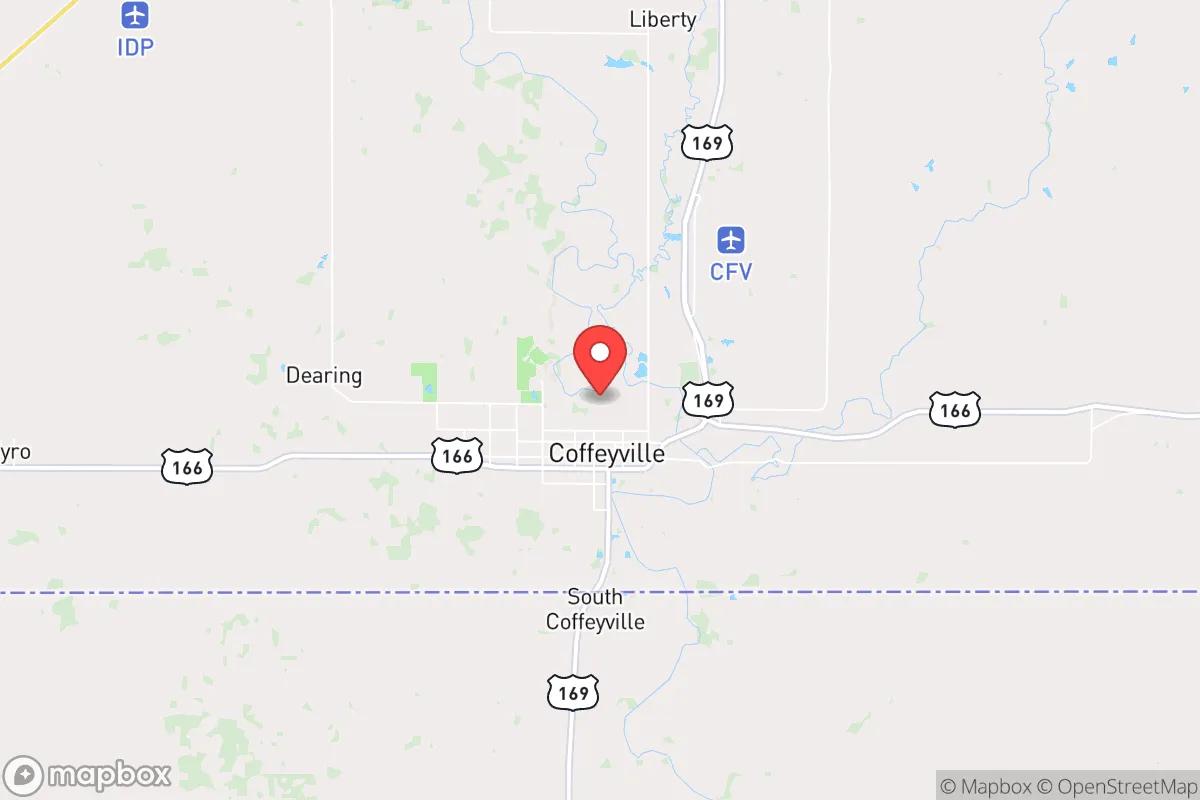
District shown is the primary district for this city’s centroid. Cities may span multiple districts.
Local Political AnalysisPolitical Analysis of Coffeyville, KS
Coffeyville sits in a reliably conservative corner of Kansas, and that’s not changing anytime soon. The area carries a Cook PVI of R+10, meaning it votes about ten points more Republican than the national average, and that number feels about right if you’ve lived here a while. In 2024, the county went heavily for the GOP ticket, and local races rarely flip. You don’t see the kind of political whiplash you get in some parts of the state. It’s steady, and for folks who value predictability in how their tax dollars are spent and their kids are educated, that’s a comfort.
How it compares
Drive an hour north to Independence, and you’ll find a similar conservative tilt, though it’s a bit more moderate on local spending. Head west toward Winfield or Arkansas City, and the politics start to feel a little more mixed—still red, but with a stronger independent streak and occasional progressive pushes on school board issues. The real contrast is if you go east into Missouri, toward Joplin, which is even more reliably conservative but has a different flavor—more libertarian on business regulation, less focused on community tradition. Coffeyville sits in the middle of that: conservative on social issues, skeptical of federal mandates, and generally wary of government overreach into personal freedoms. The local county commission and city council tend to lean that way too, though you’ll get the occasional moderate who tries to nudge things toward more centralized planning. Most folks here see that as a red flag, especially when it comes to property rights or local business ordinances.
What this means for residents
For daily life, the political climate means you’re not dealing with a lot of progressive experiments. Zoning changes that might restrict how you use your land? Usually voted down. School curriculum shifts toward ideological trends? They get a hard look before they go anywhere. The local paper and community forums are full of people who remember when things were simpler—fewer regulations, lower taxes, more local control. That’s not nostalgia; it’s a lived experience. The concern now is that as the state government in Topeka sometimes pushes more centralized authority, or as federal dollars come with strings attached, Coffeyville’s local autonomy gets squeezed. Residents are watching closely, especially around issues like gun rights, health mandates, and how federal infrastructure money is spent. The long-term worry is that if progressive ideology creeps in through state-level appointments or grant requirements, the town’s character could shift in ways that feel imposed rather than chosen.
Culturally, Coffeyville still holds onto a few distinctions that set it apart. The Dalton Defenders Museum and the annual Inter-State Fair & Rodeo are more than tourist draws—they’re reminders of a self-reliant, frontier-minded history. You won’t find many people here pushing for big government solutions to local problems. The town’s motto might as well be “we handle our own.” That said, there’s a quiet worry among longtime residents that the next decade could bring more pressure from outside—state mandates on renewable energy targets, federal housing rules, or school diversity initiatives that don’t match local values. The hope is that Coffeyville’s conservative base holds firm, and that the next generation of leaders keeps the focus on personal freedom, low taxes, and local decision-making. If that holds, the town stays what it’s always been: a place where you’re left alone to live your life, as long as you don’t mess with your neighbor’s right to do the same.

State Political ClimatePolitical Climate in Kansas
State Political AnalysisPolitical Environment in the State
Kansas has long been a reliably Republican state, but its political climate is more nuanced than a simple red label suggests. Over the past 10-20 years, the state has shifted from a moderate, pragmatic conservatism toward a more assertive, liberty-oriented brand of Republicanism, driven by a growing urban-rural divide and a series of high-profile policy battles. While the state legislature and statewide offices remain firmly in GOP control, the governor’s mansion has flipped between parties, and the suburbs around Kansas City and Wichita have become key battlegrounds. For a conservative-leaning individual or family, Kansas offers a generally favorable policy environment, but the trajectory is not without its tensions, particularly around education funding, tax policy, and the influence of the state’s few urban centers.
Urban vs. rural divide
The political map of Kansas is a stark study in contrasts. The eastern third of the state, anchored by the Kansas City metro area, is the primary engine of Democratic and progressive votes. Johnson County, the state’s wealthiest and most populous county, has been trending leftward for a decade, with its suburbs like Overland Park and Olathe electing more Democrats to local and state offices. In 2020, Johnson County voted for Joe Biden, a major shift from its long history as a Republican stronghold. Further west, the state becomes deeply red, with rural counties like Ellis (Hays), Finney (Garden City), and Ford (Dodge City) routinely delivering 70-80% of their votes to Republican candidates. The Wichita metro area, anchored by Sedgwick County, is a bellwether: it leans Republican but has pockets of Democratic strength in the city proper, while the surrounding suburbs like Andover and Derby are solidly conservative. The real political energy, however, is in the rural and exurban areas, where voters feel increasingly alienated from the urban-driven policy agenda and have pushed the state GOP to the right on issues like gun rights, abortion, and school choice.
Policy environment
Kansas’s policy environment is a mixed bag for conservatives, with notable wins and ongoing frustrations. The state’s tax structure is a key selling point: there is no state income tax on Social Security benefits, and the flat income tax rate was cut to 5.7% in 2024, with further reductions scheduled. Property taxes, however, are a persistent complaint, especially in fast-growing suburbs where assessments have outpaced income growth. The state’s regulatory posture is generally business-friendly, with right-to-work laws and limited zoning in most rural areas. Education policy is a major flashpoint. The state has a robust school choice program, including tax-credit scholarships and open enrollment, but the Kansas Supreme Court has repeatedly ordered the legislature to increase funding for public schools, leading to a perennial budget tug-of-war. On healthcare, Kansas has not expanded Medicaid under the Affordable Care Act, a win for fiscal conservatives, but the state’s rural hospital closures remain a concern. Election laws are relatively secure: Kansas requires a photo ID to vote and has a voter registration deadline 21 days before an election, though the state has resisted more aggressive measures like strict voter ID for mail ballots. The state’s abortion law is among the most restrictive in the nation, with a near-total ban after 22 weeks and a trigger law that would ban all abortions if Roe v. Wade were overturned—which it was, and the law is now in effect, though it is being challenged in court.
Trajectory & freedom
Kansas is on a trajectory of expanding personal freedom in several key areas, but not without setbacks. The most significant recent win for liberty was the passage of the Second Amendment Protection Act (SB 102) in 2021, which prohibits state and local law enforcement from enforcing federal gun laws that infringe on the right to keep and bear arms. This is a concrete, enforceable law that has made Kansas a national leader in gun rights. On parental rights, the state passed the Parental Bill of Rights (HB 2236) in 2023, which requires schools to notify parents of any changes to a child’s mental, emotional, or physical health, including gender identity. This law has been a major win for conservative families, though it faces legal challenges from the ACLU. On medical autonomy, Kansas has not imposed COVID-19 vaccine mandates on private businesses or schools, and the legislature passed a law in 2022 prohibiting employers from requiring the vaccine as a condition of employment, unless they qualify for a medical or religious exemption. Property rights are generally strong, with no statewide rent control and limited eminent domain abuse, though the state’s wind energy boom has created tensions between landowners and developers. The biggest threat to freedom in Kansas is the state’s high property tax burden, which has led to a growing movement for a property tax cap, similar to Colorado’s TABOR. The legislature is currently debating a bill that would limit annual property tax increases to 3% without a local vote, a measure that would significantly enhance taxpayer freedom.
Civil unrest & political movements
Kansas has seen relatively little civil unrest compared to coastal states, but there have been notable flashpoints. The most visible was the 2022 abortion rights protests in Overland Park and Lawrence, where thousands of demonstrators gathered after the Dobbs decision. These protests were largely peaceful but highlighted the deep divide between the urban core and the rest of the state. On the right, the Kansas State Rifle Association and Kansas for Life are highly organized and influential, regularly mobilizing voters for primary challenges against Republicans deemed insufficiently conservative. Immigration politics are a simmering issue, particularly in the meatpacking towns of southwest Kansas like Dodge City and Garden City, where the Latino population has grown rapidly. There have been no sanctuary city policies in Kansas, and the state has passed laws requiring local law enforcement to cooperate with federal immigration authorities. Election integrity controversies have been minimal, though the 2020 election saw a brief dispute over the counting of mail ballots in Johnson County, which was resolved without major incident. The most visible political movement in recent years has been the “School Choice Now” campaign, which has successfully pushed for expanded charter schools and voucher programs, particularly in urban areas where public schools are underperforming. A new resident would notice the strong presence of conservative activism in the state capitol, with groups like the Kansas Policy Institute and Americans for Prosperity holding regular events and lobbying heavily.
Projection
Over the next 5-10 years, Kansas is likely to become more conservative, not less, driven by two key demographic trends. First, the continued exodus of liberal-leaning residents from Johnson County to Missouri, where taxes are lower and housing is cheaper, is reducing the Democratic vote share in the state’s most populous county. Second, the in-migration of conservative-leaning families from California and Colorado, attracted by lower housing costs and a more freedom-friendly environment, is accelerating. The state’s rural areas are also growing, albeit slowly, as remote work allows people to move to places like Manhattan, Hays, and Emporia. The biggest political fight in the coming decade will be over property taxes and school funding. If the legislature passes a property tax cap, it will lock in a low-tax environment that will attract even more conservative migrants. However, if the Kansas Supreme Court continues to mandate higher education spending, the state could face a fiscal crisis that forces a tax increase, which would be a major setback for the freedom agenda. The abortion issue will remain a flashpoint, but the state’s current ban is likely to survive legal challenges, given the conservative makeup of the Kansas Supreme Court. On the whole, someone moving to Kansas now should expect to find a state that is increasingly aligned with traditional conservative values, with a strong emphasis on gun rights, parental rights, and low taxes, but with persistent battles over property taxes and education funding that will require ongoing civic engagement.
Bottom line for a new resident: Kansas offers a solid foundation for a conservative lifestyle—low income taxes, strong gun rights, and a legislature that is actively expanding personal freedom. The main trade-offs are the high property taxes and the ongoing fight over education funding, which can be frustrating but are manageable with the right local knowledge. If you’re looking for a state where your values are reflected in the law and where you can have a real impact on the political direction, Kansas is a strong bet. Just be prepared to get involved in the property tax debate—it’s the issue that will define the next decade.
* Values derived from national, state, county, city and local statistics and may differ in a specific area. Last updated: 2026-04-29T22:40:35.000Z
Narrative content on this page is AI-generated and may contain mistakes. Verify any details that matter before acting on them.
ReloMaps may earn a commission from affiliate links at no extra cost to you.

