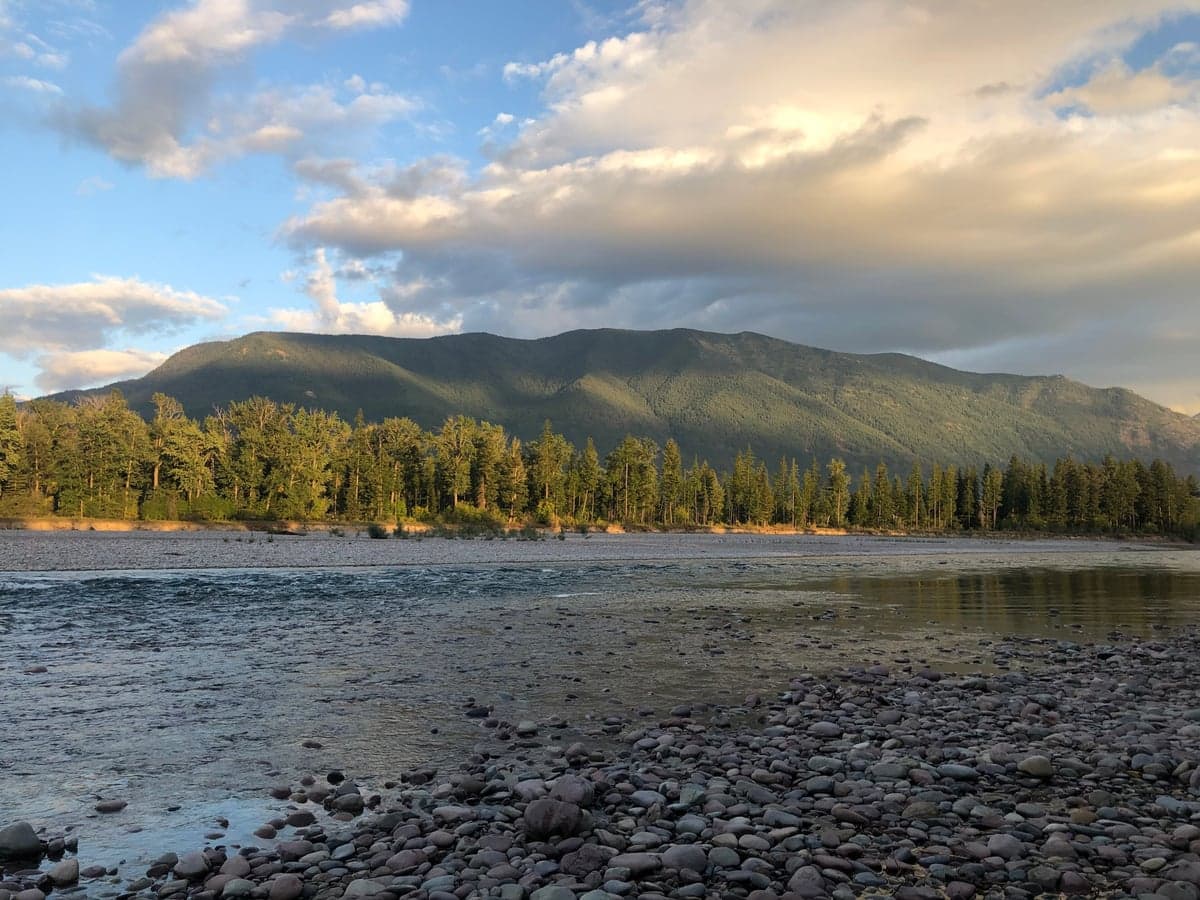
Photo: Wikipedia
Demographics of Columbia Falls, MT
Affluence Level in Columbia Falls, MT
A below-average socioeconomic profile. Incomes, home values, and educational attainment trail the U.S., with higher poverty and unemployment.
People of Columbia Falls, MT
The people of Columbia Falls, Montana, today number 5,531, forming a tight-knit, predominantly white community where 92.7% of residents identify as white alone. With a foreign-born population of just 1.4% and a Hispanic share of 4.6%, the city remains ethnically homogeneous compared to national averages, reflecting its roots as a working-class railroad and timber town. The population is notably family-oriented, with a median age around 40, and 31.6% of adults hold a college degree, a figure that aligns with the region’s growing appeal to remote workers and outdoor enthusiasts. Distinctive identity markers include a strong sense of local independence, a culture shaped by generations of logging and railroad families, and a recent influx of newcomers drawn to the Flathead Valley’s natural amenities.
How the city was settled and grew
Columbia Falls was founded in the 1890s as a railroad town, with the Great Northern Railway establishing a division point here in 1891. The original population was overwhelmingly of Northern European descent—primarily Irish, German, and Scandinavian immigrants—who arrived to work on the railroad and in the burgeoning timber industry. The first wave of settlers clustered in what is now the Historic Downtown District, centered around Nucleus Avenue, where boarding houses, saloons, and general stores sprang up to serve railroad crews. By the early 1900s, the Anaconda Copper Mining Company’s timber operations drew additional workers, and the Railroad Addition neighborhood, located just south of the tracks, became home to many of these laborers and their families. A second wave of homesteaders, largely of Scandinavian origin, arrived between 1900 and 1920, settling in the Pinewood Park area east of downtown, where they built modest homes on small plots for subsistence farming alongside mill work. The city’s population remained stable through the mid-20th century, hovering around 1,500, as the timber economy dominated and the community retained its working-class character.
Modern era (post-1965)
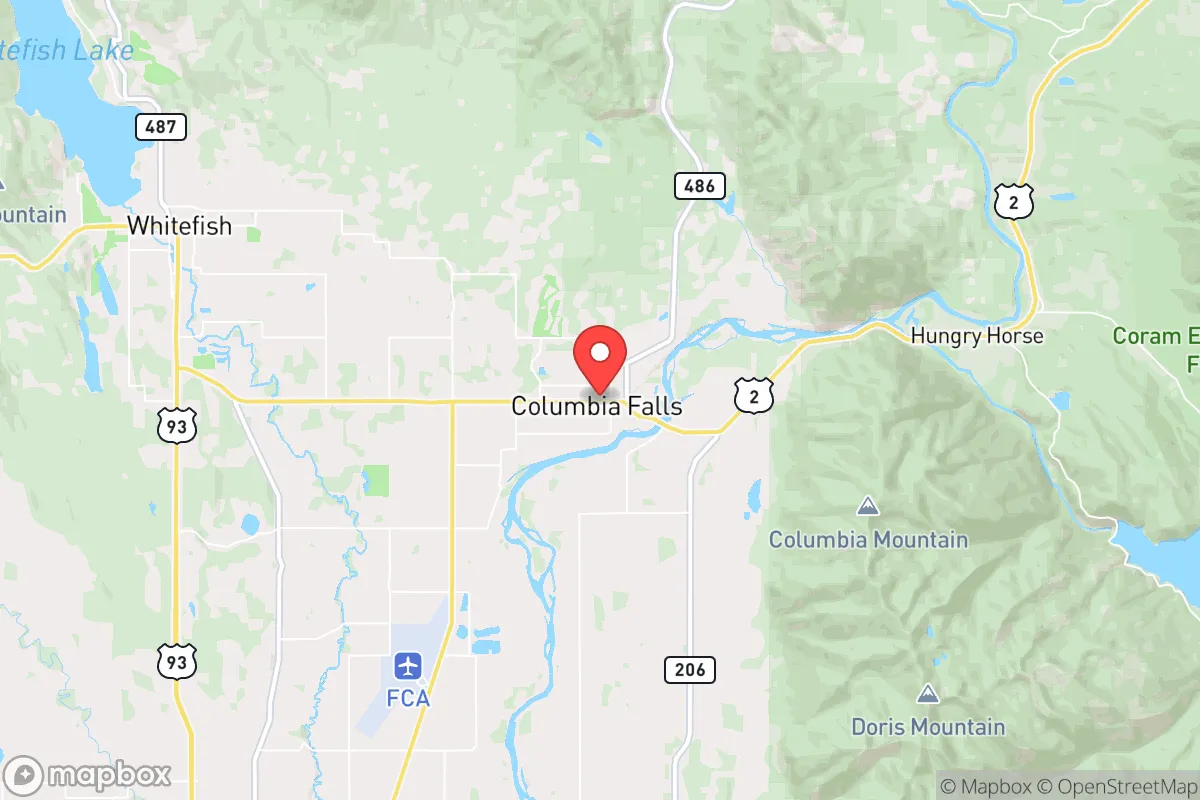
After the 1965 Hart-Cellar Act, Columbia Falls saw minimal immigration-driven change, as the city’s remote location and limited economic diversification offered few draws for new international arrivals. Instead, the modern era has been defined by domestic in-migration, particularly from the 1990s onward, as the Flathead Valley’s recreational appeal—Glacier National Park, Whitefish Mountain Resort, and the Flathead River—attracted retirees, second-home buyers, and remote workers. This influx has been predominantly white and relatively affluent, settling in newer subdivisions like Canyon View Estates and Riverbend, located along the Flathead River on the city’s western edge. The Hispanic population, now 4.6%, grew modestly from the 2000s, largely through workers in the construction and service industries, with many residing in the Meadow Lake area, a mixed-income neighborhood south of Highway 2. The East/Southeast Asian community, at 0.8%, is small and scattered, with no distinct ethnic enclave, while the Black and Indian-subcontinent populations remain at 0.0%. The city’s racial homogeneity has actually increased slightly since 2000, as the white share has held steady above 92%, while the small Hispanic and Asian communities have not grown enough to shift the overall balance.
The future
Columbia Falls’ population is heading toward modest growth, driven by continued domestic migration from other Western states, particularly California, Washington, and Oregon. The city is not tribalizing into distinct ethnic enclaves; instead, it is homogenizing further, as new arrivals are overwhelmingly white and English-speaking, reinforcing the existing demographic profile. The Hispanic community is plateauing at around 4-5%, with little new immigration from Latin America, and the East/Southeast Asian population remains static. Over the next 10-20 years, the city is likely to see a gradual aging of its population, as retirees continue to move in, while younger families are priced out of nearby Whitefish and seek more affordable housing here. This trend may increase the college-educated share (currently 31.6%) as remote workers with higher education levels replace some of the declining timber workforce. The city’s demographic future is one of slow, homogeneous growth, with no major shifts in racial or ethnic composition anticipated.
For someone moving in now, Columbia Falls is becoming a quieter, more residential extension of the Whitefish recreation economy—a place where the population is stable, overwhelmingly white, and increasingly composed of retirees and remote professionals. The working-class timber and railroad identity is fading, replaced by a more service-oriented and outdoor-recreation-focused community. New residents should expect a culturally conservative, family-oriented environment with limited ethnic diversity, where the main demographic change is the gradual replacement of longtime locals by newcomers from out of state.

* Values derived from national, state, county, city and local statistics and may differ in a specific area. Last updated: 2026-04-29T22:11:44.000Z
Narrative content on this page is AI-generated and may contain mistakes. Verify any details that matter before acting on them.
ReloMaps may earn a commission from affiliate links at no extra cost to you.

