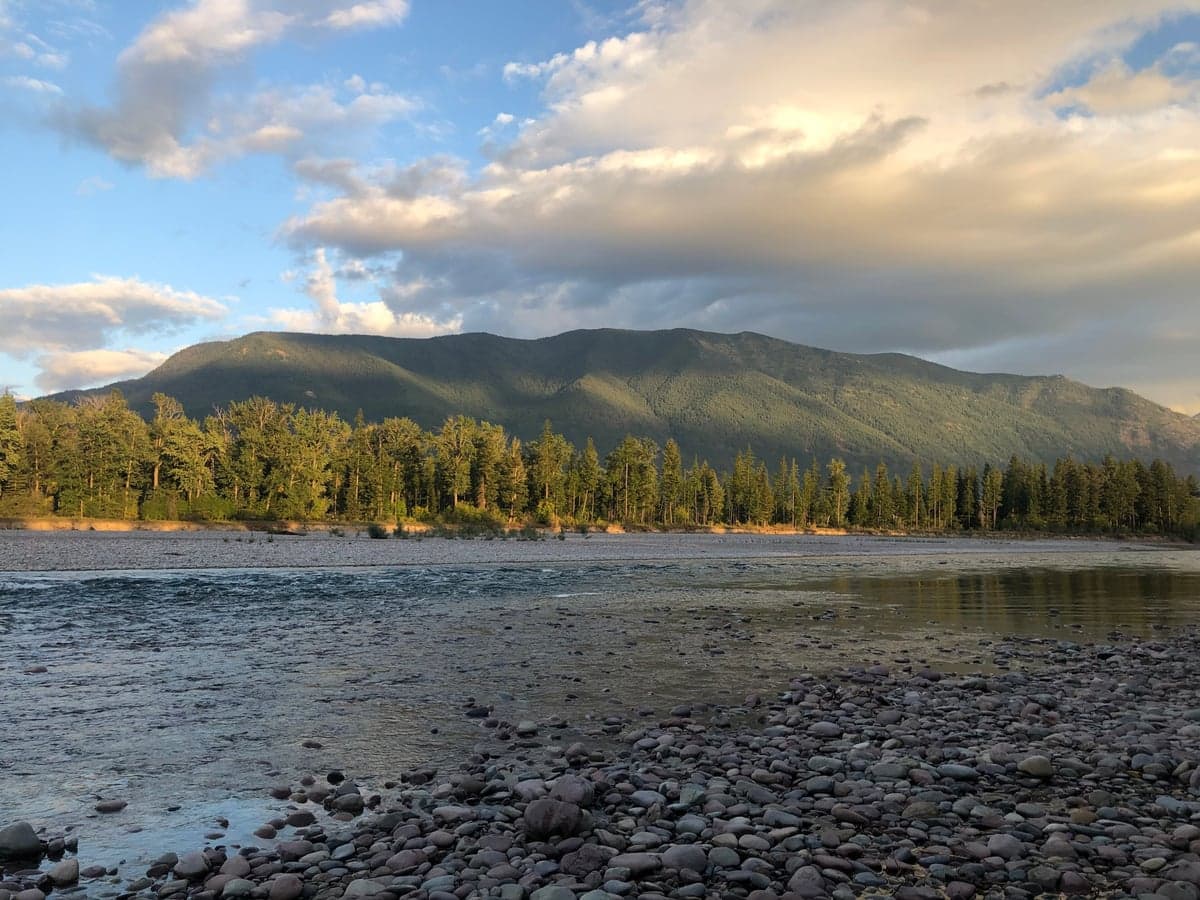
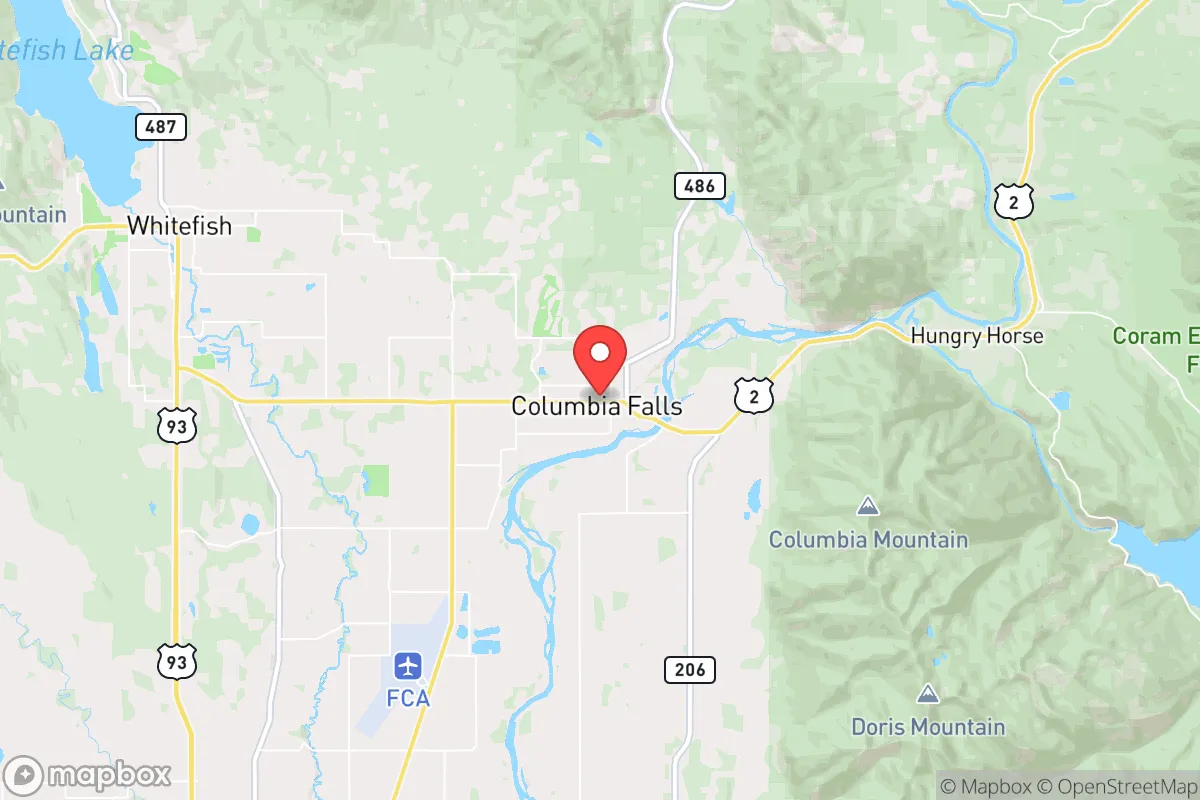
Photo: Wikipedia
Personal Sovereignty in Columbia Falls, MT
Viable for self-reliance. Generally workable, though some barriers may limit total independence.
What does Personal Sovereignty tell us?
Personal Sovereignty measures your capacity for self-reliance and independence with minimal government friction. Higher scores mean fewer barriers between you and the way you want to live... but it assumes you have the space you need and good neighbors.
What does this tell us?
Personal Sovereignty measures your capacity for self-reliance and independence with minimal government friction. Higher scores mean fewer barriers between you and the way you want to live... but it assumes you have the space you need and good neighbors.
State Policy
Energy independence: Net exporter (120% of energy produced in-state)
Personal Liberty
Homesteading

Personal Liberty Analysis
Columbia Falls offers a notably high degree of personal sovereignty compared to many western Montana towns, largely due to its physical distance from state regulatory hubs and a local culture that prizes self-reliance. While no location in the lower 48 is a libertarian utopia, this Flathead Valley community provides a practical environment for those seeking to minimize government entanglement in daily life. The key trade-offs involve navigating Montana’s generally favorable state-level legal framework while contending with local zoning and the steady influx of out-of-state residents who may not share the same independent ethos.
Tax burden and regulatory posture: How Montana’s fiscal climate supports autonomy
Montana’s tax structure is a clear advantage for those prioritizing financial sovereignty. The state imposes no sales tax, meaning every purchase—from a chainsaw to a year’s worth of freeze-dried food—is free from that layer of government extraction. Property taxes in Flathead County are moderate, typically landing between 0.7% and 0.9% of assessed value, though recent reassessments driven by population growth have pushed some parcels higher. The state’s income tax is a flat 6.75% on most earnings, which is higher than zero-income-tax states but still predictable. More importantly, Montana’s regulatory posture toward small-scale enterprise is permissive: no state-level business license is required for most sole proprietorships, and home-based businesses (including firearms-related services, small-scale food production, and mechanical repair) face minimal county interference as long as they don’t generate excessive traffic or noise. The state’s right-to-try laws and limited occupational licensing requirements for certain trades further reduce bureaucratic friction. However, the city of Columbia Falls itself has a modest business license fee and zoning code that can complicate larger home-based operations, so a careful review of city ordinances versus county jurisdiction is essential before committing to a property.
Self-defense and gun law specifics: What the Second Sanctuary status means for residents
Montana is a constitutional carry state, and Columbia Falls sits in Flathead County, which has formally declared itself a Second Amendment Sanctuary. This means local law enforcement is directed to not enforce federal firearms regulations that the county deems unconstitutional, including any future bans on standard-capacity magazines or specific firearm types. For the prepper-minded, this is a critical buffer against federal overreach. There is no state-level permit required to carry a concealed firearm, and no waiting period for purchases. Private firearm sales between individuals require no background check or paperwork, though federal law still applies to licensed dealers. The state’s stand-your-ground statute is unambiguous: there is no duty to retreat before using deadly force if you are lawfully present and reasonably believe force is necessary to prevent death or great bodily harm. Castle doctrine protections extend to vehicles and occupied structures. One practical consideration: while the legal framework is strong, the local sheriff’s office is small (roughly 40 deputies for the entire county), so response times in rural areas outside city limits can exceed 20 minutes. This reality reinforces the need for personal preparedness rather than reliance on government protection.
Self-reliance and homesteading viability: Lot sizes, zoning, and off-grid feasibility
Columbia Falls proper has relatively restrictive zoning for a Montana town of its size. Standard residential lots within city limits are typically one-quarter to one-half acre, and the city code prohibits keeping livestock (chickens, goats, etc.) on lots under one acre. This pushes serious homesteading activity to the unincorporated areas of Flathead County, where the regulatory environment is far more permissive. Outside city limits, minimum lot sizes in agricultural zoning start at 5 acres, and 10- to 20-acre parcels are common and affordable relative to the rest of the valley. Off-grid living is legally feasible: Montana has no state law requiring grid connection, and Flathead County does not mandate building permits for structures under 200 square feet (though septic systems always require county health department approval). Solar panels, rainwater collection for non-potable use, and composting toilets are all permissible, though a drilled well and septic system will be required for a primary residence. The county’s building code enforcement is minimal in rural areas, with no county-wide inspection requirement for owner-built homes as long as they meet basic health and safety standards. The primary constraint is the local fire district: some rural areas require fire-resistant construction materials and defensible space clearance, a reasonable trade-off given the wildfire risk. For those serious about self-sufficiency, the areas north and east of Columbia Falls—toward the North Fork Road or along the Middle Fork of the Flathead River—offer the best combination of affordable land, water access, and regulatory freedom.
Personal liberties: Parental rights, medical autonomy, speech, and property protections
Montana’s legal environment is generally protective of individual liberties, though recent legislative battles have created some uncertainty. Parental rights in education are strong: Montana law requires parental notification for any medical or mental health services provided to minors in school settings, and parents have the right to review all instructional materials. The state has no mask or vaccine mandates for school attendance, and local school boards in the Columbia Falls area have been resistant to federal health guidance that conflicts with parental authority. Medical autonomy is mixed: Montana has legalized medical marijuana and has a robust right-to-try law for terminally ill patients, but the state’s medical board remains cautious about off-label treatments and alternative therapies. The Montana Constitution explicitly protects the right to privacy, which has been interpreted to include medical decision-making, though this has been tested in court. Free speech protections are strong, with no state-level hate speech laws that would criminalize political or religious expression. Property rights are well-guarded: Montana’s eminent domain laws are among the most restrictive in the nation, requiring a clear public purpose and full market-value compensation. The state also has a right-to-farm law that protects agricultural operations from nuisance lawsuits, which is relevant for those planning to raise animals or run a small farm. The primary threat to personal sovereignty in the area is not state law but the rapid influx of new residents from high-regulation states, who sometimes push for more restrictive local ordinances. Engaging with the Columbia Falls City Council and Flathead County Commission meetings is a practical way to monitor and resist such encroachments.
Overall, Columbia Falls ranks as one of the stronger locations for personal sovereignty in the northern Rockies, particularly when compared to the increasingly regulated enclaves of Bozeman or Missoula. The combination of constitutional carry, no sales tax, minimal rural building codes, and strong property rights creates a foundation for self-reliant living that is increasingly rare in the lower 48. The primary risks are local: city zoning that limits homesteading, a growing population that may shift the political balance, and the ever-present threat of federal overreach into public lands management. For the survivalist or prepper who values autonomy over convenience, the areas just outside Columbia Falls city limits offer a compelling balance of legal freedom, affordable land, and proximity to the vast resources of the Flathead National Forest and Glacier National Park. The key is to act before the regulatory creep that follows population growth becomes entrenched.

* Values derived from national, state, county, city and local statistics and may differ in a specific area. Last updated: 2026-04-29T22:11:44.000Z
Narrative content on this page is AI-generated and may contain mistakes. Verify any details that matter before acting on them.
ReloMaps may earn a commission from affiliate links at no extra cost to you.

