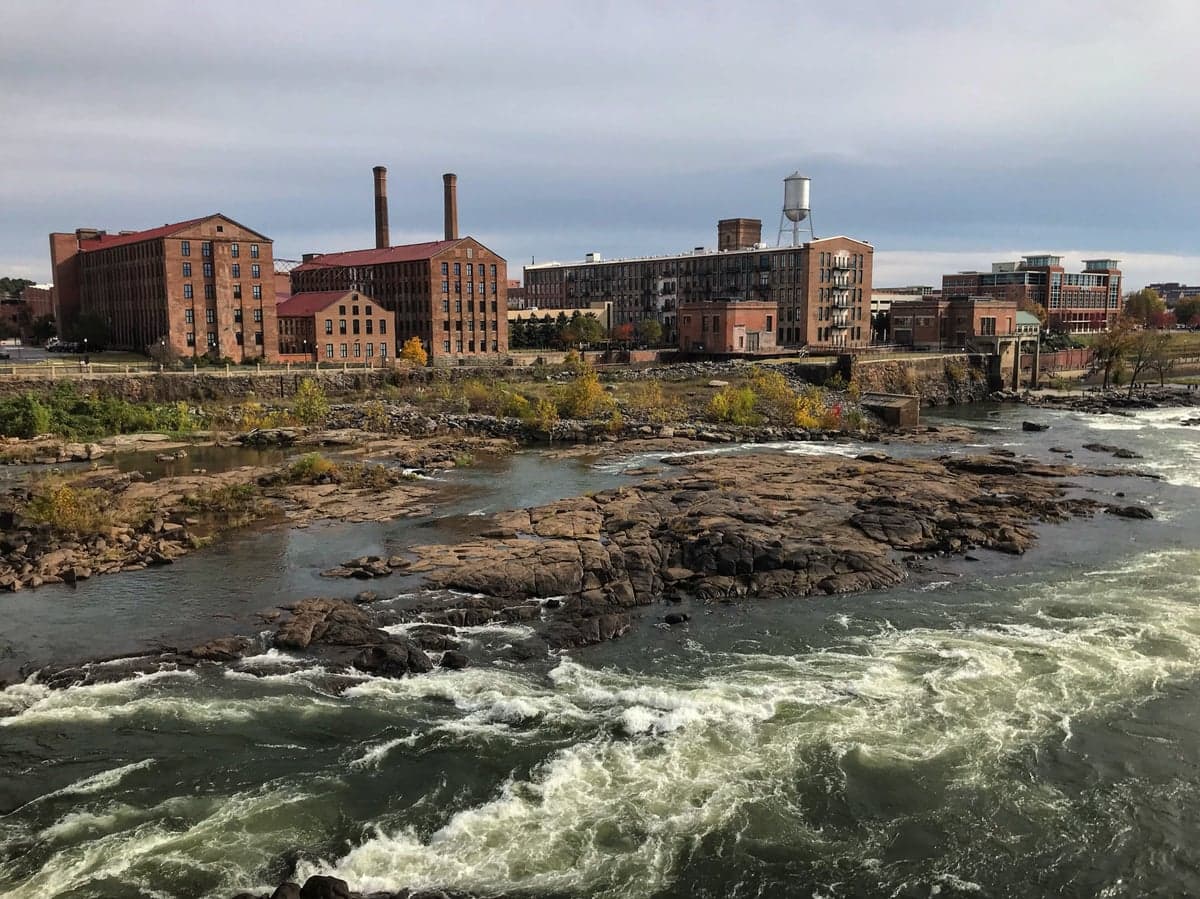
Photo: Wikipedia
Strategic Assessment of Columbus, GA
Meaningful friction. Expect exposure to either population pressure, blast zones, or natural disaster risk. Consider buying a retreat property.
What does the Strategic Assessment tell us?
Our Strategic Assessment grades tactical survivability of an area. Major population centers, military targets, fallout zones, natural disasters, and border exposure all drive risk — lower exposure means a more defensible position in a crisis.
This is heavily inspired by Joel Skousen's Strategic Relocation book. Highly recommended you checkout the book ($)What does this tell us?
Our Strategic Assessment grades tactical survivability of an area. Major population centers, military targets, fallout zones, natural disasters, and border exposure all drive risk — lower exposure means a more defensible position in a crisis.
This is heavily inspired by Joel Skousen's Strategic Relocation book. Highly recommended you checkout the book ($)Strategic Pillars

Key Distances
Regional Safe Places
Below is our recommended "safe zones" in Georgia and the surrounding area based on our strategic heuristics. For most people, it's unrealistic to live in a “safe zone” full-time due to work, family or other personal reasons. They tend to be more rural. However, many of these areas are perfect for second homes and retreat properties that double as a vacation home or even a short-term rental.
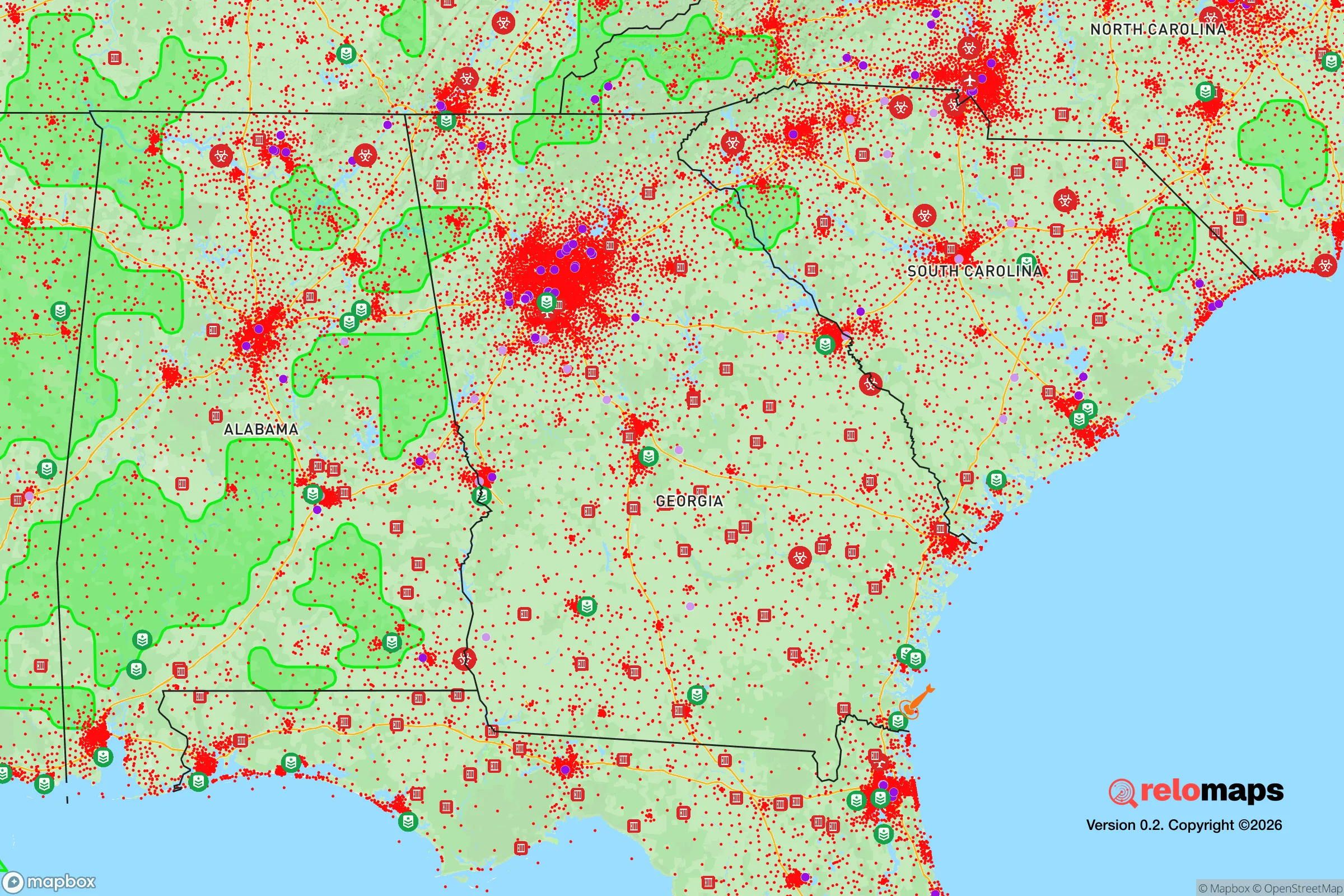
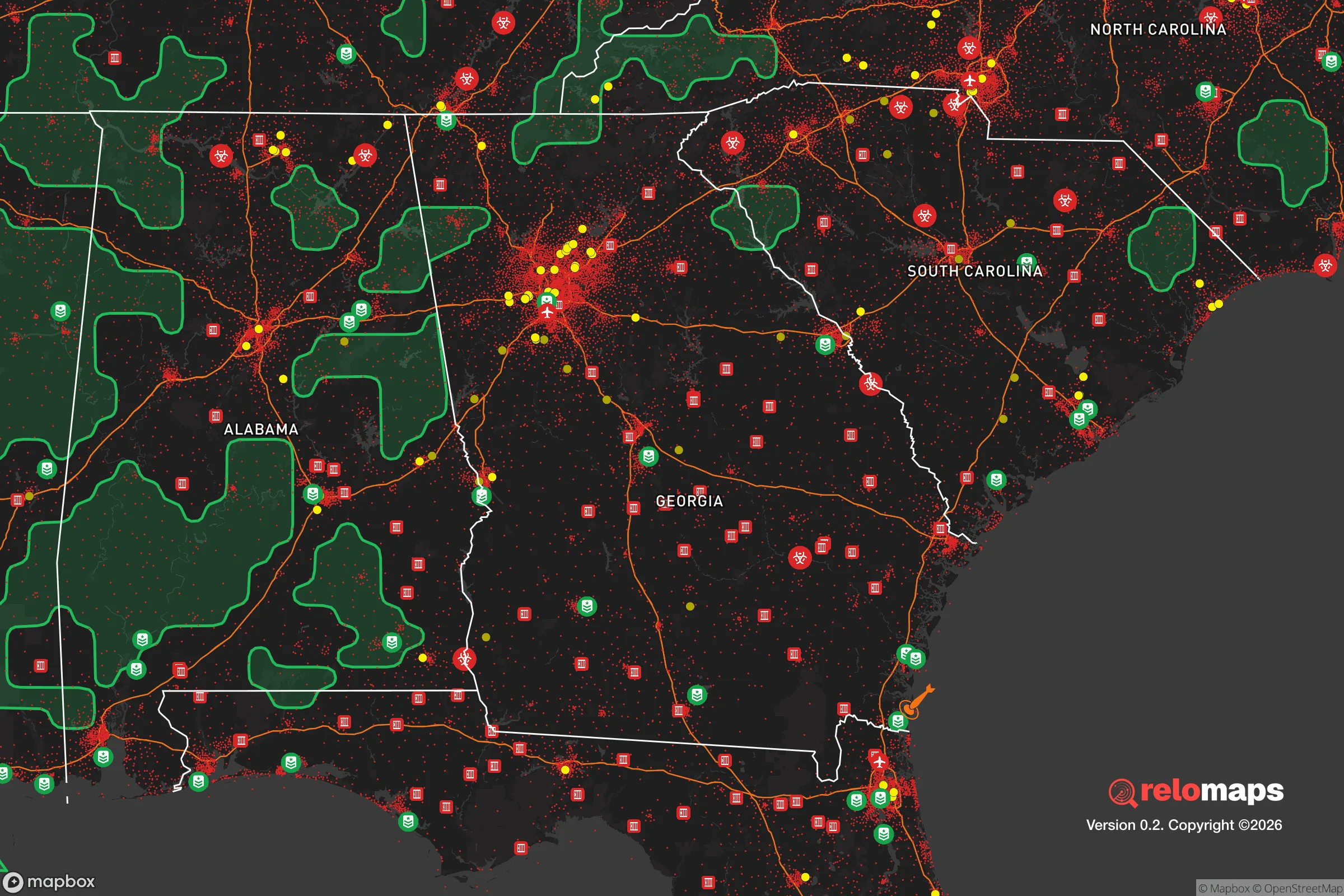


Important Note: For informational purposes only. This does not mean nothing bad ever happens in the green zones. Please use common sense. This is based on public data and modeled with AI. We tried to take a conservative approach but mistakes happen. We update this regularly as new information becomes available.
Solar Generator Recommendations
Backup power matters more here than in safer locations. We've picked three solar generators across budgets and capacity tiers — start with the budget unit if you only need a few essentials, or step up if you want to run a fridge and HVAC for days at a time.

Jackery Portable Power Station Explorer 300
Budget OptionPower on the Go: Weighing only 11 lbs, it's convenient to set up and store with book-sized foldable solar panels

BLUETTI Portable Power Station AC180
Designed for both indoor and outdoor scenarios, AC180 is highly capable as it has a robost capacity and continuous output power.

EF ECOFLOW DELTA Pro Ultra Power Station
Upgraded PickEcoFlow DELTA Pro Ultra is a whole-home energy system designed to grow with your family. Integrated with the Smart Home Panel 2, it scales to meet your evolving energy needs — keeping your home powered, intelligent, and secure through every stage of life.
We earn a commission, at no additional cost to you.
Strategic Assessment Analysis
Columbus, Georgia, sits as a surprisingly resilient option for those looking to balance proximity to regional infrastructure with a buffer from the worst-case scenarios of urban collapse. Its location along the Chattahoochee River, combined with a robust military presence at Fort Moore (formerly Fort Benning), gives it a structural backbone that many similarly sized cities lack. For a relocator with a prepper mindset, Columbus offers a strategic middle ground: close enough to Atlanta and Montgomery to access major resources, but far enough to avoid being caught in the immediate blast radius or chaos of a major metropolitan meltdown.
Geographic position and natural advantages for long-term security
Columbus’s position in west-central Georgia, right on the Alabama line, is a double-edged sword that leans heavily in favor of the prepared. The city sits on the fall line of the Chattahoochee River, which historically powered its mills and today provides a reliable, year-round water source. This is not a desert town dependent on a dwindling aquifer; the river is a hard asset for any long-term survival scenario. The surrounding terrain is a mix of rolling hills and pine forests, offering decent natural cover and defensible positions without the extreme isolation that makes resupply or community-building difficult. The climate is humid subtropical, which means a long growing season for food production—typically from March to November—and ample rainfall, averaging around 50 inches per year. This makes subsistence farming or gardening a realistic option, unlike arid western states. The city’s elevation, roughly 240 feet above sea level, keeps it out of flood-prone river bottoms while still allowing access to the water table. For someone thinking about grid-down scenarios, the ability to dig a well or divert rainwater is a significant advantage over coastal or low-lying areas.
Risks, exposures, and proximity to fallout-relevant landmarks
The sobering reality is that Columbus is not a fallout-free zone. The most obvious risk is its proximity to Fort Moore, one of the largest military installations in the world. While the base provides a stabilizing economic and security presence during normal times, it becomes a primary target in any large-scale conflict. The base is home to the U.S. Army Maneuver Center of Excellence, the 75th Ranger Regiment, and significant ammunition and equipment stockpiles. In a war scenario, this makes Columbus a high-probability target for conventional or asymmetric strikes. Additionally, the city lies roughly 90 miles southwest of Atlanta, a major transportation hub and economic center that would be a prime target for any adversary. The fallout from a strike on Atlanta—whether nuclear, biological, or cyber-induced—would likely cascade into Columbus through refugee flows, supply chain disruptions, and secondary effects. There is also the Plant Vogtle nuclear power plant near Augusta, about 150 miles east, which, while not an immediate threat, is a concern for long-term radiological contamination if compromised. On the natural disaster front, the area is low-risk for hurricanes (the Gulf Coast is 200 miles south), earthquakes, and wildfires, but severe thunderstorms and tornadoes are a seasonal reality. The 2023 tornado outbreak that hit nearby Selma, Alabama, is a reminder that mobile home parks and poorly built structures are vulnerable. For the prepper, the key takeaway is that Columbus is not a remote bunker location; it’s a strategic node with clear risks that require active mitigation—namely, having a bug-out plan for the first 72 hours and a secure, well-stocked home base for the long haul.
Practical resilience for a relocator: food, water, energy, and defensibility
For someone actually moving to Columbus with a survivalist mindset, the practical day-to-day resilience is solid but requires work. Water is the strongest suit: the Chattahoochee River runs through the city, and the underlying aquifer is accessible. However, municipal water treatment plants are vulnerable to cyberattacks or chemical spills, so a personal filtration system (like a Berkey or a Sawyer filter) and a backup well are non-negotiable. Food security is decent. The region has a strong agricultural base—peanuts, cotton, poultry, and timber are major industries—and local farmers’ markets operate year-round. The presence of Fort Moore also means a steady supply of military-grade MREs and logistics infrastructure that could be repurposed in a crisis. For long-term food storage, the humid climate is a challenge; root cellars and vacuum sealing are essential to prevent spoilage. Energy is a mixed bag. Georgia Power’s grid is generally reliable, but the state has experienced rolling blackouts during extreme winter storms (like the 2014 Snowpocalypse). Solar is viable—the area gets about 215 sunny days per year—but battery storage is critical for cloudy stretches. Natural gas is widely available in the city, but rural properties may rely on propane, which requires pre-purchasing and storage. Defensibility is where Columbus shines for the prepared relocator. The city’s layout, with the river as a natural barrier on the west and major highways (I-185, US-27, US-80) funneling traffic, makes it easier to control access points than a sprawling metro like Atlanta. The older neighborhoods north of downtown, like Midtown and the historic district, have dense tree cover and brick construction that offer good cover and structural integrity. Suburban areas like North Columbus and Harris County (just north of the city) offer larger lots with more space for gardens, rainwater collection, and perimeter security. The biggest weakness is the lack of natural chokepoints in the flat, open areas south of the city, near the airport and industrial zones. A relocator should prioritize properties with a clear line of sight to approach routes and a defensible perimeter—think chain-link fencing with privacy slats, not just a white picket fence.
The overall strategic picture for Columbus, Georgia, is that of a high-potential, medium-risk relocation target for the conservative prepper. It offers genuine advantages—reliable water, a long growing season, a military-stabilized economy, and a geographic position that buffers the worst of coastal and metropolitan collapse. But it is not a hideout. The presence of Fort Moore and the proximity to Atlanta mean that any national-level crisis will hit Columbus hard and fast. The smart move is to treat Columbus as a base of operations, not a final redoubt. Establish a home with a well, solar panels, and a garden in the northern or eastern suburbs, and maintain a secondary bug-out location further into rural Alabama or the Georgia mountains (like the Chattahoochee National Forest, about 2 hours north). Build community with like-minded locals—there is a strong veteran and firearms culture here, which aligns with self-reliance values. If you are willing to put in the work on water storage, food production, and neighborhood security, Columbus can be a solid anchor in an unstable world. Just don’t expect it to be a safe zone; expect it to be a place where preparation determines outcome.

* Values derived from national, state, county, city and local statistics and may differ in a specific area. Last updated: 2026-04-29T20:16:23.000Z
Narrative content on this page is AI-generated and may contain mistakes. Verify any details that matter before acting on them.
ReloMaps may earn a commission from affiliate links at no extra cost to you.

