
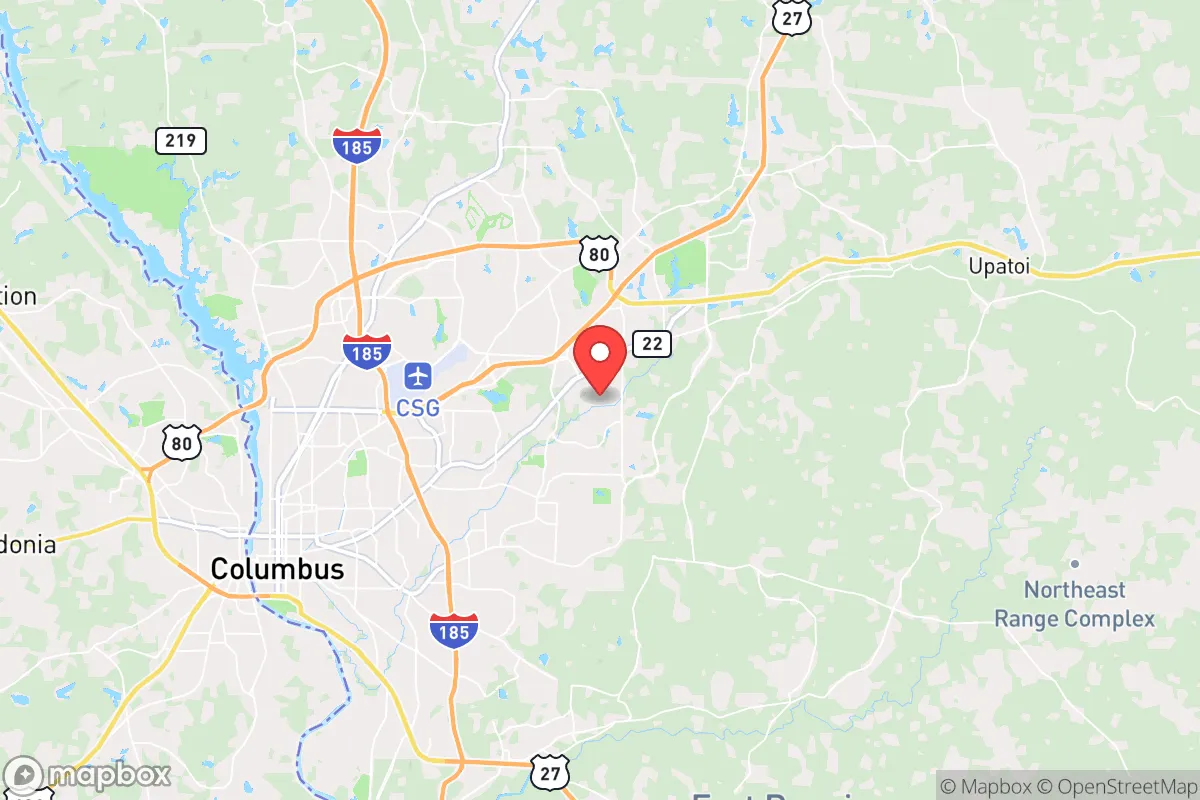
Photo: Wikipedia
Quality of Life in Columbus, GA
A high quality of life with strong walkability, manageable living costs, healthy neighborhood signals, and solid amenity access.
What does Quality of Life tell us?
Quality of Life blends cost of living, nearby amenities, socioeconomic signals, and neighborhood character. City-level scores represent the whole municipality; individual neighborhoods can differ.
What does this tell us?
Quality of Life blends cost of living, nearby amenities, socioeconomic signals, and neighborhood character. City-level scores represent the whole municipality; individual neighborhoods can differ.
Cost of Living
19% below national average
The Real Cost of Living in Columbus, GA for 2026
| Tier | Individual | Family (4) |
|---|---|---|
| Survival | $17k | $32k |
| Comfortable | $35k | $52k |
| Luxury | $102k+ | $159k+ |
| Elite (Top 5%) | $136k+ | $211k+ |
109%
The Area Signal
A metric tracking the socioeconomic signals of the area.
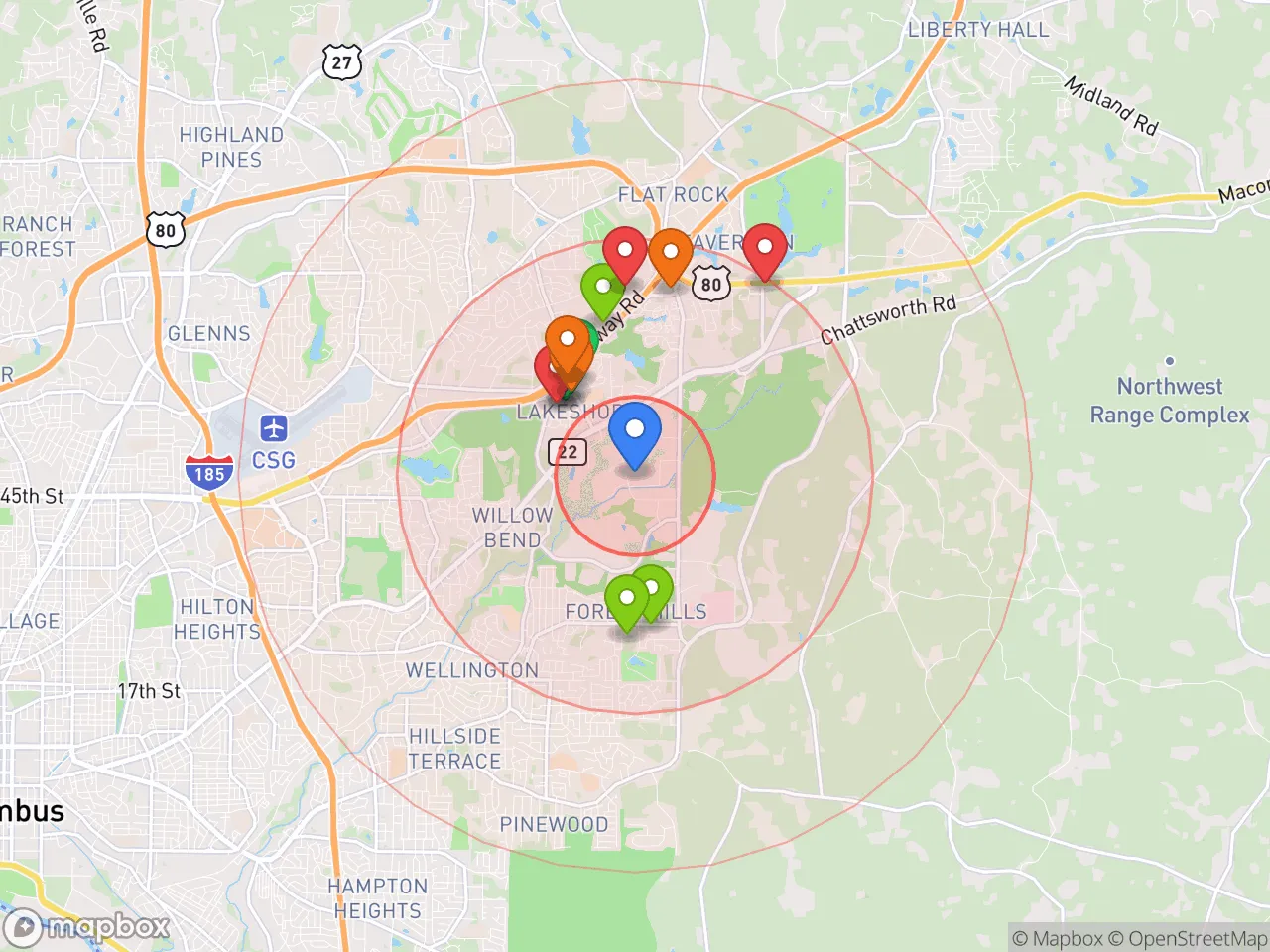
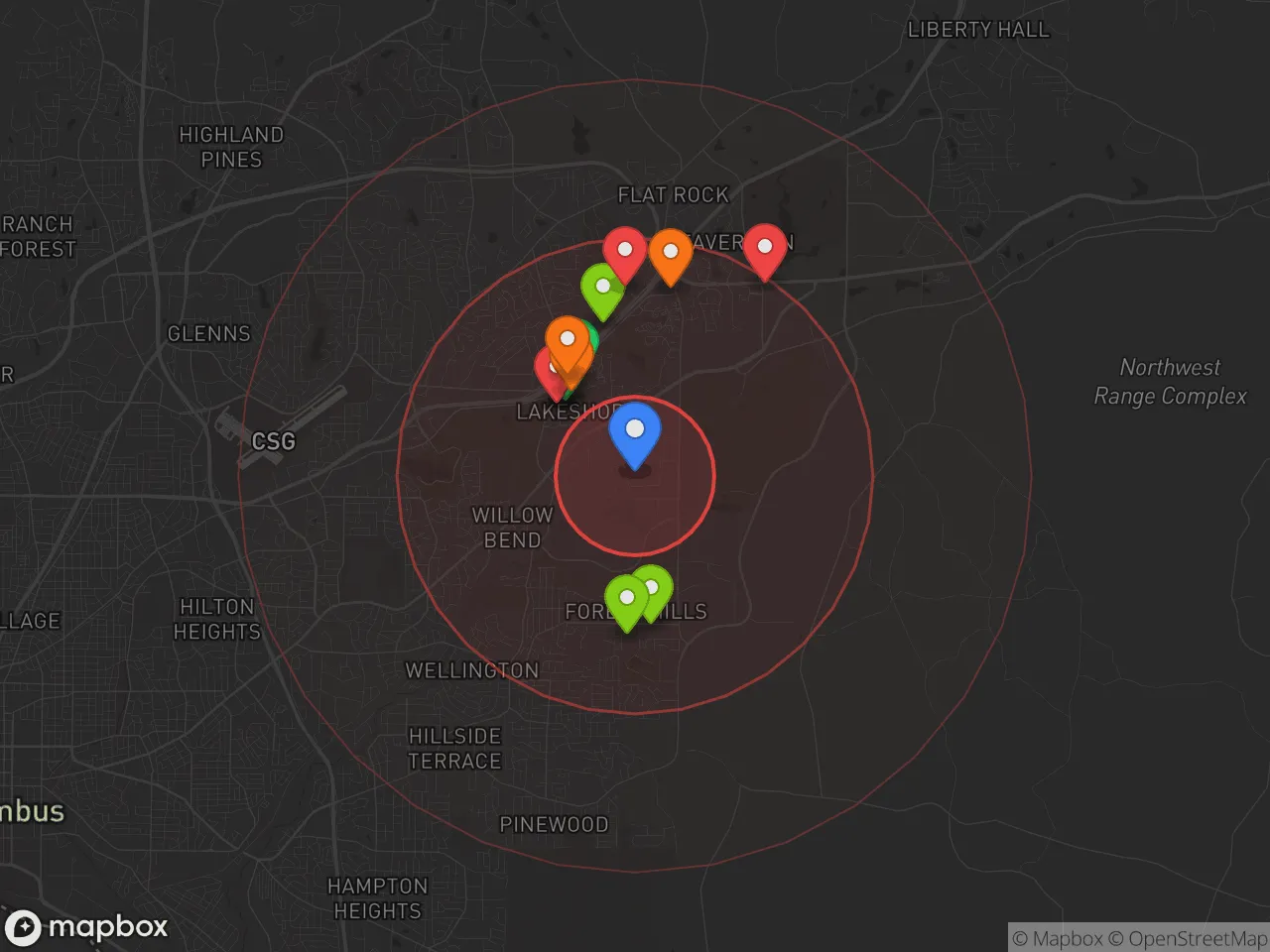
Hobbies
Explore the areaGroceries
5 within 10 miles
Gas
20 within 10 miles
Hospital
9 within 20 miles
Airport
ATL — Hartsfield–Jackson Atlanta International
Post Office
USPS — Columbus, GA
Critical Amenities
Quality-of-Life Analysis
Columbus, Georgia, offers a quality of life defined by its notably low cost of living and a population that blends military families from Fort Moore (formerly Fort Benning) with a growing base of remote workers and manufacturing employees. With a cost of living index of 81—19 percent below the national average—the city provides a level of financial breathing room that is increasingly rare in the Southeast, particularly when compared to pricier metros like Atlanta (index ~100) or even nearby Auburn, Alabama (index ~93). This affordability attracts a mix of young professionals, retirees, and career military personnel who prioritize economic stability and a slower daily pace over the hustle of larger urban centers.
Cost of living, housing affordability, and how Columbus compares to nearby cities
Housing is the primary driver of Columbus’s affordability. The median home value sits at $182,300, roughly half the national median of $360,000, while the median rent of $1,072 is well below the U.S. average of $1,400. This makes homeownership accessible for households earning the local median income of around $55,000, a sharp contrast to the Atlanta metro, where the median home value exceeds $400,000. Renters also benefit: a two-bedroom apartment in Columbus typically costs $300–$400 less per month than in Columbus’s larger Georgia counterparts like Augusta or Savannah. The average commute of just 20.2 minutes further reduces transportation costs, as most residents can reach downtown, the riverfront, or Fort Moore in under 25 minutes. Property taxes remain low—Georgia’s statewide average effective rate is 0.87%—and there is no city-level income tax, adding to the monthly savings for homeowners and renters alike.
What daily life is like for families: schools, amenities, and the local rhythm
Daily life in Columbus revolves around a compact, river-oriented geography. The Chattahoochee Riverwalk, a 15-mile paved trail system, serves as the city’s central recreational spine, connecting the Uptown dining district to the National Infantry Museum and the whitewater rafting course at the Columbus Water Works. For families, the Muscogee County School District offers several magnet programs—such as the Columbus High School International Baccalaureate program and the STEM-focused Baker Middle School—though overall district ratings are mixed, with some elementary schools scoring below state averages. Private and parochial options like Brookstone School and St. Anne-Pacelli Catholic School provide alternatives. The city’s rhythm is notably unhurried: restaurants and shops on Broadway typically close by 9 p.m. on weeknights, and weekend traffic is minimal outside of Fort Moore change-of-command events or home football games at Columbus State University. Healthcare access is solid, with Piedmont Columbus Regional and St. Francis-Emory Healthcare providing two major hospital systems within a 10-minute drive of most neighborhoods.
Columbus is best suited for those who value low housing costs, a short commute, and outdoor recreation over nightlife density or top-tier public schools. Military families will find the city exceptionally accommodating, with on-base housing options, a robust military spouse employment network, and frequent community events tied to Fort Moore. Remote workers and early retirees also thrive here, leveraging the low COL to stretch savings or salaries further than in coastal Georgia. However, professionals seeking a vibrant 24-hour urban scene or nationally ranked school districts may find Columbus’s slower pace and limited cultural amenities—such as fewer live-theater venues and a smaller food scene than Atlanta or Nashville—a trade-off worth weighing. For the right resident, the city delivers a stable, affordable foundation for family life or career transition.

Crime in Columbus, GA
Crime rates similar to the national median for U.S. locations.
Violent CrimeViolent Crime Analysis
Property CrimeProperty Crime Analysis
Crime Analysis
Columbus, Georgia, reports a violent crime rate of 363.4 incidents per 100,000 residents and a property crime rate of 1,871.2 per 100,000, placing it above national averages for both categories. While not the most dangerous city in the state, these figures indicate that crime is a tangible concern for residents and prospective movers. The local justice system's ideological leanings play a significant role in shaping public safety outcomes, a factor that warrants close attention.
Crime in context
Columbus's violent crime rate is roughly 4% higher than the national average of approximately 350 per 100,000, while its property crime rate exceeds the U.S. average by about 15%. Compared to other Georgia cities of similar size, Columbus falls in the middle tier—less violent than Albany or Macon but more so than Savannah. Property crime, particularly larceny and vehicle theft, drives the overall rate, with burglary and motor vehicle theft occurring at frequencies that outpace state medians. The city's location near the Alabama border and its status as a regional commercial hub contribute to transient criminal activity, but local policy decisions also influence long-term trends.
What residents experience
Residents report that property crime is the most visible issue, with package theft, car break-ins, and vandalism common in both downtown and suburban neighborhoods. Violent crime, while less frequent, is concentrated in specific areas and often tied to disputes or drug-related activity. A critical factor for anyone evaluating safety in Columbus is the political orientation of the local judiciary. Muscogee County, which encompasses Columbus, has elected progressive district attorneys and judges who prioritize diversion programs and reduced sentencing for non-violent offenders. While these policies aim to address root causes of crime, they have a direct and negative effect on public safety: more offenders remain on the street, recidivism rates climb, and victims see diminished accountability. This ideological approach to justice, common in larger metro areas with liberal leadership, undermines deterrence and erodes community trust in the system.
Neighborhood-level variation is significant. Areas like Midtown, North Columbus, and the historic district near Fort Moore generally report lower crime rates, benefiting from higher property values, active neighborhood associations, and better lighting and patrols. In contrast, parts of South Columbus and the central corridor near Victory Drive experience elevated rates of both violent and property crime. Prospective residents should examine block-level data from the Columbus Police Department's crime mapping tool and consider visiting neighborhoods at different times of day. The presence of Fort Moore (formerly Fort Benning) provides a stabilizing influence, as military police and a transient population of service members and families create demand for safer housing stock in adjacent areas. However, the overall safety picture in Columbus is one where progressive judicial policies amplify risk, making it essential for newcomers to prioritize neighborhood selection and property security measures.
* Values derived from national, state, county, city and local statistics and may differ in a specific area. Last updated: 2026-04-29T20:16:23.000Z
Narrative content on this page is AI-generated and may contain mistakes. Verify any details that matter before acting on them.
ReloMaps may earn a commission from affiliate links at no extra cost to you.

