Photo: Wikipedia
Demographics of Columbus, MS
Affluence Level in Columbus, MS
A below-average socioeconomic profile. Incomes, home values, and educational attainment trail the U.S., with higher poverty and unemployment.
People of Columbus, MS
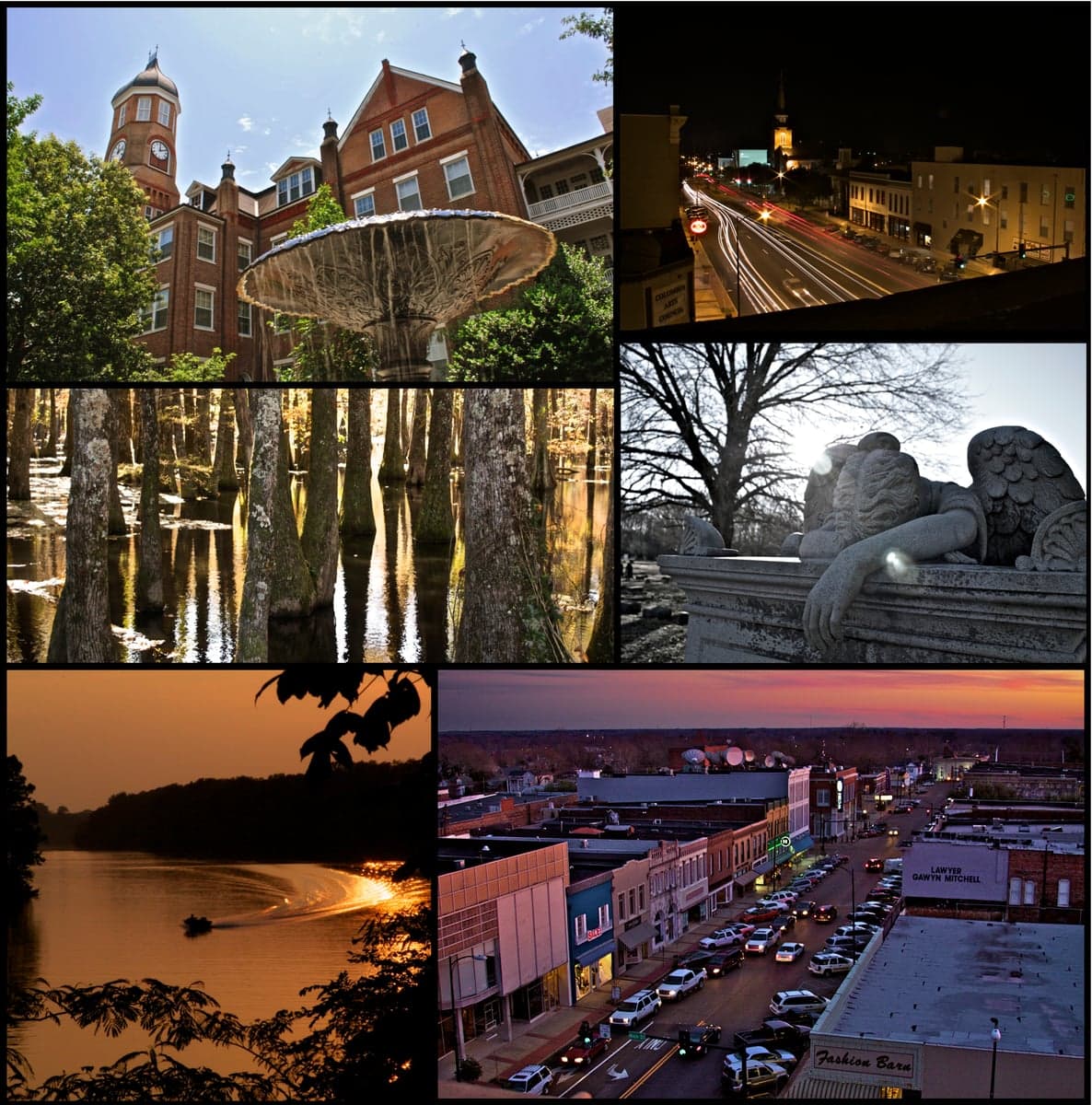
The people of Columbus, Mississippi, today form a predominantly Black-majority city of 23,616 residents, where 63.1% of the population identifies as Black or African American, 31.6% as White, and small but distinct communities of Hispanic (2.1%), Indian-subcontinent (1.0%), and East/Southeast Asian (0.3%) residents add texture. The city’s identity is rooted in a deep, layered history of Native American displacement, antebellum plantation wealth, post-Civil War Black settlement, and a modern industrial economy that has reshaped who lives where. Columbus remains a place where historic neighborhoods still reflect the racial and economic lines drawn generations ago, even as new housing developments and a slowly diversifying economy begin to blur them.
How the city was settled and grew
Columbus was founded in 1821 on land ceded by the Chickasaw Nation, and its early population was overwhelmingly White planters and their enslaved Black laborers, who arrived to clear and farm the rich bottomlands along the Tombigbee River. By the 1830s, the city had become a regional cotton hub, with wealthy families building grand homes along the river bluff in what is now the Columbus Historic District (often called the “White House” district for its antebellum mansions). Enslaved people lived in quarters behind these homes or on outlying plantations, and after emancipation, many freedmen established their own communities on the city’s east side, in neighborhoods like Sandfield and College Addition, which became the core of Black Columbus. A small wave of European immigrants—primarily German and Irish—arrived in the late 1800s to work as merchants, craftsmen, and railroad laborers, settling in the South Side near the rail yards, but they never formed a large share of the population. The city’s growth remained slow and racially stratified through the early 1900s, with the Black population concentrated in the east and the White population in the west and along the riverfront.
Modern era (post-1965)
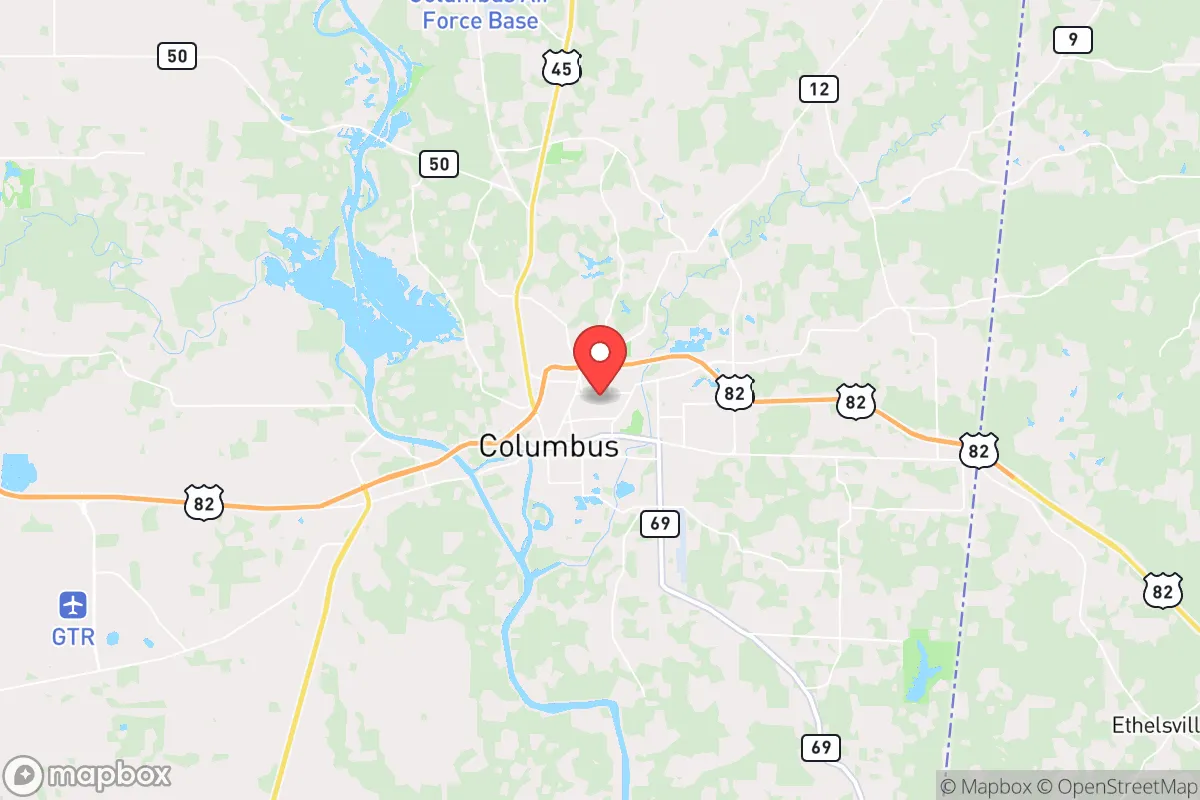
The post-1965 era brought two major shifts: the expansion of industrial employment and the acceleration of suburbanization. The opening of the Columbus Air Force Base in 1941 and the arrival of manufacturing plants like Severstal (now Steel Dynamics) and Eurocopter (now Airbus Helicopters) in the 1970s and 1980s drew a new wave of White and Black workers from surrounding rural counties, as well as a small number of military-affiliated families from outside the South. These newcomers tended to settle in newer subdivisions on the city’s north and west edges, such as Northwood and Lakewood, which remain predominantly White and middle-class today. Meanwhile, the historic Black neighborhoods of Sandfield and College Addition saw population stagnation as upwardly mobile Black families moved to newer areas like East Columbus and South Columbus, creating a more geographically dispersed but still largely segregated pattern. The foreign-born population remained tiny—just 1.1% as of the latest data—with the Indian-subcontinent community (1.0%) concentrated among professionals at the base and the hospital, and the East/Southeast Asian community (0.3%) primarily tied to the university and medical sectors. Hispanic residents (2.1%) have grown slowly, mostly in construction and service jobs, and are scattered across the city without a distinct ethnic enclave.
The future
Columbus’s population is slowly homogenizing in terms of race but not in terms of class. The White share has declined from roughly 40% in 2000 to 31.6% today, while the Black share has held steady or grown slightly, and the small Hispanic and Indian communities are growing from a very low base. The city is not tribalizing into new ethnic enclaves—the foreign-born population is too small for that—but it is seeing a widening economic divide within the Black majority, with middle-class families moving to newer subdivisions on the periphery and lower-income households concentrated in the older east-side neighborhoods. The next 10-20 years will likely see continued slow growth (the city has hovered around 23,000-24,000 for two decades), driven by expansion at the air force base and Airbus, but no major demographic transformation. The Hispanic and Indian communities may double in share but will remain small, and the East/Southeast Asian population is likely to plateau. The city will remain a predominantly Black, Southern place with a stable White minority and a thin layer of immigrant diversity.
For someone moving to Columbus now, the city offers a clear, historically rooted pattern: neighborhoods still largely reflect the racial and economic lines of the past, but new subdivisions and industrial jobs are slowly creating more mixed-income areas. The population is stable, not booming, and the small foreign-born communities mean that newcomers from outside the South will find a deeply local, insular culture. The city is becoming more economically stratified within its Black majority, but not more ethnically diverse in a dramatic way.

* Values derived from national, state, county, city and local statistics and may differ in a specific area. Last updated: 2026-04-30T13:53:31.000Z
Narrative content on this page is AI-generated and may contain mistakes. Verify any details that matter before acting on them.
ReloMaps may earn a commission from affiliate links at no extra cost to you.

