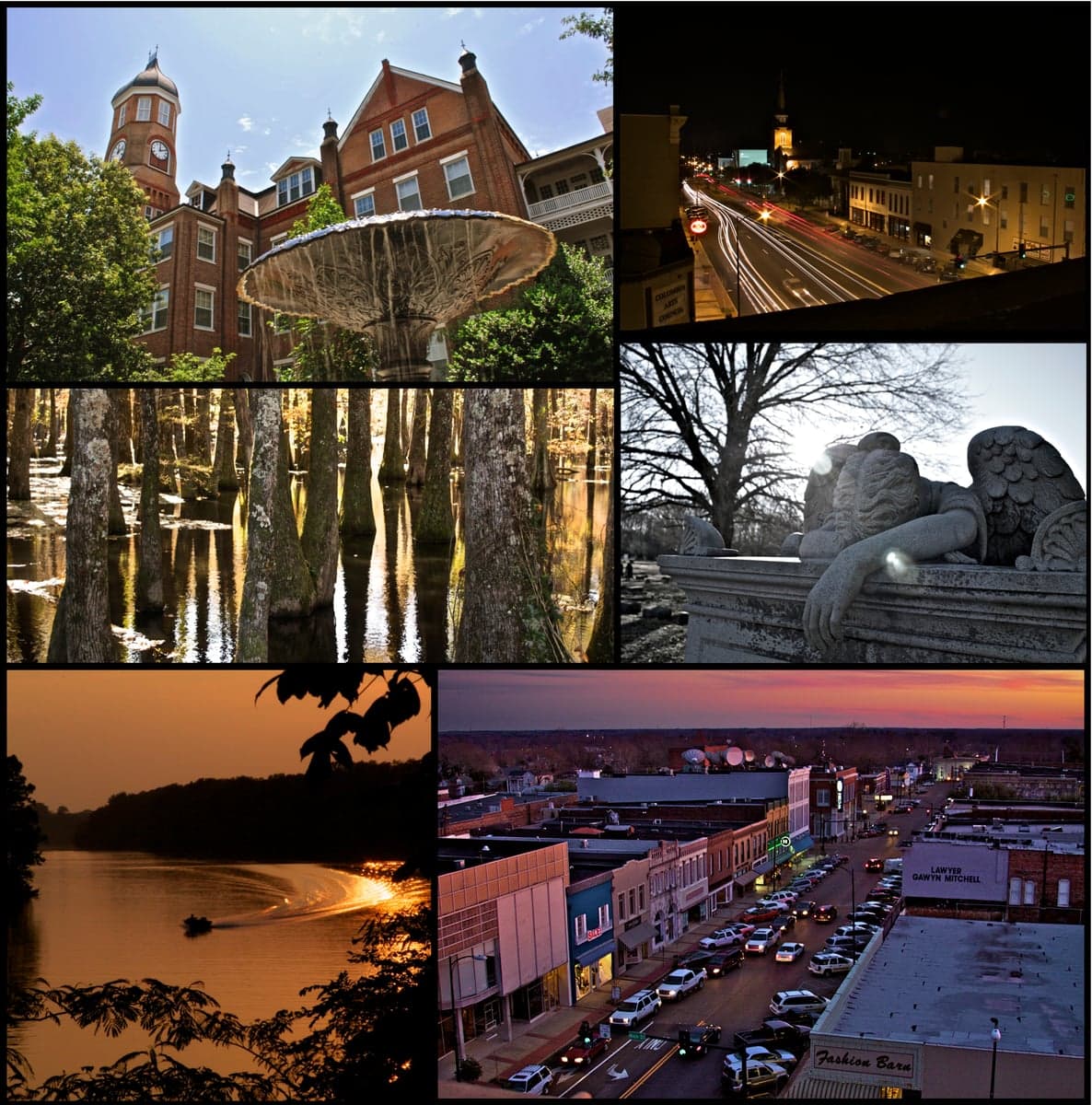
Photo: Wikipedia
Political ClimatePolitical Climate in Columbus, MS
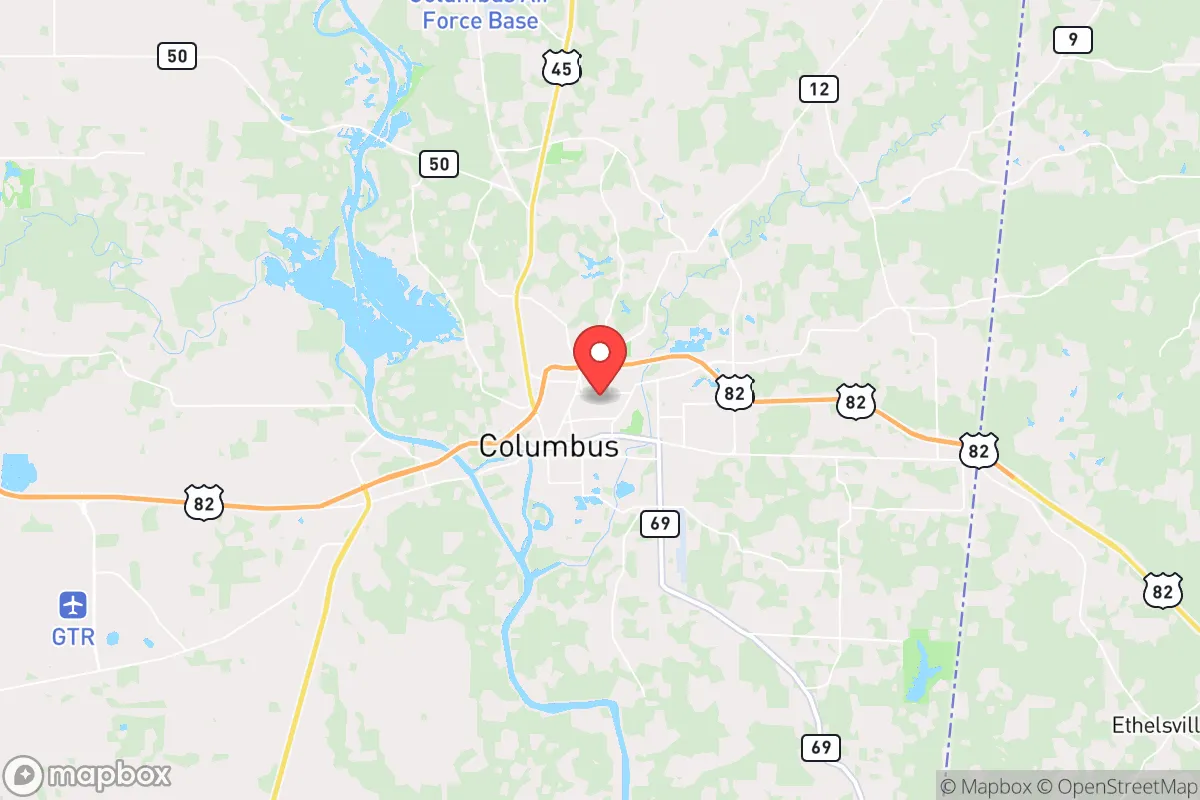
District shown is the primary district for this city’s centroid. Cities may span multiple districts.
Local Political AnalysisPolitical Analysis of Columbus, MS
Columbus, Mississippi, sits firmly in conservative territory, with a Cook PVI of R+18 that reflects decades of consistent Republican voting in federal elections. The city itself has historically leaned more moderate than the surrounding rural areas, but the overall political climate here is one that values traditional Southern values, limited government, and personal responsibility. In recent years, you’ve seen a slow but noticeable shift—not in the voting patterns, which remain solidly red, but in the cultural and policy conversations happening at the local level. The old guard, who remember when Columbus was a place where folks kept to themselves and the government stayed out of your business, are watching carefully as new voices push for changes that feel more like what you’d see in Jackson or even Oxford.
How it compares
Compared to nearby cities like Starkville, home to Mississippi State University, Columbus is noticeably more conservative. Starkville has a younger, more transient population that leans left on social issues, while Columbus’s economy is anchored by manufacturing and the Columbus Air Force Base, which brings in a military-minded, patriotic crowd. Drive 30 minutes west to West Point, and you’ll find an even deeper shade of red—smaller, older, and less exposed to outside influence. The contrast is sharpest when you look at Lowndes County as a whole: the rural precincts vote R+25 or higher, while Columbus proper sometimes splits closer to R+12 or R+15, depending on the race. That gap matters because it means local elections can feel more competitive than the countywide numbers suggest, and that’s where the tension shows up—in school board decisions, zoning debates, and how much the city government tries to regulate things like short-term rentals or public gatherings.
What this means for residents
For someone living here, the practical effect of this political climate is that you still have a lot of breathing room. Property taxes are low, there’s no city income tax, and the Second Amendment is respected without the kind of hoops you’d find in blue states. But there’s a creeping concern among longtime residents that the local government is starting to take on more authority than it should. You see it in small ways—new ordinances about noise, stricter enforcement of sign regulations, and a push to bring in more federal grant money that comes with strings attached. The worry is that these incremental steps toward more government oversight will eventually erode the personal freedoms that make Columbus a good place to raise a family. The school system, for example, has seen debates over curriculum content that would have been unthinkable a decade ago, and while those efforts have mostly been beaten back, the fact that they keep coming up is a sign of where the wind is blowing.
On the cultural side, Columbus still holds onto its distinct identity as a place where church attendance is high, family ties run deep, and people expect their elected officials to answer directly to them. The annual Pilgrimage and the city’s historic homes are a point of pride, but they also represent a resistance to the kind of rapid change that’s reshaped other Southern towns. The long-term outlook here depends on whether the next wave of leadership remembers that the job is to protect liberty, not manage people’s lives. If the current trajectory toward more regulation and progressive social policies continues, you’ll see more folks moving out to the unincorporated parts of the county where the sheriff’s office is the only authority they answer to. For now, though, Columbus remains a place where a conservative can still feel at home—but you’d better keep an eye on the city council meetings.

State Political ClimatePolitical Climate in Mississippi
State Political AnalysisPolitical Environment in the State
Mississippi is one of the most reliably conservative states in the nation, with a deep-rooted Republican lean that has only strengthened over the past two decades. The state has not voted for a Democratic presidential candidate since 1976, and in 2024, Donald Trump carried it by over 17 points. The dominant coalition is a blend of rural, evangelical, and working-class voters, with the GOP holding supermajorities in both chambers of the state legislature and every statewide office. Over the last 10-20 years, the shift has been unmistakable: as white voters in the Delta and Pine Belt moved decisively into the Republican column, the Democratic Party’s remaining strength has been squeezed into a handful of majority-Black counties and the city of Jackson. The result is a state where conservative policy is the baseline, not the exception.
Urban vs. rural divide
The political map of Mississippi is a textbook case of the urban-rural split. The state’s largest metro, the Jackson area (Hinds, Madison, and Rankin counties), is a microcosm of the divide itself: Hinds County (Jackson proper) is reliably Democratic, voting +38 for Biden in 2020, while suburban Madison and Rankin counties are deeply red, with Madison County going +27 for Trump. The Gulf Coast, anchored by Biloxi and Gulfport, leans Republican but is more competitive due to a mix of military retirees, casino workers, and a growing Hispanic population. The northeastern corner, around Tupelo and Oxford, is solidly conservative, driven by manufacturing and university-adjacent professionals. The Mississippi Delta—places like Greenville, Clarksdale, and Cleveland—remains the last bastion of Democratic strength outside Jackson, but these are shrinking populations. The rural “Pine Belt” counties like Jones, Forrest, and Lamar are among the reddest in the nation, routinely delivering 70-80% for GOP candidates. The takeaway: if you’re moving to Mississippi, your political experience will vary dramatically depending on whether you land in a small town like Hernando or a city like Jackson.
Policy environment
Mississippi’s policy environment is aggressively conservative, with a low-tax, low-regulation posture that appeals to those fleeing high-cost states. There is no state income tax on Social Security benefits, and the state has been phasing down its personal income tax rate, with a goal of full elimination. The corporate tax rate is a flat 4-5%, and property taxes are among the lowest in the nation, thanks to a homestead exemption that caps assessments. Education policy is a mixed bag: the state has a school choice program (the Mississippi Education Scholarship Account) for special-needs students, but traditional public schools remain underfunded and struggle with outcomes. Healthcare is a flashpoint—Mississippi has not expanded Medicaid under the ACA, leaving a coverage gap for about 200,000 working-age adults, but the state’s certificate-of-need laws keep hospital competition limited. Election laws are strict: voter ID is required, absentee voting is restricted to specific excuses, and early voting is limited. The state also passed a 2023 law banning ranked-choice voting and ranked-choice voting in local elections, a clear signal of resistance to progressive electoral reforms. For a conservative mover, the policy environment is largely welcoming, but the lack of Medicaid expansion and the state’s poor health outcomes are real trade-offs.
Trajectory & freedom
Mississippi is trending toward more personal freedom in several key areas, but the picture is nuanced. On gun rights, the state is a national leader: constitutional carry became law in 2016, and there are no state-level red-flag laws or waiting periods. The 2024 session saw the passage of a “Second Amendment Preservation Act” that prohibits state enforcement of any future federal gun bans. On parental rights, the 2023 “Parents’ Bill of Rights” (HB 1310) codifies the right to review curriculum and opt children out of objectionable material. Medical freedom took a hit with the 2023 ban on gender-affirming care for minors (SB 2699), which conservatives view as protecting children from irreversible procedures. On the economic front, the 2022 tax cut package (HB 531) accelerated the income tax phase-down and eliminated the 4% bracket, putting more money back in citizens’ pockets. However, the state’s heavy reliance on sales tax (7% state rate, plus local add-ons) is regressive and hits low-income families hardest. Property rights are strong, with no statewide zoning mandates and a robust “right to farm” law protecting agricultural operations from nuisance lawsuits. Overall, Mississippi is expanding freedom in the traditional conservative sense—less government interference in guns, parenting, and business—while maintaining a cautious posture on social issues.
Civil unrest & political movements
Mississippi has not seen the kind of large-scale civil unrest that has rocked other states, but there have been notable flashpoints. The 2020 George Floyd protests in Jackson and Oxford were relatively small and peaceful compared to other cities, though a Confederate monument in Oxford was vandalized. The state’s immigration politics are low-key—Mississippi has a small foreign-born population (about 2.5%), and there are no sanctuary cities. The 2023 “Secure Mississippi” law (SB 2001) requires local law enforcement to cooperate with federal immigration authorities, a clear deterrent to any sanctuary movement. Election integrity has been a hot topic: the 2023 law banning private funding of election administration (a response to Zuckerberg-funded grants in 2020) and the 2024 law requiring hand-counted paper ballots in all precincts (HB 1310) were both passed with bipartisan support. The most visible political movement is the rise of the “Mississippi Freedom Caucus,” a group of hardline conservative state legislators who have pushed for further tax cuts, school choice expansion, and restrictions on transgender athletes. On the left, the Mississippi Poor People’s Campaign and the NAACP remain active, but their influence is limited to Jackson and a few Delta towns. A new resident would notice that political activism is less visible than in other states, but the culture war is alive and well in local school board meetings and county supervisor races.
Projection
Over the next 5-10 years, Mississippi is likely to become even more conservative, driven by two trends: continued out-migration from Jackson and the Delta (which dilutes Democratic votes) and in-migration of retirees and remote workers from blue states, who tend to be conservative-leaning or at least politically moderate. The state’s population is projected to grow slightly in the Gulf Coast and DeSoto County (near Memphis), while the Delta and the Hill Country will continue to shrink. The Republican supermajority in the legislature is unlikely to be challenged, meaning further tax cuts, school choice expansion, and restrictions on abortion (already banned with no exceptions for rape or incest) are all on the table. The wild card is the state’s Black population, which is about 37% of the total—if turnout among Black voters increases, it could make statewide races more competitive, but gerrymandered legislative districts and voter ID laws make that a long shot. For a new resident, the Mississippi of 2035 will look much like the Mississippi of 2025: deeply red, low-tax, and culturally traditional, but with a slightly more diverse economy as the Gulf Coast’s aerospace and shipbuilding sectors expand.
For a conservative individual or family considering relocation, Mississippi offers a political climate that is stable, predictable, and aligned with traditional values. You won’t find the policy whiplash of a swing state or the overreach of a blue state. The trade-offs are real—poor health outcomes, underfunded schools, and limited cultural amenities—but if your priority is freedom from government intrusion, low taxes, and a community that shares your values, Mississippi delivers. Just know that the state’s politics are not monolithic: choose your county wisely, and you’ll find your tribe.
* Values derived from national, state, county, city and local statistics and may differ in a specific area. Last updated: 2026-04-30T13:53:31.000Z
Narrative content on this page is AI-generated and may contain mistakes. Verify any details that matter before acting on them.
ReloMaps may earn a commission from affiliate links at no extra cost to you.

