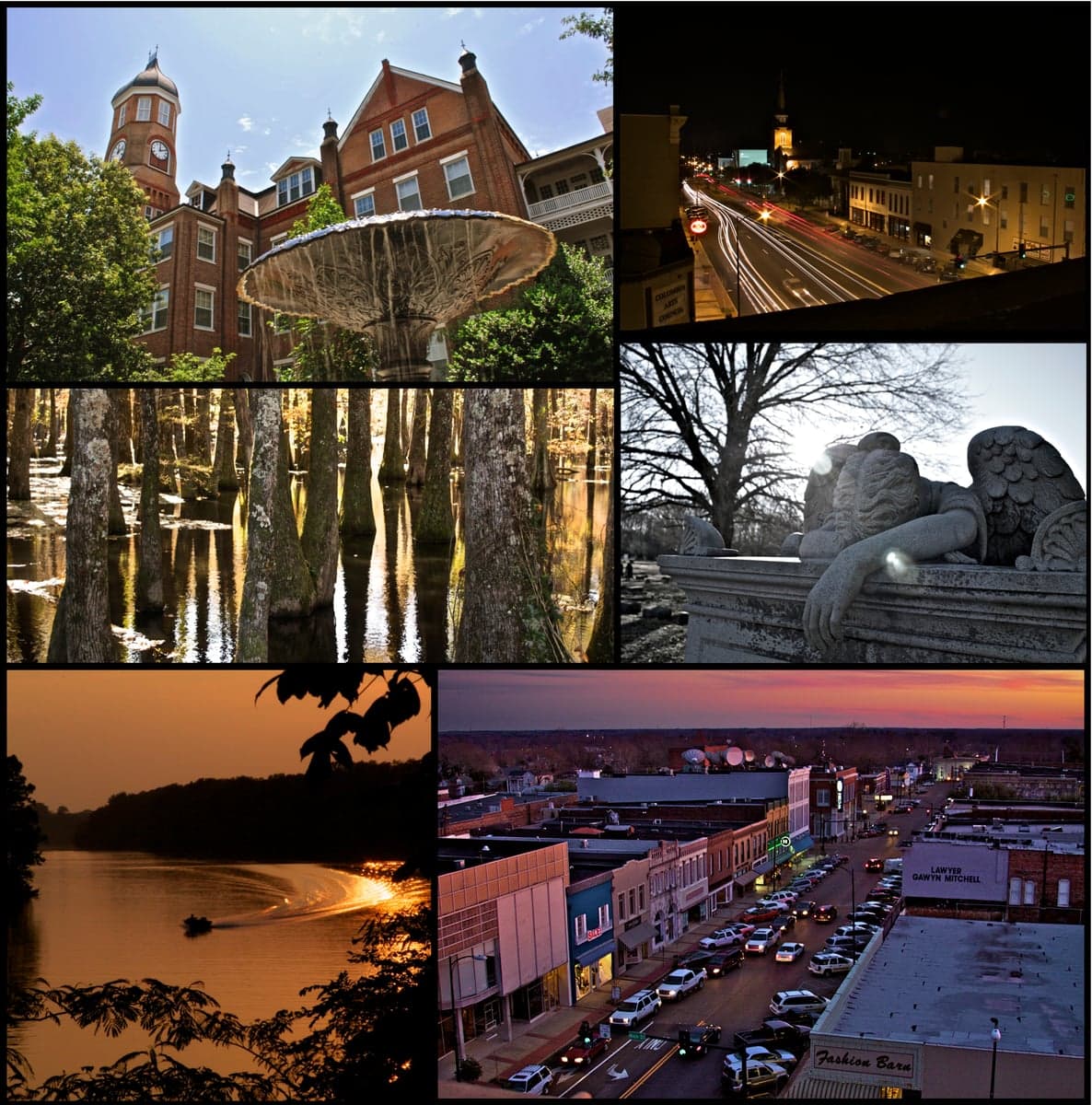
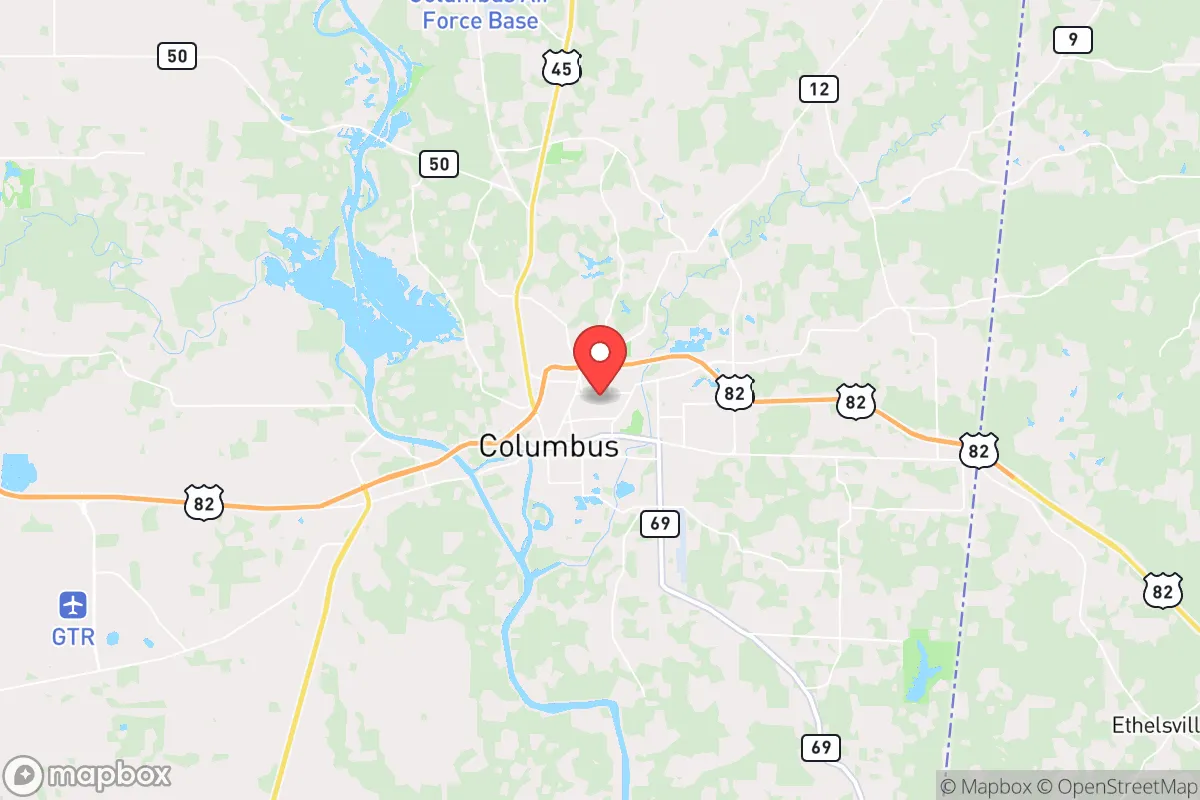
Photo: Wikipedia
Strategic Assessment of Columbus, MS
Workable tactical position. Some exposure to population density or targets, but generally defensible in a crisis.
What does the Strategic Assessment tell us?
Our Strategic Assessment grades tactical survivability of an area. Major population centers, military targets, fallout zones, natural disasters, and border exposure all drive risk — lower exposure means a more defensible position in a crisis.
This is heavily inspired by Joel Skousen's Strategic Relocation book. Highly recommended you checkout the book ($)What does this tell us?
Our Strategic Assessment grades tactical survivability of an area. Major population centers, military targets, fallout zones, natural disasters, and border exposure all drive risk — lower exposure means a more defensible position in a crisis.
This is heavily inspired by Joel Skousen's Strategic Relocation book. Highly recommended you checkout the book ($)Strategic Pillars

Key Distances
Regional Safe Places
Below is our recommended "safe zones" in Mississippi and the surrounding area based on our strategic heuristics. For most people, it's unrealistic to live in a “safe zone” full-time due to work, family or other personal reasons. They tend to be more rural. However, many of these areas are perfect for second homes and retreat properties that double as a vacation home or even a short-term rental.
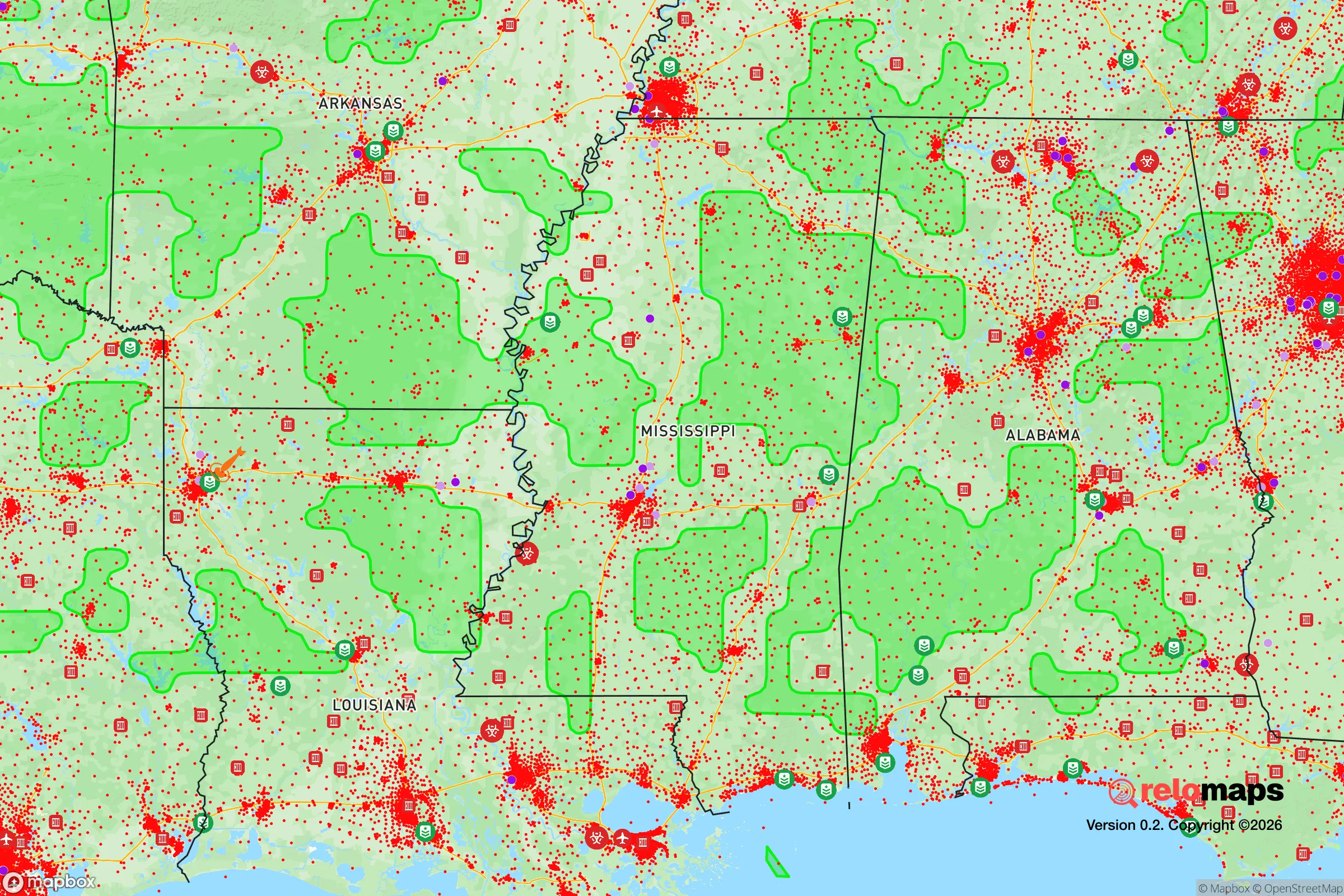
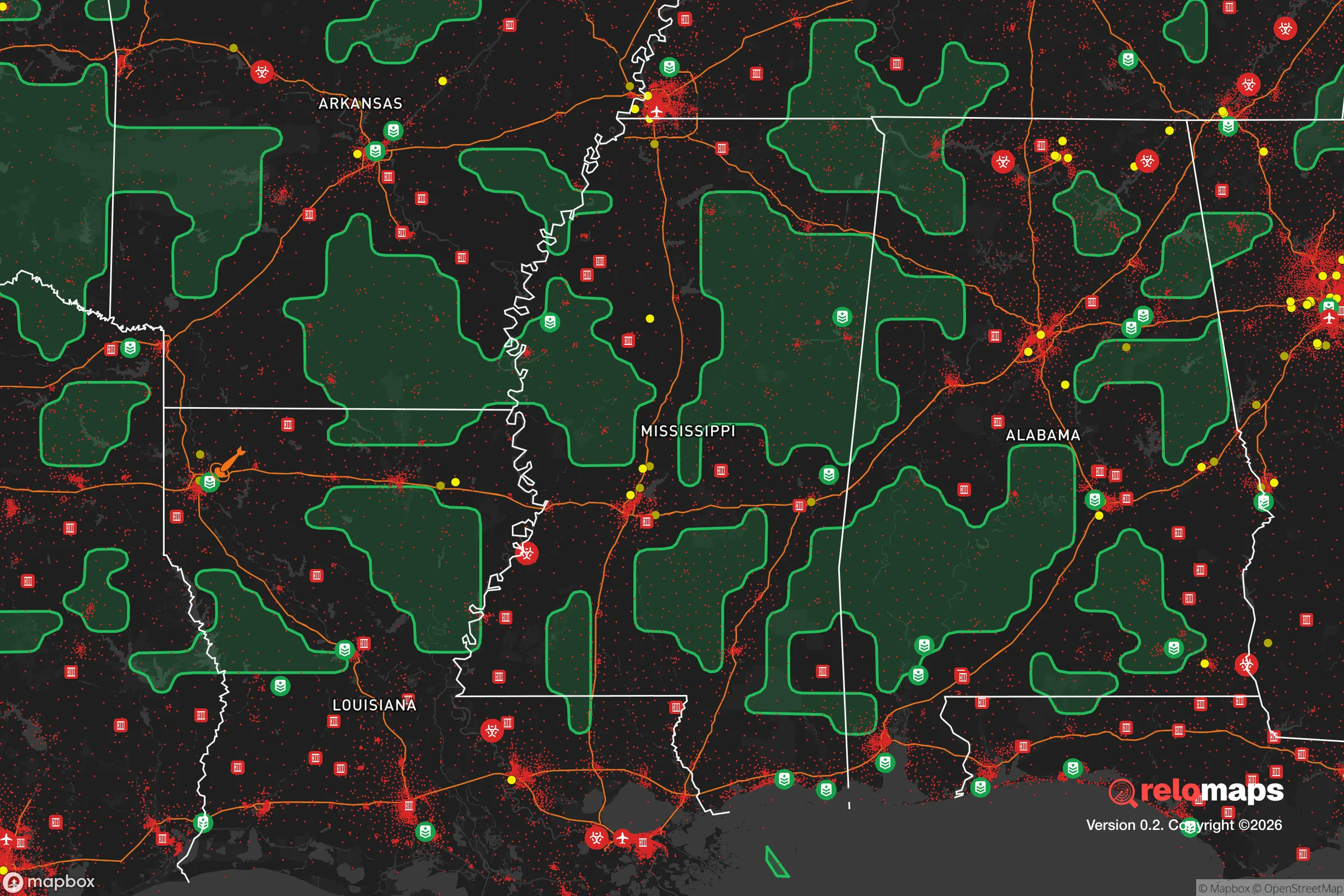


Important Note: For informational purposes only. This does not mean nothing bad ever happens in the green zones. Please use common sense. This is based on public data and modeled with AI. We tried to take a conservative approach but mistakes happen. We update this regularly as new information becomes available.
Solar Generator Recommendations
Backup power matters more here than in safer locations. We've picked three solar generators across budgets and capacity tiers — start with the budget unit if you only need a few essentials, or step up if you want to run a fridge and HVAC for days at a time.

Jackery Portable Power Station Explorer 300
Budget OptionPower on the Go: Weighing only 11 lbs, it's convenient to set up and store with book-sized foldable solar panels

BLUETTI Portable Power Station AC180
Designed for both indoor and outdoor scenarios, AC180 is highly capable as it has a robost capacity and continuous output power.

EF ECOFLOW DELTA Pro Ultra Power Station
Upgraded PickEcoFlow DELTA Pro Ultra is a whole-home energy system designed to grow with your family. Integrated with the Smart Home Panel 2, it scales to meet your evolving energy needs — keeping your home powered, intelligent, and secure through every stage of life.
We earn a commission, at no additional cost to you.
Strategic Assessment Analysis
Columbus, Mississippi, offers a surprisingly resilient strategic position for those prioritizing long-term stability and self-sufficiency, sitting at the intersection of the Tennessee-Tombigbee Waterway and major rail lines while remaining far enough from major metropolitan chaos to provide a genuine buffer. This city of roughly 24,000 in Lowndes County benefits from a diversified economic base anchored by the Columbus Air Force Base and several advanced manufacturing plants, which provides a layer of institutional stability that many similarly sized towns lack. For the prepper or survivalist-minded relocator, Columbus presents a mixed bag: genuine geographic advantages for food and water security, but real exposure risks tied to its industrial and military infrastructure that demand careful consideration.
Geographic position and natural advantages for long-term stability
Columbus sits in the Black Belt region of Mississippi, a strip of rich, dark soil that historically made this area a cotton powerhouse and today offers some of the most fertile ground east of the Mississippi River for small-scale agriculture. The city is positioned on the Tombigbee River, which connects to the Tennessee-Tombigbee Waterway, giving residents access to a navigable water route stretching from the Gulf of Mexico to the Tennessee River system — a serious logistical asset if supply chains ever fracture. The surrounding Lowndes County is heavily forested with mixed pine and hardwood, providing ample cover, firewood, and raw materials for construction or defense. The terrain is gently rolling, not mountainous, which means decent road access but also limited natural defensibility compared to hillier regions. The climate is humid subtropical, with hot summers and mild winters, allowing for year-round growing seasons that are a major plus for anyone serious about food independence. The area sits outside the highest-risk tornado alley zones, though severe weather is still a factor — you’ll want a storm shelter if you’re building or buying.
Risks, exposures, and proximity to fallout-relevant landmarks
The most significant risk factor for Columbus is its proximity to the Columbus Air Force Base (CAFB), a major pilot training center for the U.S. Air Force. While the base provides economic stability and a population of disciplined military families, it also makes the city a potential target in any large-scale conflict scenario. The base operates T-6 Texan II, T-1 Jayhawk, and T-38 Talon aircraft, meaning regular military air traffic overhead — something that could draw unwanted attention in a crisis. Additionally, Columbus is about 90 miles from the Tennessee Valley Authority’s Browns Ferry Nuclear Plant in Alabama, and roughly 120 miles from the Grand Gulf Nuclear Station in Port Gibson, Mississippi. While not in the immediate fallout zone for a worst-case event at either facility, prevailing wind patterns could carry contamination toward the area depending on the season. The city is also within a two-hour drive of both Birmingham, Alabama, and Jackson, Mississippi — meaning that in a mass evacuation scenario, Columbus could see a surge of refugees from those larger population centers. Interstate 82 and U.S. Highway 45 provide direct routes from those cities, which is both a vulnerability for unwanted traffic and a potential advantage for resupply if you control the choke points. The area has no major chemical or biological research facilities, which is a net positive compared to places like Fort Detrick or the CDC’s Atlanta campus.
Practical resilience for a relocator: food, water, energy, and defensibility
For food security, Columbus is genuinely strong. The surrounding agricultural land supports row crops like soybeans, corn, and cotton, but also a growing number of small farms and homesteads raising cattle, poultry, and produce. The Mississippi State University Extension Service in Lowndes County offers soil testing, crop advice, and livestock resources that are accessible to residents — a practical advantage for anyone serious about growing their own food. Water access is excellent: the Tombigbee River is a reliable surface water source, and the area sits atop the Mississippi Embayment aquifer, which provides abundant groundwater at relatively shallow depths. Most residential wells in the county hit good water at 100-200 feet, and the water quality is generally good with moderate mineral content. For energy, Columbus is served by the Tennessee Valley Authority (TVA) grid, which is one of the more reliable regional power systems in the country, but any prepper should plan for grid-down scenarios. Solar potential is decent — the area gets about 215 sunny days per year, slightly below the national average but workable with a properly sized off-grid system. Defensibility is the weak point. The terrain is flat to gently rolling, with no natural high ground or chokepoints that would make a rural property easy to defend. The best strategy is to buy acreage with tree cover and a creek or river frontage, ideally on a dead-end road or a property with limited access points. The local gun culture is strong — Mississippi is a constitutional carry state with no permit required for concealed carry — and the Lowndes County Sheriff’s Office is generally pro-Second Amendment, which matters if you’re concerned about self-defense in a crisis. The nearest major medical trauma center is in Tupelo (North Mississippi Medical Center, about 60 miles north), which is a concern for serious injuries or mass casualty events. For daily life, the cost of living is about 20% below the national average, and property taxes are low — around 0.7% of assessed value — which frees up capital for prepping supplies, land improvements, or equipment.
The overall strategic picture for Columbus is one of cautious opportunity. It offers genuine advantages in food production, water access, and low population density that make it a viable base for a self-sufficient lifestyle, especially for someone willing to invest in a well, solar panels, and a defensible property layout. The military base is a double-edged sword — it provides economic stability and a community of like-minded individuals, but it also introduces a target risk that can’t be ignored. The proximity to larger cities is manageable if you’re positioned on the outskirts or in one of the surrounding unincorporated areas like Caledonia or Steens, where you can maintain a low profile while still having access to Columbus’s hardware stores, feed suppliers, and medical clinics. For the conservative-minded relocator who sees the writing on the wall and wants a place that balances remoteness with practicality, Columbus is worth a serious look — just don’t buy within five miles of the base, and make sure your property has a water source you control. It’s not a bug-out paradise, but it’s a solid, workable location for building a resilient life in uncertain times.

* Values derived from national, state, county, city and local statistics and may differ in a specific area. Last updated: 2026-04-30T13:53:31.000Z
Narrative content on this page is AI-generated and may contain mistakes. Verify any details that matter before acting on them.
ReloMaps may earn a commission from affiliate links at no extra cost to you.

