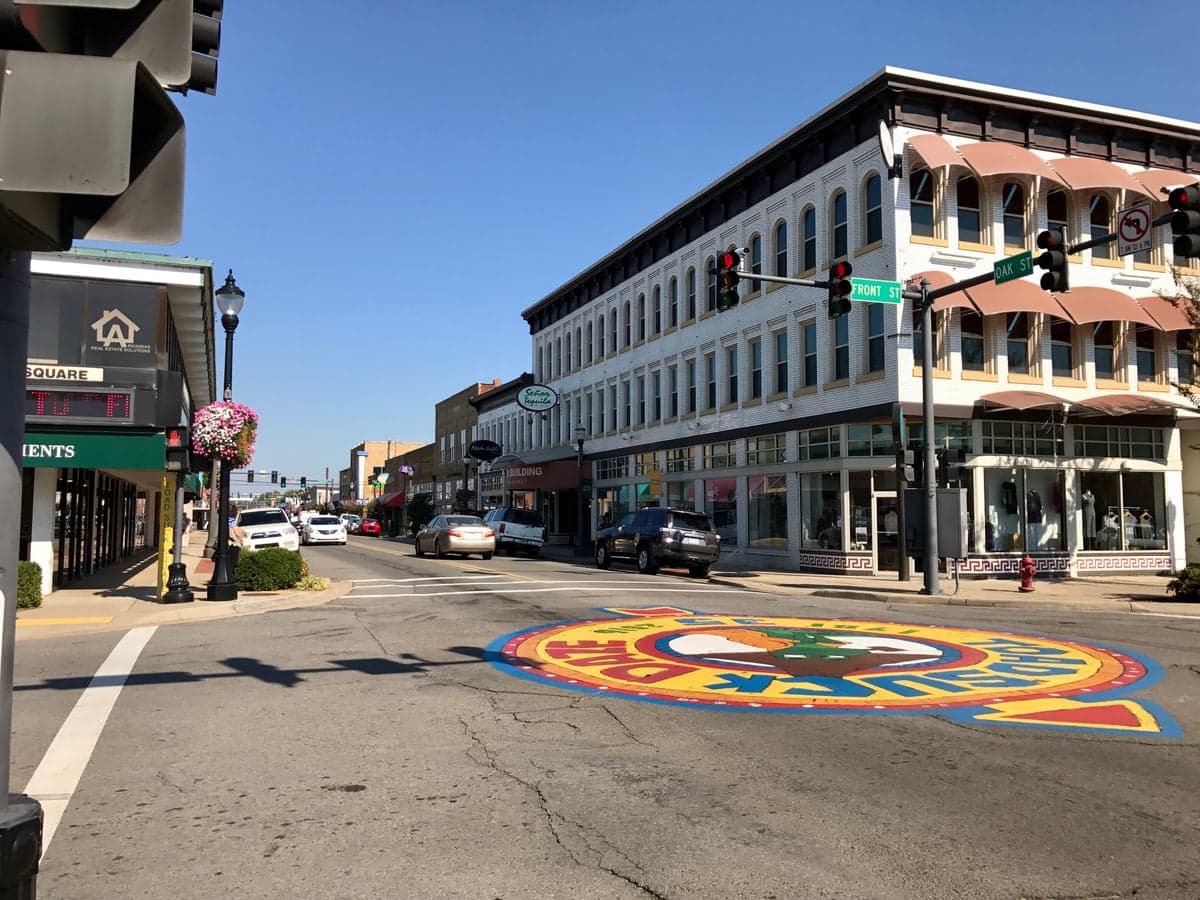
Photo: Wikipedia
Strategic Assessment of Conway, AR
Workable tactical position. Some exposure to population density or targets, but generally defensible in a crisis.
What does the Strategic Assessment tell us?
Our Strategic Assessment grades tactical survivability of an area. Major population centers, military targets, fallout zones, natural disasters, and border exposure all drive risk — lower exposure means a more defensible position in a crisis.
This is heavily inspired by Joel Skousen's Strategic Relocation book. Highly recommended you checkout the book ($)What does this tell us?
Our Strategic Assessment grades tactical survivability of an area. Major population centers, military targets, fallout zones, natural disasters, and border exposure all drive risk — lower exposure means a more defensible position in a crisis.
This is heavily inspired by Joel Skousen's Strategic Relocation book. Highly recommended you checkout the book ($)Strategic Pillars

Key Distances
Regional Safe Places
Below is our recommended "safe zones" in Arkansas and the surrounding area based on our strategic heuristics. For most people, it's unrealistic to live in a “safe zone” full-time due to work, family or other personal reasons. They tend to be more rural. However, many of these areas are perfect for second homes and retreat properties that double as a vacation home or even a short-term rental.
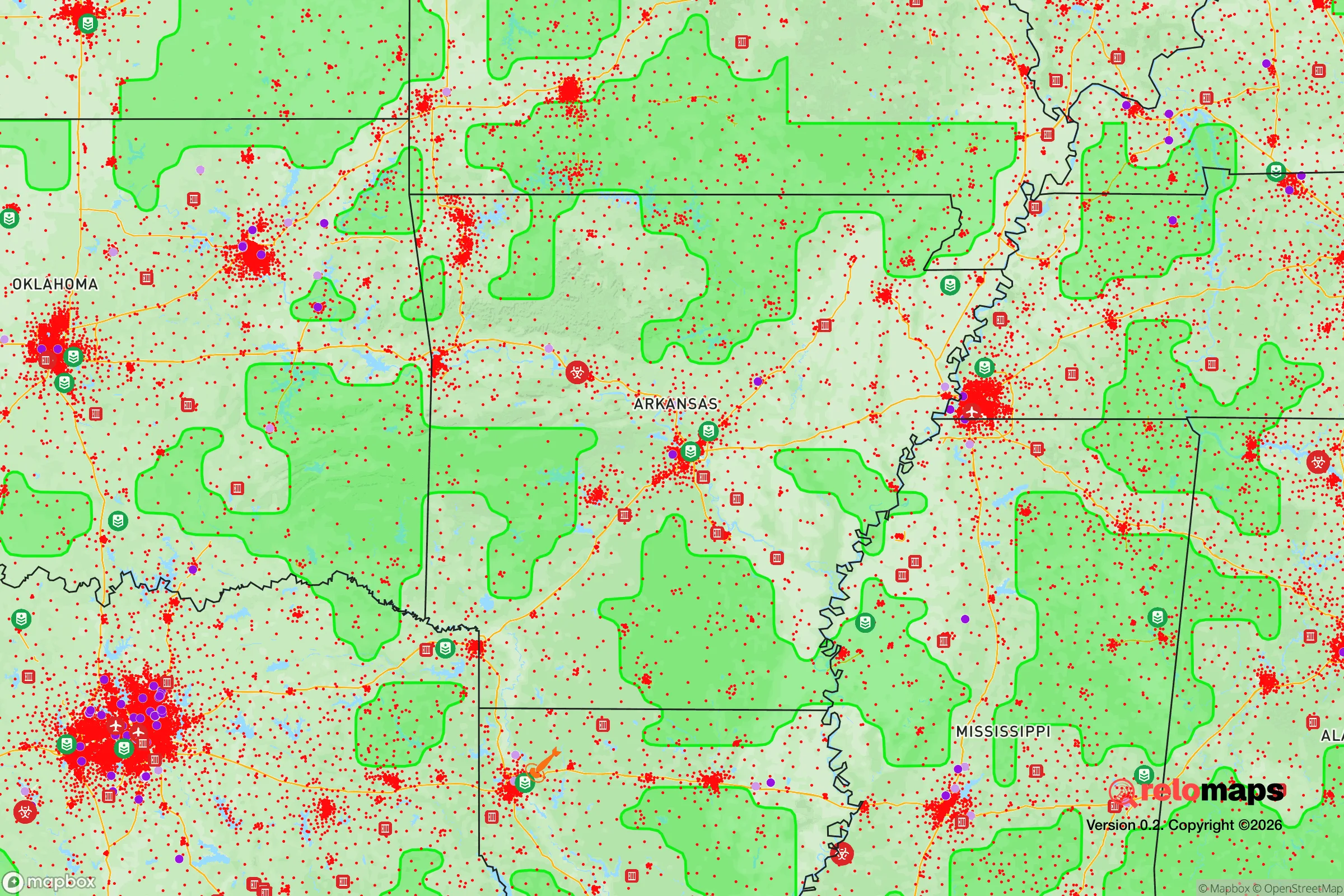
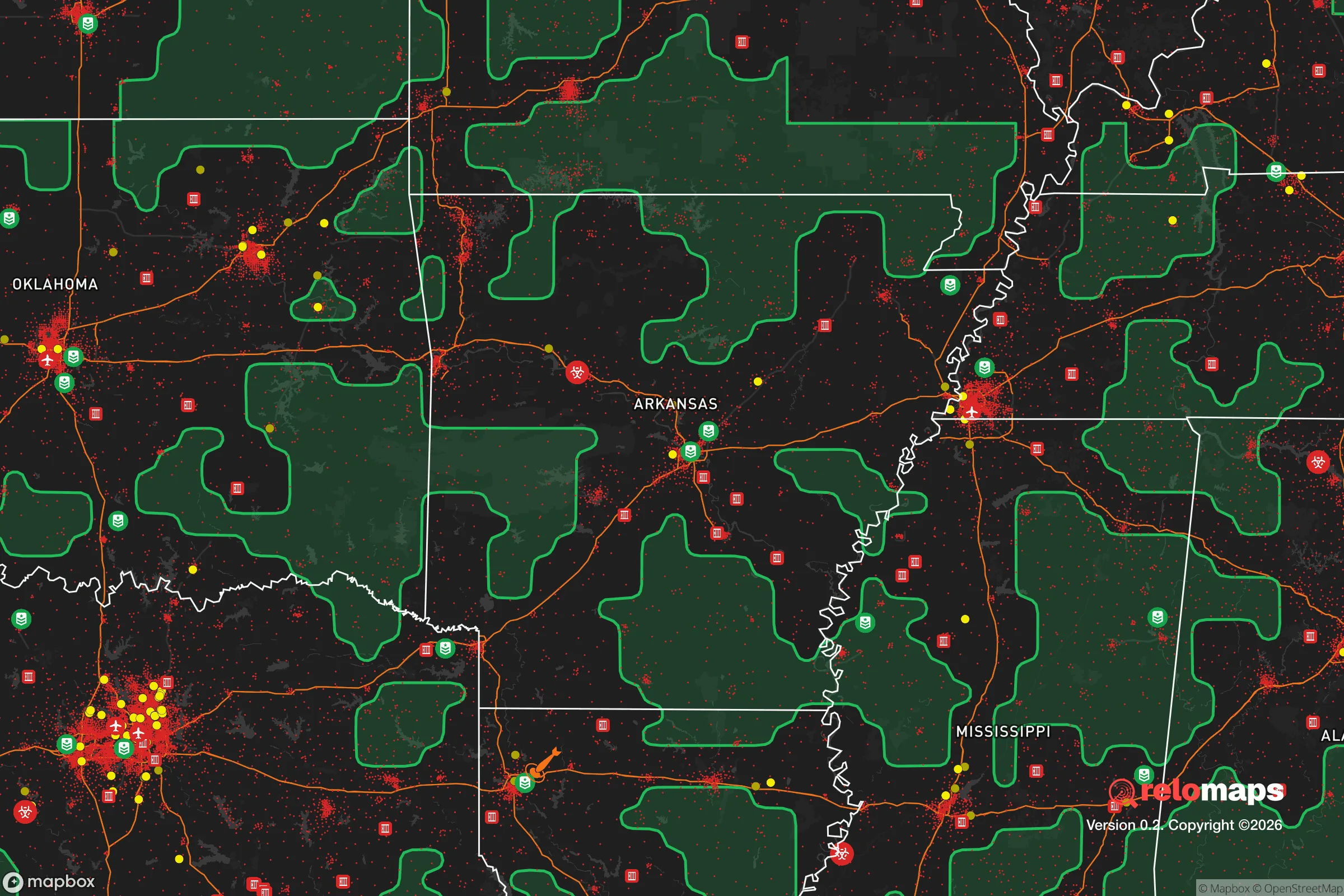


Important Note: For informational purposes only. This does not mean nothing bad ever happens in the green zones. Please use common sense. This is based on public data and modeled with AI. We tried to take a conservative approach but mistakes happen. We update this regularly as new information becomes available.
Solar Generator Recommendations
Backup power matters more here than in safer locations. We've picked three solar generators across budgets and capacity tiers — start with the budget unit if you only need a few essentials, or step up if you want to run a fridge and HVAC for days at a time.

Jackery Portable Power Station Explorer 300
Budget OptionPower on the Go: Weighing only 11 lbs, it's convenient to set up and store with book-sized foldable solar panels

BLUETTI Portable Power Station AC180
Designed for both indoor and outdoor scenarios, AC180 is highly capable as it has a robost capacity and continuous output power.

EF ECOFLOW DELTA Pro Ultra Power Station
Upgraded PickEcoFlow DELTA Pro Ultra is a whole-home energy system designed to grow with your family. Integrated with the Smart Home Panel 2, it scales to meet your evolving energy needs — keeping your home powered, intelligent, and secure through every stage of life.
We earn a commission, at no additional cost to you.
Strategic Assessment Analysis
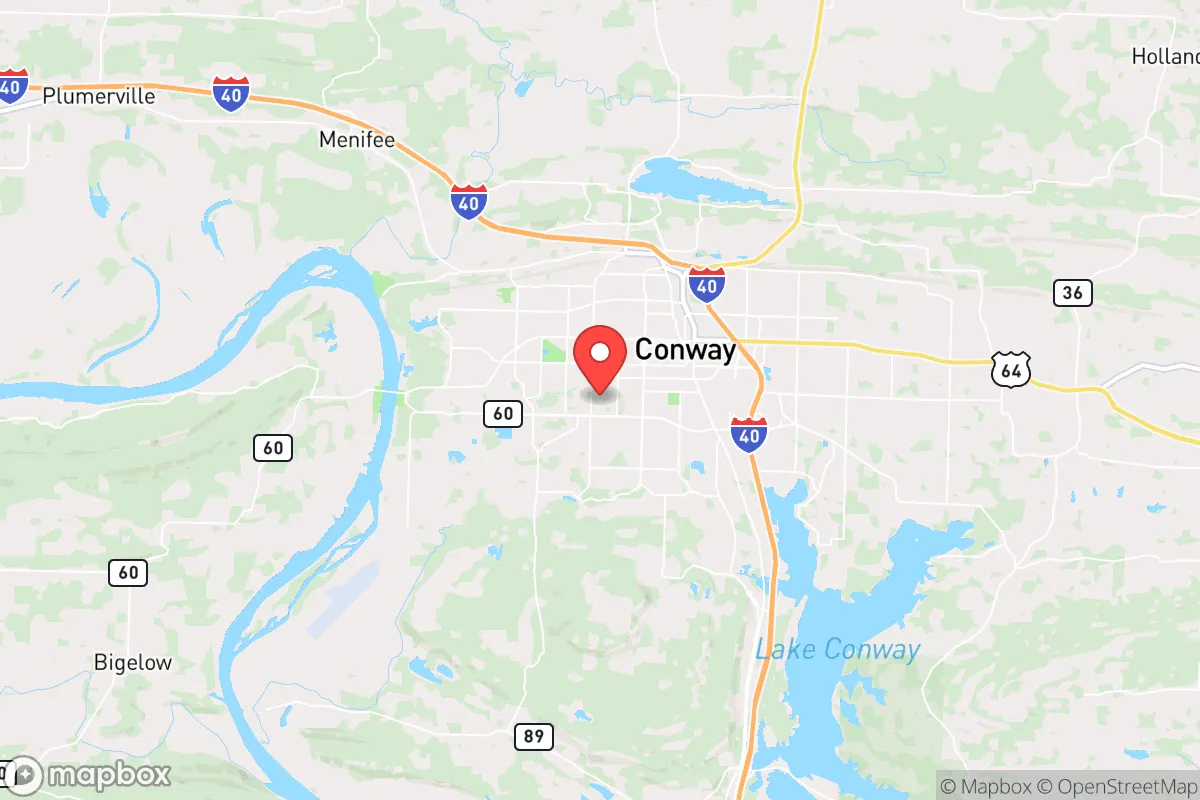
Conway, Arkansas, often flies under the radar in relocation circles, but for a relocator with a survivalist or prepper mindset, its strategic position offers a blend of genuine resilience and notable vulnerabilities. Nestled in the heart of the state, roughly 30 miles north of Little Rock, Conway benefits from being just far enough from a major urban center to avoid the worst of its collapse scenarios while remaining close enough to leverage its resources in a crisis. The city’s status as a college town—home to the University of Central Arkansas, Hendrix College, and Central Baptist College—provides a stable, educated population base, but its real value lies in its geographic and infrastructural positioning. For those assessing long-term survivability, Conway presents a mixed bag: solid natural advantages paired with proximity to risks that demand careful planning.
Geographic position and natural advantages for long-term survival
Conway’s location in the Arkansas River Valley is its primary strategic asset. The city sits on the southern edge of the Ozark foothills, offering a transition zone between flat agricultural plains and rugged, defensible terrain. This means relocators have access to both fertile bottomlands for food production and the forested hills to the north for retreat or resource gathering. The Arkansas River, flowing just south of the city, provides a reliable water source, though it’s also a potential vector for contamination or unwanted traffic. The region’s moderate climate—with four distinct seasons but no extreme cold or heat—supports year-round gardening and reduces the strain on heating and cooling systems in a grid-down scenario. The surrounding area is dotted with small towns like Vilonia and Greenbrier, which can serve as fallback positions or supply nodes, but Conway itself is the largest population center in Faulkner County, meaning it has the infrastructure to support a community without being a primary target. The Ozark National Forest, about an hour’s drive north, offers a vast, low-population wilderness for those who need to bug out, but the key advantage here is the ability to stay put: Conway’s position allows for a “live and work” prepper lifestyle, where you can maintain a normal cover while building resilience.
Risks, exposures, and proximity to fallout-relevant landmarks
The biggest strategic downside for Conway is its proximity to Little Rock, a city of roughly 200,000 that sits just 30 miles south on Interstate 40. In a scenario of civic unrest, mass casualty events, or a major disaster, Little Rock would likely become a source of refugees, looters, and chaos. The I-40 corridor is a major east-west artery, meaning Conway is directly in the path of any mass exodus from the capital. Additionally, the Arkansas River is a potential target for industrial accidents or sabotage, with several chemical plants and refineries along its course near Little Rock. For those concerned with nuclear fallout, Conway is roughly 150 miles from the nearest major nuclear facility—the Arkansas Nuclear One plant near Russellville—but prevailing winds from the south could carry fallout from a strike on Little Rock’s infrastructure. The city itself has no major military bases or government installations, which is a double-edged sword: it reduces the likelihood of being a direct target, but it also means no immediate military response in a crisis. The nearby Camp Robinson, a National Guard base in North Little Rock, could become a staging area for martial law or a magnet for conflict. For a prepper, the key takeaway is that Conway is not a safe haven from national-level events; it’s a buffer zone that requires active defense and planning to mitigate the risks from the south.
Practical resilience for a relocator: food, water, energy, and defensibility
When it comes to day-to-day preparedness, Conway offers a workable but not ideal baseline. The city’s water supply comes from Lake Conway, a 6,700-acre man-made lake that is the largest of its kind in the United States. This is a double-edged resource: it provides ample water for the city, but in a drought or contamination event, the lake’s shallow depth (average 6 feet) makes it vulnerable to evaporation and pollution. Relocators should plan for private well drilling or rainwater catchment, as the municipal system is a single point of failure. Food security is more promising: Faulkner County has a strong agricultural base, with local farms producing poultry, soybeans, and rice. The Conway Farmers Market is a year-round option for building local supply chains, and the surrounding rural areas offer opportunities for small-scale livestock and gardening. Energy resilience is a weak point—Conway is served by Entergy Arkansas, which relies on a mix of natural gas, coal, and nuclear power from the Russellville plant. In a grid-down scenario, solar panels with battery storage are a must, as the local terrain is flat enough to support them but not so exposed as to make them obvious. Defensibility is moderate: Conway’s layout is a typical suburban sprawl with a compact downtown core. The city is bisected by Interstate 40 and U.S. Highway 65, which are both escape routes and invasion corridors. For a relocator, the best strategy is to secure a property on the northern or eastern edges of town, closer to the Ozark foothills and away from the main highways. The presence of three colleges means a large transient population of students, which could be a liability in a breakdown—they’re likely to flee rather than fight, but they could also become a drain on resources. Overall, Conway requires a proactive approach: stockpiling, community building with like-minded neighbors, and a clear bug-out plan for the hills.
The overall strategic picture for Conway is one of cautious viability. It’s not a hardened redoubt like the Idaho panhandle or the Montana Rockies, but it offers a realistic middle ground for a relocator who wants to stay connected to modern amenities while building a resilient lifestyle. The city’s conservative lean—Faulkner County voted heavily Republican in recent elections—aligns with a prepper mindset of self-reliance and community defense, but the proximity to Little Rock and the I-40 corridor means you can’t afford to be complacent. For a single individual or a family, Conway works best as a base of operations: a place to establish a home, build a network, and prepare for the worst while enjoying a relatively normal life. The key is to treat it as a staging ground, not a final destination. If the country stabilizes, Conway’s schools, low crime rates, and affordable housing make it a solid long-term bet. If things go south, the Ozarks are a short drive away. In the end, Conway is a strategic compromise—and for a prepper, that’s exactly the kind of honest assessment that saves lives.

* Values derived from national, state, county, city and local statistics and may differ in a specific area. Last updated: 2026-04-23T16:31:40.000Z
Narrative content on this page is AI-generated and may contain mistakes. Verify any details that matter before acting on them.
ReloMaps may earn a commission from affiliate links at no extra cost to you.

