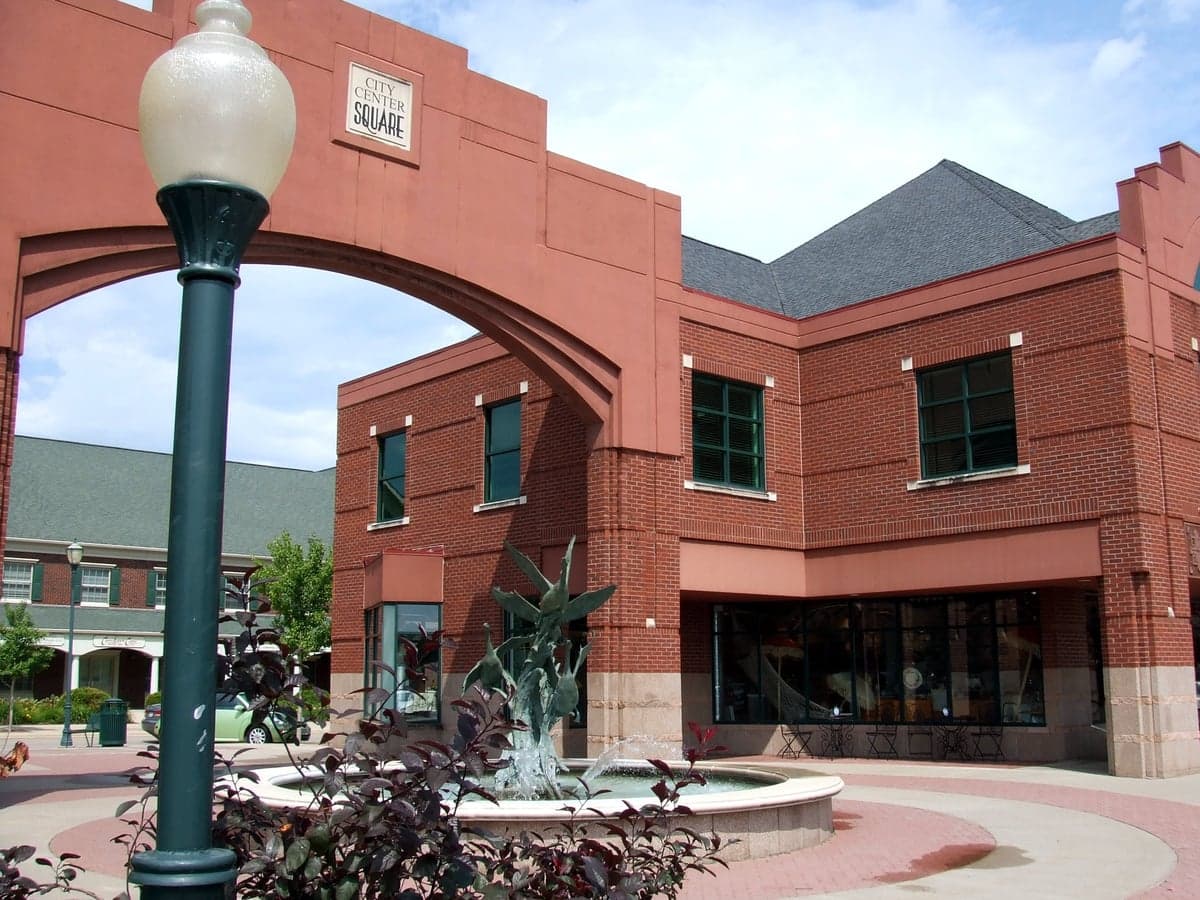
Photo: Wikipedia
Personal Sovereignty in Coralville, IA
Viable for self-reliance. Generally workable, though some barriers may limit total independence.
What does Personal Sovereignty tell us?
Personal Sovereignty measures your capacity for self-reliance and independence with minimal government friction. Higher scores mean fewer barriers between you and the way you want to live... but it assumes you have the space you need and good neighbors.
What does this tell us?
Personal Sovereignty measures your capacity for self-reliance and independence with minimal government friction. Higher scores mean fewer barriers between you and the way you want to live... but it assumes you have the space you need and good neighbors.
State Policy
Energy independence: Importer (50% of energy produced in-state)
Personal Liberty
Homesteading

Personal Liberty Analysis
Coralville, Iowa, offers a mixed bag for those prioritizing personal sovereignty, with the state’s generally conservative legal framework providing a solid foundation, but local municipal codes and a growing urban corridor introducing friction points that a survivalist or prepper must carefully weigh. The city sits within Johnson County, which leans left politically, creating a tension between state-level protections and local governance that can erode autonomy. For a single individual or parent concerned with government overreach, Coralville’s environment is workable but requires active vigilance—especially regarding property use, self-defense, and medical freedom—rather than offering the hands-off liberty found in more rural, less regulated parts of the Midwest.
Tax burden and regulatory posture: How Iowa’s low-tax framework interacts with local codes
Iowa’s state-level tax climate is relatively favorable for those seeking to keep more of their earnings and minimize government entanglement. The state has a flat income tax rate of 3.8% as of 2026, down from higher progressive rates in prior years, and no estate or inheritance tax—a clear win for wealth retention and generational transfer. Property taxes in Coralville, however, are a different story. The combined city and school district levy pushes effective rates to around 2.1% of assessed value, which is above the national average and a notable bite for anyone trying to build self-sufficient assets like land or a workshop. Sales tax in Coralville is 7%, with the local option adding a full percentage point on top of the state’s 6%—every purchase at a hardware store or bulk food supplier chips away at your buying power. Regulatory posture at the city level is moderate but creeping: building permits are required for most structural changes, and the city enforces a rental housing code that can feel invasive if you’re running a small homestead operation or renting out a portion of your property. Compared to unincorporated areas of Johnson County or neighboring rural counties, Coralville’s regulatory overhead is higher, but it’s still far lighter than what you’d face in coastal blue states. For a prepper, the key is to budget for these costs and avoid assuming that Iowa’s low-tax reputation extends seamlessly into every city limit.
Self-defense and gun law specifics: What Coralville residents can and cannot do
Iowa is a shall-issue state for permits to carry, and as of 2021, it became a permitless carry state for anyone 21 or older who can legally possess a firearm—meaning you can carry a concealed handgun without a license, a significant win for personal defense autonomy. Coralville does not have its own gun ordinances that exceed state law, so the city follows the statewide framework: no waiting periods, no magazine capacity bans, and no registration requirements for long guns or handguns. Stand-your-ground laws are in effect, with no duty to retreat in any place you are lawfully present, which is critical for a survivalist mindset that values decisive self-defense without legal second-guessing. However, there are practical limitations within city limits. Discharging a firearm within Coralville city limits is prohibited except at a licensed range or in lawful self-defense, so you cannot simply pop off rounds on your own property for training or pest control—a restriction that pushes preppers toward rural land for live-fire practice. The Johnson County Sheriff’s Office processes permits to acquire (for handguns) and permits to carry, and while the process is straightforward, the local political climate means you may encounter more bureaucratic friction than in deeply red counties like Cedar or Jones. For parents, Iowa law allows for firearm possession in vehicles on school property if the firearm is unloaded and locked in a container, but school zones remain a legal minefield—know the federal Gun-Free School Zones Act exceptions. Overall, Coralville’s gun laws are solid for defensive carry, but the urban setting imposes constraints on training and storage that a rural property would not.
Self-reliance and homesteading viability: Lot sizes, zoning, and off-grid feasibility
Coralville’s zoning and lot sizes make serious homesteading a challenge within city limits. Most residential lots range from 6,000 to 10,000 square feet, with many newer subdivisions packing houses on smaller parcels. The city’s zoning code restricts keeping livestock—chickens are allowed with a permit and specific coop setbacks, but larger animals like goats or pigs are prohibited in residential zones. Gardening is generally permitted, but front-yard vegetable gardens can run afoul of neighborhood aesthetic covenants, and there are no allowances for permanent greenhouse structures without a building permit. Off-grid feasibility is low: Coralville requires connection to municipal water and sewer for any habitable structure, and solar panel installations must comply with building codes and utility interconnection agreements—you cannot simply disconnect from the grid. Rainwater collection is not prohibited, but it is limited to 2,500 gallons of storage without a permit, and any system must not create a nuisance for neighbors. For a prepper seeking true self-reliance, Coralville is a compromise: you can grow a substantial garden, store supplies, and install backup power, but you will remain tethered to city infrastructure and subject to inspections. The better play is to own a rural property within 30 minutes—say, in rural Johnson County or adjacent Iowa County—where lot sizes of 5 acres or more are common, livestock is unrestricted, and building codes are minimal. Coralville works as a base for employment and supply runs, but not as a full homestead.
Personal liberties: Parental rights, medical autonomy, speech, and property
Iowa has strong parental rights on paper, with a law requiring parental consent for medical treatment of minors and a Parents’ Bill of Rights that affirms the right to direct a child’s education and upbringing. In practice, Coralville’s school district, the Iowa City Community School District, has been a flashpoint for parental concerns—mask mandates, curriculum transparency, and library book policies have all seen contentious debates. The district leans progressive, and parents who want to opt their children out of certain lessons or materials may face administrative pushback, though state law provides a mechanism for review. Medical autonomy is a bright spot: Iowa has no state-level vaccine mandate for adults, and while COVID-era restrictions are largely lifted, the state passed a law in 2023 prohibiting employers from requiring COVID-19 vaccination as a condition of employment—a clear win for bodily autonomy. However, Coralville’s local health department may still promote public health campaigns that feel coercive to those wary of government overreach. Free speech is protected under the First Amendment, and Iowa has no state-level hate speech laws that chill expression, but the social climate in Johnson County can be hostile to conservative viewpoints—expect social ostracism rather than legal penalty for speaking your mind. Property rights are generally strong, with Iowa’s eminent domain laws requiring just compensation and a public purpose, but Coralville has used eminent domain for economic development projects in the past, including the Iowa River Landing area, which raises red flags for anyone who values absolute control over their land. For a parent or individual concerned with creeping government control, Coralville offers a legal framework that respects many liberties, but the local culture and school district require active engagement to preserve those rights.
Overall, Coralville provides a workable but imperfect environment for personal sovereignty. The state-level protections—permitless carry, low income tax, parental rights, and medical freedom—form a sturdy backbone, but the city’s urban zoning, higher property taxes, and progressive local governance create friction points that a survivalist or prepper must navigate deliberately. Compared to rural areas in the same state, Coralville demands more compromise on self-reliance and defensive training, but it still ranks far above most cities in blue states for autonomy. For those willing to engage in local politics, build community with like-minded individuals, and maintain a rural retreat property, Coralville can serve as a viable base of operations—just don’t expect the full measure of liberty you’d find in the open country.

* Values derived from national, state, county, city and local statistics and may differ in a specific area. Last updated: 2026-04-30T07:59:20.000Z
Narrative content on this page is AI-generated and may contain mistakes. Verify any details that matter before acting on them.
ReloMaps may earn a commission from affiliate links at no extra cost to you.

