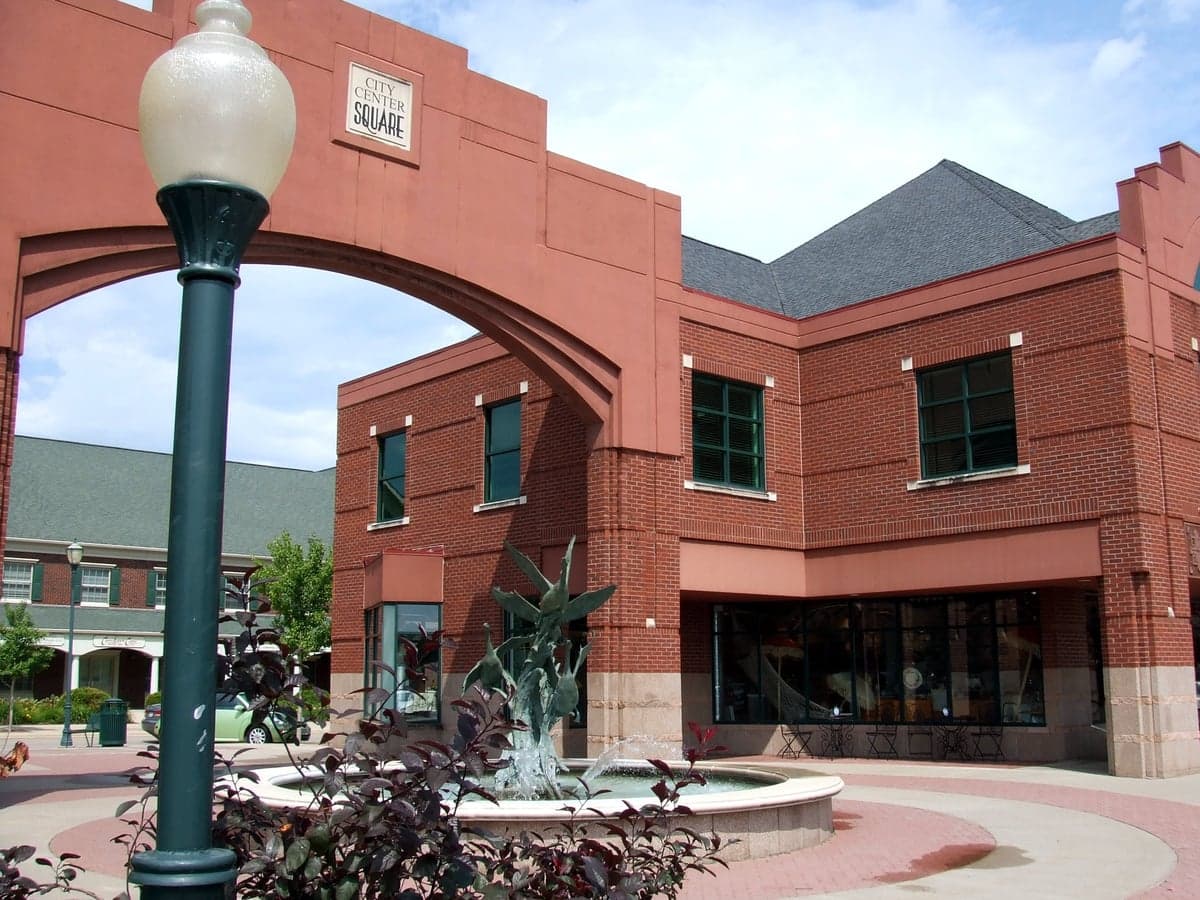
Photo: Wikipedia
Quality of Life in Coralville, IA
A high quality of life with strong walkability, manageable living costs, healthy neighborhood signals, and solid amenity access.
What does Quality of Life tell us?
Quality of Life blends cost of living, nearby amenities, socioeconomic signals, and neighborhood character. City-level scores represent the whole municipality; individual neighborhoods can differ.
What does this tell us?
Quality of Life blends cost of living, nearby amenities, socioeconomic signals, and neighborhood character. City-level scores represent the whole municipality; individual neighborhoods can differ.
Cost of Living
7% below national average
The Real Cost of Living in Coralville, IA for 2026
| Tier | Individual | Family (4) |
|---|---|---|
| Survival | $16k | $31k |
| Comfortable | $56k | $82k |
| Luxury | $120k+ | $186k+ |
| Elite (Top 5%) | $192k+ | $297k+ |
81%
The Area Signal
A metric tracking the socioeconomic signals of the area.
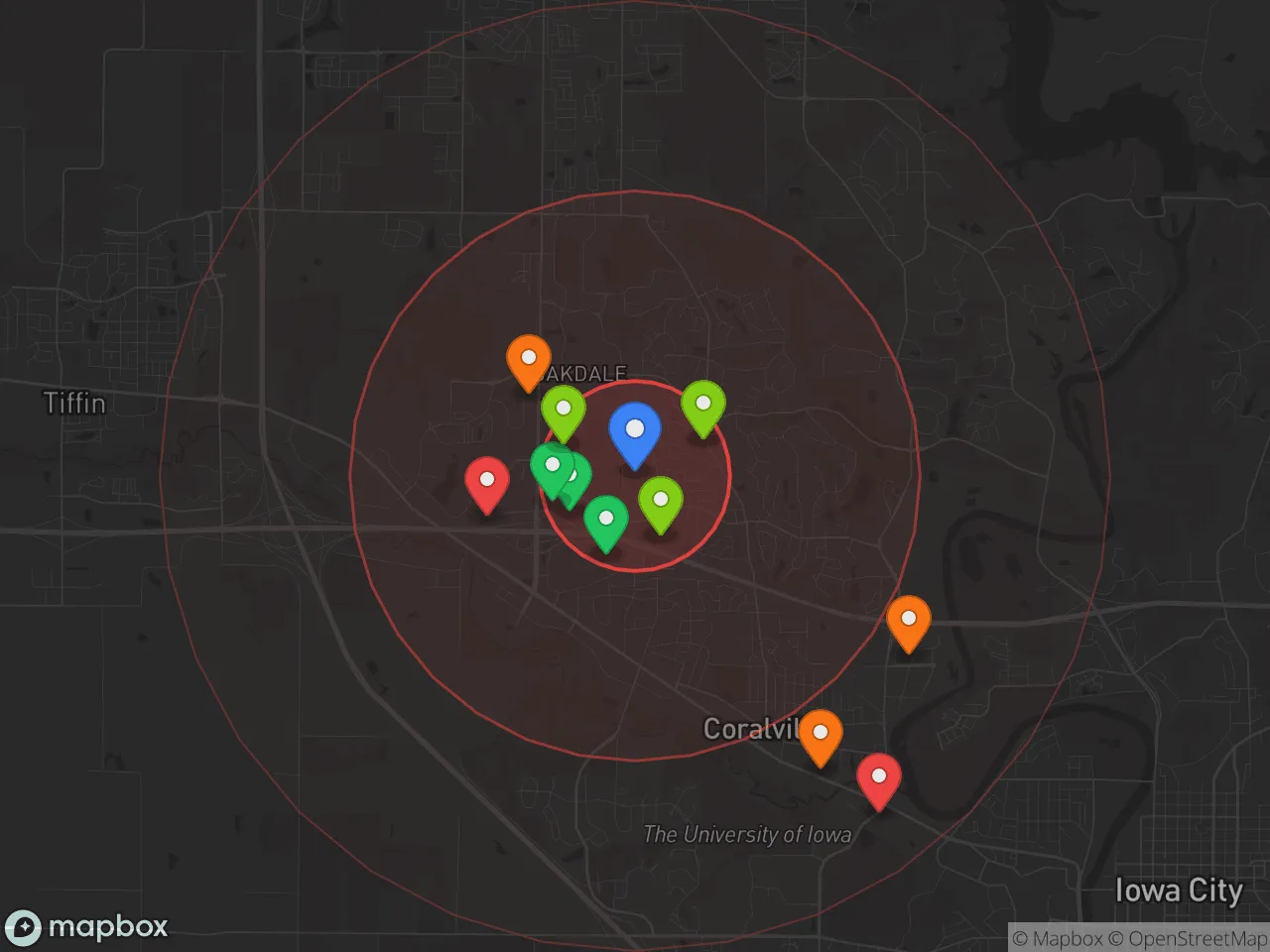
Hobbies
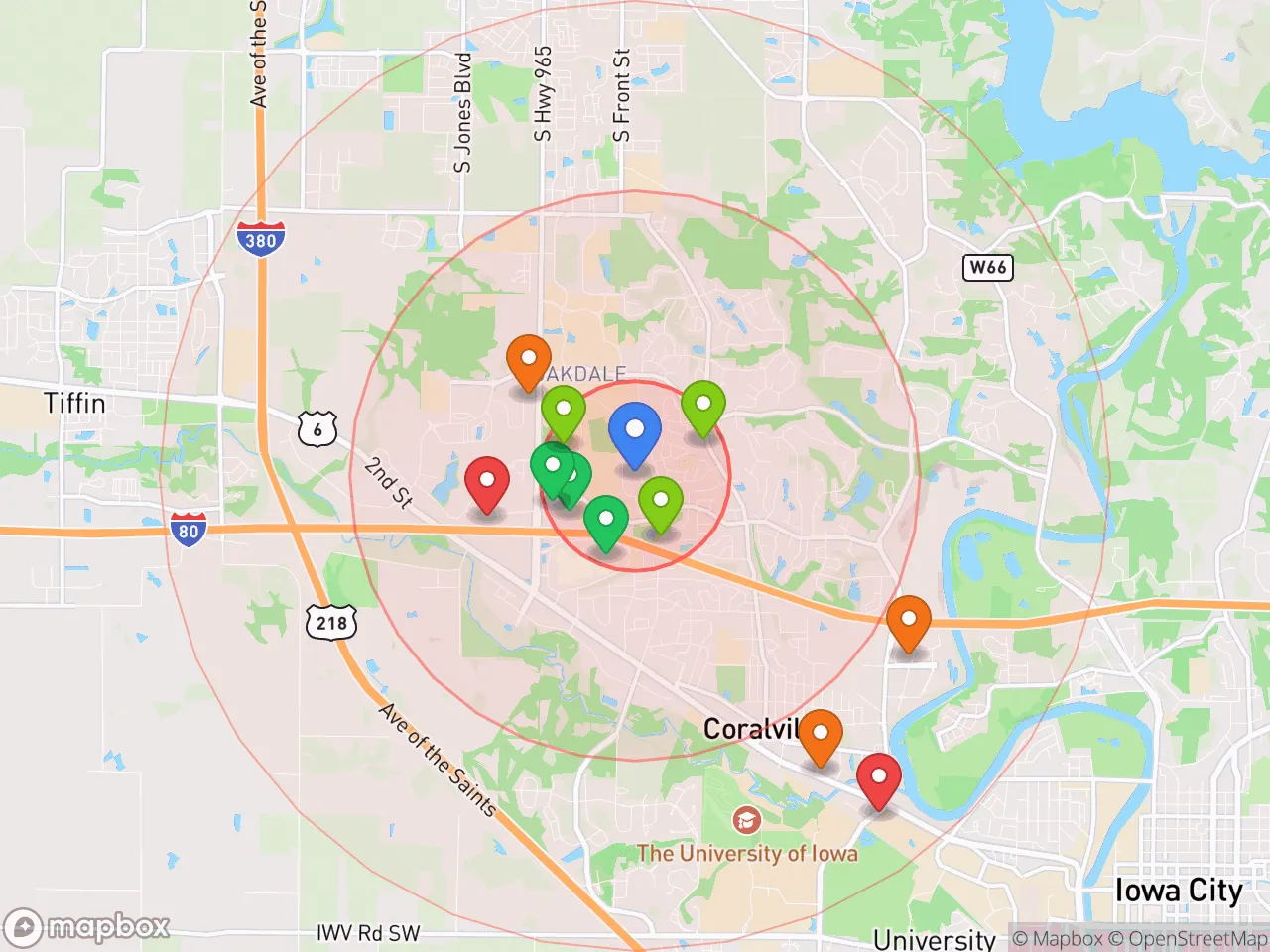
Explore the areaGroceries
6 within 10 miles
Gas
20 within 10 miles
Hospital
8 within 20 miles
Airport
ORD — O'Hare International
Post Office
USPS — Coralville, IA
Critical Amenities
Quality-of-Life Analysis
Coralville, Iowa, presents a distinctive quality-of-life profile shaped by its position as an affluent, fast-growing suburb of Iowa City and home to the University of Iowa's research corridor. The city attracts a mix of university-affiliated professionals, healthcare workers at the nearby University of Iowa Hospitals and Clinics, and families drawn to its highly-rated school system and lower cost of living compared to the national average. With a cost-of-living index of 93 (100 = U.S. average), Coralville offers a tangible financial advantage without sacrificing urban amenities, making it a practical choice for those seeking a balanced, midwestern lifestyle.
Cost of living, housing affordability, and how Coralville compares to Iowa City and North Liberty
Coralville's cost of living sits notably below the national average, though it is slightly higher than in more rural parts of Johnson County. The median home value of $286,000 is competitive with nearby North Liberty (around $310,000) and significantly more affordable than Iowa City's median of roughly $330,000. Renters benefit from a median rent of $1,021, which is below the national median of $1,200 and substantially lower than comparable units in Iowa City's downtown core. The average commute of just over 20 minutes is one of the shortest in the region, reflecting Coralville's compact geography and direct access to Interstate 80 and Highway 6. Property taxes in Johnson County are moderate, with an effective rate around 1.5%, though homeowners should note that valuations have risen steadily since 2020, narrowing the affordability gap with Iowa City.
What daily life is like: amenities, schools, and the local rhythm
Daily life in Coralville revolves around a blend of outdoor recreation, retail convenience, and strong public schools. The Iowa City Community School District serves Coralville, with Coralville Central Elementary and Northwest Junior High consistently earning above-average state ratings. The city's 20+ parks, including the 200-acre Coralville Lake and the Iowa River Trail, provide residents with immediate access to hiking, biking, and water sports. The Iowa River Landing district anchors the local retail scene with a mix of national chains, local restaurants, and the Marriott Hotel & Conference Center, which hosts regional events. The rhythm is distinctly family-oriented: weekend mornings see crowds at the Coralville Farmers Market, while evenings often involve youth sports leagues at the Coralville Recreation Center. For culture, residents are a 10-minute drive from the University of Iowa's Hancher Auditorium and the Iowa City downtown arts scene.
Professionals and families who value a lower cost of living, short commutes, and access to a major research university's amenities will find Coralville a strong fit. The city is particularly well-suited for healthcare and education workers at the University of Iowa, as well as remote workers seeking a stable, affordable base with reliable high-speed internet. Retirees may also appreciate the walkable Iowa River Landing area and proximity to UIHC's medical services. Those seeking a vibrant nightlife or a dense urban environment should look to downtown Iowa City instead, but for most, Coralville's blend of affordability, convenience, and community-oriented living makes it one of the most balanced options in eastern Iowa.

Crime in Coralville, IA
Generally safer than 64% of comparable U.S. locations.
Violent CrimeViolent Crime Analysis
Property CrimeProperty Crime Analysis
Crime Analysis
Coralville, Iowa, reports a violent crime rate of 184.6 incidents per 100,000 residents and a property crime rate of 1,870.2 per 100,000, placing it in a moderate range for a small city adjacent to a major metropolitan area. While these figures are not the highest in the state, the city’s proximity to Iowa City and its status as a growing commercial hub mean that crime patterns are influenced by regional dynamics, including the policies of the broader Johnson County justice system. Residents should be aware that the area’s progressive judicial philosophy, which prioritizes rehabilitation over incarceration, can result in shorter sentences and more frequent releases of repeat offenders, potentially increasing the risk of property crime and public disorder.
Crime in context
Coralville’s violent crime rate of 184.6 per 100,000 is roughly half the national average of 380 per 100,000, but its property crime rate of 1,870.2 per 100,000 exceeds the national average of 1,954 per 100,000 only slightly. Compared to the state of Iowa, which reports a violent crime rate of approximately 280 per 100,000 and a property crime rate of 1,750 per 100,000, Coralville is safer for violent offenses but slightly above the state norm for property crimes. The city’s crime profile is typical of small cities near large metro areas—like the Iowa City-Coralville corridor—where transient populations, including students and visitors, contribute to higher rates of theft and vehicle break-ins. However, the influence of progressive district attorneys in Johnson County, who often pursue diversion programs and reduced charges for non-violent offenders, means that many property crimes result in minimal jail time, which can embolden repeat offenders and undermine deterrence.
What residents experience
In daily life, Coralville residents are far more likely to encounter property crime than violent crime. The most common incidents include theft from vehicles, particularly in retail parking lots along the Coral Ridge Avenue corridor, and package theft from residential porches. Burglaries of apartments and storage units also occur, especially near the University of Iowa campus fringe. Violent crime is rare but not absent: incidents of assault and robbery are concentrated in late-night hours near bars and entertainment venues. A key concern for residents is the local justice system’s approach: Johnson County’s liberal judges and prosecutors frequently impose probation or treatment programs instead of incarceration for theft and drug-related offenses, meaning that a person caught stealing from a car may be back on the street within days. This cycle frustrates victims and can make neighborhoods feel less secure, even when overall crime numbers appear moderate.
Neighborhood-level variation is notable. The areas west of Highway 965 and near the Iowa River Landing tend to have lower crime rates, while the commercial zones along Highway 6 and the apartment complexes near the Coralville Strip see higher property crime. The city’s police department maintains a visible presence, but the broader judicial environment means that enforcement alone cannot fully address the underlying issue of recidivism driven by lenient sentencing. For those considering relocation, understanding that Coralville’s safety is shaped as much by its legal culture as by its crime statistics is essential.
* Values derived from national, state, county, city and local statistics and may differ in a specific area. Last updated: 2026-04-30T07:59:20.000Z
Narrative content on this page is AI-generated and may contain mistakes. Verify any details that matter before acting on them.
ReloMaps may earn a commission from affiliate links at no extra cost to you.

