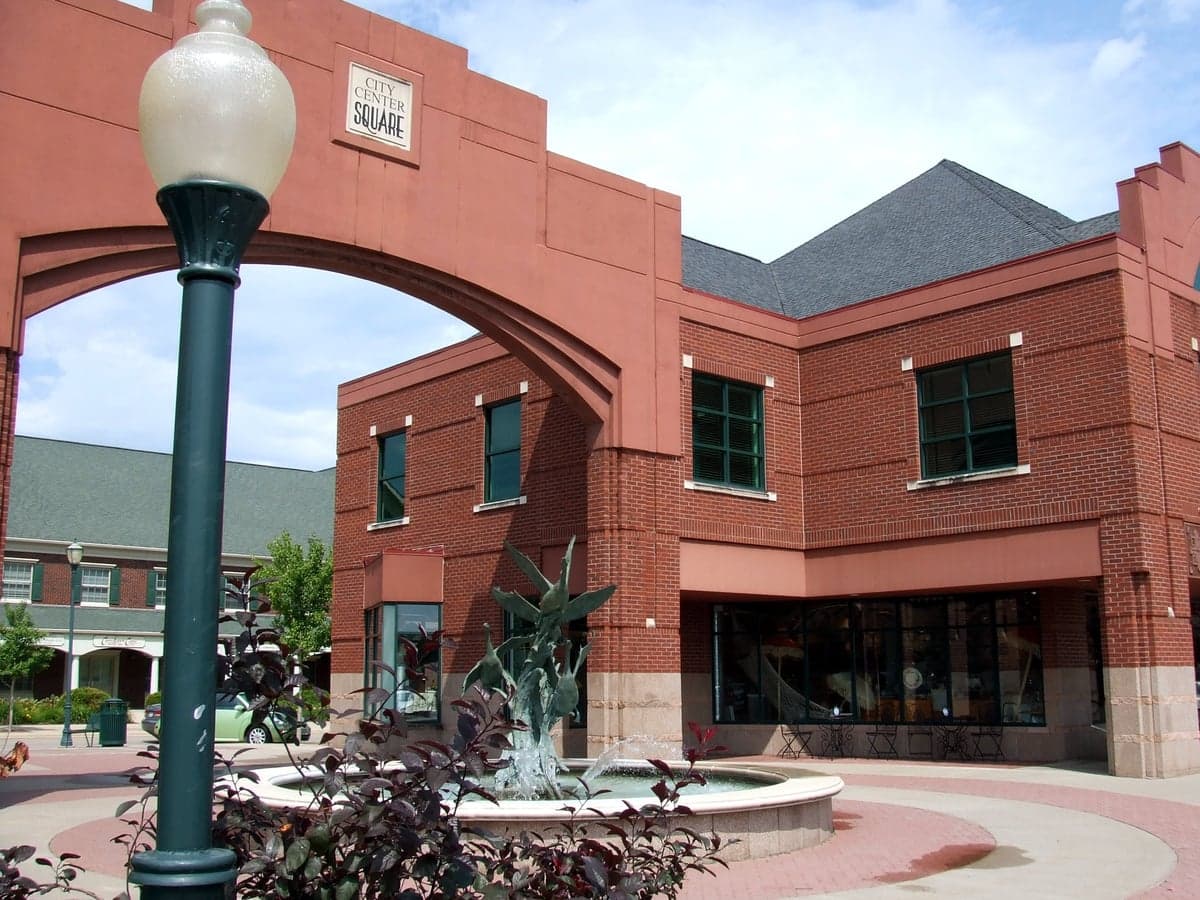
Photo: Wikipedia
Political ClimatePolitical Climate in Coralville, IA
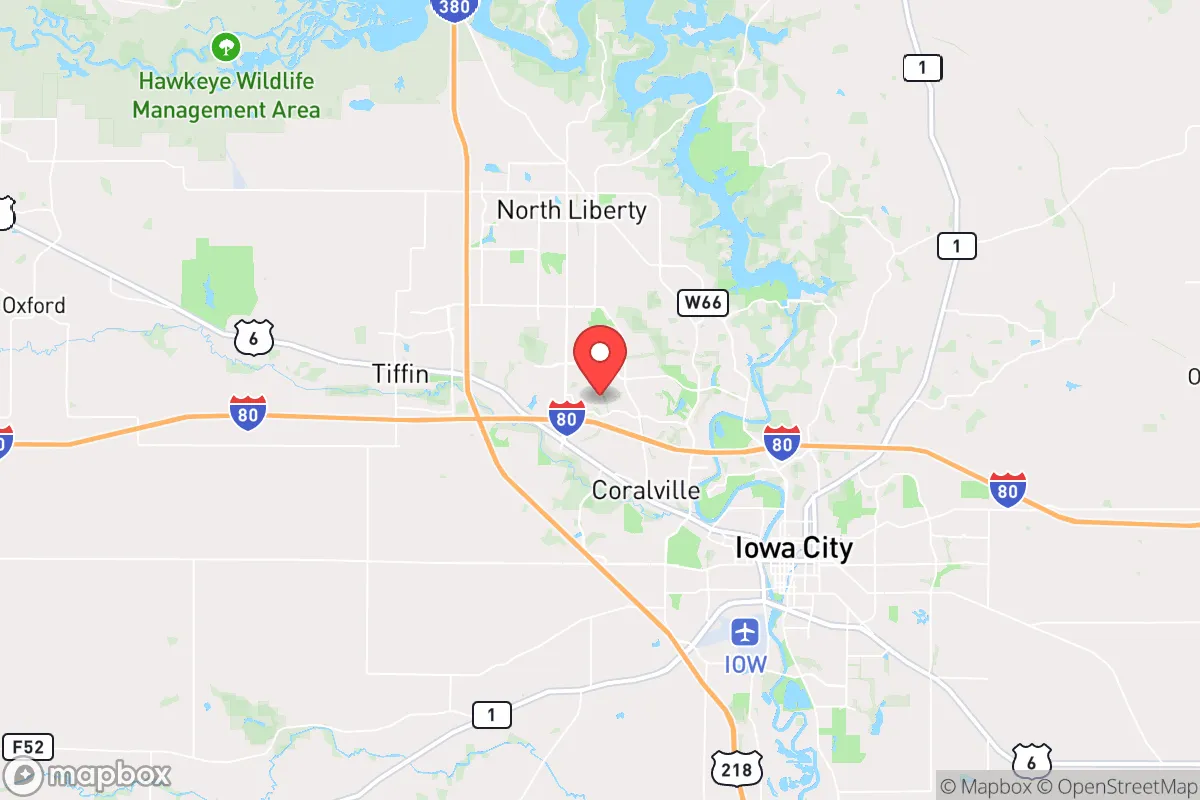
District shown is the primary district for this city’s centroid. Cities may span multiple districts.
Local Political AnalysisPolitical Analysis of Coralville, IA
Coralville, Iowa, sits in a county that leans right on paper—the Cook PVI is R+4—but if you’ve lived here as long as I have, you know that number doesn’t tell the whole story. The town itself has been drifting away from its conservative roots over the past decade, especially as the University of Iowa’s influence from neighboring Iowa City bleeds across the river. While the surrounding rural areas and towns like North Liberty still hold a more traditional, limited-government mindset, Coralville’s local elections and policy debates have started to feel a lot more like the progressive playbook you’d expect in Johnson County’s liberal hub. It’s a slow shift, but one that’s worth watching if you value personal freedoms and local control.
How it compares
Drive five minutes east into Iowa City, and you’re in a completely different world—one where city council meetings buzz with talk of rent control, sanctuary policies, and climate mandates that feel more like government overreach than common sense. Coralville, by contrast, has historically been the pragmatic middle ground: lower taxes, fewer regulations, and a pro-business attitude that kept the strip malls and the Iowa River Landing development humming. But lately, that contrast is narrowing. Coralville’s city council has quietly adopted more progressive zoning rules and sustainability resolutions, while neighboring Tiffin and Solon still push back hard on any hint of top-down planning. The R+4 rating masks a growing divide: the county’s rural precincts vote red by wide margins, but Coralville’s precincts are trending purple, with some even tipping blue in recent midterms. If you’re looking for a place where government stays out of your backyard and your wallet, the smaller towns around here are holding the line better than Coralville is.
What this means for residents
For folks who moved here to escape the heavy hand of government, the warning signs are there. Coralville’s school board has started pushing diversity, equity, and inclusion training that some parents see as ideological indoctrination, and the city’s housing authority has floated inclusionary zoning mandates that could drive up costs for everyone. Property taxes have crept up faster than inflation, partly to fund new public art projects and bike lanes that feel more like a wish list than a necessity. On the flip side, the Second Amendment is still respected here—no red flag laws or magazine bans have made it through the statehouse—and the county sheriff’s office remains a strong check on any federal overreach. But the trajectory is clear: if you value local control over your property, your children’s education, and your business decisions, you’ll want to keep a close eye on who’s running for city council next cycle. The old guard of fiscal conservatives is retiring, and the new crop is younger, more progressive, and more willing to use government power to shape daily life.
Culturally, Coralville still feels like a Midwestern town where neighbors wave and the Fourth of July parade draws a crowd, but the policy undercurrent is shifting. The city’s embrace of “smart growth” and transit-oriented development has led to higher density apartments near the interstate, which some residents worry will bring more transient renters and less community stability. There’s no income tax in Iowa, which helps, but the local sales tax has been nudged up to fund projects that not everyone asked for. If you’re a conservative who values freedom from government intrusion, Coralville isn’t a lost cause yet—but it’s no longer the safe bet it was twenty years ago. Keep your ear to the ground, vote in every local election, and don’t be surprised if the next big debate is over a mask mandate or a housing quota. The R+4 label might hold, but the culture war is already here.

State Political ClimatePolitical Climate in Iowa
State Political AnalysisPolitical Environment in the State
Iowa has been a reliably Republican state in presidential elections since 2016, but its political identity is more nuanced than a simple red-state label suggests. The state’s overall partisan lean has shifted rightward over the past decade, with Republicans now holding unified control of state government, but this masks a deep urban-rural divide and a history of competitive, swing-state dynamics. For a conservative considering relocation, Iowa offers a policy environment that has become increasingly aligned with limited government and traditional values, though the trajectory is not without its tensions.
Urban vs. rural divide
The political map of Iowa is a classic study in contrast. The state’s two largest metros, Des Moines and Iowa City, are the primary engines of Democratic votes. Polk County (Des Moines) and Johnson County (Iowa City) consistently deliver double-digit margins for Democrats, driven by a mix of government workers, university faculty, and younger professionals. In 2024, Johnson County voted +28 for the Democratic presidential candidate, while Polk County was +12. These areas are also where you’ll find the strongest support for progressive policies on education and social issues. In contrast, the rest of the state is overwhelmingly Republican. Counties like Sioux (northwest), Plymouth, and Dallas (a fast-growing Des Moines suburb) are deep red. Dallas County, once a swing area, has flipped decisively Republican as conservative families have moved outward from the capital. The rural towns of Pella, Orange City, and Carroll are strongholds of conservative values, with high church attendance and a focus on agricultural and small-business interests. The divide is stark: drive 20 minutes outside any major city, and the political signs change from blue to red.
Policy environment
Iowa’s policy environment has been aggressively reshaped by the Republican trifecta since 2017. The state now has a flat income tax rate of 3.8% (phased down from a progressive top rate of 8.98% in 2018), with a goal of reaching 3.5% by 2026. Property taxes are relatively low compared to neighboring states like Illinois and Minnesota, though local levies vary. Education policy has been a major flashpoint: Governor Kim Reynolds signed a school choice law in 2023 that created Education Savings Accounts (ESAs) for all K-12 students, allowing parents to use state funds for private or homeschool expenses. This is a significant win for parental rights. On healthcare, Iowa expanded Medicaid under the Affordable Care Act but has since implemented work requirements for able-bodied adults, a policy that has been challenged in court. Election integrity saw a tightening in 2021 with a law that reduced early voting days, required polls to close at 8 p.m., and banned private funding of election offices. The state also passed a constitutional amendment in 2022 affirming that the right to keep and bear arms is a fundamental right, and permitless carry became law in 2021. For conservatives, the policy environment is broadly favorable, though some worry about the long-term fiscal sustainability of the tax cuts.
Trajectory & freedom
Iowa is moving decisively in the direction of expanded personal freedom, particularly for conservatives. The 2021 permitless carry law (HF 756) eliminated the requirement for a permit to carry a concealed firearm, a clear expansion of Second Amendment rights. The 2023 school choice law (SF 159) is a landmark for parental freedom, allowing families to redirect tax dollars to the education setting of their choice. On medical autonomy, Iowa passed a law in 2023 banning nearly all abortions after six weeks of pregnancy, a significant restriction on abortion access that aligns with pro-life values. However, there are areas where government overreach is a concern. The state’s ban on mask mandates in schools (2021) and its prohibition on vaccine passports (2021) were seen by some as necessary protections against federal overreach, but others viewed them as government dictating private choices. The 2023 law restricting transgender procedures for minors (SF 538) is another example of the state stepping in to regulate medical decisions. Overall, the trajectory is toward more conservative governance, but the pace of change has created some friction, especially in the blue metros.
Civil unrest & political movements
Iowa has not seen the kind of large-scale civil unrest seen in coastal states, but there have been notable flashpoints. The 2020 Black Lives Matter protests in Des Moines and Iowa City were relatively small compared to national events, but they did lead to some property damage and a heightened police presence. More recently, the debate over school library books and curriculum has been a major source of grassroots activism, with conservative parents organizing to challenge materials they deem inappropriate. Groups like Moms for Liberty have a strong presence in suburbs like Ankeny and Waukee. Immigration politics are less visible here than in border states, but there is a growing concern about illegal immigration in agricultural communities, where labor shortages are acute. There is no sanctuary city policy in Iowa; in fact, a 2024 law requires local law enforcement to cooperate with federal immigration authorities. Election integrity remains a hot topic, with some activists still questioning the 2020 results, though the state’s Republican leadership has largely moved on. The most visible political movement is the annual Iowa State Fair, where presidential candidates of both parties come to court voters, a tradition that underscores the state’s outsized role in national politics.
Projection
Over the next 5-10 years, Iowa is likely to become more conservative, not less. The in-migration pattern is telling: people are moving to the state from blue states like Illinois and California, drawn by lower taxes and a more traditional lifestyle. These newcomers tend to be conservative-leaning, reinforcing the red trend. The urban centers of Des Moines and Iowa City will remain blue, but their growth is slower than the surrounding red suburbs and exurbs. Dallas County, for example, is one of the fastest-growing counties in the Midwest and is now solidly Republican. The state’s population is also aging, which tends to favor conservative candidates. However, there is a risk of overreach: if the Republican majority pushes too hard on social issues, it could alienate the moderate suburban voters who have been key to their success. The 2024 election results showed that while Trump won Iowa by 13 points, some suburban areas showed slight softening. A new resident moving in now should expect a state that is firmly conservative on fiscal and social issues, with a government that is willing to use its power to shape cultural outcomes. The freedom to live as you see fit is high, provided your values align with the majority.
For a conservative individual or family, Iowa offers a strong alignment of policy and culture. The tax burden is low and falling, school choice is a reality, gun rights are robust, and the state government is actively pushing back against federal overreach. The trade-off is that you will be living in a state where the political conversation is dominated by agriculture and small-town values, not coastal cosmopolitanism. If you value a community where your neighbors are likely to share your beliefs on family, faith, and freedom, Iowa is a solid bet. Just be prepared for the winters—and the fact that your vote will matter more here than in a deep blue state.
* Values derived from national, state, county, city and local statistics and may differ in a specific area. Last updated: 2026-04-30T07:59:20.000Z
Narrative content on this page is AI-generated and may contain mistakes. Verify any details that matter before acting on them.
ReloMaps may earn a commission from affiliate links at no extra cost to you.

