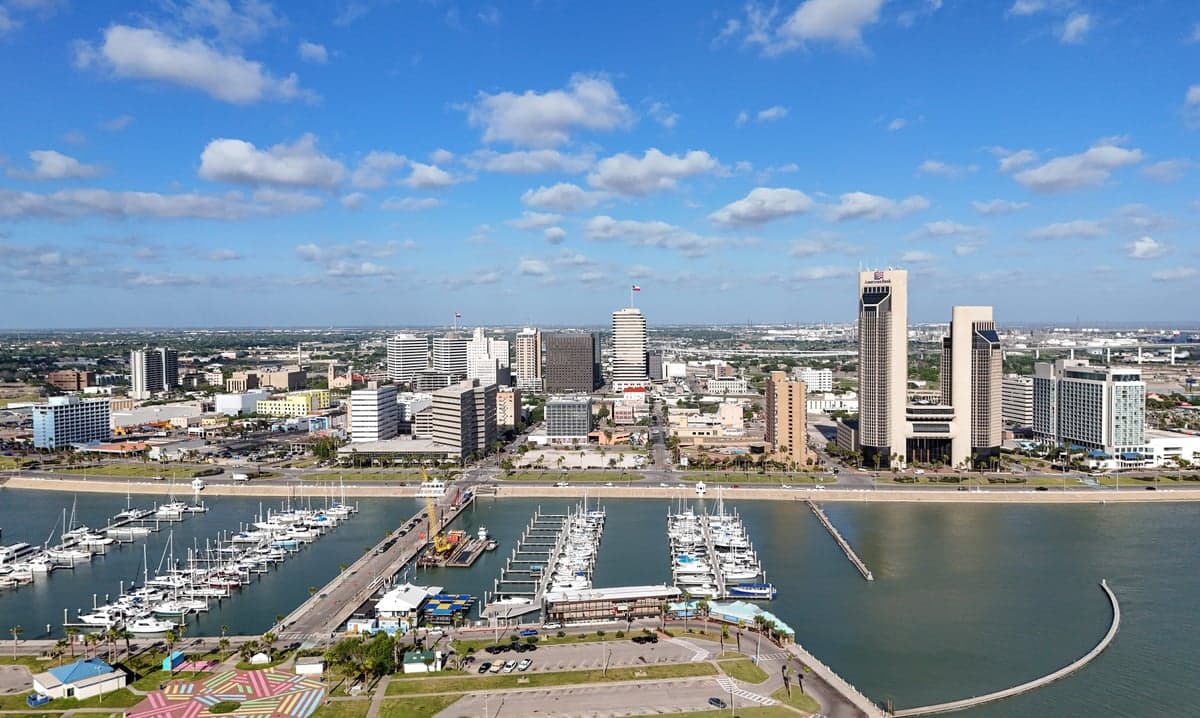
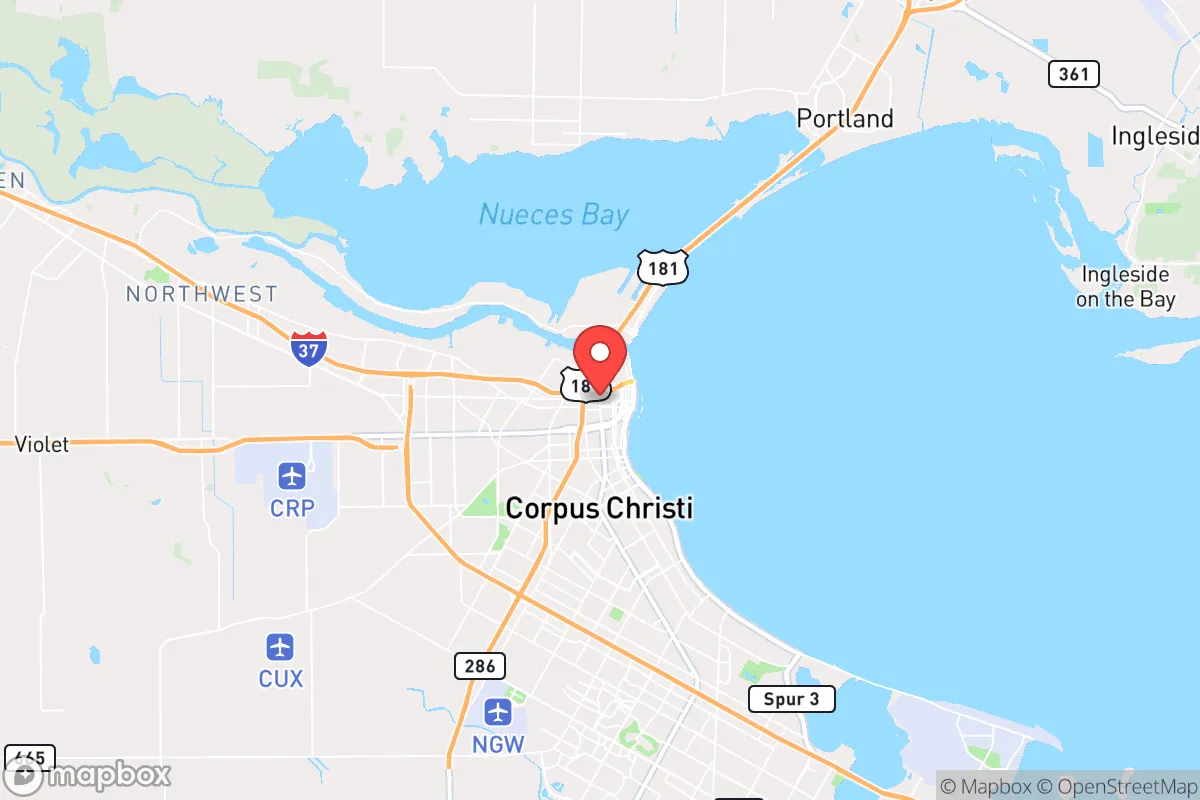
Photo: Wikipedia
Strategic Assessment of Corpus Christi, TX
Multiple tactical vulnerabilities. Population density, target proximity, or disaster risk are likely compounding. A retreat property and exit planning is required.
What does the Strategic Assessment tell us?
Our Strategic Assessment grades tactical survivability of an area. Major population centers, military targets, fallout zones, natural disasters, and border exposure all drive risk — lower exposure means a more defensible position in a crisis.
This is heavily inspired by Joel Skousen's Strategic Relocation book. Highly recommended you checkout the book ($)What does this tell us?
Our Strategic Assessment grades tactical survivability of an area. Major population centers, military targets, fallout zones, natural disasters, and border exposure all drive risk — lower exposure means a more defensible position in a crisis.
This is heavily inspired by Joel Skousen's Strategic Relocation book. Highly recommended you checkout the book ($)Strategic Pillars

Key Distances
Regional Safe Places
Below is our recommended "safe zones" in Texas and the surrounding area based on our strategic heuristics. For most people, it's unrealistic to live in a “safe zone” full-time due to work, family or other personal reasons. They tend to be more rural. However, many of these areas are perfect for second homes and retreat properties that double as a vacation home or even a short-term rental.

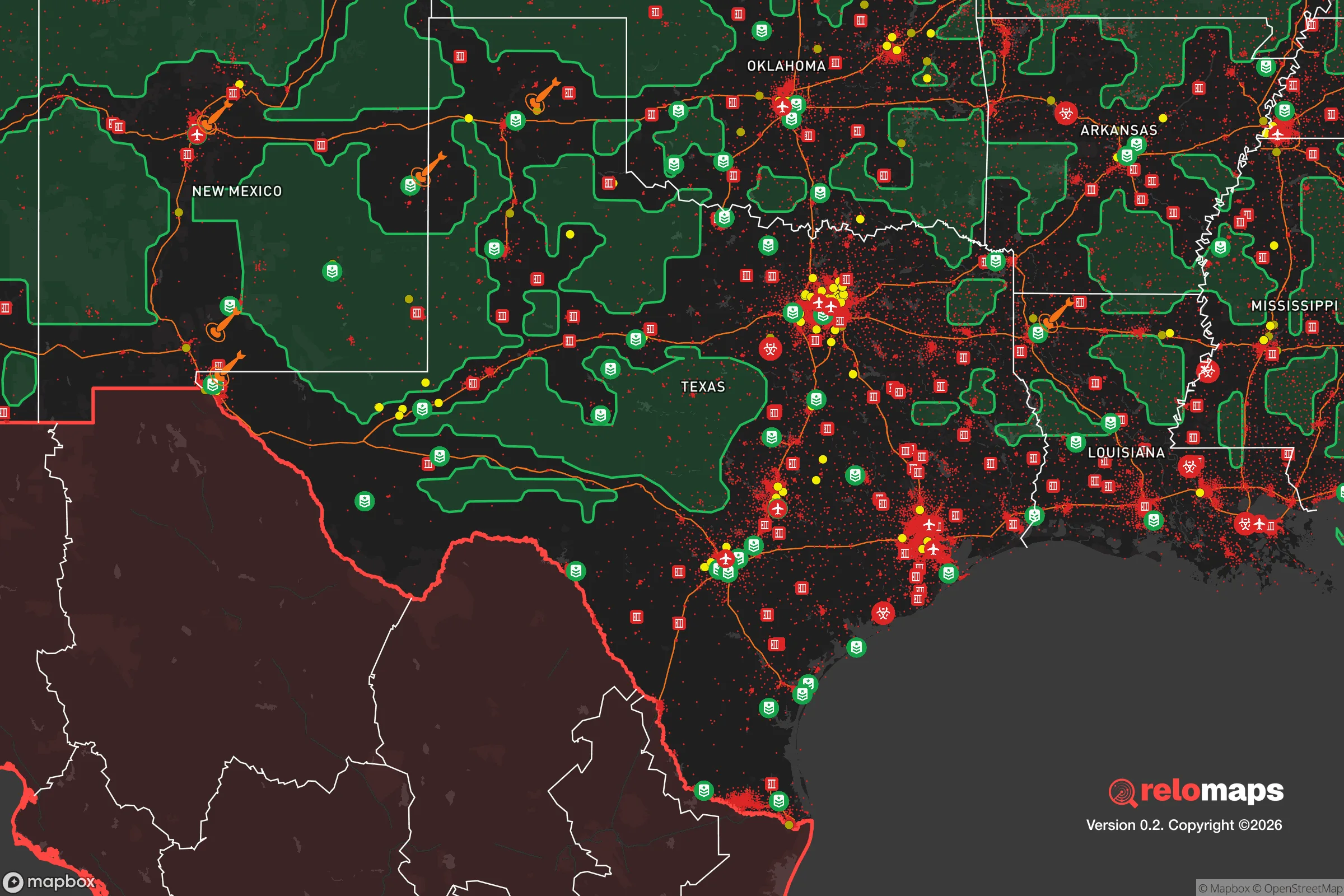


Important Note: For informational purposes only. This does not mean nothing bad ever happens in the green zones. Please use common sense. This is based on public data and modeled with AI. We tried to take a conservative approach but mistakes happen. We update this regularly as new information becomes available.
Solar Generator Recommendations
Backup power matters more here than in safer locations. We've picked three solar generators across budgets and capacity tiers — start with the budget unit if you only need a few essentials, or step up if you want to run a fridge and HVAC for days at a time.

Jackery Portable Power Station Explorer 300
Budget OptionPower on the Go: Weighing only 11 lbs, it's convenient to set up and store with book-sized foldable solar panels

BLUETTI Portable Power Station AC180
Designed for both indoor and outdoor scenarios, AC180 is highly capable as it has a robost capacity and continuous output power.

EF ECOFLOW DELTA Pro Ultra Power Station
Upgraded PickEcoFlow DELTA Pro Ultra is a whole-home energy system designed to grow with your family. Integrated with the Smart Home Panel 2, it scales to meet your evolving energy needs — keeping your home powered, intelligent, and secure through every stage of life.
We earn a commission, at no additional cost to you.
Strategic Assessment Analysis
Corpus Christi, Texas, offers a compelling strategic position for those prioritizing resilience, but it requires a clear-eyed assessment of both its natural advantages and its exposure to modern threats. Situated on the Gulf Coast with a deep-water port, a strong military presence, and a diversified industrial base, the city is less vulnerable to the cascading failures that could cripple inland hubs. However, its proximity to major petrochemical infrastructure and a large metropolitan population means that any relocation here must be paired with a serious plan for self-sufficiency and situational awareness. For the conservative prepper or survivalist, Corpus Christi is a mixed bag—strong on resources and location, but with distinct vulnerabilities that demand mitigation.
Geographic position and natural advantages for long-term security
Corpus Christi’s location on the Texas Gulf Coast provides several strategic benefits that are hard to replicate. The city sits at the mouth of the Nueces River and Corpus Christi Bay, giving direct access to the Gulf of Mexico for maritime trade, fishing, and potential evacuation routes. The Port of Corpus Christi is the third-largest port in the United States by tonnage, handling massive volumes of crude oil, refined products, and agricultural goods. For a relocator, this means a steady flow of essential commodities—fuel, grain, and industrial supplies—even if inland supply chains are disrupted. The surrounding region is also part of the Texas Coastal Bend, a relatively low-density area compared to Houston or San Antonio, which are roughly two and three hours away respectively. This buffer reduces the immediate risk of urban unrest spilling over, while still keeping major medical and logistical resources within a day’s drive. The climate is semi-arid, with mild winters and hot summers, which supports year-round gardening and livestock grazing, though water availability is a concern (more on that below). The flat terrain and extensive network of county roads also offer multiple egress routes if a coastal evacuation becomes necessary, unlike the choke points found in many coastal cities.
Risks, exposures, and proximity to fallout-relevant landmarks
The most significant strategic downside of Corpus Christi is its concentration of high-value, high-risk industrial targets. The city is home to the largest petrochemical refining complex in Texas outside of Houston, including the Flint Hills Resources refinery and the Corpus Christi Liquefaction (CCL) LNG export terminal. These facilities are obvious targets for both state-level adversaries and domestic disruption. A major accident, sabotage, or attack at these sites could produce a toxic cloud, a firestorm, or a supply chain shock that would ripple across the entire region. Additionally, the city hosts the Naval Air Station Corpus Christi, a primary training base for the U.S. Navy and Marine Corps. While this provides a strong military presence and potential security, it also makes the area a legitimate target in any conflict scenario. The nearby King Ranch and vast ranchlands offer some buffer, but the industrial corridor along the ship channel is a vulnerability that cannot be ignored. For the prepper, this means that a relocation to Corpus Christi should include a plan for rapid evacuation or sheltering in place with HEPA filtration and a sealed safe room. The risk of a hurricane or storm surge is also real—the city was hit hard by Hurricane Harvey in 2017 and has a history of flooding in low-lying areas. Any property should be chosen on high ground, preferably west of Interstate 37, and built to modern wind and flood codes.
Practical resilience for a relocator: food, water, energy, and defensibility
For the individual or family looking to establish a resilient homestead, Corpus Christi offers a mix of opportunities and challenges. Water is the critical constraint. The region relies on the Nueces River and the Choke Canyon Reservoir system, which are subject to drought and competing demands from agriculture and industry. A serious prepper should plan for rainwater catchment, a well (if outside city limits), and at least a 30-day supply of stored water. On the positive side, the local food supply is robust. The Coastal Bend is a major agricultural area, with cattle, cotton, sorghum, and corn grown in abundance. The city has multiple farmers' markets, and the Gulf provides year-round fishing for redfish, trout, and flounder. For those willing to hunt, the surrounding ranchlands offer white-tailed deer and feral hogs. Energy is a strong point. Corpus Christi is a net exporter of electricity, with natural gas, wind, and solar farms feeding the grid. The city also has a high concentration of backup generators and fuel storage due to the industrial base. A relocator can reasonably expect grid power to be more stable than in many other parts of Texas, but a solar-plus-battery system is still a wise investment. Defensibility is moderate. The city itself is sprawling and hard to secure, but the outlying areas—especially west of the city toward Mathis or north toward Refugio—offer rural properties with good lines of sight, limited access points, and a culture of self-reliance. The local population is heavily conservative, with a strong gun culture and a "mind your own business" attitude that aligns well with a prepper mindset. The Nueces County Sheriff's Office and local police are generally well-funded and responsive, but in a widespread crisis, you will be on your own for the first 72 hours.
The overall strategic picture for Corpus Christi is one of calculated risk. It is not a bug-out location in the mountains, nor is it a fortified compound in the desert. It is a working-class coastal city with real industrial exposure but also real logistical advantages. For the conservative relocator who is willing to invest in water storage, a well-sealed shelter, and a reliable vehicle for evacuation, Corpus Christi offers a base of operations that can weather many types of disruption. The key is to avoid the flood zones, stay upwind of the refineries, and build relationships with the local ranching and fishing communities. If you can manage those variables, you gain access to a port, a military presence, and a food supply that few other cities can match. If you ignore them, you are just another target in a vulnerable coastal zone. The choice is yours, but the data is clear: Corpus Christi is a viable option for the prepared, not for the complacent.

* Values derived from national, state, county, city and local statistics and may differ in a specific area. Last updated: 2026-04-14T20:11:02.000Z
Narrative content on this page is AI-generated and may contain mistakes. Verify any details that matter before acting on them.
ReloMaps may earn a commission from affiliate links at no extra cost to you.

