
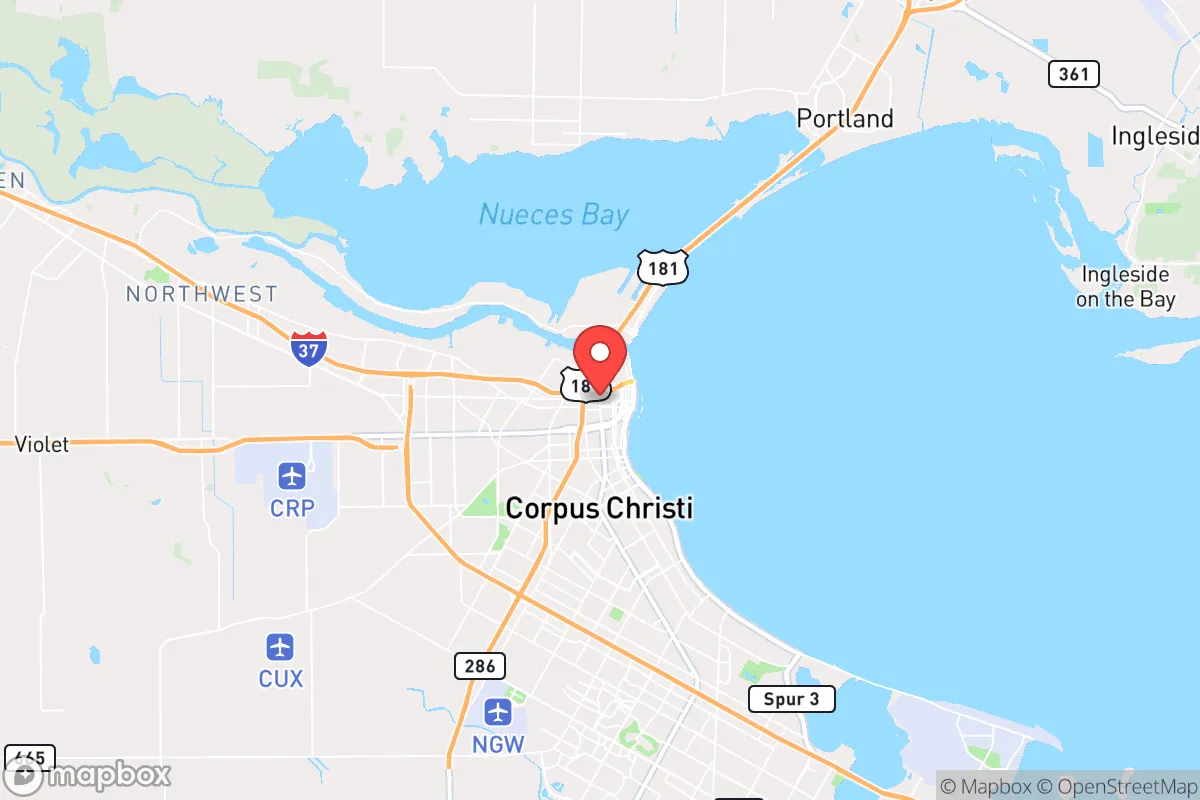
Photo: Wikipedia
Quality of Life in Corpus Christi, TX
A high quality of life with strong walkability, manageable living costs, healthy neighborhood signals, and solid amenity access.
What does Quality of Life tell us?
Quality of Life blends cost of living, nearby amenities, socioeconomic signals, and neighborhood character. City-level scores represent the whole municipality; individual neighborhoods can differ.
What does this tell us?
Quality of Life blends cost of living, nearby amenities, socioeconomic signals, and neighborhood character. City-level scores represent the whole municipality; individual neighborhoods can differ.
Cost of Living
9% below national average
The Real Cost of Living in Corpus Christi, TX for 2026
| Tier | Individual | Family (4) |
|---|---|---|
| Survival | $37k | $69k |
| Comfortable | $56k | $83k |
| Luxury | $120k+ | $186k+ |
| Elite (Top 5%) | $139k+ | $216k+ |
80%
The Area Signal
A metric tracking the socioeconomic signals of the area.


Hobbies
Explore the areaGroceries
4 within 10 miles
Gas
0 within 10 miles
Hospital
3 within 20 miles
Airport
SAN — San Antonio International
Post Office
USPS — Corpus Christi, TX
Critical Amenities
Quality-of-Life Analysis
Corpus Christi presents a middle-market coastal lifestyle where the cost of living sits well below the national average, attracting a mix of military families, energy-sector professionals, and retirees seeking Gulf Coast affordability. The city’s median household income of roughly $59,000 aligns with its cost index of 91 (100 = U.S. average), creating a population that is neither notably affluent nor distressed, but rather solidly working- and middle-class. The Port of Corpus Christi, the U.S. Navy’s Corpus Christi Army Depot, and the growing healthcare sector at CHRISTUS Spohn Health System anchor employment, while tourism and fishing support a secondary economy along the bayfront.
Cost of living, housing, and affordability compared to nearby cities
With a cost-of-living index of 91, Corpus Christi is measurably cheaper than the Texas state average (about 97) and significantly more affordable than Austin (index 103) or San Antonio (index 94). The median home value of $197,100 is roughly $100,000 below the national median, and the median rent of $1,230 undercuts the U.S. average by about $400 per month. For context, a comparable home in nearby Rockport or Portland would cost 10–15% more, while the affluent suburb of Padre Island (the barrier island portion of the city) pushes median values above $300,000. The average commute of 20.8 minutes is shorter than the national average of 26 minutes, reducing transportation costs and giving residents more daily flexibility. Property taxes in Nueces County hover around 2.2% of assessed value, which is typical for Texas but higher than the national average; however, the low home prices keep monthly payments manageable for most buyers.
What daily life is like for families: schools, amenities, and recreation
Daily life in Corpus Christi revolves around the bay and the barrier islands. The Corpus Christi Independent School District (CCISD) serves most of the city, with several magnet programs—such as the Collegiate High School and the MET School—drawing families seeking specialized curricula. Private options include Incarnate Word Academy and St. John Paul II High School. The city’s signature amenity is the Texas State Aquarium and the adjacent USS Lexington museum, both major draws for weekend outings. The Padre Island National Seashore, a 70-mile stretch of protected coastline, lies 30 minutes southeast and offers free public beach access. For families, the city’s 20-minute average commute means parents can reach most schools, grocery stores, and medical offices within a short drive, reducing the time pressure common in larger metros. The downtown area along Shoreline Boulevard has seen reinvestment in the past decade, with new restaurants, a farmers market, and the Art Museum of South Texas, though nightlife remains limited compared to Houston or San Antonio. Crime rates in Corpus Christi are slightly above the national average, with property crime being the primary concern; the city’s overall crime index is 34 (100 = safest), so families should research specific neighborhoods—areas near the university or the Southside tend to report lower incidents.
Corpus Christi is best suited for people who prioritize coastal access and low housing costs over urban density or high-end amenities. Military personnel stationed at Naval Air Station Corpus Christi, energy workers at the Port or refineries, and retirees who want a slower pace near the water will find the city’s affordability and short commutes compelling. Those seeking top-tier public schools, vibrant nightlife, or a robust job market outside energy and healthcare may find the city limiting. For a family or individual who values a $1,230 monthly rent, a 21-minute drive to work, and weekend access to uncrowded beaches, Corpus Christi offers a quality of life that is hard to match at this price point in coastal Texas.

Crime in Corpus Christi, TX
Higher crime rates than 71% of comparable U.S. locations.
Violent CrimeViolent Crime Analysis
Property CrimeProperty Crime Analysis
Crime Analysis
Corpus Christi’s overall safety picture is a mixed one, with crime rates that significantly exceed both Texas and national averages, particularly for violent offenses. The city recorded a violent crime rate of 792.6 incidents per 100,000 residents and a property crime rate of 2,767.8 per 100,000 in the most recent reporting period. These figures place Corpus Christi among the higher-crime metro areas in the state, a reality shaped by both socioeconomic factors and local criminal justice policies.
Crime in context
To understand the scale, Corpus Christi’s violent crime rate is roughly 2.5 times the national average and well above the Texas state average of approximately 450 per 100,000. Property crime, while closer to the state norm, still exceeds the national benchmark by a notable margin. The city’s location as a major Gulf Coast port and energy hub introduces specific crime patterns, including cargo theft and drug trafficking along the I-37 corridor. However, the most significant driver of elevated violent crime is the local justice system’s approach. Nueces County, which encompasses Corpus Christi, has a history of electing progressive district attorneys and judges who prioritize diversion programs and reduced sentencing for non-violent and violent offenders alike. This ideological tilt, while intended to reduce incarceration, has a direct and measurable consequence: more convicted criminals remain on the streets, often reoffending before their cases are adjudicated. For victims and the general public, this creates a cycle where repeat offenders face minimal accountability, eroding deterrence and public safety.
What residents experience
For daily life, the high violent crime rate translates into tangible risks. Aggravated assault is the most common violent offense, but the city also sees elevated rates of robbery and rape compared to peer metros. Property crime is pervasive, with vehicle theft and burglary being the most frequent complaints. Residents in central and lower-income neighborhoods, such as the Molina and Hillcrest areas, report the highest exposure to both violent and property crimes. In contrast, the more affluent Southside and areas near the Texas A&M University-Corpus Christi campus experience lower incident rates, though property crime remains a concern citywide. The presence of a large military population at Naval Air Station Corpus Christi adds a layer of security in adjacent neighborhoods, but does not insulate the broader city from the effects of a lenient prosecutorial environment.
Neighborhood-level variation is significant. The Bay Area and Padre Island corridor generally see fewer violent incidents, while the downtown core and the Westside struggle with gang-related activity and open-air drug markets. Prospective residents should research specific zip codes and consult local crime mapping tools, as the difference between a safe block and a high-risk block can be stark. Overall, Corpus Christi demands a higher degree of personal vigilance than most Texas cities of comparable size, largely due to the compounding effect of progressive criminal justice policies that prioritize offender rehabilitation over public protection.
* Values derived from national, state, county, city and local statistics and may differ in a specific area. Last updated: 2026-04-14T20:11:02.000Z
Narrative content on this page is AI-generated and may contain mistakes. Verify any details that matter before acting on them.
ReloMaps may earn a commission from affiliate links at no extra cost to you.

