
Photo: Wikipedia
Political ClimatePolitical Climate in Corpus Christi, TX
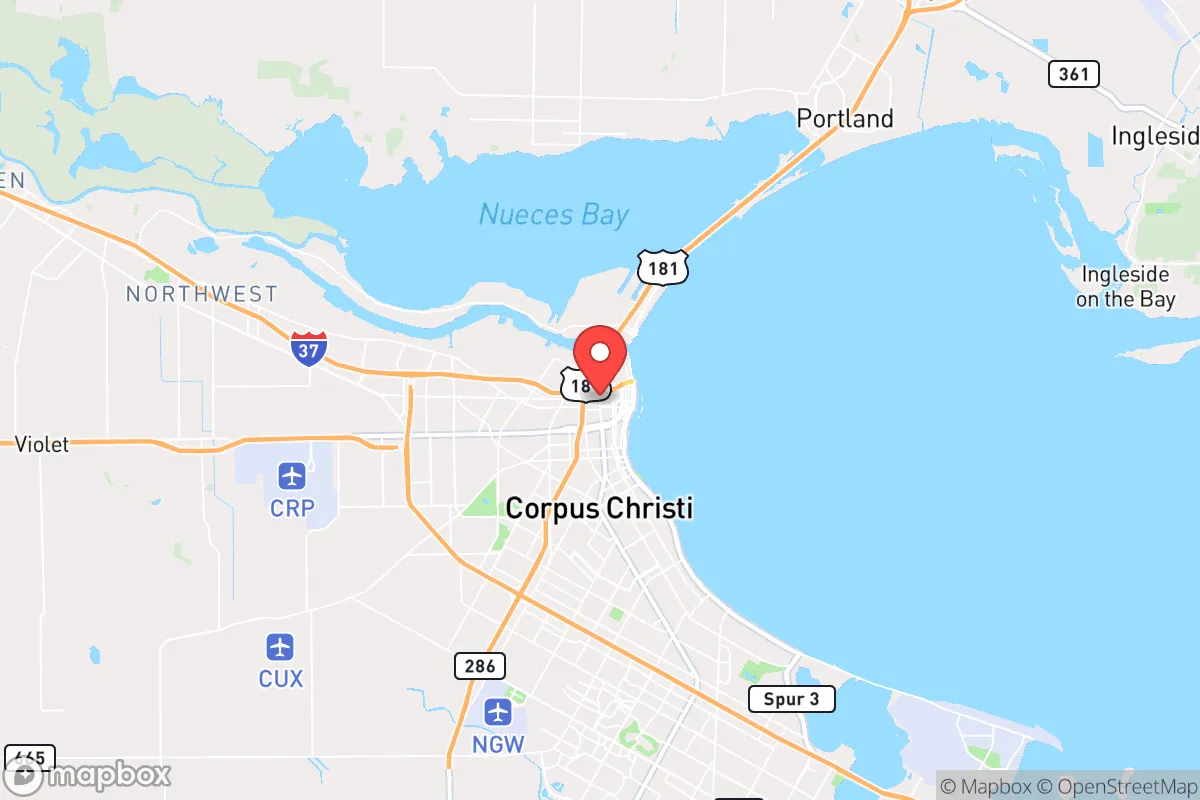
District shown is the primary district for this city’s centroid. Cities may span multiple districts.
Local Political AnalysisPolitical Analysis of Corpus Christi, TX
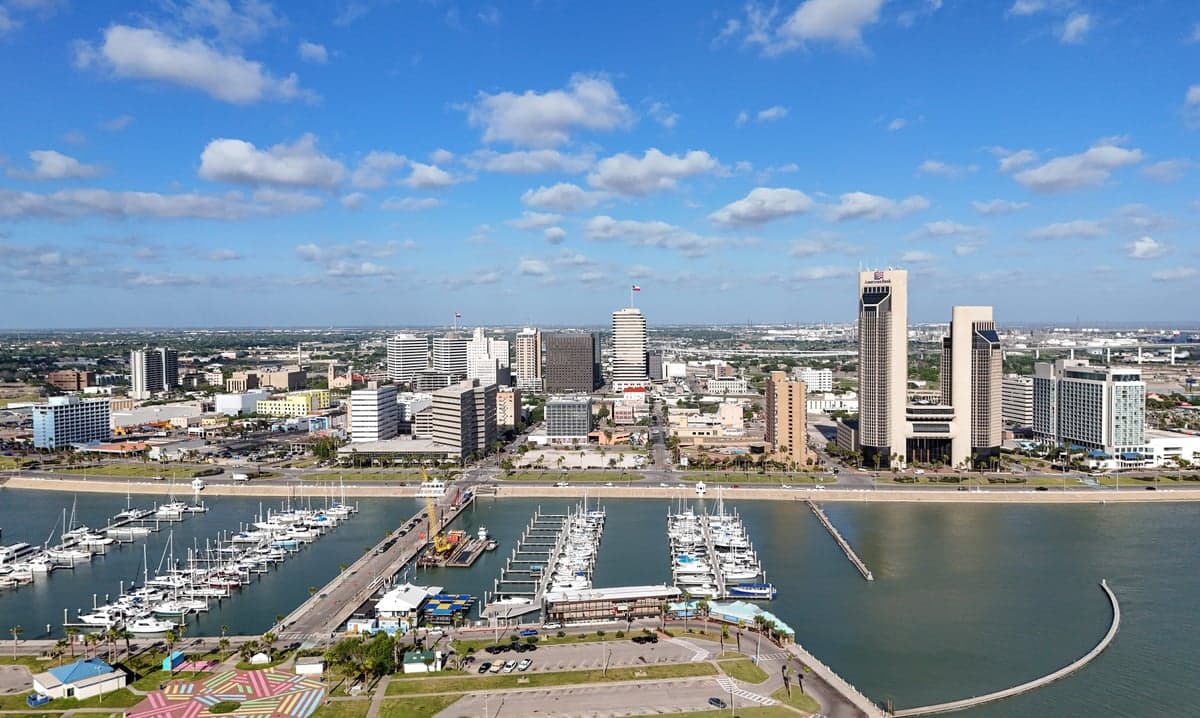
Corpus Christi has long been a solidly conservative community, and the numbers back that up with a Cook PVI of R+14, meaning the area votes about 14 points more Republican than the national average. But if you’ve lived here a while, you know the political climate isn’t quite as simple as that one stat suggests. The city itself has a strong blue-collar, military, and oil-and-gas backbone that keeps things red, but you’re starting to see some progressive drift in the younger, more transient population—especially around the downtown and university areas. The real story is that while Nueces County still leans right, the surrounding rural counties like San Patricio and Jim Wells are even more deeply conservative, and that contrast is getting sharper every election cycle.
How it compares
If you drive 20 minutes west to Robstown or 30 minutes north to Portland, you’re in territory that votes even more Republican than Corpus Christi proper—think R+20 or higher. Those communities are heavily tied to agriculture, refining, and the Port of Corpus Christi, and they haven’t seen the same influx of out-of-state transplants that the coastal areas have. On the flip side, head south to Kingsville or east to Rockport, and you’ll find a similar conservative vibe, though with a stronger ranching and fishing culture. The real political outlier is the city’s own Southside, which is more moderate and has seen a few local school board and city council races tilt left in recent years. That’s where you’ll hear talk of “equity initiatives” and zoning changes that feel like government overreach to longtime residents—things that would never fly in the county precincts.
What this means for residents
For the average Corpus Christi family, the political climate directly affects your wallet and your freedoms. Property taxes are a constant headache, and while the city council has kept them relatively low compared to Austin or Houston, there’s always pressure from progressive groups to raise them for “social programs” that sound good on paper but often mean more bureaucracy. The Second Amendment is still respected here—most gun laws are state-level, and local enforcement is friendly—but you’ll see the occasional push for red flag ordinances or “safe storage” mandates that feel like a foot in the door. School choice is a big topic too: the local ISD has resisted charter expansion, which frustrates parents who want options outside the traditional system. The bottom line is that Corpus Christi remains a place where you can mostly live your life without the government breathing down your neck, but you have to stay engaged at the local level to keep it that way.
Culturally, Corpus Christi still holds onto its Texas independence in ways that matter day-to-day. You won’t find mask mandates or vaccine passports here—those were dead on arrival after 2021. The city’s annual Buc Days celebration and the strong military presence at Naval Air Station Corpus Christi reinforce a “we take care of our own” attitude that resists top-down directives from Austin or Washington. That said, the long-term trend is concerning: as more people move in from blue states for the low cost of living and warm weather, they bring voting habits that could shift the needle over the next decade. For now, though, Corpus Christi is still a place where a conservative can feel at home, where the local news covers the port and the refinery more than culture wars, and where the biggest political fights are about water rights and hurricane preparedness—not identity politics.

State Political ClimatePolitical Climate in Texas
State Political AnalysisPolitical Environment in the State
Texas has been a reliably Republican state for decades, but the political climate is far from monolithic. The dominant coalition is a mix of traditional conservatives, libertarian-leaning business interests, and a growing number of socially conservative voters, but the state’s rapid population growth is slowly shifting the map. Over the last 10-20 years, the GOP’s grip has tightened in rural areas while major metro counties like Harris (Houston), Dallas, and Tarrant (Fort Worth) have become battlegrounds, with Bexar (San Antonio) and Travis (Austin) now solidly blue. The 2024 election saw Donald Trump win Texas by roughly 9 points, down from 11 in 2020, signaling a slow but steady erosion of the Republican margin driven by in-migration from blue states and growing Hispanic voter shifts in the Rio Grande Valley.
Urban vs. rural divide
The political map of Texas is a stark checkerboard. The major metros—Austin, Dallas, Houston, San Antonio, and El Paso—are the Democratic strongholds, with Travis County voting +45 points for Biden in 2020 and El Paso County going +35. But the real story is the suburbs: Collin County (north of Dallas) and Denton County are still red but drifting purple, while Fort Bend County (southwest of Houston) flipped from red to blue in 2018 and hasn't looked back. Meanwhile, the rural expanse—places like Lubbock, Amarillo, and the Permian Basin—vote 75-80% Republican. The Rio Grande Valley, once a Democratic firewall, has shifted rightward: Zapata County flipped from +20 Clinton in 2016 to +10 Trump in 2024. This urban-rural chasm means state politics are dominated by rural and exurban voices, even as the population concentrates in cities.
Policy environment
Texas’s policy environment is defined by a low-tax, low-regulation posture that appeals to conservatives. There is no state income tax, and property taxes are high (averaging 1.6% of home value) but capped by the 2023 property tax reform that added $18 billion in relief. The regulatory climate is business-friendly, with no state-level OSHA plan and minimal environmental permitting. On education, the 2023 school voucher battle ended in a loss for Governor Abbott, but a 2025 special session passed a universal Education Savings Account program, allowing parents to use state funds for private or homeschool expenses. Healthcare is a mixed bag: Texas has the highest uninsured rate in the nation (18%), and the state has refused Medicaid expansion under Obamacare. Election laws tightened after 2021’s SB 1, which banned drive-through voting and added ID requirements for mail ballots. The state also passed a near-total abortion ban (SB 8, 2021) and a trigger law in 2023, with no exceptions for rape or incest.
Trajectory & freedom
On the freedom front, Texas is a tale of two trends. On one hand, the state has expanded personal liberty in key areas: constitutional carry (HB 1927, 2021) allows permitless carry of handguns, and the 2023 “Parental Bill of Rights” (HB 900) requires schools to get parental consent for library materials and health services. The state also passed a law banning COVID-19 vaccine mandates for private employers (SB 7, 2023). On the other hand, government overreach has grown in other areas. The 2021 election law (SB 1) was criticized for restricting voting access, and the 2023 drag show ban (SB 12) was struck down by a federal court as unconstitutional. Medical freedom took a hit with the 2023 ban on gender-affirming care for minors (SB 14), which some conservatives celebrate as protecting children but others see as government intrusion into family medical decisions. Property rights remain strong, with no statewide zoning and a robust eminent domain compensation system, but the 2023 “anti-SLAPP” law (HB 2060) was weakened, making it easier for developers to sue critics.
Civil unrest & political movements
Texas has seen its share of political flashpoints. The 2020 Black Lives Matter protests in Austin and Houston were large but largely peaceful, though Austin saw property damage and a police budget cut that was later restored. The “Defund the Police” movement fizzled after crime spikes in 2021-2022. On the right, the “Texas Nationalist Movement” (TEXIT) has gained some traction, with a 2024 poll showing 18% support for secession, but it remains fringe. Immigration is the hottest button: Governor Abbott’s Operation Lone Star has bused over 100,000 migrants to New York, Chicago, and Denver, and the state passed SB 4 (2023) allowing local police to arrest illegal immigrants—a law currently tied up in court. The border crisis is visible in El Paso and the Rio Grande Valley, where crossings have overwhelmed local resources. Election integrity remains a rallying cry for conservatives, with the 2020 audit in Harris County finding no widespread fraud but procedural issues that led to a 2023 takeover of the county elections office by the state.
Projection
Over the next 5-10 years, Texas will likely remain Republican but with a shrinking margin. In-migration from California, New York, and Illinois is bringing more moderate and left-leaning voters to the suburbs of Dallas, Houston, and Austin, while the rural population stagnates. The Hispanic vote is the wildcard: if the Valley trend continues, Republicans could offset urban losses, but if suburban Hispanics swing back to Democrats, the state could be competitive by 2032. The state legislature will likely continue to push conservative policies—more school choice, tighter border enforcement, and further restrictions on abortion—but may face federal court challenges. A new resident moving in now should expect a state that is still broadly free and low-tax, but with growing political friction as the population diversifies. The culture war battles over education, gender, and immigration will intensify, and the state’s leadership will remain firmly in GOP hands for at least another decade.
For a conservative-leaning individual or family, Texas offers a strong alignment with traditional values, low taxes, and a business-friendly environment. The practical takeaway: you’ll find a state that respects gun rights, parental authority, and economic freedom, but you’ll also encounter a polarized political landscape where your vote matters more than ever. The suburbs of Fort Worth or San Antonio may feel like a safe bet, while Austin and El Paso will feel like a different country. If you’re moving for freedom, Texas still delivers—but keep an eye on the demographic winds.
* Values derived from national, state, county, city and local statistics and may differ in a specific area. Last updated: 2026-04-14T20:11:02.000Z
Narrative content on this page is AI-generated and may contain mistakes. Verify any details that matter before acting on them.
ReloMaps may earn a commission from affiliate links at no extra cost to you.

