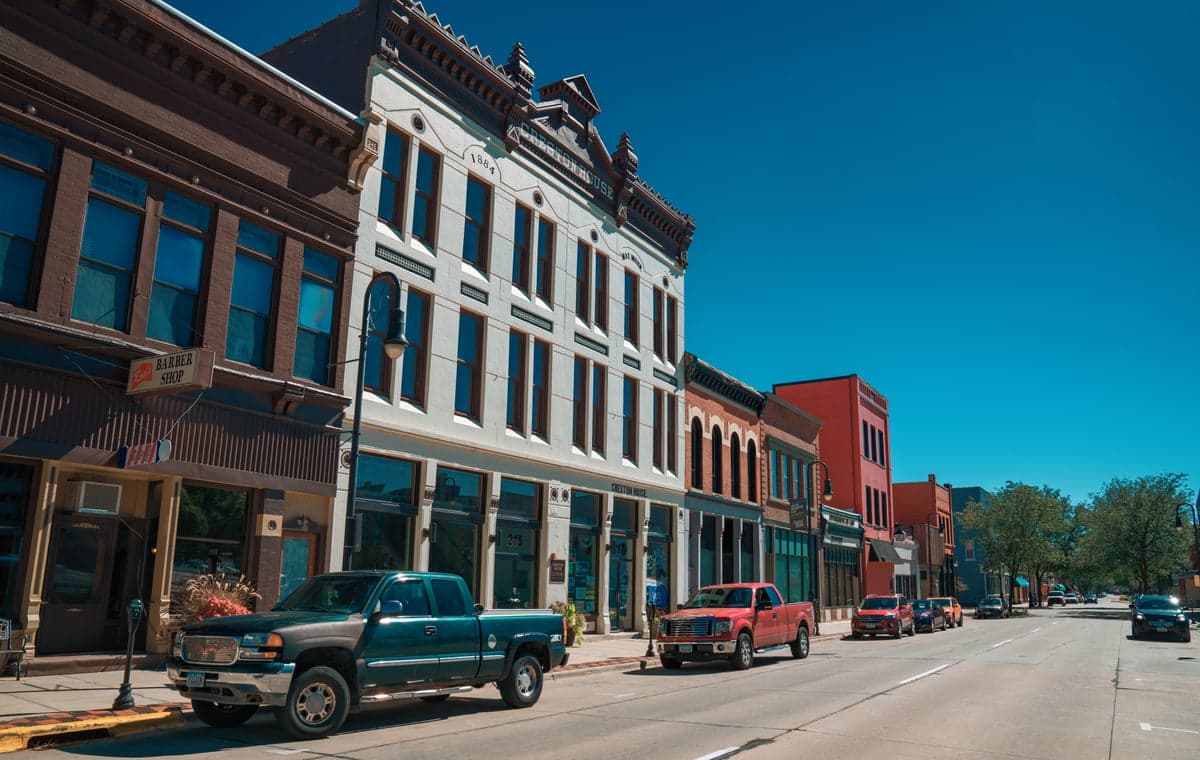
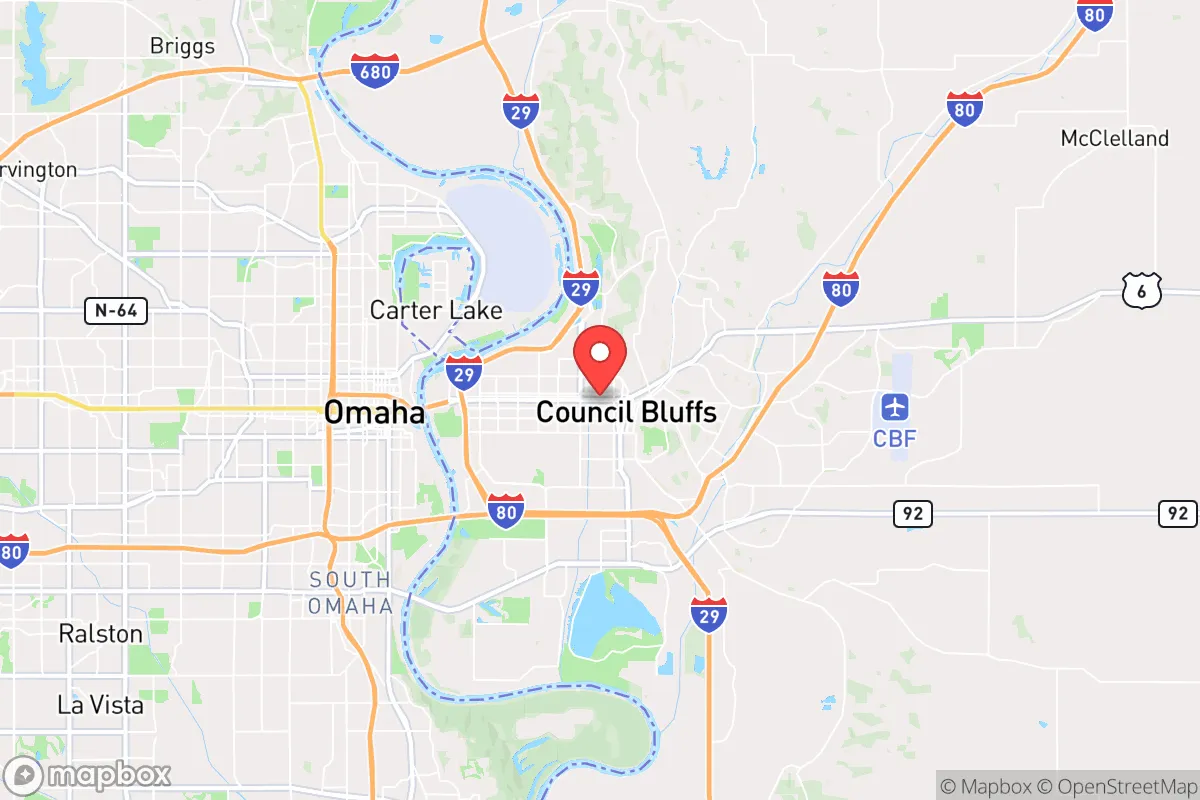
Photo: Wikipedia
Quality of Life in Council Bluffs, IA
A high quality of life with strong walkability, manageable living costs, healthy neighborhood signals, and solid amenity access.
What does Quality of Life tell us?
Quality of Life blends cost of living, nearby amenities, socioeconomic signals, and neighborhood character. City-level scores represent the whole municipality; individual neighborhoods can differ.
What does this tell us?
Quality of Life blends cost of living, nearby amenities, socioeconomic signals, and neighborhood character. City-level scores represent the whole municipality; individual neighborhoods can differ.
Cost of Living
26% below national average
The Real Cost of Living in Council Bluffs, IA for 2026
| Tier | Individual | Family (4) |
|---|---|---|
| Survival | $16k | $29k |
| Comfortable | $32k | $47k |
| Luxury | $107k+ | $166k+ |
| Elite (Top 5%) | $126k+ | $195k+ |
137%
The Area Signal
A metric tracking the socioeconomic signals of the area.


Hobbies
Explore the areaGroceries
2 within 10 miles
Gas
0 within 10 miles
Hospital
3 within 20 miles
Airport
MCI — Kansas City International
Post Office
USPS — Omaha, NE
Critical Amenities
Quality-of-Life Analysis
Council Bluffs offers a notably lower cost of living than the national average, attracting a mix of young families, long-term residents, and Omaha-commuting professionals. With a cost of living index of 74 (where 100 equals the U.S. average), the city provides a financial cushion that is increasingly rare in the Midwest. The median household income hovers around $55,000, meaning housing and daily expenses consume a smaller share of earnings than in many peer communities, though the area’s overall affluence is modest compared to Omaha’s western suburbs.
How housing costs and affordability compare to Omaha and surrounding areas
The most striking quality-of-life factor in Council Bluffs is housing affordability. The median home value sits at $164,300, roughly half the median in Omaha’s pricier western neighborhoods like Elkhorn or Millard. Median rent is $980, well below the national median of $1,200 and significantly cheaper than Omaha’s average rent of around $1,100. This price gap means a household earning the area’s median income can afford a three-bedroom home with a mortgage payment that is 20-25% lower than a comparable property just across the Missouri River. Property taxes in Pottawattamie County are moderate, and the lack of a state income tax on Social Security benefits further stretches retirement budgets. The trade-off is a slower rate of home value appreciation—Council Bluffs homes have risen roughly 35% since 2020, compared to 50%+ in Omaha’s core—but for buyers prioritizing monthly cash flow over equity growth, the math is compelling.
What daily life is like for families: schools, amenities, and commute
Daily life in Council Bluffs centers on a compact, car-dependent layout with an average commute of just 18.6 minutes—one of the shortest in the metro area. Most residents can reach downtown Omaha in under 25 minutes via I-29 or I-80, making the city a practical bedroom community for workers at major Omaha employers like Mutual of Omaha, First National Bank, or the University of Nebraska Medical Center. The Council Bluffs Community School District operates 15 elementary schools, three middle schools, and two high schools (Abraham Lincoln and Thomas Jefferson), with a graduation rate near 88%. For amenities, the city offers the Mid-America Center for concerts and conventions, the RailsWest Railroad Museum, and the 1,500-acre Hitchcock Nature Center for hiking and birding. Retail and dining cluster along the Mall of the Bluffs and the riverfront casino district, though residents often cross into Omaha for higher-end shopping and entertainment. The city’s parks system includes 30+ parks, with Lake Manawa State Park providing swimming, fishing, and a 3.5-mile paved trail loop.
Council Bluffs is best suited for budget-conscious families, remote workers, and retirees who value low housing costs and a short commute over urban density or rapid home appreciation. The city’s slower pace and proximity to Omaha’s job market create a practical middle ground—residents gain the financial breathing room of a small city while retaining access to a major metro’s healthcare, dining, and cultural offerings. Those seeking walkable neighborhoods, elite public schools, or a vibrant nightlife scene may find the trade-offs less appealing, but for anyone prioritizing affordability and a 20-minute commute, Council Bluffs delivers a stable, low-stress daily rhythm.

Crime in Council Bluffs, IA
Higher crime rates than 59% of comparable U.S. locations.
Violent CrimeViolent Crime Analysis
Property CrimeProperty Crime Analysis
Crime Analysis
Council Bluffs, Iowa, reports a violent crime rate of 525.3 per 100,000 residents and a property crime rate of 2,230.4 per 100,000, placing it among the more dangerous communities in the state. These figures, drawn from the most recent FBI Uniform Crime Reporting data, indicate that residents face a significantly higher risk of victimization compared to both the Iowa average and national benchmarks. The city’s proximity to the Omaha metropolitan area introduces additional concerns, as large metro regions often experience higher crime spillover, and the local justice system’s ideological leanings can directly impact public safety outcomes.
Crime in context
Council Bluffs’ violent crime rate of 525.3 per 100,000 is roughly 1.5 times the national average and nearly double the Iowa state average of approximately 280 per 100,000. Property crime, at 2,230.4 per 100,000, also exceeds the national rate of about 1,954 per 100,000 and is substantially higher than Iowa’s statewide figure of roughly 1,600 per 100,000. These disparities are not random; they reflect systemic factors including the city’s role as a regional hub for the Omaha-Council Bluffs metro area, which concentrates economic pressures and criminal opportunity. Readers should note that progressive judicial philosophies in Pottawattamie County and the broader metro area—characterized by lenient sentencing, reduced incarceration for repeat offenders, and diversion programs that prioritize offender rehabilitation over public protection—contribute directly to higher recidivism and more criminals on the street. This approach, while sympathetic to offenders, undermines justice for victims and erodes the deterrent effect of law enforcement.
What residents experience
For daily life in Council Bluffs, the elevated crime rates translate into tangible risks. Aggravated assaults and robberies are the most common violent crimes, often concentrated near commercial corridors like West Broadway and the interstate exchange areas. Property crime is pervasive, with vehicle theft and burglary rates notably high; residents report frequent break-ins of parked cars and storage sheds. The city’s police department has responded with targeted patrols and community policing initiatives, but the underlying driver remains the metro area’s lenient criminal justice environment. Prosecutors in the region routinely offer plea deals that reduce felony charges to misdemeanors, and judges frequently impose probation rather than incarceration for violent offenders, a pattern that keeps dangerous individuals in the community. This systemic leniency means that even when crimes are reported and suspects are arrested, meaningful consequences are rare, leaving residents feeling that the justice system prioritizes offender outcomes over public safety.
Neighborhood-level variation is significant. The downtown core and areas near the Missouri River, including the historic district, see the highest concentrations of both violent and property crime. In contrast, the western neighborhoods—such as those near Lake Manawa and the newer subdivisions along Highway 92—report lower incident rates, though property crime remains a concern citywide. Residents in higher-crime zones often express frustration with the revolving-door justice system, where repeat offenders cycle through arrests without facing substantial penalties. For anyone considering relocation, a thorough review of block-level crime maps and direct conversations with local police precincts are essential, as safety outcomes vary dramatically within a few blocks. The overarching reality is that Council Bluffs’ crime problem is not merely statistical but is reinforced by a metro-area judicial philosophy that consistently prioritizes offender leniency over victim protection and community safety.
* Values derived from national, state, county, city and local statistics and may differ in a specific area. Last updated: 2026-04-19T07:15:31.000Z
Narrative content on this page is AI-generated and may contain mistakes. Verify any details that matter before acting on them.
ReloMaps may earn a commission from affiliate links at no extra cost to you.

