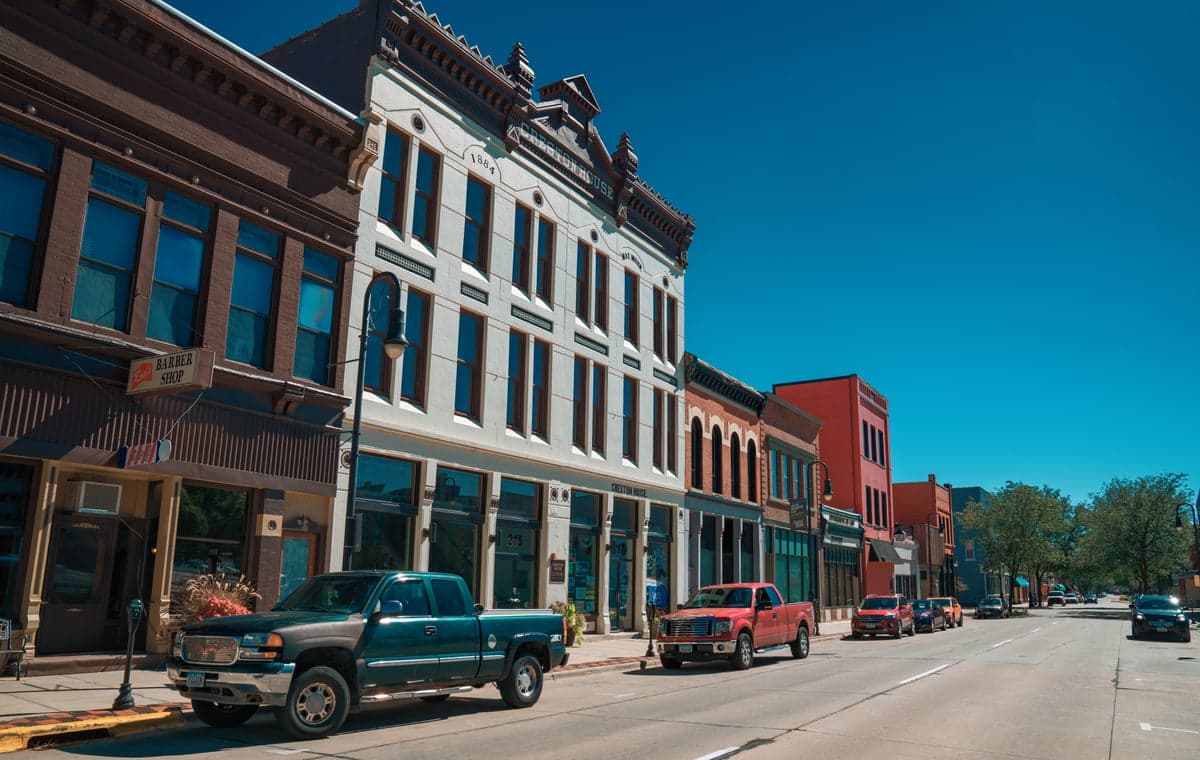
Photo: Wikipedia
Political ClimatePolitical Climate in Council Bluffs, IA
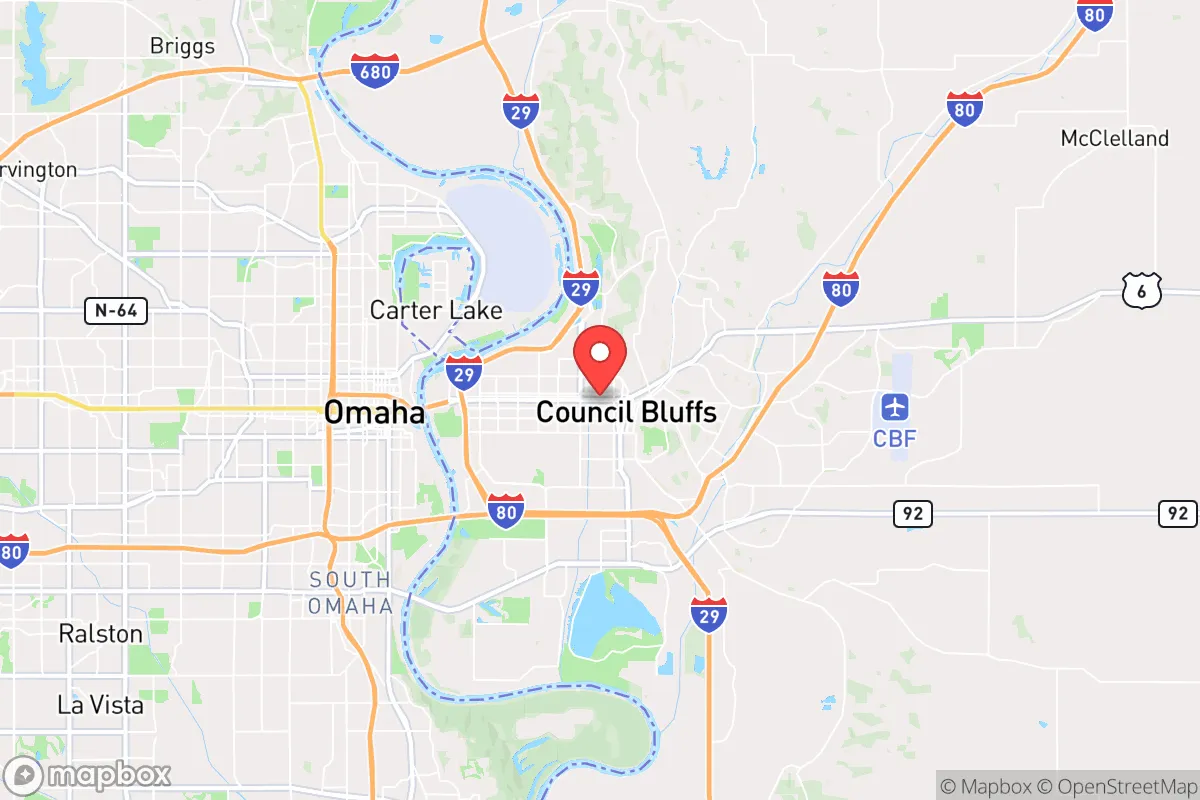
District shown is the primary district for this city’s centroid. Cities may span multiple districts.
Local Political AnalysisPolitical Analysis of Council Bluffs, IA
Council Bluffs has long been a solidly conservative area, and that hasn't changed much despite some national trends. The Cook PVI of R+15 tells you the story right off the bat — this isn't a place that's flirting with progressive ideas. Pottawattamie County, where Council Bluffs sits, has voted Republican in every presidential election since 2000, and in 2024 it went for Trump by a comfortable margin. But if you've lived here a while, you know the real story is more about the slow creep of government overreach than any sudden shift in party loyalty. The local politics still lean heavily toward limited government and personal responsibility, but there are signs that some folks in city hall are starting to eye those "progressive" playbooks from Omaha and Des Moines, and that's worth keeping an eye on.
How it compares
Drive ten minutes east across the Missouri River into Omaha, and you're in a completely different world — Douglas County, Nebraska, is reliably blue, with a Cook PVI of D+9. That contrast is stark. Council Bluffs residents see the higher taxes, the more restrictive business regulations, and the growing homeless encampments in Omaha, and most of us want no part of it. To the west, places like Glenwood and Red Oak are even more conservative, but Council Bluffs has a bit more diversity in its economy and population, which means you'll occasionally hear a council member float ideas about "affordable housing mandates" or "equity initiatives" that sound an awful lot like what's happening in Des Moines. So far, those proposals usually get voted down, but the fact that they keep coming up is a reminder that the fight over personal freedoms — your right to run a business without endless permits, your right to keep what you earn, your right to live without government telling you how to heat your home — is never really over.
What this means for residents
For the average person living here, the political climate means you still have a lot of breathing room. Property taxes are relatively low compared to the rest of the state, and there's no city income tax. The local school board has resisted the kind of critical race theory and gender ideology curriculum battles that have torn apart districts in more liberal areas. But don't get complacent. The state legislature in Des Moines has been pushing some genuinely good bills to protect parental rights and Second Amendment freedoms, but local enforcement can vary. For example, Council Bluffs has a "safe storage" ordinance for firearms that some residents see as a backdoor infringement on the right to keep and bear arms. It's not as bad as what you'd find in California, but it's a reminder that even in a R+15 county, you have to stay engaged. The biggest concern I hear from neighbors is about the long-term trajectory: if the city keeps growing and attracting people from Omaha who want to bring their big-government ideas with them, we could see more zoning restrictions, more fees, and more "climate action plans" that tell you what kind of car you can drive or how you can heat your home.
One thing that sets Council Bluffs apart from some other conservative towns is the strong union presence, especially among the railroad workers and meatpacking plant employees. That creates an interesting dynamic — you'll find folks who are solidly Republican on social issues but skeptical of free trade deals and corporate tax breaks. It's a reminder that conservatism here isn't about country club politics; it's about hard work, self-reliance, and wanting the government to stay out of your life. The local culture still values neighborly help over government programs, and most people would rather solve a problem with a fundraiser at the VFW than a new city ordinance. If you're looking for a place where you can live your life without a bureaucrat looking over your shoulder, Council Bluffs is still that place — but you have to be willing to speak up at those city council meetings to keep it that way.

State Political ClimatePolitical Climate in Iowa
State Political AnalysisPolitical Environment in the State
Iowa has been a reliably Republican state in presidential elections since 2016, after a long stretch as a classic swing state that went for Barack Obama twice. The GOP now holds all four U.S. House seats, both Senate seats, the governorship, and supermajorities in the state legislature. The shift has been dramatic: in 2012, Obama won the state by 5.5 points; by 2024, Donald Trump carried it by over 13 points. The driving force has been a realignment of rural and small-town voters toward the GOP, combined with a steady out-migration of younger, more liberal voters from urban centers. For a conservative-leaning individual or family, Iowa today offers a policy environment that is increasingly aligned with limited government, parental rights, and Second Amendment protections — but the state’s political future is not without its tensions.
Urban vs. rural divide
The political map of Iowa is a textbook case of the urban-rural split. The state’s two largest metros — Des Moines (Polk County) and Iowa City (Johnson County) — are the Democratic strongholds. Polk County, home to the state capital, voted for Biden in 2020 by 16 points, while Johnson County, anchored by the University of Iowa, went for Biden by a staggering 41 points. These two counties alone produce a huge chunk of the state’s Democratic votes. But outside of those islands, the rest of the state is deeply red. Dallas County, a fast-growing suburban ring west of Des Moines, flipped from blue to red in 2020 and has only gotten redder since. Sioux County in the northwest, home to a large Dutch Reformed population, is one of the most reliably Republican counties in the entire country, routinely voting 80%+ GOP. The rural counties along the Mississippi River, like Dubuque and Clinton, were once blue-collar Democratic bastions but have shifted hard right over the past decade. The divide isn’t just about population density — it’s cultural. The urban cores are increasingly progressive, while the small towns and farm communities see the GOP as the party of traditional values and economic freedom.
Policy environment
Iowa’s policy environment under Republican control has been aggressively conservative. The state has a flat income tax of 3.8% (down from a top rate of 8.98% in 2021), with a plan to phase it down to 3.5% by 2027. Property taxes are relatively low, and there is no estate tax. The regulatory climate is business-friendly, with a right-to-work law and no state-level minimum wage above the federal $7.25. On education, Iowa passed a universal school choice program in 2023 that allows any family to use state funds for private or homeschool expenses — a major win for parental rights. The state also banned nearly all abortions after six weeks in 2023, with no exceptions for rape or incest, and has a constitutional amendment on the ballot for 2026 that would enshrine the ban. Election integrity measures include strict voter ID requirements, a ban on ballot drop boxes, and a shortened early voting window. For a conservative family, the policy mix is about as friendly as it gets in the Midwest — low taxes, school choice, and strong protections for life and liberty.
Trajectory & freedom
Iowa is clearly trending toward more freedom in the areas that matter most to conservatives. The 2021 permitless carry law (HF 756) allows any law-abiding adult to carry a concealed firearm without a permit, and the state preempts all local gun ordinances. The 2023 school choice law (HF 68) expanded educational freedom dramatically. On medical freedom, Iowa banned COVID-19 vaccine mandates for state employees and contractors in 2022, and the legislature has considered bills to limit mRNA vaccine mandates more broadly. Property rights are strong, with no statewide rent control and a relatively low property tax burden. However, there are areas where freedom has contracted. The state’s medical cannabis program is one of the most restrictive in the country — only low-THC products are allowed, and there is no recreational marijuana. The 2023 abortion ban represents a significant restriction on personal autonomy, though that’s a feature, not a bug, for the conservative audience. On balance, the trajectory is toward more liberty in the realms of guns, education, and economic choice, with a corresponding tightening in the social conservative agenda.
Civil unrest & political movements
Iowa has not seen the kind of large-scale civil unrest seen in coastal states, but there have been flashpoints. The 2020 Black Lives Matter protests in Des Moines and Iowa City were relatively small and peaceful compared to national standards, but they did lead to some property damage and a heightened police presence. The most visible political movement in recent years has been the rise of the Parents’ Rights movement, which successfully pushed for the school choice law and the removal of certain library books in districts like Ankeny and Waukee. On the left, the Iowa City area has seen organized protests against the abortion ban, but these have not disrupted daily life. Immigration politics are relatively quiet — Iowa has a low foreign-born population (about 5%), and there are no sanctuary cities. The state did pass a law in 2024 requiring law enforcement to cooperate with federal immigration authorities. Election integrity controversies have been minimal; the 2020 and 2022 elections were conducted smoothly, though some rural counties saw calls for hand-counting ballots. A new resident would notice a general sense of political stability, with the occasional culture-war flare-up in school board meetings or at the state capitol.
Projection
Over the next 5-10 years, Iowa is likely to become more Republican, but with a caveat. The rural population is aging and shrinking, while the Des Moines metro is growing steadily, driven by insurance and finance jobs. That growth is bringing in a mix of out-of-state transplants — some from blue states seeking lower taxes and conservative governance, others from more moderate backgrounds. The net effect is that the GOP’s margins in suburban counties like Dallas and Warren may tighten slightly, but the rural base remains solid. The state’s congressional map is gerrymandered to favor Republicans, and the legislature is unlikely to flip. The biggest wild card is the 2026 gubernatorial election — Governor Kim Reynolds is term-limited, and the GOP primary could shift the party’s direction. Expect continued movement on school choice expansion, further income tax cuts, and possibly a push for a constitutional amendment on abortion. For a new resident, the Iowa of 2035 will likely look much like today: reliably red, low-tax, and culturally conservative, but with a slightly more diverse and suburbanized population in the central part of the state.
Bottom line for a new resident: If you’re a conservative individual or parent looking for a state where your values are reflected in law, your taxes are low, and your kids can attend the school of your choice, Iowa is a strong bet. The political climate is stable and trending in your direction. You’ll find a welcoming environment in the suburbs of Des Moines or the small towns of western Iowa, but you should be prepared for the cultural isolation of rural life if you move outside the metro. The state is not without its progressive pockets — stick to Dallas County or Sioux County if you want to avoid them. Overall, Iowa offers a rare combination of conservative governance and Midwestern neighborliness that is increasingly hard to find elsewhere.
* Values derived from national, state, county, city and local statistics and may differ in a specific area. Last updated: 2026-04-19T07:15:31.000Z
Narrative content on this page is AI-generated and may contain mistakes. Verify any details that matter before acting on them.
ReloMaps may earn a commission from affiliate links at no extra cost to you.

