
Photo: Wikipedia
Personal Sovereignty in Covington, KY
Viable for self-reliance. Generally workable, though some barriers may limit total independence.
What does Personal Sovereignty tell us?
Personal Sovereignty measures your capacity for self-reliance and independence with minimal government friction. Higher scores mean fewer barriers between you and the way you want to live... but it assumes you have the space you need and good neighbors.
What does this tell us?
Personal Sovereignty measures your capacity for self-reliance and independence with minimal government friction. Higher scores mean fewer barriers between you and the way you want to live... but it assumes you have the space you need and good neighbors.
State Policy
Energy independence: Importer (60% of energy produced in-state)
Personal Liberty
Homesteading

Personal Liberty Analysis
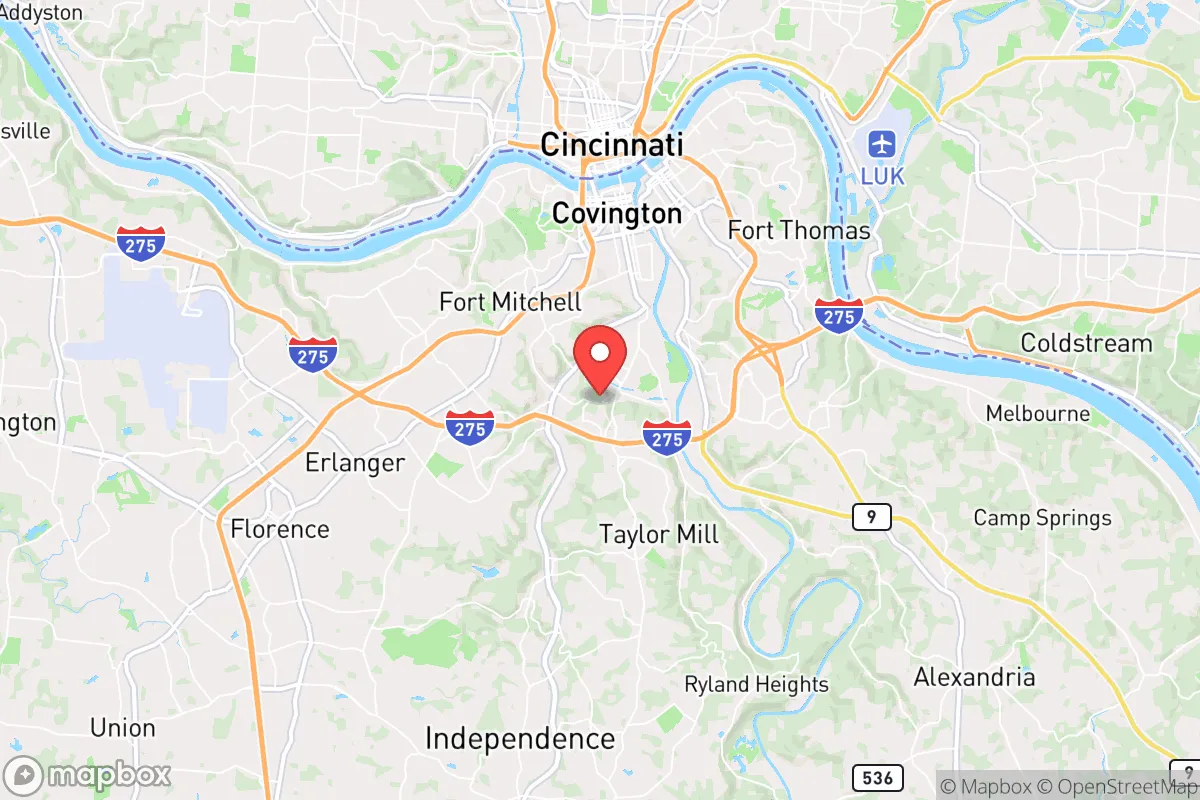
Covington, Kentucky offers a notably higher degree of personal sovereignty than many urban centers in the Northeast or Midwest, largely due to Kentucky’s status as a conservative-leaning state with strong preemption laws and a constitutional carry environment. While Covington itself is a small, dense city of roughly 40,000 people, its location directly across the Ohio River from Cincinnati means it sits at a strategic intersection of state-level autonomy and urban proximity. For the survivalist or prepper-minded individual, the key question is whether local governance in Covington erodes the freedoms granted by the state — and the answer is mixed, but leans favorably for those willing to navigate a few municipal quirks.
Tax burden and regulatory posture: How Kentucky’s policies affect your wallet and freedom
Kentucky’s overall tax burden is moderate compared to high-tax states like New York or California, but Covington sits in Kenton County, which adds its own layers. The state income tax is a flat 4.5% as of 2026, with no local income tax in Covington itself — a significant advantage over Cincinnati, which imposes a 2.1% city earnings tax on residents. Property taxes in Kenton County average around 0.85% of assessed value, which is below the national average. However, Covington’s urban density means you’ll pay more per square foot than in rural Kentucky. The regulatory posture at the state level is business-friendly, with right-to-work laws and limited occupational licensing compared to neighboring Ohio. But Covington’s city council has occasionally flirted with progressive ordinances — such as plastic bag bans and short-term rental restrictions — that signal a slight tilt toward local overreach. For a prepper, the key takeaway is that state-level protections (like preemption on firearms and zoning) generally override local impulses, but you should still check Covington’s specific building codes and business license requirements before committing.
Self-defense and gun law specifics: Constitutional carry and local realities
Kentucky is a constitutional carry state, meaning no permit is required to carry a concealed firearm for anyone 21 or older who can legally possess a gun. This is a bedrock freedom for the survivalist mindset. Covington, despite its urban location, has not enacted any local gun ordinances that conflict with state preemption — a critical point, as some Kentucky cities (like Louisville) have tried to push their own restrictions. The state also has a “Stand Your Ground” law with no duty to retreat, and castle doctrine protections for home and vehicle defense. However, Covington’s proximity to Ohio and Indiana means you must be aware of crossing state lines: Ohio requires a permit for concealed carry (though it honors Kentucky permits), and Indiana is also constitutional carry. For the prepper, this means your defensive rights are robust within Kentucky, but daily commutes across the river demand vigilance. Additionally, Covington’s police department is generally supportive of gun rights, though the city’s higher crime rate (property crime is above the national average) means you should prioritize secure storage and situational awareness.
Self-reliance and homesteading viability: Lot sizes, zoning, and off-grid feasibility
Homesteading in Covington is challenging due to its dense urban layout. Most residential lots are small — typically 0.05 to 0.15 acres — and zoning is restrictive for agricultural uses. Raising chickens is permitted in some zones with a permit, but livestock like goats or pigs are generally prohibited. Gardening is feasible on small plots, but soil contamination from industrial history (Covington was a manufacturing hub) is a real concern; raised beds with tested soil are recommended. Off-grid living is essentially impossible within city limits: Covington requires connection to municipal water and sewer, and solar panels are allowed but must comply with building codes that limit independent energy systems. For serious self-reliance, you’d need to look at rural Kenton County or neighboring Boone County, where acreage is available and zoning is far looser. That said, Covington’s location gives you access to the Ohio River for water collection (with proper filtration) and a strong network of local farmers’ markets and bulk food suppliers. The city’s walkability and bikeability reduce fuel dependency for daily errands, which is a subtle sovereignty advantage.
Personal liberties: Parental rights, medical autonomy, speech, and property
Kentucky has strong parental rights protections, including a law that allows parents to opt their children out of any school curriculum they find objectionable — a key concern for conservative families. Covington’s public schools (Covington Independent Public Schools) have faced challenges with low test scores and high poverty, which may push parents toward homeschooling or private options; Kentucky is homeschool-friendly with minimal reporting requirements. Medical autonomy is a mixed bag: Kentucky has some of the strictest abortion laws in the country (near-total ban), which aligns with conservative values, but also has vaccine mandates for school attendance that some parents view as overreach. Free speech is robust under Kentucky law, and Covington has not enacted any local hate speech or “misinformation” ordinances that chill expression. Property rights are generally strong, with no statewide rent control and limited eminent domain abuse, though Covington’s historic preservation board can restrict modifications to older homes — a potential frustration for those wanting to fortify or retrofit a property. Overall, the state’s legal framework prioritizes individual liberty over collective mandates, but Covington’s local governance occasionally nudges in the opposite direction.
In the broader context of personal sovereignty, Covington occupies a strategic middle ground. It offers the legal protections of a red state — constitutional carry, low taxes, parental rights — while being a short drive from the economic and cultural resources of Cincinnati. For the prepper or survivalist, the city itself is not a homesteading haven, but it serves as a viable base for those who work across the river and want to maintain a low profile. Compared to areas like rural Montana or Idaho, Covington’s density and local ordinances are a constraint; compared to Portland or Chicago, it’s a bastion of freedom. The real sovereignty play here is using Covington as a launch point: live in the city for job access, but invest in a rural property within an hour’s drive for long-term self-sufficiency. That dual-location strategy maximizes Kentucky’s state-level freedoms while minimizing the friction of urban governance.

* Values derived from national, state, county, city and local statistics and may differ in a specific area. Last updated: 2026-04-21T10:25:27.000Z
Narrative content on this page is AI-generated and may contain mistakes. Verify any details that matter before acting on them.
ReloMaps may earn a commission from affiliate links at no extra cost to you.

